Showing posts with label Israel. Show all posts

Wednesday, October 14, 2009

COMMENT: Time for Jewish-Muslim Solidarity ...


The following comment from the now-defunct Aussie Mossie blog was first published on Saturday 29 July 2006.

Israel may well gain its military objectives in Lebanon, just as it always has in the constructively occupied West Bank and Gaza. But Israel is fast losing the war of public opinion.

People across all sectors of Australian society, of all ethnicities and faiths are questioning what has clearly been a disproportionate response by Israel to the military incursions of Hamas and Hezbollah.

Australia’s Jewish community has been largely supportive of Israel. With a relatively higher proportion of Holocaust survivors compared to other Jewish communities in the Western world, many Australian Jews regard support for Israel as a kind of emotional life insurance policy.

But now even prominent Jewish writers and academics are beginning to make critical noises against Israel. This must prove unsettling for more hawkish pro-Israel lobbies. They now see Americans and Australians and New Zealanders and Europeans, people whose support they always took for granted, abandoning the blindly pro-Israel position.

Why is this happening?

Firstly, things haven’t been the same since Yasir Arafat shook hands with Yitzhak Rabin on the White House Lawn. Since then, the Palestinian cause gained respectability.

There was a time when Lebanese, palestinian or Muslim groups on Australian campuses faced a barrage of criticism when inviting speakers critical of Israel to speak. Today, on campuses across the country, Jewish, Muslim, Arab and other students are holding inter-faith gatherings and joint functions.

Secondly, the internet has opened up sources of information hitherto unavailable. Westerners now have access to Israeli and Palestinian newspapers and magazines online. Views and positions labelled anti-Semitic by rabid pro-Israel lobbies are now accessible on Israeli news websites. Previously, such views were only known to people in Israel.

Thirdly, Israel’s treatment of Christian minorities is also becoming known, thanks to the work of writers from various Christian denominations. Books such as
William Dalrymple’s From the Holy Mountain are exposing the excesses of Jewish extremists in Jerusalem as they engage in blatant and often violent takeovers of Church land under the watchful and supportive eye of Israeli authorities.

Fourthly, Palestinians have also gained many articulate spokespeople actively building bridges for peace. Attempts to paint
Sydney Peace Prize recipient Dr Hanan Ashrawi as a bloodthirsty supporter of suicide bombers in 2003 failed dismally.Attempts to discredit the recent study by two prominent American academics, John Mearsheimer and Stephen Walt, on the power of the pro-Israel lobby seem to have backfired. In Australia, we see the paper profiled even on the pages of establishment papers such as the Australian Financial Review.

It also doesn’t help the more hawkish pro-Israel lobbies when their views are couched in the xenophobic and racist language of News Limited tabloid scribes. Today, many pro-Israel positions are represented by the most extreme, belligerent and imbecilic argument.

Recently Australia’s Ambassador to Lebanon declared that it is almost inevitable that Australians will be amongst the dead and wounded among Lebanon’s civilian population as Israel’s campaign in Lebanon continues. When Australians see their fellow countrymen and women being incinerated and blown to pieces by Israeli fire power, when the effects of this war begin to affect ordinary Australian families, goodwill toward Israel in Australia will nose-dive.

And should Hezbollah and Lebanon’s armed forces join forces under a unified command, it will be impossible for Israel’s friends in Canberra to cry “terrorist” when young Australians leave in droves to join in the fighting on either side of the war.

Lebanon is being seen as the victim. Israel’s apparent policy of “an Israeli eye for 30 Lebanese and Palestinian heads” is being exposed in all its ugliness.

So what should Australian Muslims do? Should we raise our voices in anger toward those we presume to be Israel’s die-hard supporters? Should we be demanding Jewish Australians to prove their loyalty the way we are demanded to prove ours when Aussie are killed in terror attacks in Bali? Should we be complaining that Jewish leaders aren’t condemning Israeli aggression enough as many complained (and continue to complain) about ours?

Should we produce our own Muslim versions of Mark Steyn and Daniel Pipes? No. We should rise above such divisive strategies.

Now is the time for us to engage our brethren of Jewish faith. Now is the time for us to hold out the hand of friendship. Because the reality is that we are all victims in this war.

We know there are many Australian Jews who are openly questioning Israel’s military policies. We also know there are many decent people inside Israel (including inside Israel’s Defence Forces) questioning and rejecting Israel’s current campaign.

As Israel’s army commits more atrocities, Hezbollah replies by firing more rockets. Who is killed? Ordinary Lebanese. Ordinary Israelis. Ordinary Jews, Christians and Muslims.

As Muslims, we should be the first to hold out the hand of friendship. Yes, we are opposed to Israeli government policies. But that doesn’t mean we show venom and resentment to our Jewish neighbours and colleagues and workmates and classmates.

Extra efforts should be made by Muslim organisations, particularly those representing young people, to arrange meetings and joint functions with Jewish organisations. Imams should go out of their way to meet with rabbis. Principals of Muslim schools should arrange visits to Jewish schools.

It makes me so pleased to see the disciples of Turkish Islamic scholar Muhammad Fethullah Gulen arranging functions with groups associated with the congregation of Temple Emanuel in Northern Sydney. More such gatherings need to occur.

With so much tension in the air, surely now is the best time for Muslims and Jews to interact and to build friendships. Let the hawks and extremists on both sides talk war and blood and death. Let us ordinary Australians, Muslims and Jews, speak the language of friendship.

Rabbi Hillel is quoted as saying: “Judge not your neighbour till you've been in his place.”

The Prophet Muhammad (peace & blessings of God be upon him) is reported to have said: “You are not a true believer until you want for your brother what you want for yourself.”

Muslims and Jews in Australia are fellow citizens and neighbours. Now more than ever, both our communities need to show we will not allow conflicts overseas to colour our relations with each other. We are already friends. We now must be seen to becoming better friends.


Words © 2006-9 Irfan Yusuf

UPDATE: The following comment was left in English by this rather friendly dual citizen:

I love your last paragraph. That is the 'ideal' isn't it. I think criticism and more in-depth examination of these conflicts is eessential. I am a practising Australian Christian currently living in the UK (I differentiate myself from 'cultural' Christians, of which most white Aussies/Brits would probably describe themselves as).


And this comment was left in Spanish by a Chilean Jewish brother:

Irfan,

He leído con atención tu blog, y concuerdo con tus ideas.

Como chileno, judío y activista del diálogo fraterno entre los "hermanos separados" te envío un caluroso abrazo desde Santiago de Chile.

Jorge


Stumble Upon Toolbar

Wednesday, August 19, 2009

REFLECTION: What Aussie Muslims must do for Christian minorities ...

The following post was published on the Aussie Mossie blog on Tuesday September 19 2006.

In today's Daily Telegraph and Canberra Times, I challenged the tiny but loud minority of infantile Muslim protesters to siddown and shuddup or find another religion. Today, I’d like to make some suggestions to the more mature Muslims living on either side of the Tasman.

In January, the Australia-Indonesia Institute sent me with a group of 4 other Aussie Muslims to Indonesia. That trip included a visit to a private Protestant university in Yogyakarta, that gorgeous Javanese town recently rocked by earthquakes and living in the shadow of a rather nasty volcano.

The students and staff at this university were all members of a religious minority in the world’s largest Muslim country. I couldn’t help but notice these Indonesians expressing virtually the same concerns Muslims express in Australia and New Zealand.

If Muslims aren’t concerned about the plight of Christian minorities in nominally Muslim countries like Indonesia, they shouldn’t expect anyone to care about their problems in Australia. Further, Muslims have strong theological reasons to act in this case. The Prophet Muhammad promised that on the Day of Judgment he would personally testify against any Muslim who caused the slightest injury to a non-Muslim citizen of a Muslim state.

With that in mind, here are some practical suggestions for Muslims:

a. Imams and Presidents of all local mosques contact and offer support to their local Catholic clergy.

b. All peak Muslim bodies and the PM’s Muslim Reference Group should write letters to embassies of all member-states of the Organisation of Islamic Conference (OIC) demanding their governments take all necessary steps to protect Christian churches and other property and to bring to justice anyone who so much as threatens Christian civilians and property.

c. The Boards of Imams of each State and territory should write to their equivalent boards in each province or state of each OIC state and (unless Phillip Ruddock deems this in some cases to breach anti-terror laws) to each Islamic party and remind them of their religious and legal responsibilities toward Christian minorities.

d. Prominent and wealthy Australian Muslims should sponsor full-page advertisements in as many English-language dailies published in OIC states as possible. These advertisements should remind Muslim readers of the extensive religious and legal duties Muslims have toward their Christian brethren.

These are just some of the things that come to mind.

Christian minorities have played productive roles in Muslim communities across the world. Christians like Dr Hanan Ashrawi and Amin Maalouf (author of The Crusades Through Arab Eyes) have defended Muslim perspectives in historical and political matters.

In Pakistan, the late Justice AR Cornelius, Chief Justice of the Pakistan Supreme Court from 1960 to 68, defended the rights of Pakistanis to implement Muslim religious law.

In Australia, the Catholic Church is at the forefront of not only defending the rights of (mainly Muslim) asylum seekers but also providing them with essential welfare services. Indeed, Christian churches have been far more active than Muslim organizations, a matter of enormous shame for Australian Muslims.

Indeed, the Pope himself has been at the forefront of supporting peace efforts in the Middle East. He has been a staunch critic of the Israeli incursions into Lebanon and Gaza, and expressed his concerns on these issues just days before his address in Germany.


Words © 2006-9 Irfan Yusuf

Delicious
Bookmark this on Delicious

Digg!

Get Flocked

Stumble Upon Toolbar

Wednesday, August 12, 2009

EGYPT: A look at divided Cairo ...

Today I had a chat with ABC reporter Hagar Cohen. A migrant from Israel, she settled in Australia in 2003, studying journalism at UTS and now working as a producer for Radio National programs including Background Briefing. She spoke to me in relation to a story about the role of the mufti of Australia.

Ms Cohen told me about a recent trip to Egypt to film a story on the future of Cairo, Egypt's ancient city on the Nile. The program looks at some of the difficult issues facing the city, especially the increasing segregation of rich and poor residents. This includes the development of "gated communities" and suburbs seeking to replicate American suburbia.

I wonder how much of these problems is replicated in other cities in the Arab and nominally Muslim world.

UPDATE I: The episode of Background Briefing dealing with imams and young Muslims can be seen and heard here.

Words © 2009 Irfan Yusuf


Delicious
Bookmark this on Delicious

Digg!

Get Flocked

Stumble Upon Toolbar

Friday, January 30, 2009

OPINION: No such thing as a monolithic Muslim state of mind ...


Politics and foreign policy can be so confusing. Let's look at Iraq, for example. The conventional wisdom is that we went to war against Saddam Hussein in 2003 and overthrew his government for a variety of reasons, including that Iraq was a crucial battleground in the so-called war on terror. The former Iraqi dictator is said to have had direct links with an Islamist terrorist organisation, al-Qaeda. We were at war with al-Qaeda. Hence we had to make war on Saddam.

Now let's move to the present and another conflict. Israel claimed to be fighting a war on terror of its own recently in its bombardment on Gaza. Israeli spin doctors told us that their war wasn't against the people of Gaza but against Hamas, an Islamist terrorist organisation dedicated to Israel's destruction through firing thousands of rockets and sending suicide bombers into Israel.

See the connection? The war on terror is always a war on political Islamists. It isn't a war on Muslims as such, nor is it a war on the Islamic religion or on nominally Muslim countries. The battle we wage is against political Islam, an ideology that seeks to establish an Islamic state.

That's the rhetoric. But what is the reality?

Before the outbreak of the first Palestinian intifada in 1987, what we now know as the virulently anti-Israel militia Hamas was created from an Israeli-backed network of social welfare projects (including clinics, schools, libraries and other facilities) operated under the auspices of the Muslim Brotherhood, an Islamist movement founded in Egypt by one Hasan al-Banna. At the time, Israel and the Tunis-based PLO had not signed the Oslo Agreements. Israel's line was that it would not negotiate with Yasser Arafat's PLO because it was a terrorist organisation. Israel also knew that the Brotherhood' s reputation for scrupulous honesty would make it an excellent alternative to the PLO.

So when it suited Israel's desire to drive a wedge between Palestinians living in the Occupied Territories and the Palestinian diaspora-based PLO that Israel then labelled a terrorist organisation, Israel was quite happy to deal with another organisation it now labels terrorists.

The Muslim Brotherhood's Islamist credentials and ideology weren't seen as an obstacle to its establishing a host of institutions in the West Bank and Gaza.

But don't take my word for it. A report from United Press International on June 18, 2002 cites documents obtained from the Israeli-based Institute for Counter Terrorism to the effect that Hamas was legally registered in Israel in 1978 by Sheik Ahmed Yassin, the movement's spiritual leader, as an Islamic association by the name of Al-Mujamma al-Islami, which widened its base of supporters and sympathisers by religious propaganda and social work.

The report also cites US administration officials saying funds for the movement came from the oil-producing states and, directly and indirectly, from Israel.

Back to present-day Iraq. Thousands of US and British soldiers have lost their lives defending a democratically elected Iraqi Government. After the 2003 invasion and the toppling of its Ba'athist regime, an Iraqi Governing Council was set up and an interim constitution drawn up, which became the basis for Iraq's current constitution. Among the experts assisting in the drafting of this document was Noah Feldman, Rhodes scholar and Harvard University professor of law and Islamic studies.

Feldman is hardly what some might describe as an apologist for political Islam. He has intimate first-hand knowledge of Iraqi governance and law. Feldman openly says Iraq's constitution establishes an Islamic state. Coalition troops are putting their lives on the line to defend the very political agenda the war on terror was supposedly designed to fight.

In other words, all this hysteria about political Islam is little more than a rhetorical cover for what are really just the usual political manoeuvrings one expects in relations between states.

This isn't so much about defending our freedoms against those who allegedly hate our way of life though in the case of anarcho-Islamist syndicates like al-Qaeda and Jemaah Islamiah the rhetoric largely reflects reality.

What we need to understand is that political Islam isn't in itself the enemy. If it were, American and British troops wouldn't be in Iraq today. And if, as President Barack Obama has promised, US troops are withdrawn, it will not be because the US has abandoned Iraq's democratically elected Islamist Government. Indeed, President Obama has indicated that US troops from Iraq will more than likely be deployed in Afghanistan to fight combined Taliban and al-Qaeda forces and the odd insurgency movement. Even in Afghanistan, our allies, led by President Hamid Karzai, are (at least on paper in the Afghan constitution) committed to maintaining Afghanistan as an Islamic republic, albeit a democratic one. The Afghan Government consists of the remnants of old Afghan jihadi factions which once waged war on the Soviet Union, again with support from the West.

In his 2008 book The Fall and Rise of the Islamic State, Professor Feldman argues that the struggle is not between secularism and theocracy. Religion and government are not necessarily seen in many Muslim-majority states as polar opposites. Instead, in the primary battlegrounds of Afghanistan and Iraq, democratic political Islam is allied with the West against what are in essence forces of anarchy.

Being moderate isn't the same as separating mosque from state. Saudi Arabia is classed as a moderate ally of the West but could hardly be described as secular. Muslim-majority states such as Indonesia, Turkey and Kosovo are fiercely secular, even if religion plays a significant role.

With George W.Bush back at the ranch and his neo-conservative advisers and their array of think-tanks and mercenary commentators (including pundits who during the US presidential campaign were obsessed with the Democratic candidate's middle name) largely discredited, now is a good time to adopt a more nuanced approach to our relations with Muslim countries, among them our closest neighbour, Indonesia, which also happens to be the world's most populous Muslim nation.

As President Obama said in his inauguration speech, we in the West must seek a new way forward, based on mutual interest and mutual respect.

That can be achieved only when we seek to understand the interests of Muslim electorates and to respect their political aspirations, whether these have more secular or religious outcomes.

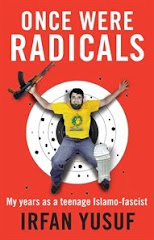
Irfan Yusuf is a Sydney lawyer and author of the forthcoming book Once Were Radicals. First published in The Canberra Times on 30 January 2009.

Delicious
Bookmark this on Delicious

Digg!

Get Flocked

Stumble Upon Toolbar

Sunday, September 14, 2008

US/ELECTIONS: Thou shalt ignore thy Muslim neighbour as thou ignoreth no one else?


Writing for a Newsweek blog, Michael Isikoff talks to the Vice-President of Alaska's Islamic Cultural Centre, a chap named Osama Obeida. No, Osama isn't a terrorist or a relative of a certain Saudi business family. Rather, he is a Palestinian-American who runs an art gallery with his 82-year-old dad.

There are only about 2,000 to 3,000 Muslims in Alaska, and, while there are no mosques, Anchorage (which is home to most of the state's Muslims) does have an Islamic Community Center, located in a rented office in a strip mall, where members pray on Fridays. But Osama Obeida ... said his group has never had any contacts at all with Alaska’s governor. No meetings, no invitations to state ceremonies, no pro forma letters commemorating the observance of Islamic holy days. “She has never taken the initiative ...”
Is this a case of the very Christian governor of Alaska not showing much love to her neighbours? The blog post continues ...

Osama Obeidi acknowledged that the Anchorage Muslim community has never reached out to the governor either—nor did it have any dealings with previous Alaska governors. “We don’t like to get involved in politics,” he explains.
OK, so members of this small community, like many Americans of various persuasions and no persuasion in particular, choose not to get involved in politics.

The blog post continues ...

Still, the lack of contact has left Alaskan Muslim leaders underwhelmed about Palin’s presence on the national ticket. “Maybe she doesn’t know we have a community of Muslims here,” said Lamin Jobarteh, a Wells Fargo banker (originally from Gambia) who is president of the Islamic center.
What on earth does the term underwhelmed mean in this context? Are Muslims expecting Ms Palin to visit them all the time or with some regularity? Are they expected to be excited or indifferent to Ms Palin's presence on the ticket?

Its not as though Alaska’s Muslims don’t have issues they’re concerned about.
What sort of issues? Peculiarly Muslim issues? Why must Muslims necessarily have issues different to the concerns of non-Muslim Alaskans? Why should journalists and reporters assume that certain faith-minorities have peculiar issues that they can (or necessarily must) see their governor about?

The blog post continues ...

Osama Obeidi said he and his father have been repeatedly hassled at Ted Stevens Airport when they fly to see their extended family in the Palestinian West Bank. “They keep us for three hours,” said Mousa Obeidi. "They ask us, “Where are you going? Who are you going to see?’” Osama Obeidi said he was even briefly arrested a few years ago when he landed in Germany after leaving Anchorage on his way to Jerusalem. That prompted him and other members of the Islamic center to seek a meeting with Sen. Lisa Murkowski to complain about their treatment. After the meeting, Osama Obeidi said the scrutiny from Homeland Security officials at the Anchorage airport tapered off. But, he said, the group never thought of raising its concerns with Palin.
OK, so they had hassles which people of certain appearance or background are commonly having with Homeland Security officials. Are these the types of issues one would see a state governor about? Does airport security come within the purview of a State Governor?

The blog continues ...

Bill McAlister, the governor’s spokesman, said Palin’s lack of interaction is not by design. “I don’t know that it's ever came up” he said when asked why the governor has never met with the state’s Muslims. “Certainly there was no attempt to exclude Muslims.”
Makes sense to me. But then, what about other groups? How does Ms Palin treat other minorities of similar size? This is where the blog post tries to get interesting.

By contrast, Palin has visited with members of the state’s Jewish community (about the same size as the state’s Muslim community) and spoke at an Anchorage synagogue last year. (Escorted by Sen. Joe Lieberman, she also met with representatives of the American Israel Public Affairs Committee at the Republican National Convention last week and told the group how she has an Israeli flag in her office in Juneau, according to David Gottstein, an Anchorage investment banker who invited her to meet with the AIPAC group.) But McAlister said this does not signify any bias against Muslims on Palin’s part—even if, as McAlister conceded, he doesn’t know whether Palin has “specifically” met any Muslima. “She’s not a bigot,” he said. “I’m not aware of anyone she has snubbed.”
Certainly Osama and his dad might find this disturbing. However, this is more because they are Palestinian and probably less because they are Muslim. Osama's dad was a refugee who left Ramallah for the United States in the 1950's.

Ms Palin has strong Assemblies of God beliefs. It is well known that charismatic churches in the United States are very pro-Israel. In this respect, they are close to many Jewish Americans. Further, virtually all US law-makers could be described as pro-Israel. Heck, even America's first Muslim congressman stated during his campaign that he hoped his first overseas trip would be to Israel.

Ms Palin's pro-Israel sentiments would probably be of equal concern to Palestinian Christians. Certainly many of my Palestinian Christian friends (and people I have met of that background) are concerned about the refusal of Western Christian churches to show sympathy to their plight.

Muslims are having a hard time as it is. I'm not sure if this kind of reporting is really doing them any favours. I think Muslims probably wished they could just be left out of things, and that people know them less as Muslims and more as ordinary Americans.

This kind of reporting also unnecessarily creates divisions between Republican Party supporters and ordinary Muslims (quite a few of whom would probably agree with Palin's strong pro-life and moral agenda). Muslim voters should be seen as voting on the same basis as any other voter.

After all, when interest rates go up and housing foreclosures increase, it doesn't just affect American Christians or Jews or athiests. National security also means (or at least should mean) protecting the liberty and security of all Americans regardless of race or religion. Because when the Twin Towers fell on September 11, the huge blocks of ice and concrete didn't somehow manage to fall in a manner which avoided Muslim firefighters or which didn't quite kill this young chap.


I'm not sure if this is really a case of Governor Palin ignoring her Muslim neighbours in a manner that she refuses to ignore any other group. Who knows? Perhaps a future Vice-President Palin might remind Americans that Islam really is a religion of peace, even if some of her supporters will frown and mutter.

UPDATE I: Click below to watch a recent al-Jazeera report on Alaska's first mosque.


Words © 2008 Irfan Yusuf

Delicious
Bookmark this on Delicious

Digg!

Get Flocked

Stumble Upon Toolbar

Monday, May 07, 2007

COMMENT: Ayaan Hirsi Ali on Jewish fundamentalism ...

Muslims often attack Ayaan Hirsi Ali for her criticisms of the Islamic faith and Muslim cultures. Anti-Muslims adore her for these very reasons, using Hirsi Ali's (often legitimate) critiques of Muslim culture as an excuse to attack all Muslims.

Now, Hirsi Ali's attacks on religion have extended to overly religious and fundamentalist Israeli Jews. The result is that she is beginning to lose favour with her old supporters, many of whom come from the Jewish circles she criticises.

In August last year, the Jerusalem Post newspaper published Hirsi Ali's views on Jewish fundamentalism ...

From my superficial impression, the country ... has a problem with fundamentalists ... The ultra-Orthodox will cause a demographic problem because these fanatics have more children than the secular and the regular Orthodox.
As a result of these comments, one far-Right Jewish blog has described Hirsi Ali as an ...

... intellectually challenged anti semite ...
So there you have it. When Hirsi Ali criticises Muslim extremism, she is applauded. But when she attacks the Israeli equivalent, she is hounded. Still, at least she is consistent, unlike so many of her (now increasingly former) supporters.

Words © 2007 Irfan Yusuf

Stumble Upon Toolbar

Friday, September 23, 2005

COMMENT: Muslims and the Holocaust

Nazi-hunter Simon Weisenthal passed away. He was perhaps the world’s premiere Nazi hunter. His centre built up an intelligence network that provided evidence leading to the trial and conviction of numerous people at all levels of the Nazi regime.

Yet for some Muslims, Weisenthal has been a problematic figure. His stated views on Palestinian rights were sometimes reminiscent of attitudes of some of the very people he was fighting. It seemed as if he lived in denial of Palestinian suffering.

But then, it is hard to blame him. For many holocaust survivors, Israel is a life insurance policy they wish they had access to when Hitler came to power. They lived in a Europe which promised and preached emancipation of Jews in the name of liberalism or socialism or secularism or some other ism.

Yet all the rhetoric could not face the tsunami of hatred built up over centuries toward the Jewish people. Jews were lambasted as Christ-killers, as nasty bankers and money-lenders, as being involved in a huge conspiracy to destroy Christianity and Western civilisation.

From time to time, I read some disgustingly anti-Muslim editorials and opinion pieces in newspapers. The suspects are well-known – Janet Albrechtsen, Andrew Bolt, Miranda Devine. Some are more subtle and sophisticated – Pamela Bone and Paul Sheehan comes to mind.

I imagine the hatred and venom that goes into these articles, and am reminded of a verse from the Qur’an which goes something like this.

Their lips speak hatred of you, but what their hearts conceal is much worse.
I sometimes wonder whether such editorials hide a deeper hatred which many in this country have toward Muslims. Today, people are able to say things about Muslims which they couldn’t say maybe 10 years or even 5 years ago. Today, a politician can stand up and describe me in Federal parliament as a “bomb thrower”, suggesting I have some links to terrorism.

Had that politician not been the human embodiment of all that is irrelevant and redundant in Australian politics, I would perhaps have ignored her. But then, I wonder – are her attitudes all that irrelevant? Is there an undercurrent of racism against Muslims in Australia?

I wonder whether David Hicks would receive more government support if he had not converted to Islam. I wonder if Schapelle Corby would have received the support she does if she had announced a conversion to Islam and not Christianity? But it goes beyond that.

I wonder if Aussie Mossie Ed Husic would have won the seat of Greenway at the last Federal Election if he had been born to a Bosnian Catholic family. I wonder if Paul Sheehan would have written about Husic’s religion a fortnight from the campaign. I wonder if some Young Liberals would have handed out a false how-to-vote in letterboxes speaking about Husic being “an asset to Islam”.

The attitudes we see in Christendom toward Muslims seem to find a mirror in what Jews saw in Germany and elsewhere in Europe in the first half of the 20th century. And that means that Muslim Australians need to learn some coping mechanisms from Jewish Australians.

The attitudes of the late Simon Weisenthal toward Palestinians should not blind us to the importance of learning to recognise the signs of xenophobia from our Jewish spiritual cousins.

Islamic and Jewish theology, law and culture have more similarities than differences. Today’s Muslims are being demonised in the same way Jews have been, the attitudes are centuries old and are locked into the Christian psyche.

Jews are Christ-killers. Muslims are Saracens or Moors or Turks, the Sick Men of the 21st Century. Muslims don’t understand “our” values and refuse to conform to “our” way of life.

Recently, I bought over $100 worth of books on Jewish culture. I have been wanting to especially focus on how Jews lived as persecuted minorities and survived for so long. As an Aussie Muslim, I feel like an endangered species. I fear a holocaust on the horizon. The rhetoric of conservative politicians, shock jocks and columnists makes me even more fearful.

Muslims don’t know what it is like to live as an oppressed minority with nowhere to go. We have only in the past 200 years been suffering real internal oppression and external domination.

Jews have been experiencing this for thousands of years. We need to learn from them how to keep our theology, our cultures and our memories alive. And many Jewish Australians are reaching out to us. In this regard, I was heartened to read the reaction of the peak body of Australian Jews, the Executive Council of Australian Jewry (ECAJ) in relation to the pseudo-debate on the wearing of hijabs in state schools.

If Jewish Australians, especially holocaust survivors, can find resonance in our current position, perhaps we need to learn from their experiences. Our current fears should bring us closer to those who share so much with us.

Let us learn from the victims of a holocaust so that we are prepared to perhaps face our own.

Words © 2005 Irfan Yusuf

Stumble Upon Toolbar