Wednesday, December 22, 2010

COMMENT: Wingnut wishes ...


Some comments on a recent piece of mine published on ABC's The Drum challenged me to write something really cynical about the Prophet Muhammad and Muslim countries. Apparently the piece should involve the Prophet Muhammad leaving his blessed tomb in Madina and hitting the road to see what he'd find.

I'm supposed to be expecting a fatwa followed by an international madding crowd by writing that ... wait for it ... shock horror!!! ... Muslim countries don't exactly reflect Muhammadan ethics and expectations.

So I might as well start drafting these wingnut wishes on this blog. Here goes.

[01] In Saudi Arabia, female-only sports have led to a government investigation. I'm not sure if there was an investigation into the running races the Prophet Muhammad had with his wife Aisha. Imagine the Mother of the Believers being taken into custody by Saudi Arabia's morality police.


DeliciousBookmark this on Delicious

Digg!Get Flocked

Stumble Upon Toolbar

Thursday, December 16, 2010

OPINION: Column for the December/January edition of the Crescent Times

How to make a Shaykh’s sides split

A traditionally trained Islamic scholar visited Sydney in September 2005 for a “Deen Intensive”, a funky way of saying that he had 30 ignoramuses like me sitting around him trying to learn something about their religious heritage.

The scholar was named Naeem Abdul Wali, though his American parents christened him Gary Edwards. For the purposes of this article, I’ll call him Gazza.

So Gazza needs somewhere to perform his evening prayers and to rest. Alf, a young Turkish Aussie who lived on a farm was hosting Gazza that evening. Alf and I go back perhaps 10 years. Alf had spent much of his youth as a Buddhist, before being brought back to Islam by his Aussie Sri Lankan wife who happened to have converted from Buddhism to Islam.

Alf took Gazza along to an old mansion in Auburn that once served as an x-ray and pathology lab but was now a hospice run by the followers of the Sufi order associated with the late Shaykh Muhammad Zahid Bursawi (also known as Mehmed Zahid Kotku).

Some years before, the hospice was located a few streets down. In 2001, I lived in the hospice for around 6 months.

Alf and I met up for coffee one day and decided that one of us should run for Parliament. It was the post-September 11 period, and we were sick of getting all jittery and nervous and defensive.

I was already thinking of throwing my hat into the ring for the Liberals in Reid, a federal seat that took in the Turkish heartland of Auburn. Alf encouraged me and promised to assist “whenever I could”. In Alf ’s case, “whenever I could” basically meant full-time around-theclock assistance. I have never seen anyone work so single-mindedly on a project. Alf was as convinced as I was that it was good for both of us for me to run. He insisted that we make a serious go of it.

At the time, I was living and running a little law practise from the hospice. Believe it or not, the hospice ended up being on the front page of the Sydney Morning Herald. My opponent was sitting member Laurie Ferguson, then Shadow Minister for Multicultural Affairs. My old mate Ross Cameron (then Federal MP for Parramatta) warned me about Laurie.

“Irfan, Laurie may look like a dill, but seriously he is no dill. Watch your back. Laurie likes to play hard. He’s a lovely guy socially, but politically he is an animal!” Ross warned.

And within a few days, I found out what he meant. I got a call from a Sydney Morning Herald journalist Pilita Clark who said Laurie had made a complaint about my not living in the electorate and telling fibs to the Australian Electoral Commission about where I lived. She asked me whether Laurie was telling the truth. My response to the journo was simple.

“Come and have a look for yourself.” 45 minutes later, she rang me again to tell me she was on her way. Alf and I quickly got the place as tidied up as we could without having a vacuum cleaner or even a broom.

Pilita was accompanied by a cameraman who seemed to enjoy the exotic surrounds of a very European bookshop. I posed for the camera in a variety of spots, including lounging like a beached whale on my mattress.

The next day, 24 October 2001, that image greeted readers of the Sydney Morning Herald. Months later, Liberal Senator Bill Heffernan was to describe the event as one of the highlights of the campaign. He cornered me at a Party meeting and politely remarked: “F**ing marvellous, Yusuf! You really showed those pr*cks, didn’t you! Absolutely f***ing marvellous.”

Here are some classic excerpts from the article that put the sufi hospice on the
front page of the election campaign …

There is a thin rubber mattress on the floor. A red sleeping bag. A phone cord
trailing across the drab carpet. A gym bag half-full of clothes, an outside toilet, no fridge, no chair and no table.

But this murky space at the back of a tiny Islamic book shop in downtown Auburn is home, insists Irfan Yusuf, the Liberal Party’s somewhat unconventional candidate for the western Sydney seat of Reid.

“Here it is,” he says, gesturing about the gloom. “I live here.”

Mr Yusuf’s Labor opponent, the longtime member for Reid, Laurie Ferguson, is not so sure, however, and neither is the Australian Electoral Commission …

Lounging on his mattress, he challenged Mr Ferguson to come down and check things out for himself. “Laurie can come here any time, day or night. Just get him to ring me on the mobile first, because I’m usually at Mustafa’s [the nearby kebab shop]. I’d be happy to introduce him to the Yusuf residence. And after that, we’ll go over and have a look at his bedroom.”

Acknowledging his rudimentary surroundings, Mr Yusuf said: “I’m a bachelor.”

“Obviously when the better half comes along, she will be insisting on some
improvements.”

… Mr Yusuf said: “At the end of the day, what counts is how you relate to the people you are claiming to represent.”

“The guy’s obviously desperate,” he said of Mr Ferguson, who won just under 72 per cent of the vote in the last federal election in 1998, making Reid one of the safest Labor seats in the country.”


Later, my old friend Emine, a waitress at Mustafas, told me how proud she was of me after reading the article. “It shows you are just an ordinary guy, just like all the other ordinary people in Auburn.”

But the proudest people of all were my Naqshbandi brethren. They felt their 5 seconds of fame for many weeks as the incident was widely reported in the local and overseas Turkish press. For the next few weeks, my poster was up across the wire fence that covered at least 5 blocks of a major Auburn street. It was later dubbed “The Great Wall of Irfan”.

But now, some 4 years later, Shaykh Gazza and the rest of us were on our guided tour. Abdul (a hospice teacher) showed Gazza an example of the technique being used to teach Arabic letters to the Sufi novices. But Gaz seemed more interested in what was on the back of the white plastic sheets. He turned one around and then looked in my general direction. He then showed me what he was looking at. There was my mugshot surrounded by green and black lettering and a Liberal Party logo.

“We put these to good use. There is a whole pallet of them in the other room,” Abdul said after we completed the night prayers. Gary looked at me and Alf. We looked back and him and at Abdul. Within a few seconds, we were rolling on the floor in hysterics, laughing till our sides nearly split.

Words © 2010 Irfan Yusuf

DeliciousBookmark this on Delicious
Digg!Get Flocked

Stumble Upon Toolbar

Tuesday, December 07, 2010

INDONESIA: Aussie Muslims learn Islam from Republic of Indonesia

The following article appeared in the Jakarta Post on 22 January 2005 and coincided with the visit of 5 delegates (including yours truly) as part of the Australian Muslim Leadership Exchange Program organised by the Australia Indonesia Institute. It was also published on The Aussie Mossie blog.

A group of Australian Muslims are currently visiting Indonesia to take a closer look at Islam here, which is often, if not most of the time, seen as a radical religion in the neighboring country.

Irfan Yusuf, an Australian newspaper columnist, told The Jakarta Post on Wednesday that many Australians were not aware of Indonesia's two moderate Muslim organizations Nahdlatul Ulama (NU) and Muhammadiyah.

"Australians may only know Ba'asyir. Not many Australians, including Australian Muslims, know NU and Muhammadiyah," said Yusuf.

NU, which claims to have around 40 million members, is the country's largest Muslim organization, followed by Muhammadiyah, with around 25 million. Muslim cleric Abubakar Ba'asyir, who is currently serving time for immigration violations, was tried and acquitted for alleged links to regional terrorist group Jamaah Islamiyah (JI).

JI, which is believed to be a regional group of Osama bin Laden's terrorist network al-Qaeda, has been blamed for a spate of terrorist attacks in the country since 2000, including the deadly Bali bombings in October 2002, the JW Marriott Hotel bombing in Jakarta in 2003 and the Australian Embassy bombing in September 2004.

Yusuf, along with four other Australian Muslims, arrived in Indonesia under the Australia-Indonesia Institute's Young Muslim Leaders Exchange Program. They are scheduled to spend a week in Jakarta, two days in Bandung and five days in Yogyakarta to meet with their counterparts.

The program was established in 2002 to help address misperceptions about the role of religion in both countries by bringing young Indonesian and Australian Muslims into direct contact, so that they may experience life in each nation and observe the practices and interactions between Muslims and non-Muslims in a broad range of contexts.

In Australia, Muslims are a minority, numbering about 300,000 people, and are exposed to radical Islam because of a lack of access to moderate sources.

Most Islamic books and brochures circulated are published in Saudi Arabia, which carry a more puritan version of Islam called Wahhabi, the official school of thought there. "Although there have been Islamic books in English published in the United Kingdom or the United States recently, books from Saudi Arabia are still the cheapest and easiest to get," said Rowan Gould, the secretary of the Islamic Council of Victoria.

Gould, whose mother is a native of Padang, West Sumatra, admitted that the demand for Islamic books among Australian Muslims was still very basic, such as books on how to observe prayers and simple fiqh (law).He said not many Australian Muslims -- who come from 70 different ethnic backgrounds -- studied books written by Indonesian Muslim scholars, although many Australians speak Bahasa Indonesia. "Only a few of us (Australian Muslims) speak Bahasa Indonesia. We should learn more about Islam in Indonesia," Gould said.

Several leading Indonesian Muslim scholars have written books and developed progressive thinking on Islam, using new interpretations of the Koran and Hadith (a collection of the Prophet Muhammad's deeds and sayings), which they believe are still relevant to contemporary challenges, such as democracy, human rights and gender issues. The problem is that these books are written in Bahasa Indonesia, which make them less accessible for other Muslims abroad.

The Young Muslim Leaders Exchange Program may be more effective if it went beyond visits and meetings among young Muslims, and an exchange of knowledge and ideas was held on Islam as a religion of peace.


DeliciousBookmark this on Delicious

Digg!Get Flocked

Stumble Upon Toolbar

Wednesday, November 24, 2010

COMMENT: Why some young people get pushed toward extremists

My views have changed a fair bit on this subject. What follows is what I thought on Thursday 10 November 2005 whrn this piece was first published.

Dr Ameer Ali, President of the migrant-dominated Australian Federation of Islamic Councils, is worried about the spectre of rednecks hating Muslims.

He should be more worried about young Muslims who may be tempted to blow themselves up and take a whole heap of innocent people with them.

Rednecks are a problem. They do bin Ladin’s work by making ordinary law-abiding mainstream Aussie Mossies feel isolated and marginalised. Bin Ladin wants Muslims to feel isolated in the hope they will join his mad pseudo-jihad.

But why should young well-adjusted educated Australian-born youth be attracted to the message of hate? Is it a few government foreign policy blunders or paranoid tabloid columnists that push young people toward extremism?

The fact is that the leaders complaining about the backlash are themselves largely responsible for the radicalisation of some young Muslims. These leaders have a lot to answer for.

On 2 March 2000, the Supreme Court of NSW delivered its judgment in a marathon case between two peak Muslim bodies. The Islamic Council of NSW took on Dr Ameer Ali’s body, spending thousands of dollars arguing over a range of matters.

Who knows how many thousands of dollars were spent in legal fees. Both sides hired big-city law firms, and both had senior barristers appearing for them at the hearing.

These two bodies consist of member societies which are dominated by first generation migrants. Virtually all mosques have imams trained overseas with poor command of English. Most imams have very little understanding of the problems faced by young people growing up suspended between parental cultural pressures and mainstream Australian life. These imams practise a cultural form of Islam with little relevance to Australian conditions.

The imams are employed often on short-term contracts and are poorly paid. They must support the existing executive committees managing the mosque. The imams deliver their sermons in Arabic and the language most commonly spoken by the ethnic committee members managing the mosque.

Many mosques bar or discourage women from attending. Young people are often discouraged from participating in the executive committee.

These societies join together to form State councils which come together to form the Australian Federation of Islamic Councils (AFIC). But in recent times, AFIC has spent much of its time and resources trying to remove councils it doesn’t like.

In New State Wales, AFIC had formed 2 Islamic councils in a space of 5 years. It created the Supreme Islamic Council (often jokingly referred to as “the Supreme Pizza Council”) to replace the original Islamic Council. It then kicked out the Supreme Pizza Council and replaced it with the Muslim Council of NSW (often jokingly referred to as the “Super-Supreme Council”).

A bit like John Howard having a fight with Morris Iemma and then kicking out New South Wales from the Commonwealth to be replaced by New Zealand.

While all these silly political games are being played, young Muslims are searching for answers and meaning to their lives. Most mainstream imams cannot help them, and many are forced to learn themselves by reading books. And so many books freely distributed in Australia by peak bodies and others teach an isolationist theology that encourages Muslim youth to emphasise their differences from their fellow Australians.

And because the imams cannot speak English and the mosques are dominated by migrants disinterested in the problems of young people, many youth are attracted to those whom Sydney Radio personality Mike Carlton describes as the “thick-Sheiks”.

Whatever we think of these thick-Sheiks, one thing most have is the ability to speak English. Also, the thick-Sheiks have established centres where activities and support services for young people and Muslim converts are provided.

The thick-Sheiks make use of modern technology and means of communication to get their message across. Because they actually listen to young people, the thick-Sheiks are able to provide services young people want – sporting and fitness activities, multimedia products, internet access and other facilities you would find in any local youth centre.

But most important, the thick-Sheiks are able to communicate their fringe ideas in a language young people can understand. And because the thick-Sheiks have a simplistic and volatile theology, their charisma often wins over young people with little exposure to mainstream Islamic ideas.

You rarely see thick-Sheiks preaching in mainstream mosques. They know that Muslim migrants brought up on mainstream Islam can recognise a fringe sect when they see one. In fact, many thick-Sheiks have been banned from local mosques.

The migrant parents may recognise the thick-Sheiks as representing a fringe cult. But what would young people know? They can’t understand the sermon down at the local mosque. And the elders at the mosque arrange things in a manner local kids simply cannot relate to.

So you have young people reading isolationist literature distributed free by peak bodies. They are often made to feel unwelcome at the mosque, and the imam can’t help them with the normal problems most young Aussie face. Yet a few suburbs away is a centre where the imam speaks English and where you can play some sport and meet other young people in the same predicament.

And so you have very Australian kids being pushed by migrant Muslim leaders into the waiting arms of fringe extremists. Yet some peak bodies continue to complain about being marginalised by rednecks. But so many peak body leaders have been part of community structures that isolate and alienate Aussie Muslims, both the young and converts.

Methinks the only rednecks out there (apart from some Liberal backbenchers) are those migrant leaders who divide their faith-community along ethnic lines and push young Aussie Muslims toward fringe groups.


Words © 2005-10 Irfan Yusuf

DeliciousBookmark this on Delicious
Digg!Get Flocked

Stumble Upon Toolbar

COMMENT: Scattered facts on Muslim Australia

From the Aussie Mossie blog published 23 May 2006 ...

When talking about Aussie Muslims, it’s important that commentators have accurate information based on proper research. Sadly, Muslim institutions claiming to represent Muslim communities haven’t seen the task if researching Muslims as being a priority.

Hence, the task has been left to governments and individual researchers. One such research effort was carried out by a team of researchers from the University of Melbourne and led by Professor Abdullah Saeed.

The results of this research were published in a 2004 study entitled Muslim Australians: Their Beliefs, Practices & Institutions. The study was based largely on the 2001 Census.

It would, in my opinion, be the height of ignorance for anyone to write or comment on Muslim issues without having read this study. So many myths are shattered just on pages 5 and 6.

For instance, many people presume that Lakemba has the highest concentration of Muslims of any suburb in Australia. In fact, the highest concentration is found in Dallas, Melbourne (39%). In terms of Sydney, Auburn has a higher Muslim concentration than Lakemba or Bankstown.

Often Muslim loyalties to Australia are questioned. Yet an overwhelming majority of Muslim migrants (221,856 out of a total of 281,578, some 79%) have obtained Australian citizenship.

The terms “Muslim” and “Lebanese” are often used interchangeably. It is assumed that most Lebanese are Muslims and vice versa. Yet the most frequently cited country of birth for Australian Muslims is Australia (some 103,000). This is over three times the number of people born in Lebanon (29,321).

It is also assumed that most Muslims speak only Arabic. Yet the overwhelming majority of Muslims are proficient in English, both written and spoken.

Muslims are often accused of being hostile to mainstream Judeo-Christian Australian values. Yet Muslim rates of marriage are far higher than the national average. 51% of Aussie Muslim males are married by the age of 34. Some 41% of Muslim females are married by the age of 24. De facto relationships are uncommon.

The historical presence of Muslims in Australia is also not well-known. On page 7 of the Saeed study, mention is made of Saib Sultan, a settler who arrived in Australia in the early 19th century. After arriving at Norfolk Island, he later settled in Van Dieman’s Land (Tasmania) in 1809 where he worked on 30 acres of land with his wife and family.

Muslims arrived in Australia as both convicts and settlers. Later, during the 1870’s Malay Muslim divers were recruited to work on Western Australian and Northern Territory pearling grounds. By 1875, some 1,800 Malay divers were working in Western Australia.

Australian troops are part of a Coalition force seeking to restore order in Afghanistan. Yet little of the Afghan contribution to Australia is taught in schools. Those complaining about the over-emphasis on Aboriginal culture and history are themselves almost always guilty of neglecting non-European contributions to Australia.

The Afghan (and in many cases, Baluchi and Pathan from what is now Pakistan) cameleers were recruited to assist in early European exploration of the inland Australia. During the late 19th century, they controlled the camel transport industry and played a vital role in the economic development of early Australia.

Afghans were largely responsible for the transport of goods through inland Australia, for laying telegraph and railway lines and for establishing many outback settlements. Cameleers transported goods and supplies to gold miners and to outback settlements.

The contributions of Muslim Australians to our economy and well-being are also not mentioned enough. Often this is caused by a reluctance of Muslims in senior positions to identify themselves by their faith. There is a perception that being open about one’s Islamic faith can be a career and social liability. Negative remarks made by a tiny minority of political and church leaders don’t help in this regard.

Words © 2006-10 Irfan Yusuf

DeliciousBookmark this on Delicious

Digg!Get Flocked

Stumble Upon Toolbar

Sunday, November 21, 2010

COMMENT: al-Ahbash to speak at Melbourne University??

No, my Lebanese Moslems Association friends, don't get over-excited. It's just a post-graduate research conference that juist happens to be hosted by a university department. It's quite normal for university departments to allow all kinds of people to submit abstracts and speak at conferences.

Indeed at least one sufi (or so he once claimed) deviant fitna-mongering former Liberal Party member has spoken at a conference organised by the Centre for Excellence in Islamic Studies.

And it would not be fair to suggest that Mustapha Kara-Ali, an engineering graduate and a PhD student at the International Islamic University of Malaysia has only one layer of identity - being an admirer of one religious leader in Lebanon known as Abdullah Hareri al-Habashi and allegedly belonging to a group known as "al-Ahbash".

This same group was strongly favoured by a former Australian government for assisting with deradicalising (whatever that means) Muslim youth. The result of over $150,000 in Australian taxpayer funded largesse was one manual.

That manual was produced under the auspices of an independent school founded and managed by followers of the said religious scholar in Lebanon. In his bio for the conference, Kara-Ali refers to that manual:

In 2007, he proposed and led a Government-Community-Partnership named the Building Identity and Resisting Radicalisation (BIRR) Initiative. He was also the lead-author of its publication The Way Forward - an Islamic Mentoring Guide for Building Identity and Resisting Radicalisation (2008), which was academically endorsed.


I'm not sure who "academically endorsed" the book, or indeed how something can be "academically endorsed". Did they send it to a university academic who said some relatively nice things about the layout? Did they sit on some steering committees and provide some general direction? Or did it go through a peer review process? Is it being published in an academic journal? Or just being excerpted in Quadrant Magazine?

I was amused by this entry:

In 2007, Mustapha was selected by DFAT to join a delegation to Malaysia to strengthen people-to-people relations ...


I wonder how DFAT staff on that trip found him to work with. What was his response to a presentation on the rights of religious minorities in Malaysia by the Malaysia Chinese Association (MCA)? I really cannot say. I'd have to ask others who went with him. I wasn't in that delegation. I went in 2006 instead. But I don't mention it in a bio for an academic conference.

One thing I would shove in a bio (if I had the chance) was hanging out with the wonderful Imam Feisal Abdul Rauf of New York. Imam Feisal has had a few issues of late with imbecilic fruitloops. Many who happily endorsed Imam Feisal are now having second thoughts due to political and social pressures arising from the so-called "Ground Zero Mosque" project.

When Kara-Ali attended a conference organised by Imam Feisal's American Sufi Muslim Association entitled Muslim Leaders of Tomorrow, he had this stunning bio:

Mustapha Kara-Ali is a 29-year-old representative on the Prime Minister's Muslim Community Reference Group (MCRG). He represents second generation Australian Muslims. The Bulletin Magazine recently profiled him as "an active mentor and educator within the Australian Muslim youth community since 1995", and last month he was introduced on the ABC's Religion Report as "an agent for change". Kara-Ali has been an outspoken critic of some ethnic leaders in the community for what he says is their failure to address the concerns of an emerging community of homegrown Muslim youth in Australia. He believes that sections of the Muslim community can be too defensive and fail to articulate issues in which they believe strongly.

Mr. Kara-Ali has a Masters degree in Engineering from UNSW and has worked as a consultant for Sydney University and CSC. He is a NAATI accredited translator in Arabic, and has a graduate diploma in media studies. Mustapha has appeared on the Channel 9 Sunday Program, Channel 7 Today Tonight, SBS Insight, ABC Religion Report and other media fronts. He has authored opinion pieces in metropolitan newspapers on Muslim issues such as Muslim integration in the West, identity struggles and immigrant marginalization. In talking politics, Mustapha's approach is informed by the conviction that Muslims in the west are part of the solution, not the problem.


For some reason, Kara-Ali's attendance at such a prestigious international forum isn't mentioned in his conference bio. Is he also now embarrassed to be associated with Imam Feisal?

UPDATE I: It will be interesting to see if Mr Kara-Ali's BIRR makes a bid for the latest round of government-sponsored deradicalisation dosh. According to a recent report in The Australian:

INDIVIDUALS believed to be at risk of falling prey to the lure of violent extremism are to be targeted in a series of community-based programs under the federal government's $9.7 million counter-radicalisation strategy.

Attorney-General Robert McClelland is inviting community groups to apply for federal funding to run grassroots projects to steer young people away from extremist ideology.

Grants of between $5000 and $200,000 are to be allocated to organisations in Victoria and NSW as part of the new Youth Mentoring Grants Program, to be launched by Mr McClelland today.

"The program will support activities that directly assist young people to disengage from intolerant and radical ideologies and encourage positive and constructive participation in the community," Mr McClelland said yesterday.


Words © 2010 Irfan Yusuf

DeliciousBookmark this on Delicious
Digg!Get Flocked

Stumble Upon Toolbar

Saturday, November 20, 2010

HUMOUR: Struggling to replicate a scholar bio


I just read the biography of a prominent Shaykh al-Hadith Fadhilat al-Shaykh Maulana Mulay Kiai Ayatullah Hujjat al-Islam Abul Bayan Pir Murshid on the website of Seekers Guidance, an offshoot of Sunni Path.

I am totally bowled over by the greatness of this shaykh. I wondered what it would be like to replicate his bio. I'll give it a go.

“Know that if you pray for courage, Allah will not give you "courage”, but put you in real situations where you have the opportunity to cultivate courage; if you pray for patience and strength, that He will place you in situations so that you may strengthen yourself with patience. That is the true meaning of tests of life that Allah bestows upon you- they are all truly a Magisterial Favour upon you from your Lord, The Wise!” -- Imam Afroz Ali


"Shut the hell up, you right wing fascist bull artist!!" -- Irfan Yusuf's fiance

Imam Afroz Ali can clearly remember himself as a child watching his father (may Allah sanctify his soul) pursue his two greatest passions: serving others and teaching. This powerful relationship with a man who was both friend and father, who nurtured him in sometimes surprising ways, inspired in Imam Afroz a deep understanding the power of role models and leaders to nurture excellence in an individual. Inspired to be a part of positive action in his community, Imam Afroz began the journey of a student of knowledge.


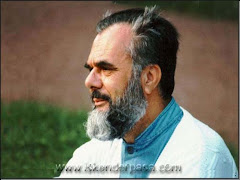
Irfan Yusuf can clearly remember his father, a university academic, telling him to get off his fat backside and do some study instead of wasting time reading Maududi books or hanging out with the Tabligh Jamaat. As a teenager, Irfan in turn wondered why his father wasted so much time listening to Mehdi Hasan ghazals when U2 has just released their Under A Blood Red Sky live EP. I mean, who could compare this ...


... with this ...


????

Still, Professor Yusuf did instil in Irfan a love of books and an insistence that one should only claim the academic qualifications one actually holds. May Allah grant the good Professor a long life, and may God transform the grave of Abu Afroz into a garden of divine light.

Those studies have taken Imam Afroz from university-based academia (the Islamic University in Madina, Saudi Arabia) to more traditional studies in Yemen, the United States and Mauritania. He has received licences to teach from some of the most esteemed Islamic Scholars of our time. He has also travelled to Cairo, Egypt for further studies in Islamic Jurisprudence with Scholars at al-Azhar University and is on the Board of Advisors at Markaz Aleem in Cairo, Egypt.


Irfan obtained his license to drive a motor vehicle from the NSW Motor Registry in Ryde. He has had his license suspended on a number of occasions. Irfan's studies have taken him from a pre-school in Boronia Park (behind the tennis courts) to Ryde East Primary School to St Andrews Cathedral School to Macquarie University to the University of Technology Sydney. Each year, Irfan completes at least 10 compulsory professional development (CPD) points of training.

Irfan studied in a Karachi madressa at age 6 where an oversized Maulana (may Allah have mercy on him) used to bash the crap out of him and all the other students (may Allah definitely have mercy on the Maulana!). He was also brainwashed by his darling mother with copious amounts of Tafhim al-Qur'an, Khutnaat, Tablighi Nisab, Behishti Zewar and numerous other Urdu books printed on cheap rice paper. Irfan spent a fair amount of time trying to figure out what kind of Muslim he was. Don't expect him to write it all here. You can spend arouund A$25 and read 80,000 words of the stuff by clicking here.

Irfan did attend a whole year of masters level lectures on public international law at ANU. He handed in assignments and even passed the course but got bored sh*tless with the degree. Presumably that means he has an ijaza in public international law and can now lecture at Harvard or the Islamic University outside Madina. But he won't tell anyone that, and will let his future students and other gullible people assume that he has a full degree in international law from ANU and/or that he held an academic post at ANU.

to be continued ...

Words © 2010 Irfan Yusuf

DeliciousBookmark this on Delicious
Digg!Get Flocked

Stumble Upon Toolbar