Showing posts with label Morocco. Show all posts

Wednesday, January 28, 2009

FILM: Journey to Mecca: In the footsteps of Ibn Battuta

Here is the text accompanying the trailer. Hopefully this will hit the Sydney IMAX. Find out more about the movie at the website here.

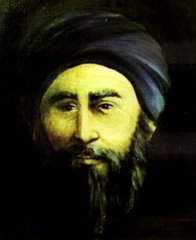
Journey to Mecca tells the story of Ibn Battuta, (played by Chems Eddine Zinoun) a young scholar, who leaves Tangier in 1325 on an epic and perilous journey, traveling alone from his home in Morocco to reach Mecca, some 3,000 miles to the east.

Ibn Battuta is besieged by countless obstacles as he makes his way across the North African desert to Mecca. Along the route he meets an unlikely stranger, the Highwayman (played by Hassam Ghancy) who becomes his paid protector and eventual friend. During his travels he is attacked by bandits, dehydrated by thirst, rescued by Bedouins, and forced to retrace his route by a war-locked Red Sea.

Ibn Battuta finally joins the legendary Damascus Caravan with thousands of pilgrims bound for Mecca for the final leg of what would become his 5,000 mile, 18 month long journey to Mecca.

When he arrives in Mecca, he is a man transformed. We then experience the Hajj as he did over 700 years ago, and, in recognition of its timelessness, we dissolve to the Hajj as it is still performed today, by millions of pilgrims, in some of the most extraordinary and moving IMAX® footage ever presented.

Ibn Battuta would not return home for almost 30 years, reaching over 40 countries and revisiting Mecca five more times to perform the Hajj. He would travel three times farther then Marco Polo. His legacy is one of the greatest travel journals ever recorded. A crater on the moon is named in his honour.


And here is a video showing the making of the film.


Delicious
Bookmark this on Delicious

Digg!

Get Flocked

Stumble Upon Toolbar

Saturday, March 22, 2008

MOROCCO: Liquid gold ...


I was clearing through my old editions of the Australian Financial Review when I came across an article hiding in the Travel section of the December 21-27 edition. The article was reproduced from the New York Times and was given the headline of “A holiday that guarantees you strike liquid gold”.

The liquid gold in question was the oil of a nut called argan. The argan tree which produces the nut can be found in a coastal town of Morocco called Essaouira, once a Portuguese fishing village now populated largely by Berbers.

Essaouira apparently was once a huge hippy hang-out, boasting of the patronage of such greats as Cat Stevens and Jimi Hendrix. Today, the town is more famous for its liquid gold, the paste produced from the argan nut which has become a major source of income for local Berber women.

Morocco may not be the most democratic nation on earth, but its King (Muhammad VI) is regarded as having a more enlightened attitude when it comes to women’s rights. The King has started supporting the formation of coops managed by women which produce argun oil that then makes its way into various skin cremes. Apparently the argan oil and paste have a high concentration of Vitamin E, not to mention phytosterols which are good for treating scar tissue and lacklustre skin.

So how is the oil/paste made? Amy Larocca writes in the AFR/NYT story ...

Approaching Essaouira’s sandy-colored ramparts, passing the olive groves and grazing donkeys, you see signs announcing women-run argan cooperatives: Argan Co-Op, Women’s Argan Collective, Miracle Oil. And so on. If you pull over to a cooperative, the Berber women — and it is only women who make argan oil — will often invite you in to watch them work. In most of the cooperatives, the older village women sit in the courtyard and work as the younger bilingual girls walk you around, giving a tutorial about the process. (Pull over too many times, though, and be prepared to hear all about the process again. And again.)

The nuts, which look like a cross between a walnut and an almond, are picked out of the fruit of the squat, gnarled argan trees that dot the yellow hills above Essaouira. Depending on the season, there might be goats up in the branches, munching on the fruit. The nuts destined for salad oil are roasted on an open flame over a large steel drum, like chestnuts, which brings out their distinctive peppery flavor; those that will be used for skin- and hair-care products are left raw.

The women first crack the shells with sharp stones. They then place the kernels between two Flintstone-size slabs of rock, grinding them into a brown paste, which resembles chunky peanut butter. The paste, kneaded by hand to extract the oil, transforms into a solid hunk and is sent to nearby factories, mainly in Agadir, where more oil is extracted by a press. Some is made into soaps, creams and shampoos, but it is the pure oil that is most sought after.

And how are the coops managed? How do they get funding? What kind of support do their receive from local and overseas investors?

... thanks to the substantial efforts of the Moroccan King Mohammed VI (who has been praised for his efforts to promote women’s rights) and the local government, the oil is being exported worldwide, moving from the mud-and-stone co-ops into spas and Sephoras around the world.

Because the extraction of argan oil is a labor-intensive task perfected by the Berber women native to the area (it takes a few days to produce one liter), the government has established a fund for the cooperatives. Outside groups, like the government of Monaco, have gotten involved as backers. Women from the villages nearby are invited to work half days (so they can still tend to their families) in exchange for fair wages and good working conditions. Eventually, the cooperatives should pay for themselves. Unesco has designated the 10,000-square-mile argan-growing region as a biosphere reserve.

Meanwhile, more Western cosmetic companies are starting to distribute this “liquid gold,” as it is often called. Liz Earle, who runs an organic skin-care line in England, uses argan oil that she buys from two of the cooperatives in Essaouira in her Superskin Concentrate.

Yep, globalised capitalism can benefit the otherwise economically vulnerable. And it seems not all Muslim monarchs are despots.


Words © Irfan Yusuf 2008

Stumble Upon Toolbar

Monday, June 25, 2007

PROFILE: Writing About Muslims (in English & Spanish) cont ...

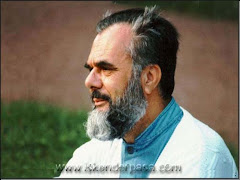
Just over a year ago, I started writing about a Spanish author the New York Times described as “The Anti-Orientalist”. Juan Goytisolo is regarded as the greatest living writer in the Spanish language. He writes extensively on medieval Islam’s impact on Western civilisation as well as on the plight of Muslim immigrants struggling to find a place in modern Europe.

With continuing interest on Islam in Europe, it is perhaps a good idea to re-visit this author who was profiled at length in the New York Times Magazine in an article by Fernanda Eberstadt on April 16 2006.

[01] During the 1990’s, Goytisolo wrote a series of essays on the Muslim world entitled Landscapes of War. In that series, he warned that radical Islam is mobilising a generation impoverished and disenfranchised by the disastrous experiments of post-colonial Arab governments with the rhetoric of nationalism and secular socialism which thinly veiled the reality of military dictatorship.

[02] Goytisolo compares more theocratic regimes like Saudi Arabia as being like centuries of Spanish monarchy following the Reconquista of Ferdinand and Isabella. This was a society characterised by “intransigent homogeneity” and “autistic self-absorption and inquisitorial vigilance”. That regime used gold from the American colonies in the same way Saudis use oil wealth – not on real development or reform but rather on hounding dissidents and providing religious and political elites with ever larger castles.

[03] Bush’s invasion of Iraq is described in a recent essay as “the illegitimate war of an illegitimate president”, a crowning catastrophe in a series of US blunders in the Muslim world. That series included American backing of Saddam Hussein and the Afghan Mujahideen/Taliban during the 1980’s as well as US support of unpopular and repressive regimes in Egypt, North Africa and the Gulf.

[04] Goytisolo is not all negative. He describes “seeds of modernity” in the Arab world, and hopes Islamist parties are tempered and matured by their participation in national politics.

[05] Goytisolo lives in the Jemaa el Fna in Marrakesh’s old quarter. This is a square where open-air storytellers, snake charmers and witch doctors ply their trade. Goytisolo has struggled to keep Jemaa el Fna’s original character against attempts by the government to turn the place into a parking lot. It is now classed by UNESCO as a site preserving “the oral history of humanity”.

[06] Goytisolo is a strict secularist, allergic to the mingling of state and religion. He loves the popular Islamic traditions of North Africa and Turkey as well as the rich cultural and religious heritage of Arab civilisation. However, he isn’t pleased by some puritanical strains of political Islam that are trying to displace this heritage. Goytisolo says:

I am against all fundamentalisms … The Muslim world needs to do an autocriticism, to take what’s good from other cultures, prepare the way for social and economic change and not merely recall the extinct glories of Al Andalus.
Goytisolo supported the 2004 ban in France of religious symbols in state schools.

... to be continued ...

Words © 2007 Irfan Yusuf

Delicious
Bookmark this on Delicious

Digg!

Get Flocked

Stumble Upon Toolbar