Showing posts with label Christianity. Show all posts

Sunday, December 25, 2016

COMMENT: The significance of Melbourne's Anglican cathedral

I haven't posted on this blog for ages and ages. This post will be spontaneous and not have a huge amount of organisation or direction. Sorry.

It's Christmas eve and I should be enjoying my holidays in Tokyo. It's winter here and Christmas is little more than a retailing gimmick. Christians are a minority in this largely Buddhist/Shinto nation. Churches are about as common as mosques. 

In this part of the world, no one seems to have the same hangups that Australians do about security and terrorism and all that stuff. The biggest security threats are China and North Korea. Muslims are more known as expat workers or tourists, just as Christians (and Jews) are.


While I've been here, my friends in Australia have had to content with a large terror-related raid in Melbourne. The alleged plot was to attack St Paul's Cathedral in the heart of the city.

I'm not sure how many Muslims:

a) understand the significance of St Paul's Cathedral

b) appreciate the timing of an attack on Midnight Mass or a late night service

c) are aware of the kinds of people who attend such services

I attended an Anglican Cathedral school in Sydney. A cathedral is the main church in a region or city. It is almost always the largest church in size and capacity, and is usually built and designed in the most ornate fashion. Australian Christianity is just over 200 years old, but our cathedrals are modeled on European structures much older.


An attack on St Paul's Cathedral i Melbourne would be the equivalent of an attack by Christian or Hindu extremists in Indonesia on Masjid Istiqlal. Or an attack in Lahore on Badshahi Masjid. Or an attack in Sarajevo on the Gazi Husrev Beg Cami. 

Stand opposite St Paul's Cathedral on Flinders Street and you will see a large placard that reads "Refugees Welcome Here". Refugees from all across the globe. Largely Muslim refugees. This Anglican institution opens its doors to the most vulnerable Muslims.

Speaking of Anglicanism and the Anglican Church, I spent a afew monthss working as a solicitor for Anglicare in a poor town in the La Trobe Valley. Anglicare offices provide services to people of all denominations including Muslims. Anglicare hires Muslim staff. I went to an Anglicare Christmas event for foster kids and their families. There were lots of women there in hijabs, all Angliicare clients.

Anyway, getting back to Midnight Mass, an event I've attended on plenty of occasions in Sydney (though admittedly at St Mary's Catholic Cathedral). The Anglican church (also known as the Church of England) remains the dominant church in Australia, though like other established churches it is facing stiff competition from charismatic churches such as Hillsong. 

But the Anglican church's fastest growth is not in Australia. Instead it is in Africa, in countries like Kenya and Nigeria and South Sudan. There are significant Anglican communions in Pakistan and India. When I started school, the school captain was a Pakistani Christian whose father was an Anglican priest.

Midnight mass would attract Anglicans from across the ethnic and linguistic spectrum of Melbourne Anglicanism. An attack on this congregation would not have merely affected "rich white people". It would have hit poorer families, including refugee families from South Sudan and immigrants from Pakistan and Indonesia.


I've often been stunned at the variety of costumes worn at Midnight Mass. Women decked out in saris and shalwar kameez and other cultural dress from Kenya and Vietnam. 

Imagine if an attack had gone ahead. The casualties would have been enormous. People from across Australia's multicultural spectrum would have been hurt. And all on Christmas, a time of celebration and worship and families and goodwill and peace on earth.

But as we all know, ISIL love attacking big targets, whether a large crowd in Istanbul or Karachi or Iraq or Syria or Tunisia. Whether Eid or Ramadan or Ashura, ISIL have no respect for holidays or sacred days or worshippers or mosques or shrines. Why would they care about our church services and congregations?

Stumble Upon Toolbar

Sunday, January 02, 2011

REFLECTION: Why Christmas is an Islamic Time of Year ...

From the Aussie Mossie blog first published 05 December 2005.

Christmas is hardly a fortnight away, and already some people feel affronted. What puzzles me is that some of these people claim to feel this way because of their Muslim faith.

Yet anyone who understands what Christmas is about will see nothing in it offensive to Muslim sensibilities.

Muslims believe the Jesus Christ is the Messiah. They believe his birth occurred by immaculate conception to the Virgin Mary, an miraculous act of direct Divine intervention. Muslims do not dispute that Jesus was born in Bethlehem, presently a Palestinian town in the West Bank.

You cannot be regarded as a Muslim if you do not believe in these key events of Christmas. The nativity scene is as much part of the Qur’an (the Muslim scripture) as it is of the New Testament.

I have the benefit of being exposed to both Christian and Muslim religious traditions. I attended Sydney’s only Anglican Cathedral School. I studied the New Testament in Divinity classes and attended weekly chapel services. My Indian Muslim parents insisted I be part of all Christian activities of the school.

At the same time, as a child, I grew up with the Qur’an. I learnt about the chapter of the Qur’an named after Mary which describes the nativity scene in great detail. In that chapter, it states that Mary chosen above the women of all nations and ages for the sacred task of giving birth to God’s Messiah.

Today, Bethlehem is a city where Muslims and Christians celebrate Christ’s birth together. It is not uncommon to see Muslims seated in the pews of the Church of the Nativity. During the most recent Israeli incursion into Bethlehem, both Muslims and Christians sought refuge in the Church.

Both ancient and modern realities of Bethlehem bring the two communities of Christ together. It makes no sense for Muslims to oppose the celebration of Christmas. In this regard, comments attributed to the Forum of Australia’s Islamic Relations (FAIR) in the Sunday Mail on 4 December are cause for concern.

In a press release dated 5 September 2005, FAIR director Kuranda Seyit denied suggesting that Christmas should be phased out of Australian life. The comments attributed to FAIR are certainly not echoed by Muslim leaders in other parts of Australia.

Of course, some will argue against Christmas being used to sell products. Even some Christians feel that Christmas is becoming too commercial, with more emphasis being placed on storewide sales than church services.

I personally feel that the sales themselves are a reflection of a broader Christmas spirit. Christmas is about celebrating Christ’s mass, the birth of Christ. It is a time when God showed His divine generosity by sending His Messiah to spread a message of love and compassion.

The New Testament Christ is a man who made time for the most marginalised members of society – tax collectors, sex workers and lepers. The Christ of the Qur’an was a man who brought the message of God’s mercy and love. Both versions involve celebrating a man whose life was itself a celebration of human kindness and generosity.

It therefore makes sense that people exchange gifts during this time. Retailers who choose to cash in on people’s generosity by offering incentives and sales for people are hardly doing society a disservice.

Islamic teachings state that money should continue to circulate through the economy. Money grows when it is in motion. Like still water stagnates, hoarded wealth is a source of many diseases of the heart. The cure for such diseases is generosity.

So this year, as in every other year, I will be sending Christmas cards to all my clients, Muslim and non-Muslim. I will also be sending a package to a close Muslim female friend for Christmas consisting of books of poems by the Muslim mystic Rumi.

The message of the Muslim saint Rumi, like that of the Muslim Messiah Jesus, was one of Divine love. I hope my fellow Aussie Muslims show traces of that love to their fellow countrymen and women of all faiths and of no faith in particular.
Words © 2005-11 Irfan Yusuf


DeliciousBookmark this on Delicious
Digg!Get Flocked

Stumble Upon Toolbar

Monday, September 07, 2009

COMMENT: Just how un-Western is Christianity? And just how Christian is Australia?


I’m writing an article about Eastern Christianity. Actually, it’s an article about just how un-Western Christianity really is. I’m not writing about theology because I’m no theologian. I’ve written about these themes in various places over the years, and I hope this article will bring all that stuff together and take it a little further.

Interestingly, the article is for a Catholic website! I’m hoping the following notes will help clear my head about these issues a little.

[01] Muslims who are on the receiving end of allegedly Christian prejudice, who are often lectured to about how the West is the way it is because it has a distinctly Christian heritage, need to understand the reality of just how un-Western Christianity today is.

[02] The message also needs to get through to Christians who swallow this Christianity=West equation. Hopefully the spread of understanding of the true nature of Christianity will have a number of effects.

[03] It will help Muslims understand just how much they have culturally in common with Christians. It will also give Muslims an opportunity to remind allegedly Christian bigots just how ignorant and misplaced their bigotry is.

[04] It’s not enough to just be reminding ourselves at interfaith conferences just how similar our beliefs are. We also need to be talking about culture, politics, music, art, civilisation and much more.

[05] During the Howard era, religion frequently became the subject of cultural wars which rarely had anything to do with theology or dogma. So often we heard about the so-called “Judeo-Christian ethic”. Even today, former ministers of the Howard government like Tony Abbott talk about how ours is a nation built on the New Testament. On a recent episode of ABC TV’s Q&A program filmed at the Melbourne Writers’ Festival, Abbott remarked:


I think everyone who has grown up in a western country is profoundly shaped and formed by the New Testament, because this is the core document of our civilisation.


He went onto say that he gave up reading the Koran after 70 pages as it was:


… it struck me as the old testament on steroids …


So we can forget about the “Judeo” bit. It’s just Christian Australia, the land of the Holy Spirit.

[06] Peter Costello used to often refer to the Judeo-Christian tradition as some kind of cultural wedge.


On May 29, 2004, Treasurer Peter Costello addressed a crowd of Pentecostal Christians at Scots Church in Melbourne.

Costello provided his audience with a lesson in Australia’s colonial history. “If the Arab traders that brought Islam to Australia, had … settled or spread their faith among the Indigenous population, our country today would be vastly different. Our laws, our institutions, our economy would be vastly different.

“But that did not happen. Our society was founded by British colonists. And the single most decisive feature that determined the way it developed was the Judeo-Christian-Western tradition. As a society, we are who we are because of that tradition … one founded on that faith and one that draws on the Judeo-Christian tradition.”


Of course, all this talk about “Judeo-Christian heritage” is all a joke when you consider, as I wrote back in 2007, that:


… Judeo-Christian culture wasn’t exactly alive and well in England. Both colonists and convicts would have been aware of the passing of the Jew Bill through the English Parliament in 1753, allowing Jews to be naturalised by application to Parliament. Mr Costello’s ideological ancestors, the Tories, opposed the Bill, claiming it involved an “abandonment of Christianity”. Conservative protesters burnt effigies of Jews and carried placards reading “No Jews, no wooden shoes”.


Jews were forbidden from attending university and practising law in England until the mid 19th century. One can only imagine the prejudice the 750-odd First Fleet Jewish convicts faced from English jailors brought up in such an anti-Semitic environment.


More to come.

Words © 2009 Irfan Ysuuf

Delicious
Bookmark this on Delicious

Digg!

Get Flocked

Stumble Upon Toolbar

Friday, May 22, 2009

ADDRESS: A Common Word ...


Before I start, I’d like to pay my respects to the indigenous owners, the Gadigal people of the Eora nation, of this land.

Thank you for inviting me to join with you to celebrate the document entitled “A Common Word” (ACW). The document was prepared by some 138 Muslim scholars and intellectuals across the world and from every denomination, and was addressed to Christians of every denomination. The document sought a basis for discussion and cooperation between Christians and Muslims, whose combined population made up well over half the world’s population.

“Without peace and justice between these two religious communities,” reads the Summary and Abridgement, “there can be no meaningful peace in the world”. The document further stated that the “basis for this peace and understanding already exists ... [in] … the very foundational principles of both faiths: love of the One God, and love of the neighbour”.

The document then provides in detail the textual evidence for both these foundational principles in the Old and New Testaments as well as in the Qur’an and Ahadith literature.


Educating Theology

It’s all wonderfully esoteric and theological, but as many of you know, I am no theologian. Religious texts matter to me to the extent that I see them acted out by those around me.

We are very close to the grounds of a school managed by the Melkite Catholic Church. Each of the children attending that school will learn about their Christian faith and heritage from their teachers and school elders. They will learn this from studying the Bible and other religious works. But more importantly, they will learn this from their exposure to their Christian teachers and elders and community leaders and (hopefully) from their own families acting out the teachings of the Bible. They will learn how to be what Jesus Christ (p.b.u.h.) described as “the salt of the earth”. They will not only learn the words of the Ten Commandments, the Lords Prayer, the Sermon of the Mount and of Paul’s wonderful description of love and charity in I Corinthians 13.

Up the road from here is a Muslim independent school. Each child attending that school will learn about their Islamic faith and heritage from their teachers and elders. They will study the Qur’an, the Ahadith and other religious works. But more importantly, they will learn from their exposure to their Muslim teachers and elders and community leaders and (hopefully) from their own families acting out the teachings of the Qur’an and the Sunna. They will learn how to be what Muhammad (p.b.u.h.) described as people of “ihsan” who “worship God as if they see Him, and if not then they are at least conscious that He is seeing them”. They will learn the words of the Ayat al-Kursi, Surat al-Fatiha and the Prophet’s extraordinary communion with God after being pushed out of the city of Taif.

But like most Muslim kids brought up in Australia, I never attended a Muslim independent school. Instead, mine was a rather confusing and confused upbringing, a mish-mash of Urdu linguistic fascism, ecumenical north Indian Bollywood culture and very spicy food. So what I wanted to share with you today is how I learned my lessons in loving God and loving my neighbour. I learned these lessons from my parents, my (largely Christian) teachers at my Christian school and the few decent imams I was exposed to during my youth.


Common Values

For my middle class North Indian parents, the idea of a “Common Word” seemed almost superfluous. They took it for granted that Christianity and Islam taught the same values. But then, so did Hinduism, Sikhism, Judaism, Buddhism and other major religions. Mum taught me that the best people were generally the most religious, and that all religions taught you to be good to people.

At primary school, Thursday afternoon was devoted to what was called “scripture”. Volunteers were sent by various churches to take children whose families belonged to their denominations. Mum left it to me to attend whichever denomination I wished, and I’d flirt between Catholic and Anglican. Much of our time was spent studying Bible stories, and my favourite was the dramatic story of Joseph. It was a full-scale Biblical blockbuster in which the good guy came out on top in the end and showed extraordinary magnanimity to his foes who ironically were his own brothers.

I also enjoyed the nativity plays we’d perform during Christmas time. For some reason, I was always assigned the role of one of the three wise men from a strange country called “The East”. The other two wise men were a boy from New Guinea and Chinese girl dressed up as a boy. The baby Jesus was played by a white skinned doll, while our teacher insisted that Mary and Joseph be played by blond-headed children. Perhaps she thought Bethlehem was somewhere north of Scandinavia and that Mary and Joseph lived next door to Santa.

Later my parents wanted to extend my religious and secular education. Like many migrant parents, they wanted their children to have the best education money could buy, even if they could barely afford this amount of money. They ended up sending me to St Andrews Cathedral School, a very Protestant low church Anglican.School located in Sydney’s CBD. It was here that Christianity was less about culture and skin colour and more about values. My first school captain was the son of a Pakistani Anglican priest. I repeatedly learned, almost memorised, the beautiful words of Paul in 1 Corinthians 13 about the primacy of love.

Christianity was less about culture and more about values. It was about God loving us so much that he was even prepared to sacrifice a part of Himself, and about how we must show love to those around us. But the Islam I learned was in a strictly Indo-Pakistani cultural zone which I never quite understood. We didn’t have many Islamic books in English, and mum would read to me from books in Urdu.


Culture and Tribalism

When we associate religion and religiosity with culture, we turn it into a closed chop, into a club. We tribalise religion. The kids at my primary school could perhaps never imagine the existence of a Pakistani Anglican priest, let alone elect his son as school captain. But then, many Pakistani Muslims I grew up with also probably couldn’t imagine a Pakistani Anglican priest.

When people use religion and religious identity to serve tribal causes, the results are not only deadly but also highly irrational and involve a complete misreading of theology, history and reality – not just that of the “other” but also of our own. For instance, Christianity (or the so-called “Judeo-Christian” tradition) is often cited in support of prejudice against persons from the Middle East, forgetting that Christ himself wasn’t exactly Caucasian.

Conclusion

ACW reminds both Christians and Muslims that they can only find commonality by becoming (in a sense) fundamentalists, by returning to the fundamental themes of their faith. Tribalised religion is about turning people away, while Islam and Christianity are missionary faiths that seek to attract people.

The basic principles of loving God and loving one’s neighbour negate religious tribalism. Or as my mother taught me as a child, the best people are those most true to their religion.

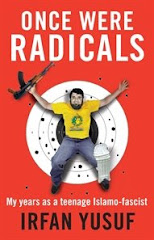
(Irfan Yusuf is a Sydney-based lawyer, author and columnist. His first book Once Were Radicals: My years as a teenage Islamo-fascist has just been published by Allen & Unwin. The above address was delivered to a conference on the Common Word document organised by the Australian Muslim-Christin Friendship Society and the Melkite Welfare Association on Friday 15 May 2009.)

Words © 2009 Irfan Yusuf

Delicious
Bookmark this on Delicious

Digg!

Get Flocked

Stumble Upon Toolbar

Monday, April 20, 2009

TURKEY: The Mor Gabriel Monastery Dispute


The Midyat district located in the south eastern Turkish province of Mardin is home to the Mor Gabriel Monastery, belonging to the Syriac Christian congregation. In recent times, a dispute has erupted between the Monastery and local villagers over land adjacent to the Monastery building. That land, consisting of some 285 of the total 1,227 hectares on which the Monastery stands, was recently declared "woodland" by the Land Registry General Directorate.

Local Muslim village heads have brought court proceedings against the Monastery, seeking to have the wall built by the Monastery around the forested woodland removed so as to allow for grazing animals. This court dispute has now become an international incident, with both the EU and the Obama administration watching Turkey's handling of the issue very carefully.

There is some suggestion that local villagers are being "manipulated" to turn this into a religious issue, pitting local Muslims and Christians against each other. The (ironically Islamist-leaning) Turkish government is seeking to avoid this turning into a religious dispute, and is pressuring the farmers to withdraw their court application pending a government investigation into the historical land registry records.

You can find out more in this article from Zaman.

The Monastery is one of the oldest active Christian monasteries on earth. It pre-dates the birth of the Prophet Muhammad.

Speaking of whom, the Prophet Muhammad is reported to have said (more or less):

Whoever mistreated a non-Muslim citizen of an Islamic state will have me witnessing against him on the Day of Judgment.

Turkey may not be an "Islamic" state. But its government should insist on minorities not being mistreated.

Words © 2009 Irfan Yusuf

Delicious
Bookmark this on Delicious

Digg!

Get Flocked

Stumble Upon Toolbar

Saturday, November 08, 2008

VIDEO: Islam and Christianity in 21st century Britain

I don't agree with both sides of this argument. The Muslims misunderstand secularism. The Christians use a very narrow definition of Christianity. The Muslims don't define Islam. The use of historical precedents by both sides is selective and at time dishonest.

Still, that's my conclusion, having watched 30 mins. I'm glad that it's a much more sensible and sensitive discussion. Plus the moderator is quite fair.


Words © 2008 Irfan Yusuf

Delicious
Bookmark this on Delicious

Digg!

Get Flocked

Stumble Upon Toolbar

Friday, October 24, 2008

EVENT: Opera & Koran meet Gregorian ...


Two performances only, both on Saturday 25 October 2008 at the City Recital Hall in Sydney. Click here to purchase tickets online.

The cast includes Tenor Rosario La Spina singing operatic arias; Dr Neil McEwan leading Gregorian Chants with the St Lawrence Singers; Sufi Master Fatih Koca with the Whirling Dervishes and World Champion of Koranic Recitation Ahmet Karali reciting from the holy Koran.

What happens when you combine recitation of the Koran with opera and the Gregorian Chant? Listen to Soner Coruhlu and Dr Neil McEwan talking about this awesome spiritual combination of sound and soul.

To read what the Sydney Morning Herald says about this event, click here.

To read a group of tunnel-visioned narrow-minded moronic imbeciles condemning this event, click here.

Words © 2008 Irfan Yusuf

Delicious
Bookmark this on Delicious

Digg!

Get Flocked

Stumble Upon Toolbar

Thursday, October 23, 2008

COMMENT: Why I am still a dirty lyin' taqiyin' Mozzlem ...


Well, it was only predictable that, following publication of this essay in Eureka Street, far-Right nutbags would come out and issue their FF's (i.e. fascist fatwas) joyfully declaring that they had managed to convince me to leave my ancestral religious heritage. And what has led them to this conclusion? The Australian Islam Monitor (it's official name is "Australian Islamist Monitor", but the url is islammonitor.org) makes this perceptive remark:

Perhaps Australia has had some influence on him.
Well, given that I have lived here since I was 5 months old, and given that I'm now almost 40, you'd think Australia's impact on me might be slightly greater than donning the Wallabies jersey during holiday trips to New Zealand and knowing the lyrics to just about every song sung by genuine Aussie musicians like Tim and Neil Finn.

(And calling them Aussie when in fact they are Kiwi. Now that's the mark of a genuine Aussie!)

Amateur (and indeed, amateurish) journalist Wendy Larkkson of the Australian (or should that be Kiwi?) Islam Monitor writes under the headline of "Sydney Muslim Speaks Out - Slams Gender Inequality". But is this really news? Or do the simple folk at the AIM only read headlines imposed on my articles by sealous sub-editors? Haven't they noticed another (albeit much shorter) article written for the New Zealand (or should that be Australian?) Herald and which can be found here? And other articls of similar import?

Larkkson's summary of my 1,500 word essay is ...

No you have not read a misprint. A Sydney Muslim, Irfan Yusuf, who often speaks out in defence of Islam, has written an article, which will surprise many readers. He has expressed lament about the appalling treatment of women in Islam. Perhaps this is a new venture for him in speaking out what the evidence of his eyes cannot deny. Perhaps Australia has had some influence on him. It is interesting that his article has been published in a left of centre Australian Catholic magazine ‘Eureka’, which has a caring, sharing, feel-good agenda most of the time.
No doubt the AIM's anti-Catholic arm will soon be publishing an article announcing that Eureka Street have come out and declared they are no longer Catholic. And no doubt Larkkson will be wondering whether, in a previous article, I had declared that I was now no longer a person of part-Indian heritage.

What the good folks at AIM don't seem to understand is that there is a difference between criticising (allegedly) Islamic cultures, countries, leaders etc and abandoning one's faith. A huge difference.

I've been doing the former for years. I haven't yet (and certainly have no plans to, unless someone puts a gun to my head and insists otherwise) done the latter i.e. abandoned my faith and heritage.

And with 1.2 billion Muslims around the world, even if only 1% were as crazy as the folk at AIM, I'd have plenty to write about. The fact is that you don't cease to be Muslim by defending Sudanese teddy bears or castigating pro-American dictators or condemn madcap terrorists or even lambast the nasty rants of former muftis. Just as you don't cease to be liberal if you manage to upset Liberal backbenchers.

The AIM take the matter further and pontificate ...

Working as a lawyer in Australia, he would be exposed to a number of situations and of course, to Australian law. At some point the evident maltreatment of women within his own society would have become crystal clear and would have forced some response from him.
Yes, I have done plenty of cases involving applications for Apprehended Violence Orders, some of them in the context of domestic relationships. I've unfortunately had to see Australian women and children of all ethnic and religious backgrounds be forced to resort to court orders. The Local Courts' AVO lists aren't exactly full of happy news. Domestic violence, much of it alcohol and drug related, affects Australians across all communities. But don't tell that to AIM. Let them assume this is a uniquely Muslim problem.

And as if to underscore the inherently anti-Semitic nature of AIM's rhetoric, they again repeat the taqiya smear, albeit in a rather amusing manner ...

On a more suspicious note – could Yusuf’s attack on Islamic maltreatment of women be an advanced form of Taqiyya? Have we moved beyond Taqiyya 101 and gone on to Taqiyya 202 or 303? Is this an attempt to ingratiate himself with the leftie Christians who would hold gender equality in all its forms as a fundamental principle? Does he want to make inroads to this section of the
Catholic community? Does he want more invitations to their barbeques? Is it espionage?
Indeed? Or am I part of that giant Judeo-Islamic conspiracy to impose unitarianism? Will I join Barack Obama's Muslim-in-hiding plot to take over the world? Does this all-American fruitloop have a point?

But it isn't just the AIM nutbags who have discovered that Irfan occasionally criticises Muslims. Australia's self-declared representative of the views and aspirations of all Christians, the Australian Christian Lobby, has suggested that I have written ...

... [a]n article ... for which he deserves thanks.
Well all I can say to ACL is thanks, but no thanks. It's interesting that ACL's "thanks" to me also carries a link to the AIM's note. And as if to confirm the imbecilic nature of the ACL thicksheiks, their last few lines are as follows ...

Related article White Ribbon Day - 25 November 2008 : http://www.acl.org.au/national/browse.stw?article_id=24715

Australia looks forward to hearing from Mr Waleed Aly, on this subject.

If the ACL researchers knew how to use the Rev Google, they'd know that Waleed has used his White Ribbon Day Ambassadorial status to pen sone devastating critiques of the treatment of women in nominally Muslim societies.

Still, as far as ACL are concerned, their mob never engage in domestic violence. You'd never see Christians engage in physical or sexual violence towards women or condoning such violence. Only nasty Mozzlems do that kind of stuff. If you don't believe me, check out ACL's moronically jaundiced analysis here.

So now that the bigotry brigade have declared their approval of my writing, what next? Will I get a guernsay to address the Big Ideas Forum hosted by Centre for Independent Studies? Will Daniel Pipes be singing my praises on his blog? Will I get to write an op-ed for that part-Saudi and part-American-owned newspaper that calls itself The Australian? Will I be appointed a fellow to the American Enterprise Institute, the Heritage Foundation and/or the Hudson Institute?
And will I finally be awarded a book deal by Allen & Unwin? Speaking of which, I'd better get back to writing the damned thing!

Words © 2008 Irfan Yusuf


Stumble Upon Toolbar

Saturday, October 11, 2008

COMMENT: Musaji gives far-Right jihadist Robert Spencer 10 slaps ...

Muslim blokes often boast to their mates about how their religion allows them to marry four women. But seriously, how many Muslim men can handle even one wife? I have a theory about this. I think it's because Muslim women are as tough as nails.

American Muslim Sheila Musaji seems to fit this description very well. And if you don't believe me, read this response she gives to professional hate-monger and pseudo-scholar Robert Spencer.

All I can say is "Ouch! That must have hurt!!"

Spencer has established his own test to determine which Muslims are sufficiently "moderate" to live on the same planet as he. Naturally such a test is only fit for Muslims. Spencer clearly doesn't believe in administering a similar test to other faith-based groups, including those nasty theocrats currently persecuting Christians in India. Heck, what's wrong with burning churches, gang-raping nuns and burning missionaries alive? We'll only notice when those filthy dirty Mozzlems do it!

Will Spencer be administering a similar test to the Hindutva thugs that destroyed this church in the Indian state of Orissa? Don't hold your breath ...


Words © 2008 Irfan Yusuf


Stumble Upon Toolbar

Friday, October 10, 2008

COMMENT: Accommodating mainstream Muslims is no danger ...

Why must I keep repeating this? Surely this should be self-evident. Anyway, here goes ...

Some people suggest that by accommodating mainstream Muslim religious traditions, America and other Western countries are somehow opening themselves up for further terrorist attacks. Many Muslims respond by arguing that the terrorists and the mainstream Muslims are two entirely different groups of people.

The Quran says what it says, but that has no bearing on the fact that mainstream Muslims and their religious traditions pose no threat to the West whatsoever.

So what if the Quran does say Muslims should convert or kill non-believers? So what if the Old Testament says the same? How many mainstream Muslims have killed or wounded non-Muslim Americans or Australians because they weren't Muslim? It just doesn't happen.

Maybe those violent passages in the Quran and/or Old Testament can help us understand more where the terrorists are coming from, but none of that is relevant to mainstream Muslims carrying on with their own peace-loving interpretation of those texts.

We have enough external enemies without creating new ones from a group of people who would like to think of themselves not only as allies but fellow citizens.

I've adapted this from a comment appearing in an online discussion on an American newspaper called the Morris Daily Herald.

Words © 2008 Irfan Yusuf


Stumble Upon Toolbar

Wednesday, August 27, 2008

Dialogue with Brad - Part II

Hi Irfan

Thank you for taking the to respond promptly, and to review my questions in due course. I will check the links you provide. I take your point about variations of expression within the same faith group, often they appear to be based upon culture and interpretation of the various holy books.

Yes, this is true within the Christian faith as it is within Islam.

I guess the underlying reason for my email and the issue at the core of my questions is to really understand the 'heart' of Islam.

Men (typically) have performed acts of torture, murder and violence in the name of both the Christian and Islamic faiths. (and also in the name of Atheism as well!)

When I look at the person of Jesus, as the founder of the Christian faith, he never carried a weapon, he submitted to the violence of those who opposed him, and offered words of forgiveness for those who killed him in his dying breath. It would be reasonable to conclude therefore, that those people who took up the sword and killed innocent people in Christ's name were not acting in accord with either his teaching or his life example.

When I consider the Prophet Mohammed, from what I read I understand that he led an army in unprovoked attacks against neighboring peoples, he is reported to have killed prisoners, and approved of assassinations. When I see Islamists performing terror attacks today, if what I have read about Mohammed is true, then they are behaving in a way that is consistent with his example, and I guess his teaching?

I ask these questions not to be provocative, but to understand how as a Muslim you rationalize these things about Islam and the Prophet if indeed they are true.As I said, we have helped resettle Muslim refugees and I employ an Egyptian Muslim as part of our small business. As his employer I don't feel I can ask him these questions.Thank you for your time.

Kind regards,
Brad
19/08/08

****

Hi Irfan

I have read both of the articles in the links provided.

The first one essentially proposes that our religious, cultural and political expression is made up from a mixture of influences, and that you cannot provide a 'one size fits all' label of 'Muslim' or 'Catholic' on any group of people and be sure to have clearly defined them.

Implicit in this approach is the notion that you cannot 'blame' all Muslims for the behaviour of (say) a radical minority.

To some extent this is true. I believe we all have a 'world view' that is shaped by all of these influences. To the extent that someone's world view is shaped by Islam, the teaching of the Prophet and the Hadith, then they would tend to be 'Muslim'. I think what we are seeing with the renewed world wide cultural confidence of Islam, is that increasingly more Muslims, including those in the west, define themselves by their Islamic faith first and foremost, possibly their land of birth secondly, and their adopted home country features a distant third in their sense of personal identity.

So while there are cultural differences in how Muslims express their faith, as is also true with Christians, there appears to be a growing sense of pan-national Islamic identity which is visible in the West today which was not visible even a decade or more ago.

There is also a sense that there is a reasonably militant minority within this grouping. Rather than integrate, this minority prefers to highlight their Islamic difference, either by means of dress code, or instance on prayer rooms at so called secular State schools, or closed sessions at public pools so Muslim women may swim apart from the general population.

Your second article seeks to address the same question using the book as a basis for discussion.
In it you say:

"The irony is that when extremist groups set out to harm the “infidel”, they include in this category ordinary Muslims who refuse to join their pseudo-jihad. It’s little wonder the survey confirms results from other studies of Muslim opinion – that many Muslims may sympathise with the causes cited by terrorist groups (Palestine , Kashmir etc) but they strongly oppose the methods used by these groups."

Most of us observing the situation in Palestine for example would wonder at what 'strongly oppose' looks like for those Muslims in the West who disagree with the methods (presumably suicide bombing etc) used by Islamists in those geographies?

Does 'strongly oppose' manifest itself in street marches by "Moderate Muslims against violence in Palestine?" or similar public condemnations every time a suicide bomber kills innocent civilians in Israel? I saw a TV interview on youtube recently where the head of the Canadian Islamic Council stated on public television that every Israeli citizen over 18 years of age was a legitimate military target. I assume this gentleman gets voted into this position by all the local Canadian Muslim community, which one assumes is predominantly moderate?

While I have no doubt moderate Muslims exist, and hopefully my employee is one, it appears that for the most part, their alignment with the cause (if not the methods) of their fellow (Islamist) Muslims ensures that for the most part their 'strong opposition' is a silent protest.
As a result, like it or not, it is the radical minority of the Muslim community is driving the agenda for all Muslims.

I can understand why moderate Muslims remain silent. To speak up in opposition brands you as an Infidel, and with that a possible death sentence. It is no doubt doubly hard to speak up if you agree with the underlying cause supported by the militant Islamists.

Right now, western governments seem determined to pursue a corse (publicly at least) of promoting the "Islam is a religion of peace" line to their people, in the face of the many obvious contradictions, in the hope that the silent moderate Muslim voice will ultimately prevail, while behind the scenes they are increasing surveillance and improving security .

In your view, do we have cause for optimism? Or, are the very obvious demographic and immigration changes that are taking place in Europe and other parts of the world, going to provide a resurgent Islam with the encouragement it needs to keep pressing its claims upon the (so called) secular liberal west?

I would be interested in your thoughts on this.

Kind regards,
Brad
20/08/08

****

G'day, Brad,

The issues you have raised are interesting, and I'd like to place our discussions on my blog
Madhab Irfy. Naturally, I won't identify you by full name or e-mail address.

I'll try and address each of these issues ...


The first one essentially proposes that our religious, cultural and political expression is made up from a mixture of influences, and that you cannot provide a 'one size fits all' label of 'Muslim' or 'Catholic' on any group of people and be sure to have clearly defined them.

Especially when followers of each faith come from a variety of different ethnic and sectarian backgrounds and define their faiths in different ways.

Implicit in this approach is the notion that you cannot 'blame' all Muslims for the behaviour of (say) a radical minority.

To some extent this is true.

To some extent? I'd have thought this would be self-evident. Do we blame all Christians for the foreign policy disasters of the Bush administration? Do we judge the attitudes of all Catholics to child sexual abuse by the appalling record of the Catholic church? Are all Jews as racist as the inhabitants of Jewish settlements like Kiryat Arba in Hebron?

I believe we all have a 'world view' that is shaped by all of these influences. To the extent that someone's world view is shaped by Islam, the teaching of the Prophet and the Hadith, then they would tend to be 'Muslim'.

Their worldview may have only an incidental relationship to scriptures. Different aspects of the same scripture may leave different influences on different cultures.

I think what we are seeing with the renewed world wide cultural confidence of Islam, is that increasingly more Muslims, including those in the west, define themselves by their Islamic faith first and foremost, possibly their land of birth secondly, and their adopted home country features a distant third in their sense of personal identity.

Do you have any empirical evidence to support this view?

So while there are cultural differences in how Muslims express their faith, as is also true with Christians, there appears to be a growing sense of pan-national Islamic identity which is visible in the West today which was not visible even a decade or more ago.

Again, where is your empirical evidence?

There is also a sense that there is a reasonably militant minority within this grouping. Rather than integrate, this minority prefers to highlight their Islamic difference, either by means of dress code, or instance on prayer rooms at so called secular State schools, or closed sessions at public pools so Muslim women may swim apart from the general population.

How is asking for a prayer room to be used for a maximum of once a day (at lunch time) in a state school evidence of militancy or a lack of integration?

And what are they integrating into? What is the dominant culture in New Zealand? Is NZ culture a static or dynamic phenomenon? Is it still developing?

Further, what example have non-Muslim European settlers provided of integration? What evidence is there that non-Muslim settlers in Australia displayed the kind of respect of indigenous Australian cultures as shown by Indonesian fishermen or Afghan cameleers? What example did non-Muslim European settlers show of integration with Maori culture?


I'd have to say that non-Muslim Europeans showed a far greater degree of militancy and lack of integration in our region. Show me Muslim migrants who fought the Maori tribes or who stole Aboriginal children from their families.

Your second article seeks to address the same question using the book as a basis for discussion.
In it you say:


"The irony is that when extremist groups set out to harm the “infidel”, they include in this category ordinary Muslims who refuse to join their pseudo-jihad. It’s little wonder the survey confirms results from other studies of Muslim opinion – that many Muslims may sympathise with the causes cited by terrorist groups (Palestine , Kashmir etc) but they strongly oppose the methods used by these groups."

Most of us observing the situation in Palestine for example would wonder at what 'strongly oppose' looks like for those Muslims in the West who disagree with the methods (presumably suicide bombing etc) used by Islamists in those geographies?

My quote was not limited to Muslims living in Western countries. In fact, you might notice that the article refers to substantial loss of support of Islamist parties as evidenced by election results in places like Pakistan and Indonesia.

What evidence do you have that NZ Muslim migrants as a whole support suicide bombings?
Does 'strongly oppose' manifest itself in street marches by "Moderate Muslims against violence in Palestine?" or similar public condemnations every time a suicide bomber kills innocent civilians in Israel?


Are we to presume that the absence of street marches by Jews after each excess of the Israeli army in the occupied territories or a neighbouring state means that all Jews necessarily support each and every action of the Israeli state? I would regard such an insinuation as anti-Semitic and deeply offensive.


I saw a TV interview on youtube recently where the head of the Canadian Islamic Council stated on public television that every Israeli citizen over 18 years of age was a legitimate military target. I assume this gentleman gets voted into this position by all the local Canadian Muslim community, which one assumes is predominantly moderate?

What evidence do you have that all Canadians of Muslim background or faith or heritage vote in the CIC elections? Can you tell me how CIC elects its executive members?

Can you provide me with the url of the YouTube clip? All I know from your quote is that the "head" of the CIC said that any Israeli aged 19 or over is "a legitimate military target". That in itself doesn't show support for HAMAS or Islamic Jihad or for suicide bombings.

While I have no doubt moderate Muslims exist, and hopefully my employee is one, it appears that for the most part, their alignment with the cause (if not the methods) of their fellow (Islamist) Muslims ensures that for the most part their 'strong opposition' is a silent protest.

I can see why you don't discuss these issues with your employee. Some of the points you have raised, and the manner in which you have raised them, suggest to me a deep underlying mistrust of anyone even remotely linked to Islam. Further, you appear to be applying one set of standards to Muslims and a completely different set to other persons. If you said this kind of stuff to your employee, his lawyers would have a field day.

As a result, like it or not, it is the radical minority of the Muslim community is driving the agenda for all Muslims.

I think you shouldn't believe everything you read in Investigate magazine or on Daniel Pipes' various blog sites. Where is your empirical evidence that ...

a. there is a uniform agenda for all Muslims?

b. there is a uniform radical fringe that has consensus on what this allegedly uniform Muslim agenda should be? and

c. there is such an entity as "the Muslim community", either in New Zealand or elsewhere?
I can understand why moderate Muslims remain silent. To speak up in opposition brands you as an Infidel, and with that a possible death sentence. It is no doubt doubly hard to speak up if you agree with the underlying cause supported by the militant Islamists.

Can you please tell me how you define a "moderate Muslim"? What are the characteristics of a "moderate Muslim"? Can you provide some examples of prominent "moderate Muslims"?

Also, how do you define being "silent"? Would writing articles for newspapers constitute silence? Would issuing press releases constitute being silent? What bare minimum of activity is required before so-called "moderate" Muslims are no longer deemed silent?

Right now, western governments seem determined to pursue a corse (publicly at least) of promoting the "Islam is a religion of peace" line to their people, in the face of the many obvious contradictions, in the hope that the silent moderate Muslim voice will ultimately prevail, while behind the scenes they are increasing surveillance and improving security .

What evidence do you have that Western governments are taking any "corse" of action that involves promoting Islam or indeed any other faith?

In your view, do we have cause for optimism? Or, are the very obvious demographic and immigration changes that are taking place in Europe and other parts of the world, going to provide a resurgent Islam with the encouragement it needs to keep pressing its claims upon the (so called) secular liberal west?

Why do you say "(so called) secular liberal west"? It seems to me you aren't as devoted to liberal democracy as you make out.

The biggest threat to liberal democracy in the West is the rise of religious fanaticism. The Christian Right have hijacked much public discussion about a range of moral and social issues to the extent that US Presidential candidates are openly courting extremists. Thankfully, there are a large number of progressive and sensible voices within Christian communities seeking to counter this stupidity. Amongst them are Australian PM Kevin Rudd and others who argue that Christianity is about social justice.

Similar movements exist within Muslim and Jewish communities. There is Muslim and Jewish extremism. No one can deny this. But the problem extremists face is that their solutions are so simplistic that they can never really resolve anything. Hence we see Islamist parties being voted out of power in places like Indonesia, Malaysia and Pakistan. In Turkey, meanwhile, former Islamists are being forced to transform themselves into mainstream centre-right coalitions and adopt a liberal free market agenda.


I am optimistic by nature, but I fear that hate-mongers are alive and prospering. The onus is on people of faith and no faith to join forces against those who want to promote civilisational war.

Regards
Irfan

20/08/08

Stumble Upon Toolbar

Sunday, August 24, 2008

Dialogue with Brad - Part I

Recently I started a discussion with a Kiwi reader named Brad (I've changed his name to protect his anonymity). With his permission, I want to share that dialogue with readers uncensored. I'll be doing this in a number of instalments. I'll start with his initial inquiry to AltMuslim.com and my response.

****

Hello

I have read articles by Irfan Yusaf in the NZ Herald and I wonder if he would be able to answer the 10 questions about Islam (or perhaps just the first 9)
posed by the writer here.

Our extended family has assisted with the resettlement of Muslim (and other) refugees in New Zealand, we have eaten together and prayed together, however I\'m aware that inter-marriage and at times developing friendships outside of the Islamic community is actively discouraged. I sense this will lead to a ghetto type isolation for Muslims in our communities which will lead to the possibility of fear and resentment from both \'sides\'. How do you think both the Islamic community and host communities can resolve this?


****

Dear Brad,

Thank you for your e-mail.

Let me start by saying that all of us have multiple layers of identity. Religious affiliation is just one layer.

If you were to ask different Muslims why they regarded themselves as Muslim, you would receive many different answers. Some would say it was because they have Muslim parents. Others would say it was because they believed in Islam. Yet many of them would probably believe in different things, and their beliefs may even conflict.

We all need to stop pretending Muslims are some kind of uniform monolith. We also need to stop pretending that Muslims are a recent addition to Europe and the West.


I know of Muslim families who have lived in New Zealand since the 1920's. I know of Australian Muslims whose families have lived in Australia since the 1850's. Muslims have lived in Bosnia since the 12th century, in Europe's heartland. Yet in many parts of Indonesia, Islam only became the dominant faith 2 or 3 centuries ago.


If you took an Indonesian Muslim to Turkey, he probably wouldn't recognise Turkish Islam as Islam.


If I were to say that Catholics all nail themselves to crosses at Easter time, you would probably think I was nuts. Yet this is what many Catholics do in the Philippines. Does this mean all Catholics do this?


If we studied each other's faiths seriously, we would realise we have more in common than we think. Although I believe Judaism and Islam have more in common that Islam and Christianity. That might explain why the reasons cited by many allegedly conservative Christians to object to a Muslim presence in the West are almost identical to the objections their ancestors had to a Jewish presence.


I'll have to read the questions you have linked to carefully and then respond. However, you might some answers to your questions here and here.

Regards
Irfan

Stumble Upon Toolbar

Tuesday, July 01, 2008

COMMENT: D'Souza on Christianity as "the only way" ...

Dinesh D'Souza poses this question: Is Christianity the Only Way? It's a legitimate question to be asked by someone living in a country as religious as the United States, where (according to Pew Research) some 92% of people believe in God. It's also legitimate considering the the United States has a strong and officially secular political system where holding a particular religious affiliation isn't a condition of holding any (including the highest) public office in the land.

At the same time, religious pluralism is very strong. Many Americans don't regard their own faith as being the only source of absolute truth or as the only comprehensive road to paradise.

What got the most attention, however, was Pew's discovery that a majority of religious Americans believe that other religions make valid claims about God and can lead to heaven. Around 80 percent of Catholics, Protestants and Jews, as well as 55 percent of Muslims, reject the idea that their religion is the only way.

D'Souza makes a very important point about how the monotheistic faiths view each other, yet how little this view is even known to many Americans.

... many people don't realize that just as Christianity sees itself as succeeding and incorporating Judaism, so Islam sees itself as coming after and incorporating both Judaism and Christianity. Consequently I'm not surprised that most Muslims view Jews and Christians as fellow monotheists rather than hell-bound infidels.
I was a bit confused by D'Souza's claim that ...

... Christianity is the only religion to hold another religion to be wholly true. That religion is Judaism.

Does that mean that Christians accept that Judaism's insistence on belief in a unitarian God is "wholly true"? What about Judaism's rejection of the belief that Jesus was the Messiah?

Followers of all faiths and none are welcome to comment.

Words © 2007 Irfan Yusuf

Stumble Upon Toolbar

Wednesday, April 30, 2008

COMMENT: On quoting the Bible to support veils ...


Christians regard Paul as a disciple of Jesus Christ. Although Paul never met Christ in person, he did see a vision of Christ during a journey to Damascus.

Paul's letters form part of the New Testament, which Christian theology regards as inspired by God. Of course, unlike Judaism and Islam, Christianity is not a law-based faith. Hence Christians are not bound by dietary and other rules contained in the sacred law of Moses.

According to a recent report in The Australian, Sheik Tajeddine Hilaly has written a book in which he claims that the Bible "mandates" women to wear veils on their heads. The headline of the article suggests that Hilaly is effectively saying that non-Muslim women are also required to veil in the same manner that Muslim women are.

The report then quotes a prominent Sydney Anglican cleric:

The Anglican Bishop of South Sydney, Robert Forsyth, challenged Sheik Hilali's comments about the veil being "mandated" in the Bible, saying they were misleading.

"The New Testament does call upon people to dress modestly," he said. "But there is no understanding that women are commanded to wear the veil. But it is mandated that you should dress appropriately for your social context."
Fair enough. So what are the actual words used in the New Testament? This is where Paul of Tarsus comes in. In his first letter to the Corinthians, Paul writes (KJV, verses 4-16):

Every man praying or prophesying, having his head covered, dishonoureth his head.

But every woman that prayeth or prophesieth with her head uncovered dishonoureth her head: for that is even all one as if she were shaven.

For if the woman be not covered, let her also be shorn: but if it be a shame for a woman to be shorn or shaven, let her be covered.

For a man indeed ought not to cover his head, forasmuch as he is the image and glory of God: but the woman is the glory of the man.

For the man is not of the woman: but the woman of the man.

Neither was the man created for the woman; but the woman for the man.

For this cause ought the woman to have power on her head because of the angels.

Nevertheless neither is the man without the woman, neither the woman without the man, in the Lord.

For as the woman is of the man, even so is the man also by the woman; but all things of God.

Judge in yourselves: is it comely that a woman pray unto God uncovered?

Doth not even nature itself teach you, that, if a man have long hair, it is a shame unto him?

But if a woman have long hair, it is a glory to her: for her hair is given her for a covering.

But if any man seem to be contentious, we have no such custom, neither the churches of God.
And in the 14th chapter of the same letter, Paul writes (NIV, verses 35-36):

As in all the congregations of the saints, women should remain silent in the churches. They are not allowed to speak, but must be in submission, as the Law says. If they want to inquire about something, they should ask their own husbands at home; for it is disgraceful for a woman to speak in the church.
Do the instructions outlined in these verses represent some kind of law for Christians? Are all Christians bound by these rules? As a non-Christian, I don't think it is appropriate for me to comment on this. But I do observe that in many Christian cultures, women do veil when attending church (and even outside church). Certainly in many Orthodox churches, women continue to veil in church.

If Sheik Hilaly had quoted these verses and similar Biblical verses in his book, does that mean he is ordering non-Muslim women in Australia to veil? Or is he merely suggesting that non-Muslims should not feel affronted by veiled Muslim women as similar practices are mentioned in both Jewish and Christian scriptures? And if so, why should Bishop Forsyth or any other non-Muslim Australian have a problem with this?

(Thanks to BC for pointing out the Biblical references.)

Words © 2008 Irfan Yusuf

Delicious
Bookmark this on Delicious

Digg!

Get Flocked

Stumble Upon Toolbar

Sunday, March 09, 2008

COMMENT: The Australian Christian Lobby and the Camden proposal ...

The Australian Christian Lobby recently ran a piece on the proposed Camden Muslim independent school. That piece was interesting in that it refused to condemn Fred Nile and others who use this issue as a divisive ethno-religious wedge.

Further, the ACL refer to me as "Islamic Spokesman". Do ACL think I would be stupid enough to claim such a position? In what sense am I an Islamic spokesman? Have I ever claimed this title? Do I represent any Muslim religious organisation?

ACL may have sufficient hubris to claim to represent all Christians. Jim Wallace may travel through the corridors of power agitating against Australia's Western secular democracy and promoting his fringe approach to social and moral issues, all the while claiming he represents all Christians.

I have never made any such representative claims, nor do I intend to. My opinion in the ABC Unleashed piece cited by ACL was my own personal view.

I would request that ACL correct their inaccurate post. ACL should understand that I don't wish to follow their example by claiming a leadership mantle that is not properly mine.

Words © 2008 Irfan Yusuf

Delicious
Bookmark this on Delicious

Digg!

Get Flocked

Stumble Upon Toolbar

Sunday, September 02, 2007

CRIKEY: Yes, Jesus was indeed a "sand nigger" ...


In 1998, I visited Brazil. In the world’s largest Catholic country, I saw icons of Jesus and Mary everywhere. There was one not-so-subtle difference between these and the icons I see in Australia. For millions of Brazilian Catholics, the Blessed Virgin with child both had black skin.

Of course, we all know that Jesus wasn’t a negroHe was, after all, born in a place called Beyt Lahm, an Arabic/Aramaic phrase meaning literally "House of Lamb Meat" or 'House of Bread". He spoke fluent Aramaic. His mother wore (at the very least) a traditional head scarf worn today by many orthodox Jewish and Muslim women.

A delegation from Jesus’ town is currently visiting Australia. All delegation members are Christians. All are accused of being terrorists. All no doubt look like Middle Easterners. All look like Arabs. Usama bin Ladin is a Middle Easterner. The Mayor of Bethlehem is a Middle Easterner. Jesus was a Middle Easterner. No doubt Jesus probably bore some resemblance to other Middle Easterners.

Yet for some reason, American-owned tabloids in Sydney and Melbourne are behaving in a very Middle Eastern fashion over one entry to an art prize. One that shows Jesus' mum in traditional arab garb (see right). Even the PM joined the fray, telling journalists ...

The choice of such artwork is gratuitously offensive to the religious beliefs of many Australians.
Yes, it is offensive if you believe Jesus looked something like Merv Hughes and Mary looked like Jennifer Hawkins. Yet the fact is that Mary wore something on her head (and, given her noble ancestry and her cultural heritage, quite likely something over her face).

What all this shows is how far the far-Right evangelical view of Christianity has strayed from the reality of Jesus. Allegedly conservative mono-cultural fruitloops keep referring to Australia’s Christian heritage. Yet how would they react if the real Jesus returned and arrived in Australia?

Well, for a start, they’d probably think he was a terrorist. He wouldn’t be speaking English, and would suddenly appear from the wilderness looking rather dishevelled.

Jesus’ photo would be splashed across our American-owned metropolitan tabloids. Piersed Akumen and his colleagues would be waxing unlyrical about this latest foreign threat. Gerard Henderson would attack the "civil rights lobby" for defending Jesus. Janet Albrechtsen would castigate lawyers and judges for defending a man who wants to establish the Kingdom of God (read sharia law) in Australia. The Australian Federal Police wouldn’t understand a word Jesus was saying but would charge him anyway. Some magistrate would grant Jesus bail, and the good Catholic Kevin Andrews would cancel Jesus’ visa and send him back to … um … er … God The Father?

As William Dalrymple keeps reminding us, Christianity (like Judaism and Islam) is a Middle Eastern religion. And Jesus was a Middle Easterner. Just accept it.

First published in the Crikey daily alert on Thursday 30 August 2007.

Words © 2007 Irfan Yusuf

Stumble Upon Toolbar

Sunday, August 26, 2007

COMMENT: The missionary position ...


It's amazing how Christian missionaries who have spent substantial periods working in Muslim countries often come away with a greater degree of empathy and understanding for the shared heritage of the great Abrahamic faiths.

In Sydney, the Columban Mission Society runs an excellent Centre for Christian-Muslim Relations. Fr Patrick McInerney from the Centre spent many years as a missionary in a Columban mission in Lahore, Pakistan, and speaks fluent Urdu and Punjabi. He is active in interfaith work, and appeared as an expert witness on Islam and Christian-Muslim relations in the controversial religious vilification case involving the Catch The Fire Ministries and the Islamic Council of Victoria.

In the Netherlands, another long-time missionary has thought of a novel idea to improve relations between Christians and Muslims. Bishop Tiny Muskens of Breda has proposed that Dutch Catholics address their prayers to Allah.

Someone like me has prayed to Allah yang maha kuasa (Almighty God) for eight years in Indonesia and other priests for 20 or 30 years. In the heart of the Eucharist, God is called Allah over there, so why can't we start doing that together?


Bishop Muskens' words were reported on the Catholic News website on 15 August 2007. The website's report also noted that ...

In the Arab world God is called Allah. The long history of Christianity in the Arab world led to the development of a rich Christian-Islamic theological vocabulary, which makes God a normal equivalent to Allah. Both Muslims and Christians use the word in the Middle East.


Bishop Muskens worked in Indonesia as a missionary some 30 years ago. He predicts that within 100 years, Dutch churches would be using the name "Allah" to address God anyway. It's hard to tell whether his comment on this regard reflects the paranoid views of far-Right fruitcakes who claim Europe will become "Eurabia" or whether he just hopes Muslims and Christians will come to the realisation that they are both worshipping the same God.

The Bishop's comments follow a call by Geert Wilders, Dutch far-Right politician and former colleague of Ayaan Hirsi Ali, that the Qur'an should be banned.

The Bishop's call hasn't been welcomed in quarters hostile to anything resembling Islam. One academic lawyer poked fun at the Bishop's name before making these remarks:

Muskens makes it sound as if the problems in Muslim–Catholic relations were merely silly arguments about semantics that distract from the truly important things on which we all agree. In fact, there is a serious, substantive problem dominating Christian–Muslim relations at the moment, the same problem that dominates Muslim–Jewish, Muslim–Buddhist, Muslim–Hindu, and Muslim–Orthodox relations, and that problem is that Muslim fanatics keep murdering innocents of all faiths, including their own, in terror attacks.


Using Robert Miller's reasoning, Muslims should cease all dialogue with Jews. After all, there are Jewish fanatics who keep murdering innocent Palestinians of various faiths. I guess Hindus and Muslims in South Asia should stop talking given that Hindu fanatics (be they BJP-linked religious extremists or the Tamil Tigers) continue to murder Muslims, Buddhists, Catholics and other groups.

And the whole world should stop talking to the United States, which seems to be ruled by a cabal of far-Right Republicans backed by evangelical Christians that love spreading freedom and democracy by invading countries and killing lots of people.

I'm so glad we don't live in a world ruled by this kind of logic. Because if we did, only God/Allah/G-d/Bhagwan could help us!

Words © 2007 Irfan Yusuf


Stumble Upon Toolbar

Monday, February 07, 2005

REFLECTION: Ramadan Does Boxing Day In The Sydney Opera House

Don’t kid yourself. This article is not about fasting. Nor is it about breaking one’s fast in one of the most recognizable landmarks in my hometown. Nor indeed is it about watching a violent sport in that landmark during Ramadan. And I know all this interfaith stuff is trendy nowadays, but I am definitely not talking about placing one’s Christmas presents in boxes to be packed away on the day after Christmas.

This year, I spent Christmas midnight for the first time at midnight mass at Sydney’s St Mary’s Cathedral. For me, this can be regarded as being a near-sacrilege given my education at the evangelical Anglican St Andrew’s Cathedral School. You see, St Mary’s is Roman Catholic. And it is anything but evangelical. I wanted to do something different for Christmas. Watching the majestic organs of St Mary’s playing whilst the magnificent choir circled the isles of the Cathedral was a truly amazing spiritual experience.

Watching the statue of Mary almost brought tears to my eyes. What an embodiment of chastity and grace she was, so humble despite being (in the words of the Qur’an) “chosen above the women of all the ages.” Eventually we sang a Christmas carol about Bethlehem. At that moment, I could see, hear and touch Christmas. It was as if we were all transported back 2,000 years ago to the town known as the abattoir of Palestine, the House of Meat (hence the name “Beyt al-Lahm”), watching the scene for ourselves.

Interestingly, the word “catholic” means literally “universal.” And that Christmas night at St Mary’s, I was putting into practice some of the universalism I had learnt from a certain Swiss citizen whose name appears in the heading.

Tariq Ramadan did not just come to Australia to enjoy a holiday with his family. He came to deliver a message. Had his journey been a mere holiday, he perhaps would have been one of the thousands of anonymous visitors to one of Australia’s cultural icons, the Sydney Opera House (SOH). But on the night of Boxing Day, 26 December 2004, Ramadan addressed a near-packed concert hall of the SOH.

Ramadan was accompanied by two other speakers and a moderator (who was in fact the President of the Uniting Church). The topic of the Symposium was a simple one – “Does God Exist?” Ramadan was last to speak, and thankfully turned the topic on its head.

Ramadan repeated the same questions he has asked Muslims in numerous talks he has given, articles he has written and books he has penned over the years. How do we understand our faith in such a way that it really does become a universal faith? How do we as a Muslim community become truly accommodating, or need I say, truly Catholic in its literal sense?

It was refreshing to hear the grandson of Imam Hasan al-Banna citing the Brazilian Paulo Coelho’s book The Alchemist to illustrate a subtle shade of Qur’anic meaning. And in doing so, those who understand the message of Ramadan’s grandfather would know that he would not be turning in his grave at his grandson’s grabbing of a piece of wisdom that, like wisdom everywhere, is the believer’s lost property.

Ramadan spent a substantial amount of his address re-defining basic terms we use so often – taqwa, jihad, rahman. For Ramadan, taqwa is not some kind of fear we have of a headmaster. Rather, it is more reverence, a fear that arises from love. As for jihad, its goal is not killing a maximum number of non-Muslims. Rather, its goal is resistance.

Ramadan said that there can be no islam without jihad. Islam is peace, and so the goal of jihad must be a resistance that leads to peace. Resistance is the name of the game. And it does not just stop at one’s soul.

In this respect, Ramadan laid out a ground plan of how Muslims can practice jihad in their own communities and nations. How? By joining other Muslims to root out social problems in the Muslim community, problems such as racism. And also by joining with non-Muslims in peaceful action toward social change.

This is jihad and this is islam according to Ramadan. It is not just about the outer aspects of sunna or prophetic tradition. It is about implementing the simple principles of islam in a complex world. And it is about doing all this in a way that emphasises what we have in common with others.

Ramadan laments the fixation which Muslims in Europe and Australia have with being minorities. It’s as if we want to receive strange looks because we are dying to be different. Yet we simply are not strong enough to achieve the goals of jihad. Yes folks, our jihad is to be conducted WITH non-Muslims, NOT AGAINST non-Muslims.

So my jihad has to be conducted not just with Tariq Ramadan’s audience at the SOH but also with the thousands who joined Cardinal Pell at St Mary’s Cathedral at Midnight Mass. Put another way, jihad is spiritual love. And love is not just some flimsy emotion from a Robbie Williams song. Love is a spiritual struggle against its opposite and all that resemble that opposite. Negativity is so easy. For many of us, it is our position of inertia. If you want to unite a large group, invent an enemy. Being Daniel Pipes is easy. Being Tariq Ramadan is very hard.

Being a true lover and a true mujahid means being prepared to move beyond hate and resentment and negativity. It means finding commonality with people. It means learning to work with people of all colors, sects, faiths, religions, nationalities, genders … and yes, I will say it … sexual orientations.

That means that I, as a socially conservative Muslim, should be prepared to work with a leftist Catholic and a politically neutral Jew if all three of us believe that certain proposed legislation will curtail civil liberties and human rights. And I should oppose this legislation if the first people whose human rights are affected are refugee animists from Papua.

But try getting most Muslims to understand this sort of thinking. Try getting them to understand that good citizenship is part of taqwa, that there is even an ecological jihad. I could lament and go on and on for fifty more paragraphs, and achieve nothing. I just hope that perhaps Dr Ramadan has the good sense to give the United States the flick and migrate to Australia instead. True, the skiing here is not as good as in the Alps. But since you Yankees already have Farid Esack and Hamza Yusuf Hanson, allow us to enjoy Ramadan all year round!

Words © 2005 Irfan Yusuf

Delicious
Bookmark this on Delicious

Digg!

Get Flocked

Stumble Upon Toolbar