Saturday, June 18, 2005

REFLECTION: A Shaykh Dies

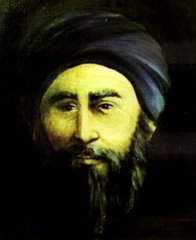
May 12 was a sad day for Muslims. Across the world, Muslims mourned the passing of one of the greatest scholars of classical Islam. This shaykh, known to his Muslim readership as Abu Bakr Siraj ad-Din, wrote one of the definitive books on the life of the Prophet Muhammad. He also wrote 11 other books, including one with the defiant title of Ancient Beliefs and Modern Superstitions.

I remember first hearing about Shaykh Abu Bakr. One of my father’s good friends mentioned the shaykh and praised his biographical work on the prophet. Some years later, I bought a set of 20 tapes of lectures by an American Imam named Hamza Yusuf. The lectures were based on a study of the shaykh’s biographical work.

I joined millions of Muslims around the world in mourning the death of Shaykh Abu Bakr. Yet hardly any western newspaper mentioned his passing. It was as if the event went unnoticed. Britain’s left-leaning The Guardian newspaper did publish a short obituary. Much of the material for this article has been taken from that obituary, written by British author Gai Eaton.

I am not aware of any other western newspaper which mentioned his passing.

So who was this mysterious shaykh that most Muslims have heard of and most non-Muslims seem to ignore? Was this Shaykh Abu Bakr the leader of a terrorist outfit from Indonesia or Iraq? Was he a nasty beedy-eyed chap of Middle Eastern appearance who gave speeches in rolling Arabic?

Shaykh Abu Bakr was born on January 24, 1909. He was born in a place called Burnage in Lancashire. His parents christened him "Martin". His family name was Lings. Out of respect for the deceased and those who mourn him, I will refer to him simply as “the Shaykh” (the term Shaykh is commonly used as a title for spiritual elders).

The Shaykh spent his early years in the United States. Later, he returned to England where he attended Clifton College, Bristol. He was head prefect at this exclusive English private school (or public school for any UK readers).

The Shaykh’s tertiary studies commenced at Magdalen College, Oxford. He studied English, and became a close friend of the famous C.S.Lewis. In 1935, the Shaykh taught English courses in Lithuania.

In 1940, during the early years of World War II, the Shaykh travelled to Egypt to visit a friend who lectured in Cairo. As fate would have it, the Shaykh’s friend died in a motor accident, and the Shaykh was offered the teaching post. He stayed in Egypt until the early 1950s.

At this time, Gamal Abdel Nasser came to power and whipped up nationalist frenzy among young Egyptian students. Three of the Shaykh’s colleagues were killed. The Shaykh and his other colleagues of British origin were summarily dismissed. After 17 years of living in a village at the foot of the Pyramids, the Shaykh and his wife, Lesley Smalley, returned to England.

The post-war period was one of economic downturn for England and the rest of Europe. Work was hard to come by, and the Shaykh was forced to resume his studies. He followed up his BA in Arabic studies with a PhD thesis on the life of Algerian Sufi Ahmed al-Alawi. His wife, a physiotherapist, returned to work.

In 1954, the Shaykh found employment at the British Museum as assistant keeper of Oriental printed books and manuscripts. He held this position for about three decades, and the quiet reclusive work situation allowed the Shaykh to enter his most productive period of writing.

In 1983, the Shaykh published his best-known work. Muhammad: His Life Based On the Earliest Sources is regarded as a masterpiece of English and Islamic scholarship. Millions of copies have been sold across the world, and a copy can be found in just about any Muslim household where English is spoken.

Apart from writing and reading, the Shaykh was an avid gardener. His home in Kent was a place where plants and flowers from across the world bloomed. The Shaykh was also passionate about Shakespeare, carrying on a passion he had developed while teaching in Egypt, where his students under his direction would perform a Shakespeare play each year. During the mid-90s the Shaykh wrote a book on the spiritual side of Shakespeare’s work.

Shaykh Martin’s books have been translated into more than a dozen languages. The UK-based newspaper, The Independent, described Shaykh Martin as “One of the most eloquent and serene Western voices in the Islamic world”. The British Muslim magazine Q-News carries on its website photos of the Shaykh delivering a series of lectures on Shakespeare and Islam in November 2004 at the Globe Theatre, the place where Shakespeare first made a name for himself.

Some readers will find it strange that Muslims would mourn the passing of someone who, by all accounts, might be considered little more than just another eccentric English academic. Yet the fact remains that Western and European scholarship forms an essential part of the corpus of Islamic discourse. When Muslims think of travel writing, two names immediately come to mind. One is Michael Wolfe, the other William Dalrymple. Only one is known to be a Muslim.

The Imam Hamza Yusuf Hanson is an American Muslim of Greek heritage. Another Greek Muslim of British heritage, Yusuf Islam, has made an outstanding contribution to Islamic musical expression, just as he did when he was known as Cat Stevens. He has teamed up with musicians, Muslim and non-Muslim, from such far away places as Turkey, South Africa and Malaysia.

In the fields of spirituality (tasawwuf) and legal sciences (fiqh), it would be impossible to speak of 20th century developments without mentioning the name of an American by the name of Nuh Ha Mim Keller. And in Australia, the only published textbook on Islamic law has been written by Jamila Hussain, an Anglo-Australian Muslim teacher at the University of Technology, Sydney.

All of these writers, scholars and artists, including Shaykh Martin Lings, are proof that the modern Muslim mind has allowed itself to be open to influences from all cultures. As the prophet himself is quoted as saying: "Knowledge is the lost property of the believer. Let him take possession of it regardless of where it is found".

Muslims respected Martin Lings, notwithstanding the humiliation he received at the hands of a popular Muslim political figure like Gamal Abdel Nasser. The passing of a scion of British aristocracy, a former head student at an English public school, a Shakespearean scholar and an avid gardener brought together Muslims to pray for his soul in mosques and homes across the world, from Sarajevo to Sydney and from Oslo to Cape Town. May God bless and honour Shaykh Martin with the highest station of paradise. May God provide comfort to the Shaykh's family and loved ones and to the millions of Muslims who mourn his passing.

(This article was published at Online Opinion on June 16 2005. The book is available for purchase in Sydney and online from the Andalus Bookstore.)

Words © 2005 Irfan Yusuf

Delicious
Bookmark this on Delicious
Digg!

Get Flocked

Stumble Upon Toolbar

Monday, June 13, 2005

A Year Without Service?

The Messenger of God (peace & blessings of God be upon him) was known even to his enemies for his services to the poor and the community.

Before revelation came to him, the Prophet joined a body known as ‘Hilf al-Fudul’ to fight for justice on behalf of persons without traditional tribal protection. Indeed, he was one of the founding members of that body.

Even after revelation, he recalled his involvement in the pledge to serve the downtrodden. He once said publicly: “I was there before revelation to pledge in support of the weak. If I was called upon even after revelation to renew my loyalty to that group, I would gladly do so”.

The honesty and integrity of the Prophet were never questioned, even by his enemies. Few were surprised when he refused to be bribed to abandon his mission. Fewer were surprised by the loyalty he generated in his followers.

The Prophet’s life was one of service to all people. He established a system of spiritual purification based on active service to the community. His tradition was followed by those following in his footsteps.

Muslim scholars and rulers served their communities. Every mosque had lodging for travellers. Homeless people were provided for. Hospitals provided free medical care. The community guaranteed the wages of professors and teachers. Public parks and baths guaranteed fresh air and good health.

In India, scholars like Muin ad-Din Chishti established the tradition of service by feeding homeless and poor people regardless of their faith. This tradition is found even in sufi offshoots such as the traditional Sikh communal meal at the gurudawara (house of worship).

On the battlefields, Muslim and Jewish doctors were sent by Saladdin to bring relief to the Crusader king of Jerusalem who suffered from a severe skin disease. The head of this medical team was a Jewish rabbi who was not disqualified from his post notwithstanding the fact that he had written a book in Arabic o why Judaism was superior to Islam.

This is our history. We are a people of service.

But when it comes to Australia, our service stops. I can think of very few Australian Muslims whose service to the broader community is recognised and known. We are not seen to be active in any areas of public life.

This especially became evident this long weekend when the Queens Birthday Honours List was published. Not a single Muslim made it to that list.

It is true that we do good deeds for recognition by our Lord, not to have our names published in an honours list. But the fact is that such lists are read and noted by the broader community. Our absence from that list speaks volumes for our refusal to contribute to our communities.

Where are the Muslim public servants assisting governments with implementing policy? Where are the Muslim medical researchers or fundraisers or educators or academics or writers or journalists or civic leaders? Where are our deeds mentioned and recognised? What evidence do ordinary Australians have that we really do wish to contribute to this country?

I am proud to be Australian. But sometimes I feel ashamed to be an Australian Muslim. When I see Muslims visibly contributing little and openly complaining about discrimination, I feel ashamed of belonging to a community that prefers to take and take but gives nothing in return and expects everyone to make allowances for them.

It’s as if we have forgotten about our heritage. We talk a lot about it. We argue and complain when we are discriminated against or when some journalist or talkback host speaks ill of us. Yet what have we done lately for this country? How can we expect our fellow Australians to be charitable to us when we visibly contribute little to Australia?
© Irfan Yusuf 2005

Stumble Upon Toolbar

Sunday, June 12, 2005

Letters To The Editor - Part 1

I have been reading the Sydney Morning Herald since Year 7. That means I have been reading it since 1982. This is my 23rd year of reading it religiously, everyday. And who started this precedent in my life?

Was it my dad? My mum? My cricket coach? No. The trend was started by one Michael Miller, an English teacher at St Andrews Cathedral School. From Years 7 to 10, Mr Miller drummed into our heads that we must read the Herald every morning.

There were certain parts of the paper he especially emphasised. For instance …

1. The back page of the main section. Then entitled “stay in touch”, it has had various reincarnations. In 2001, when a photo of me appeared laughing whilst eating Turkish ice cream at Auburn, it was called “Sauce”. It was the place where all the smutty and silly humour was. And there was enough smut to keep private school boys entertained for hours.

2. The editorial and opinion sections. These were a must-read so that we knew what issues were being debated and re-debated and mass-debated out there in the “real” world. I hope Mr Miller was reading the Herald opinion page on April 28 2005 when his most troublesome student had his surname misspelt on that page.

3. The letters page. This was always located smack-bang between the editorials and the opinion pieces. This was wear the average punters had a go at sounding like journalists. It was also the place where short, terse, sarcastic and witty sentences ruled the roost.

Mr Miller told us that the letters page was perhaps the most influential part of the paper. Why? Because it was here that the real news was made. It was in the letters that we could read what we the readers were thinking and believing and responding to.

Letters were also what politicians, their media advisers, companies, public relations gurus, sociologists, social scientists and other miscellaneous BS-artists would read. Everyone knows what particular journalists think. But journalists only get 1 vote, just like the rest of us.

Politicians don’t know what goes through the minds of people when they vote. Political parties spend thousands of dollars doing polling and push-polling. They also rely on anecdotal evidence. And perhaps the most useful of this evidence is the letters page of daily newspapers.

People who regularly write to letters pages are often well-known in their community. Sometimes they are business people or professionals or civic leaders. Generally, they are self-opinionated gas-bags like me. Yes, we may be gas-bags. But at the dinner tables and pubs and clubs and churches and mosques and synagogues and other public places, it is the awful stench of our gases that people remember the most.

It is more than just a truism to suggest that he who shouts the loudest gets heard. The fact is that if your letter gets published in a major newspaper, thousands of people will read it. They will ring up their friends and ask if they read it. And in this age of e-mail, chances are that you will have readers everywhere from Iran to Israel, from Brazil to North Korea.

In short, if you are a regular feature in the Letters section, you are on your way to becoming an influential media star. You will wield real power in the press. Your opinions will be noted. Those choosing to ignore your opinions will have to make that choice and deliberate on it. You will no longer be casually ignored.

And how do Letters editors choose letters? Is it just a matter of whose letter best represents what the editors want people to believe? Is it a function of whose letters enclosed the biggest cheques?

Tune in next time when I continue on this fascinating topic.

(The author is a Sydney industrial relations lawyer who has been writing letters since he first learnt the alphabet. He has had letters published in the Melbourne Age, the Sydney Morning Herald, the Daily Telegraph, the Australian, The Australasian Muslim Times, Australia FAIR, Insight, Australian Islamic Review, Arena (the Macquarie University Students Council newspaper) and the NSW Young Liberal Magazine Action. Some years back on Valentines Day, he wrote a letter accompanying a rose to a sub-continental Muslim girl, and was almost driven out of town by her father and other male family members. He has since learnt from that experience, and focuses his energies on writing letters to clients with accompanying bills.)

Stumble Upon Toolbar

Friday, June 10, 2005

UnSecret Womens Business (Part II)

On Saturday May 28 2005, I attended a second consultation, this one organised by the Muslim Women’s National Network of Australia (MWNNA). The Network, like the MWA, does some superb work. But its focus is not so much on welfare issues as on education and policy development.

The Network has some fabulously educated and articulate women. At the helm, holding an informal position of Chief, is the former MWA apparatchik Mrs Azizah Abdel Halim. Azizah has lived in Australia since probably before I was born, and she hails from Egypt. She still has a delightful Egyptian accent, and her English is much more fluent than my 'strayan'. Azizah is a school teacher by profession.

I am not sure how old Azizah is, and I am too embarrassed to ask. Age is hardly a question one would ask a woman regardless of her faith. However, I would estimate from her appearance that she is probably in her mid-30’s. Perhaps I should propose to her? Nah, better not. Her husband and daughters might become a bit upset.

People tell me Azizah is in her 60’s. If they are correct, she is yet another example of a Sydney Muslim activist who refuses to retire. Which is a good thing, because there is so much work to be done in this crazy town.

Azizah presided over the MWNNA for years since her defection from the MWA. Exactly what happened all those years ago remains controversial. Since then, there hasn’t been much love lost between the two organisations. But generally they stay out of each other’s way. Women are always much more civilised about these things.

Azizah is surrounded by some extraordinarily talented women. There is Jamila Hussain, a legal academic from the University of Technology Sydney (UTS). Anyone who meets Jamila will find her name and her appearance do not quite match. Jamila is about as anglo-Australian as one could be. She lives in the Blue Mountains and is the proud mother of five boys. Her late husband, may God shower him with His mercy, was of Malay origin.

Then there is Faikah Baherdien, a South African “Cape coloured” of mixed (but mainly Malay) ancestry. Faikah has a background in private sector management. She seriously rocks when she makes a presentation, and her loosely-fitting hijab reminds me of Benazir Bhutto. Hopefully, she will not be offended by that comparison.

Which brings me to another characteristic of the Network. They really seriously don’t mind if you don’t wear pieces of cloth on your head. They also do not put you through a test on the orthodoxy or otherwise of your beliefs and views. In fact, I am confident that, were I do undergo some “Shocking Asia” surgery in somewhere like Thailand, I’d be welcome to join the Network notwithstanding my weird and crazy ideas on too many things.

And before you think the Network is just Sydney-based, you really need to check out the Bowater School of Management & Marketing at the Burwood (no, not in Sydney) campus of Deakin University. There, you might be fortunate enough to bump into Nasya Bahfen. Originally from Indonesia, this Melbournite has a CV that makes me feel like Irshad Manji or some other 3rd rate amateur journo. She currently works as an associate lecturer in business communication and holds the portfolio of Project Manager at the Network.

There are so many other amazing women who work with the Network. I met up with a number of them at their community consultation on the issue of women in mosques. Now I know many of you will be wondering why anyone needs to be consulted on this issue. But seriously, there is a problem. Mosques seem to be no-go zones for women. It’s as if most have been built on parts of Australia declared no-woman’s land.

The Network are trying to deal with this touchy issue by consulting with Muslim men, especially imams and mosque management committee members. The Network invited just about every imam on earth to turn up. No one came. Neither did any mosque committee members (apart from the Auburn Gallipoli Mosque who hosted the event).

The closest thing they got to mosque committee activists was a medical practitioner associated with the so-called “Ahl as-Sunnah wal Jamaah Association”. This gentleman acknowledged the problem and agreed to talk to imams in his group about it. When he mentioned the name of one of his imams (one Shaykh Faiz Mohamed), I could see Network women around the room desperately trying to restrain themselves.

Finally, after a few more mentions of Shaykh Faiz (the ASJA spokesman must have been enjoying it), Azizah could not help herself. She audibly whispered words to the effect of: “He is not an imam. He has no respect for women. He has no scholarly credentials”. The doctor then felt unrestrained and started defending Shaykh Faiz. At that stage, the whole room erupted in roars of condemnation about the comments the Shaykh made on rape and women’s dress. The doctor quickly shut his mouth, realising that any further mention of the shaykh would not be good for his health.

Many useful suggestions were made by participants. Afroz Ali from the al-Ghazali Centre for Islamic Sciences & Human Development (a mouthful at the best of times) suggested that not only should imams be consulted but also persons who do not hold the position of imam but actively engage in teaching young people.

Some clumsily-dressed overweight Indian lawyer also suggested that as the problem is not so much religion as culture, perhaps the focus should be on secular cultural icons at work in Muslim communities such as non-English newspapers and ‘ethnic’ radio journalists. In doing so, he came close to suggesting that the entire project might be focussed on consulting the wrong people. Thankfully, someone handed him a plate of Turkish biscuits and he quickly shut up.

So what do we learn from all this? One lesson is to never get into an argument with a Muslim woman. She will knock you out quick-smart. Muslim women are some of the most outspoken and articulate persons of the female persuasion on this planet.

Also, Muslim women are as diverse as Muslim men. They practise different cultures and speak different languages and have differing degrees of religiosity. Don’t be surprised if the Muslim woman you meet for the first time does not wear a piece of cloth on her head. And don’t be surprised if the one that does wear it also has a PhD in the neuro-psycho-pharmo-toxicological aspects of Deepak Chopra’s work or some other subject I am too stupid to understand and appreciate.

Finally, Muslim women are usually far more civilised than Muslim men. Here are two Muslim women’s organisations that do not often see eye-to-eye. Yet they have an attitude of live and let live. They realise that so much work needs to be done that there is probably room for 25 more Muslim women’s groups. Unlike our stupid male-dominated Islamic councils in NSW, these organisations spend their meagre resources on their members and on providing services, not on futile legal battles over who has the right to rule the roost.

© Irfan Yusuf, 2005

Stumble Upon Toolbar

Friday, June 03, 2005

Indonesia Attacked, Australians Abandoned

An Australian woman, Schapelle Corby, was arrested in Bali for carrying a large quantity (from memory, 4.1 kg) of illicit drugs in her baggage. She was charged under Indonesian law, tried and convicted following a hearing in which she was legally represented. A panel of three judges found her guilty, and had the power to sentence her to be killed by firing squad. The prosecution sought a life sentence in the event she be found guilty. Ms Corby was sentenced to 20 years in gaol.

Ms Corby's arrest comes at a time when over 10 other Australians have been arrested for trying to smuggle illicit drugs through Bali. Other Australians have been arrested elsewhere in Asia, including one Australian of Vietnamese origin sentenced in Vietnam.

However, none of these cases gained the attention of politicians and media as the Corby case. And when the verdict was delivered, the response from many quarters was swift.

Some Australians rang local aid agencies and asked for their donations to the tsunami appeal to be refunded. Somehow tsunami victims in Sri Lanka, Somalia, Thailand and Aceh had some responsibiluty for the apparent injustice Ms Corby had suffered at the hands of the Bali court. Letters to the editor appeared in a number of major newspapers, with writers calling for the Australian government to cancel its $1 billion aid pledge to Indonesia for tsunami relief.

(Predictably, anti-Semites such as Daniel Pipes and Mark Steyn did not make any comment about Australians and their lack of generosity to tsunami victims, whilst being quick to point out the alleged lack of generosity from donors in Muslim countries.)

The Australian media had a field day, both with Corby and against each other. Various news networks were trading blows, accusing each other of paying money to Corby family members and friends for exclusive access to their reactions.

Channel 9's behaviour in this regard was most disturbing. Popular TV personalities such as Ray Martin and others did a marvellous job by asking questions of the Corby family immediately after the verdict, questions whose understandably emotion-charged responses could be used as evidence by the prosecution in any appeal. Poor Ms Corby's mother was caught off guard, virtually admitting that her daughter Schapelle has more or less "done enough time for what she did" and should be returned to her family.

Ms Corby's own defense team, led by 2 Perth QC's offering their services for free, have already commented on the irresponsible nature of the media coverage. But even more irresponsible was the Government's response to the whole affair.

For starters, the Government chose to focus on Corby whilst ignoring the plight of other Australian citizens in custody in the same gaol. It seems that Corby's good looks and green eyes captured the imagination of the PM and Mr Downer in a way that the Asiatic features of the alleged ringleader and the other Australians could not. And we are not hearing a peep from the Government about the Australian caught up in Vietnam on drug charges.

The Australian Government had written to the Indonesian authorities on behalf of Schapelle Corby. Yet we do not hear of any letters being written on behalf of other Australians detained on drug smuggling charges. what does it take to get Government support? Does one require a high profile and wealthy financial backer as well as having a pretty face?

Yet in case anyone thought it was racism which drives the Howard Government's decisions on such matters, what is the Government doing for another white handsome Australian citizen rotting away at Guantanamo Bay?

It seems that having an Australian passport is no guarantee of Government support. Our Government has turned its backs on its citizens. Indeed, as recent events have shown, our Government is even prepared to allow Australian citizens to be detained with "illegal" asylum seekers in the middle of the desert. Worse still, our citizens can even find themselves deported as if they were illegal immigrants!

Returning to the Corby fiasco, the Government's reaction to the finding of a biological agent at the Indonesian embassy on 1 June 2005 was predictably low-key. The word "terrorism" simply did not register on the lips of the PM or his Ministers. Yet there can be little doubt that this was a possible terrorist attack.

So how should we read the Government's response? The following letter to the Melbourn Age pretty sums up my feelings ...

Relieved raghead

If it had been the US embassy targeted, our media would be saturated with conspiracy theories about nasty Islamists from Lakemba attacking our allies. Mr Howard would have called for tougher anti-terror laws, and his shock-jock and tabloid columnist allies would be crying out for more mandatory detention. Thankfully, it was only the Indonesian embassy that was attacked. Indonesia isn't as important to us. And because it is a largely Muslim nation, it's unlikely there were any nasty raghead Muslims involved. I'll be able to sleep much more peacefully now.
I. Yusuf, Fairfield

Stumble Upon Toolbar

Sunday, May 29, 2005

UnSecret Womens Business (Part I)

This week, I was fortunate to attend consultations arranged by 2 Australian Muslim women’s groups. I thought I might share with readers what I saw, thought, interpreted, misinterpreted and probably misunderstood from each meeting. If it gets too long (given my ability to be long-winded and bombastic), I might turn it into a 2-part series.

The first consultation took place on Thursday 26 May 2005. It was held at and organised by the Muslim Womens Association at their offices in Lakemba in south western Sydney.

The MWA like to refer to themselves as the ‘United Muslim Womens Association’. And they certainly put on a united front on this evening.

The president, Sally Mousa, spoke and introduced the association and the project. Sally is a young Australian woman of Iraqi background. She holds a number of tertiary qualifications (including, I believe, a Masters in Social Policy).

I first met Sally in 1999. She was then an undergraduate student and worked in a department store in Sydney’s Central Business District (CBD). She was your typical northern Sydney girl (with a slight Canadian twang). At the time, there was a debate raging about hijabs in Turkey. Sally decided to join the debate and placed a piece of cloth on her head. No one in the photographic section of the department store where she worked seemed to mind.

At that time, Sally impressed me as someone with enormous stores of energy. Frequently, she would passionately disagree with me, and it was so refreshing to meet a Muslim female with an opinion and the willingness to express it.

And now our Sr Sally was standing at the top of Sydney’s oldest Muslim women’s organisation. The changes she was implementing were quite obvious.

For a start, not everyone working in the organisation had the same surname. The MWA, like many organisations part of the oldest of the 3 Islamic Councils in New South Wales, had for years been plagued with nepotism. It seemed getting a job or an executive position was impossible unless you were somehow related to one of numerous Lebanese royal families.

Sally was upbeat about these changes, describing it as a process of injecting new blood whilst maintaining links with the MWA’s founding members. She also introduced the program being funded by the NSW Attorney General’s Department. The “Step Up” program was a project funded in order to fight racism and discrimination against “Muslim and Arab” communities.

As part of the program, 2 project officers were employed. One had a predictable surname, but both were employed on their merits. And those attending the consultation represented a broad cross-section of the community. Well, they probably did. At least I was told that many other people were invited.

As usual, I could not restrain myself from making controversial remarks. The crescendo arose when I dared to suggest that there are at least 2 other Muslim Women’s groups who could be consulted and that the MWA should consider talking to “even Muslim women’s groups with whom you do not see eye to eye”.

The employed general manager of the MWA, formerly the MWA president for around a decade, immediately jumped in with: “Brother Irfan, we have our contacts and we will be using those”.

Well, that’s what I remembered her saying. They recorded the whole affair, as did a whole bunch of angels sitting on people’s shoulders. So I’d better shut up.

But enough of my SBS (scientifically- balanced smart-ass) comments and subtitles. What impressed me about the night was as follows:

1. MWA were open, up-front and transparent about how much funding they received and what it was for. They told us what their budget was.

2. MWA were slick. For years they have been doing work that no one else has been prepared to touch. And now they are realising that there is no harm in telling others what they do. You have to be seen to be doing something, not just doing it.

3. The entire meeting was conducted in the English language. Everyone there spoke English, including an executive member of the Lebanese Muslim Association.

4. The meeting was being recorded.

5. Executive and staff members were taking notes. They genuinely appeared interested in what we armchair critics had to say.

6. We all got a nice show-bag with 4 copies of the suitably funky ‘Reflections’ magazine.

7. I didn’t cough like a dying man after eating the “man’oosh” (or as us Urdu-speakers call it, the “man’oos”). And cheese pizzas were also quite tasty.

8. My errant Fiji-Indian cousin phoned me just at the right time to talk about her boyfriend troubles. I was just about to ruin my diet by grabbing the bottle of creaming soda when my phone started vibrating. I was able to do some on-the-spot counselling outside in the cold dark Lakemba night, something MWA staff must do everyday.

But seriously, MWA cop a lot of flack from their communities. And the flack is generally well-deserved. I mean, how dare they fight domestic violence? And who are they to protect women of all faiths from violence and homelessness by establishing a refuge? How dare they provide a properly functioning referral service for women in crisis? And worst of all, how dare they speak English!!

As this entire essay is going from sublime to ridiculous, I had better mention the name of one more MWA founder with whom the MWA has every right to be proud of. This founder was a pioneer in giving Muslim women voices in mosque and community affairs. This founder urged Muslim women to be educated and to protect their rights. This founder frequently shields these women from personal attacks made by disgruntled fathers and husbands resentful that they had no one to use their fists on.

This founder has always defended and supported the MWA and every other Muslim women’s group. This founder was a pioneer of Muslim women’s activism, perhaps our community’s first true feminist.

This founder was and remains a bloke. He is an Imam. He is currently risking his life in Iraq trying to free an Australian hostage. This founder was Imam Taj ad-Din al-Hilaly. Had he been present on the night I am sure he would be proud of how far the MWA has gone since it was founded over 2 decades ago!

To be continued …

Stumble Upon Toolbar

Monday, May 23, 2005

Muslim Australians - A New Study

Abdullah Saeed and his team at the University of Melbourne have put together a superb booklet entitled "Muslim Australians - Their Beliefs, Practices And Institutions". The book is some 80 pages long and introduces the fubdamental beliefs, practices and institutions of Islam as it exists in Australia.

The book is written for high school students and for persons with little exposure to Islamic literature. Aussie Muslims can also benefit from gaining an understanding of their community and its interactions with the broader community.

And many of our pre-conceived notions about Muslims are dealt plenty of blows by this study. It stunned me that Auburn in central Sydney has a higher proportion of its population as Muslim than Lakemba or Bankstown, with some 33% of the population being of Muslim background.

This is a superb initiative, and you can pick up your free copy by clicking here ...

http://www.amf.net.au/PDF/religionCulturalDiversity/Resource_Manual.pdf

Abdullah Saeed and his team (including the exceptionally funky Umm Yasmin of http://www.maryams.net/dervish fame) deserve to be congratulated on their efforts. I also deserve to be given congratulations in monetary format for the free plug I have provided to this wonderful publication. I trust the cheque is in the mail.

Stumble Upon Toolbar

Sunday, May 22, 2005

A Night With The Brethren (Part I)

Muslims come in all shapes and sizes, colours and flavours. They speak all different languages at home. And like all major religions, Muslims have different denominations with different understandings of Islam.

Yet regardless of colour or sect or belief, Muslims all become equally upset when neo-Conservative commentators and shock jocks speak with ignorance about Islam and Muslims. Usually the ill speech consists of the presentation of a huge conspiracy that Muslims are conspiring to destroy western civilisation. The ill speech is often made to sound less defamatory by pretending that a clear distinction exists between “Islamists” and the “moderate” Muslims.

Daniel Pipes is a great supporter of the notion that “Islamists” are evil and must be destroyed. He estimates that 10-15% of Muslims are “Islamist”. In a community of 1 billion people, that means that at least 100 million of these are eligible for elimination.

Hitler killed 6 million Jews. Daniel Pipes would like to see 100 million Muslims eliminated. Who is more dangerous?

Of course, what hate-mongers like Mr Pipes do not focus on is the enormous diversity of faith and culture that exists within Muslim communities. I witnessed that diversity first-hand on the evening of 21 May 2005 when I attended a cultural night organised by the Ismaili Shia community in Sydney.

The Ismailis are a small sect that branched off from the mainstream varieties of shia (being the ithna ashariyya and the zaydiyya). The spiritual leader of the branch of Ismailis I met was the Agha Khan. Hence, this branch are often described as ‘Agha Khanis’.

The bulk of the Ismaili Muslims I met that night hailed from Gujrat in the Indian sub-Continent. They form a large minority within a broader Ismaili community that find their homes in Central Asia, China, the Middle East and Africa. Most of my Indian Ismaili friends travelled widely, and many settled in Pakistan following partition in 1947. Many speak Urdu and Gujrati, but almost all speak fluent English.

The Ismaili community are extremely organised, and have a very slick public relations machine. Many of our allegedly mainstream Muslim organisations could learn a lot from this small Ismaili branch about building bridges with their host communities and communicating their contributions and achievements.

The night commenced with drinks and tandoori chicken. I felt right at home in the company of ‘desi’ (i.e. from the home country) people. There were plenty of saris floating around, and I even noticed mums eyeing me as a marriage prospect for some female relative.

How on earth did they think I was single? "Hindustani aur Pakistani ma'o ko sab kuch patha lag jaatha hai" (more or less translated as "Indian and Pakistani mums have a unique system of matrimonial telepathic radar"), my mother used to say.

The Communications & Publications Director of the Australia/New Zealand wing of the international Ismaili community addressed a mixed crowd of politicians, civic leaders and other people of actual and supposed influence. He cited the verse from the Quran in which God says that He created us from one male and one female, then making us into tribes and nations so that we may come to know each other, not hate each other.

The Director went onto mention the Clash of Civilisations thesis of Samuel Huntington. He said that in reality, civilisations can only enrich each other, and that a clash of civilisations was impossible. Sadly, what was possible was a clash of different forms of ignorance. And so it is when ignorance spreads within and between communities that conflicts begin.

It was not hard to read between the lines of the Director’s message. On the one hand, he was signalling that "Agha Khanis" were mainstream Muslims and mainstream Australians, and that most Muslims are of this description. On the other hand, he was telling his audience (which included a close Parliamentary colleague of the Prime Minister) that Muslims are not a monolith and are not to be treated as the enemy.

His message is hopefully still ringing in the ears of the Mayor of Baulkham Hills Shire (where the function was being held). The Shire Council had recently shown its commitment to the Muslim communities by refusing to allow a development application from a Muslim to build a small inconspicuous prayer facility on his property. The property was located in the heart of an industrial zone and on a main road, well away from residential areas where parking and noise may have affected residents.

The Director’s message was later expressed to me in more stringent language by some young Ismailis I met. They are highly educated, articulate young men and women who had travelled far and wide. Their view of the world was far more realistic than so many Muslim young people from mainstream sunni and shia communities (many of whom had rarely ventured outside of the Muslim ‘ghettos’ of south western Sydney).

To be continued ...

© Irfan Yusuf, 2005

(Irfan Yusuf is a workplace relations lawyer and freelance writer based in Sydney. He does not belong to the Ismaili community, and the comments he makes in this article are not a reflection of the official position of the Ismaili jemaat. All inquiries (including from the desi mums!) should be sent to irfsol@yahoo.com.au)

Stumble Upon Toolbar