Friday, January 23, 2009

CRIKEY: Jonathan Greene's piece on the Abu Hamza pseudo-scandal ...


I normally don't do this. I only reproduce on my blogs Crikey items I have written myself. But in the circumstances, I think the following is warranted ...

I am posting the complete Jonathan Greene story on Abu Hamza (including graphics) for a reason. From time to time, we are all prone to being over-affected by media spin and journalistic bullsh*t. I always thought I was immune from this. Well, in fact I wasn't quite as immune as I thought.

Crikey is a subscription-only service which is a terrific read and well-worth subscribing to. It has been a key force in keeping media magnates, journalists and politicians honest. I strongly recommend readers take out a trial subscription or even fork out a small amount for a full subscription. Find out more here.

When the Abu Hamza story first hit the media websites, I thought I would do something many Herald Sun and Daily Telegraph readers wouldn't do. I thought I would watch the video.

Anyone who watched the video will see that News Limited and/or the lecture organisers have done a rather clumsy edit. It is quite clear from the video that, far from promoting domestic violence, Abu Hamza was emphasising just how evil it is.

Today, the tabloids are going nuts over Abu Hamza's comments about Australia being allegedly a nation of drunks and gamblers. Again, a complete fabrication. If it is true that Abu Hamza really did make this gross generalisation about Australians, is it any worse than Rupert Murdoch's gross generalisation to the effect that all Muslims suffer from genetic defects because they marry their cousins?

Of course, none of this detracts from the fact that any suggestion that marital rape is OK should be condemned in the strongest possible language.

Anyway, enough from me. reproduced below is Jonathan Greene's analysis of the media lynching of Abu Hamza.

UPDATE I: This article is also available to non-subscribers at the Crikey website here.

Words © 2009 Irfan Yusuf

_______________

Muslim cleric the YouTube hit of ... 2003

Crikey editor Jonathan Green writes:

"Outspoken Islamic cleric" Abu Hamza has been top of the pops for the past two days, incurring no lesser thin-lipped wrath than that of the Prime Minister yesterday for YouTubed comments on s-xual violence and r-pe. He backed up again in this morning's tabloids, accusing Australians of an over-fondness for booze, gambling and s-x.

More of the last later, but the sudden flurry over these six-year-old recordings must have left Hamza more than a little bemused, not only for the Australian tabloid press's capacity to recycle the ancient as fresh front page news, but also for the way on which the media wheel can turn.

Hamza, also known as Samir Mohtadi, has been a feature of significant media coverage before. Three years after the recordings that so enraged Kevin Rudd, the Daily Telegraph and the Herald Sun he was much discussed as the "moderate cleric" who appeared as a star prosecution witness in the case against accused terrorist Abdul Benbrika.

This is how the ABC's AM described Mohtadi in August 2006:
Samir Mohtadi is the director of the Islamic Information and Services Network for Australasia, based in Melbourne. He's a moderate Islamic cleric who preaches regularly at the Preston mosque in north-east Melbourne. He's also a teacher, who gives lectures about the meaning of Islam, mainly to young people.

Through his work, Samir Mohtadi knows some of the men who have been charged with various terrorism offences, and today he gave evidence at their committal hearing.
And this is how news.com.au described him at the time of the 2006 trial:
Mr Mohtadi is the director of the Islamic Information and Services Network of Australasia, in Coburg, in Melbourne's north.

The network provides information and services to Muslims and non-Muslims about Islam.

He said he had known Mr Benbrika as they both attended the same mosque, also in Melbourne's north.
According to sources close to the Benbrika trial, Samir Mohtadi had been cultivated by Australian security agencies since the events of September 2001. He became a key Crown witness in the Benbrika case and gave evidence about a meeting he had with Benbrika in 2004 in which he said to Benbrika that he had heard Benbrika was planning a terrorist attack in Australia. Benbrika denied it. Mohtadi said he would go to the government if he got wind of any plan. According to some, it is not too greater stretch to wonder of Mohtadi was not something of an ASIO mole within Melbourne Muslim circles.

He gave evidence at the long Benbrika trial, and was cross examined at length about Islamic practices, scholarship and views about Israel and jihad. Richard Maidment SC, the lead prosecutor for the Crown, said in his closing that:
... you saw Mr Mohtadi and he was a credible witness, in our respectful submission.

How times change.


Which takes us to today's outrage at Hamza/Mohtadi's comments -- 2003 remember -- that Australians

... think happiness can be achieved by being intoxicated, by going to the casino and blowing your money away.

The Herald Sun demanded his removal from the continent in its editorial today:
Mr Hamza would be better off living somewhere else. His inflammatory teachings are not welcome here.
That was on page 46 of the paper. Here's a look at some other content from the same edition:


Which is not to say that across town The Age is any less dependent on alcohol fueled display advertising. Au contraire:


All of which goes to show that Mohtadi might have a point. Or at least he did in 2003.


Stumble Upon Toolbar

Friday, January 16, 2009

OPINION: Third Column in Crescent Times - Muslims in Australia have no rights!

I have some terrible news for you all. Muslims in Australia have no rights.

This is no joke. And as if to make matters worse, Christians also have no rights. Nor do Hindus, Buddhists, Jews, Sikhs or even atheists. In fact, no one in Australia, no Australian citizen or permanent resident, has any rights.

And no, I’m not writing this because I have gone stark-raving mad. I’m giving you free legal advice. I’m telling you this as a lawyer, so you can trust me on this one.

When I was in first year uni, my law lecturer told me that Australia’s legal system is based on the English Common Law tradition. There are a number of countries that follow this tradition, including many Muslim-majority states like Malaysia and Pakistan. Of course, it’s no mystery to many of us that Muslims living in many Muslim countries have few if any rights. Recent media reports suggest Malaysian Muslims don’t even have the right to engage in yoga.

Then again, I doubt that the Malaysian Common Law could improve some of the wackier declarations of Malaysian muftis. Returning to that first year law class, my lecturer told me that the Common Law tradition doesn’t grant rights. Instead, it grants citizens these interesting legal creatures called “liberties”.

Citizens can always decide to limit or even dispense with these liberties. How so? By electing members of Parliament to represent them who decide to legislate these liberties out of existence.

But why would citizens wish to deprive themselves of their own liberties? There could be any number of reasons. People might decide that there are internal or external threats that need to be dealt with. Before it was unceremoniously booted out of office, the Howard government kept telling us that it needed to implement a range of strategies to meet the apparently new threats of al-Qaeda terror. This included starting a war in Iraq that created enough chaos to enable al-Qaeda to establish a new front, to wreak havoc in yet another Muslim country. No doubt Osama bin Ladin was clapping his hands in glee when Messrs Howard and Downer joined Messrs Bush and Blair in that disastrous invasion.

The Howard government also kept reminding us that the terrorists hate us because of our values and our liberty. And what better way to protect that liberty than by legislating it almost out of existence?

The weird thing is that Australia claims to be a liberal democracy. Now liberalism is a political philosophy that places emphasis on the rights of individuals to be free of the coercive power of the state wherever possible. But the Common Law gives a sovereign parliament the right to limit the freedoms and liberties of individuals. MP’s can make laws that take away our liberties. But they can also make laws to create rights.

By now, some readers will be completely confused. So let me get to the point. We need a Charter of Rights. Or perhaps we need what citizens of the United States take for granted – a Bill of Rights. The US Bill of Rights hasn’t stopped the Bush administration from implementing draconian laws. But it has provided US citizens with a means to challenge and fight these laws in the courts.

Catharine Branson QC was a Federal Court Judge for 14 years. She is now president of the Australian Human Rights Commission. In a December 2007 speech, she made this startling remark:

... neither Australian lawmakers nor those who make decisions under Australian laws are sufficiently conscious of people’s rights. I have experienced lawmakers restricting freedom of speech. I have experienced public decision-makers making incorrect decisions with harmful consequences for people.

We’re fortunate to live in a country where we have at least some say over the decisions made by our governments. But having elections every 3 years isn’t enough to establish or protect human rights. It certainly hasn’t been enough to stop our government from locking up children in detention centres or deporting citizens. Victoria and the ACT both have a Charter of Rights. The United Kingdom has implemented a Charter of Rights, as has Canada and New Zealand. In fact, the Commonwealth of Australia is one of the few English-speaking democracies without such a charter.

The risk in having a Charter is that it gives unelected judges the power to disrupt the law making processes of our elected representatives. In any event, this is a debate in which Muslim Australians have much at stake. Unfortunately Muslims are frequently used as political and legislative footballs. We often feel our rights are trampled on. The national consultation and debate over a possible Commonwealth Charter of Rights is one process we need to become involved in.

First published in the January 2009 edition of the Crescent Times.

Delicious
Bookmark this on Delicious

Digg!

Get Flocked

Stumble Upon Toolbar

Sunday, January 11, 2009

COMMENT: Introducing Great Moments From Jihad Watch ...


I was speaking to a friend recently who is a voracious reader of conservative websites and books, and is a huge fan of Hayek and just about anything else non-Left. I asked him about Rob Spencer, the blogger behind the JihadWatch website. His response went something like this:

Robert Spencer has lost the plot. He's surrounded himself with wackos who praise him and then infect him with their lunacy. All he seems to do now is search for media reports about people with Muslim-sounding names doing crazy things and then collect them to manufacture a litany of so-called Muslim crimes against "Christendom".


I think my friend was being a bit cruel. I don't think people with psychiatric illnesses could be compared to Spencer. After all, their condition is a genuine illness. Spencer seems clearly to believe the tripe he writes. As do those posting on his blog.

I thought I'd start a series of posts celebrating Spencer and the true believers who congregate at his website. I'll call it "Great Moments From Jihad Watch" (GMFJW). Here is my first post from "ebonystone" about me and Gandhi ...

"Irfan Yusuf: Western civilisation? What a good idea that would be"posted by: sheik yer'mami

I think that line is stolen from Gandhi. How strange that he quotes a filthy polytheist.


Go figure.

Words © 2009 Irfan Yusuf

Delicious
Bookmark this on Delicious

Digg!

Get Flocked

Stumble Upon Toolbar

Saturday, December 20, 2008

VIDEO: Besieged by the Basij?

This short documentary concerns a special part of Iran's Revolutionary Guards which is allegedly growing in influence and power. The Basij see themselves as the guardians of Iranian Muslim culture and its fierce sense if undependence.

The documentary is the work of Kouross Esmaeli, a 38 year old film maker and journalist from New York. Esmaeli talks about the making of this documentary and the workings of al-Jazeerah in Iran.


You can read his superb story about racial profiling at airports in the United States here. You can also read about how the nuclear issue is helping Ahmedinejad rather popular in Iran here.

Esmaeli has tourned his journalism and documentary-making into activism on a range of issues. He has documented the negative consequences of America's disastrous war in Iraq.


Words © 2008 Irfan Yusuf

Delicious
Bookmark this on Delicious

Digg!

Get Flocked

Stumble Upon Toolbar

Saturday, December 13, 2008

VIDEO: Visiting a spiritual master ...

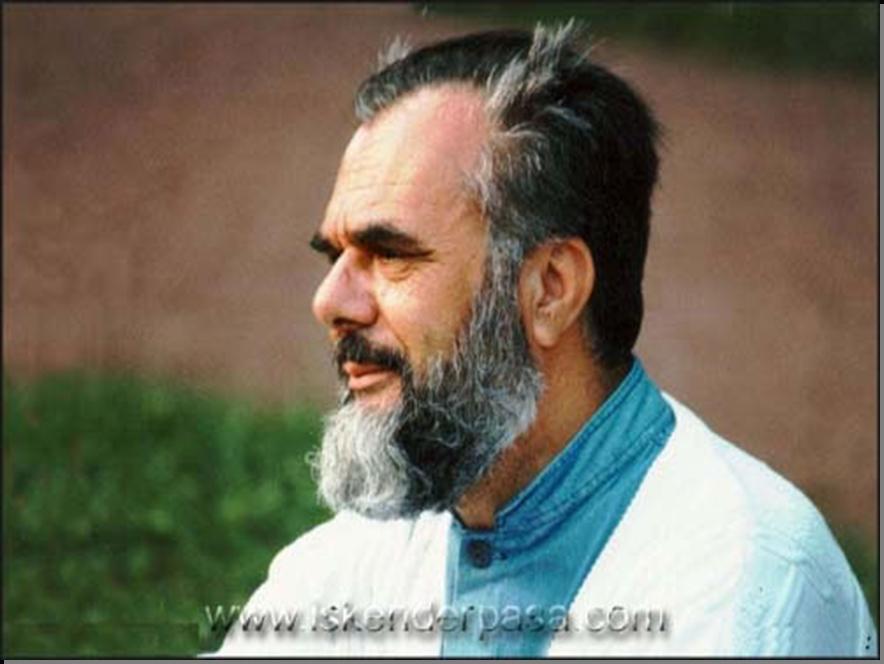
The following video shows images of the grave of my deceased teacher, Professor Mahmud Esad Cosan (may God enlighten his grave), who passed away in a car accident in country New South Wales some years back.


Delicious
Bookmark this on Delicious

Digg!

Get Flocked

Stumble Upon Toolbar

Friday, December 12, 2008

OPINION: An Irreverent Guide to the Aussie Hajj ...


Recently one of my favourite editors announced he was packing his bags, partner and kids off to the Iberian peninsular. I was a little confused at first as to why he was going. I thought it might be some kind of pilgrimage.

I went to his farewell at his house in the inner-city of Sydney . Lots of wine and beer was flowing, none of it down my throat but plenty of its fumes up my nostrils. Once we were in a sufficient state of intoxication, I think I remember us having the following conversation:

HIM: So are you gonna visit me over there?

ME: Maaaate [in Tony Abbott style], I'll only go if you take me on pilgrimage on the road to Santiago de Compostella.

HIM: Mate [this time less like Tony Abbott], when are you taking me to Mecca ?

ME: You've got a point there. Still, they should let you in this time, now that you've grown a beard!.

I guess that's the problem many non-Muslims face. They simply can't get into Mecca even if they wanted to. I mean, I'm sure plenty of Aussies would absolutely relish the opportunity to spend a fortnight in a desert wilderness enjoying the 45-plus degrees celcius heat (without having an ice-cold VB as a consolation prize), the noise, the crowds, the pick-pockets, the rudeness of Saudi customs officials and police etc etc. What better way to spend Christmas?

An Aussie Hajj-a-holic's guide to the pilgrimage

For those of you who ever wondered what it was like to go on the Hajj - the Muslim pilgrimage to Mecca, now located in the modern (and I use that word in its broadest possible sense) Kingdom of Saudi Arabia - here is a step-by-step guide to the experience.

No, not my experience. I've never been. In fact, I'm not allowed to go until I've paid all my debts. Though my exceptionally South Asian mum has. In fact, she's already been there three times. And worse still, she wants to go again! I reckon it's because she wants to commune with God. Though I could be wrong.

I vaant to go a-ghen, to get aveh frum yoo and yoor faadhar. Olvez mek
me doo-ing iss-stoopid cooking!

(Trans: I'd go again just to get away from you and your father! When are
you two gonna learn to cook??)


Yep, she's a bit of a Hajj-a-holic.

The crowd

The first problem mum points out is with the crowds. If Byron Bay and Sunshine coast locals thought they had it bad with schoolies and toolies, they should spare a thought for the people of Mecca. Each year, over 5 million people visit this sacred Muslim city.

The biggest numbers are at the time of Hajj, the sacred pilgrimage all able-bodied Muslims who can afford it are expected to make at least once in their lifetime. This year, over 2.7 million people are expected to converge on this ancient city for this annual assembly of monotheism.

The pilgrims come from just about every part of the planet. Despite the enormous cultural, linguistic and sectarian differences amongst Muslims, there is a surprising degree of consensus when it comes to the rituals of the Hajj. These ancient rites date back 1,400 years and are based on an even older story.

The Hajj story

Some people in Australia talk about "Judeo-Christian" values, as if they haven't quite figured out that there are at least 3 monotheistic faiths that emerged from the Middle East. And that's not including all the other monotheistic faiths (such as Sikhism).

Really, what we should be talking about are "Abrahamic" values. The triplet faiths of Islam, Christianity and Judaism all respect and honour Abraham, an Iraqi chap regarded by all three traditions as the father of ethical monotheism.

According to Islamic tradition, Ibrahim (Abraham) married an Egyptian woman named Hajira (Hagar) who bore him a son named Ismail (Ishmael). He also took a second wife Sarah (pronounced slightly differently in Biblical English) who bore him a second son Ishaq (Isaac).

For some domestic reasons, Ibrahim feels the need to leave his first wife in a desert valley named Bakkah with the baby Ismail. Like all good mums, Hajira's primary concern is the survival of her toddler. But where will she find water in this wilderness?

The well and the cube

She heads for a hill, finds nothing and so heads in the opposite direction to another hill. She again finds nothing. In desperation, she runs back and forth around 7 times before setting eyes on her young boy kicking the ground to uncover a spring. Quickly she builds a make-shift well.

Within a short period, the well attracts the attention of other travellers through this area. Hajira watches her son become a grown man, and receives a visit from Ibrahim again. Ibrahim and Ismail are ordered to build a temple in honour of the one true invisible God. The temple was a simple cubic structure, in the direction of which people would pray.

The valley of Bakkah eventually became known as Mecca. The cubic temple is known as the Kaaba (an Arabic word which just means "Cube"), and is traditionally draped in a black embroidered cloth. The well kicked to the surface by the infant Ismail is known as the Well of Zam Zam.

The age of pilgrims

The elders teach that the reward for a successful Hajj is nothing less than forgiveness of all sins and paradise. In many Muslim cultures, this means people tend to leave performing Hajj to the end of their life. In the Indian sub-Continent, where my parents come from, people tend to perform Hajj after their kids have grown up, married and left home. Cynics (like my dad each time his wife books her Hajj package at the travel agent) recite an old Hindi/Urdu phrase which can be roughly translated as:
After eating several thousand mice, the fat cat finally decides to head off for Hajj!

In places closer to our shores, people tend to go much earlier. In Malaysia, it's common for young couples to treat the Hajj as a kind of spiritual honeymoon. According to the Prophet Muhammad, a person who married has completed half the faith. So if you're a boofy bloke like me and you are lucky enough to marry some gorgeous Malay (apologies for the tautology) princess, it's like a heavenly 2-for-1 deal. You've got guaranteed loss of your virginity, gain of half your faith and your sins forgiven in one go!

And for those who believes neo-Con fictions about Islam, the deal doesn't even include the fictitious 72 heavenly virgins!

Multicultural Aussie Hajj

Each year Australia sends a few hundred people to perform Hajj. When they come back, they're given the honorific title of "Hajji" or "al-Hajj". If their Hajj was successfully completed, they should come back with their sins are washed away and as pure as the day they were born.

(Anyone who has had to deal with Saudi officials at Jeddah airport will know why forgiveness of one's sins is furnished so readily.)

In Australia, the Hajj trip is performed by people of various ages. More young people accompany their elderly parents on this difficult journey.

Then there are the different nationalities and their interesting idiosyncrasies.

Hajj Hansonisms

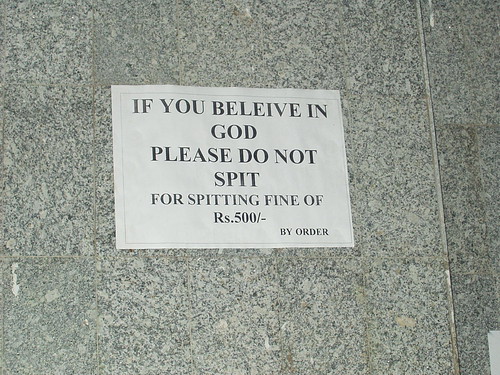
In Mecca, all street signs are in various languages. But there are certain signs you'll only find in Urdu, Bengali and Hindi. These signs simply state: "Spitting here is forbidden!". Or something like that.

Why? Across the Indian sub-Continent, people chew a special blend of nuts and paste wrapped in leaf known as paan which they chew and spit out into gutters or even against walls, leaving a nasty and distinct reddish-brown stain.

Turks travel in large groups and are extremely fussy about cleanliness. In one part of the Hajj, all pilgrims stay in tents on a plain called Mina for the night. The place becomes tent city for the night, with a range of facilities including toilets and kitchens. You know you're in the Turkish section because tents look shiny-new, the sand looks like someone has rubbed Mr Sheen into it, and the toilets are spotless to the extent you could make a sandwich on their floors.

Cronulla rioters will be pleased to learn that according to a reliable source (my mum), Lebanese pilgrims basically spend most of their Hajj sitting around cracking jokes and drinking coffee strong enough to keep you awake until the next Hajj.

Nigerians are tall and heavy-set. A major part of the pilgrimage is to circle the cubic temple seven times in an anti-clockwise direction, all the while shouting "Labayk! Allah humma Labbayk!" (roughly translated as "I'm here, Oh Lord, I'm here" though if you're on the receiving end of the rampage, you should read "My God! Here they come!!"). It's generally not advisable to slip if you find yourself in their path. When you see a group of them with arms clasped rushing toward you screaming the prayer, it's scarier than seeing 500 All-Blacks doing the Haka.

I have no idea what Kiwi pilgrims are like. I doubt they scream the Haka at any stage of the rituals. Plus people at Hajj tend to use sheep for slaughtering purposes.

And what the dinky-di Australian pilgrim do at Hajj? Maybe throw a halal shrimp on the bbq, have a game of sand cricket and sink down a few non-alcoholic VB's.

Hajj dress code

Despite the weird and wonderful characteristics of various cultural groups at Hajj, everyone dresses the same. Blokes wear a white-coloured two-piece towel thing, and ladies wear some additional stuff which is also white coloured. If you landed in Mecca at Hajj time and you didn't know where you were, you'd think it was a huge toga party. Except at this party, everyone is praying and no one gets pissed or stoned.

Despite this, Mecca does have some rather nasty features found in big secular cities. UK stand-up comic and columnist Shazia Mirza often talks about her Hajj during her routine. She was circling the Ka'aba when some dude pinched her behind. She turned around but couldn't recognise the culprit in a sea of sacred togas. She kept going when, within a moment or so, it happened again. She turned around, and again she couldn't locate the deviant.

Later, Shazia caught up with her sister, who also complained of being pinched. Shazia then relates to her audience: "We both concluded it was the Hand of God".

Boom boom!

(Don't panic. I didn't just let off a bomb.)

Meanwhile, back home...

Believe me, the party isn't just happening in Mecca. Across the world, Muslims celebrate their own party. In fact, it's the biggest feast of the year, and is known as Eid al-Adha (or Bayram for Turks, Hari Raya for Indonesians/Malays, Baqrah Eid for South Asians etc).

Thankfully, this year Eid and Christmas (or Hari Natal for all you Indonesians out there) are both happening around the same time. But for Aussie employers with Muslim employees, it's a huge pain in the butt. Here's why.

Aussie Lunar-tics

I'm sure all you (non-Orthodox) Christians find celebrating Christmas fairly straight forward. For a start, you at least know when it is. But spare a thought for us Muslims. The absence of any central priestly or scholarly authority in Aussie Islam means that we simply cannot agree on when the feast is to be celebrated.

Imagine being office manager in a medium-sized law firm in Sydney's CBD. It's Tuesday afternoon. Sekire (pronounced "Shakira"), a law clerk of Turkish ancestry, approaches you to confirm her leave on Wednesday to be at home helping mum with the cooking while her fiancé, brothers and dad go to the mosque for Bayram prayers. Her community's imams have settled religious festival dates until 2,987 A.D.

Then high-powered solicitor Suraina approaches you on Wednesday morning to take Thursday off for Hari Raya Haji. Her family and her metro-sexual husband (apparently the managing director of Petronas) are flying in from KL for the occasion. She only found out last night it was Hari Raya. She assures you a barrister had been briefed and will attend her hearing on Thursday.

Then on Friday morning, you get a call from the barrister's clerk. Thursday's hearing was adjourned to this morning, and the barrister Mr Yusuf can't make it as he heard last night that the Bakra Eid moon has been sighted.

But heck, don't blame us lay Muslims. Blame our lunar-tic mullahs, imams, sheiks, hojjahs, maulanas etc who can't seem to agree on how to calculate the beginning and end of lunar months!

The End

So that's the end of my slightly irreverent look at Hajj. For more information, go to your local mosque and convert. Then get on the first plane you can to Mecca, and you might arrive in time for the last rites.

First published in ABC Unleashed on 19 December 2007.

Words © 2007-8 Irfan Yusuf

Delicious
Bookmark this on Delicious

Digg!

Get Flocked

Stumble Upon Toolbar

Thursday, December 11, 2008

OPINION: Muslim apathy & thick-Sheiks


Tanya Louise Smith, a young Australian woman who converted to Islam and eventually went to Yemen. She met up with some other Australians and started studying a more fringe form of Islam, which sometimes going by the name "salafi" or "wahhabi".

She married a Palestinian man, fell pregnant and went to Gaza to live with her in-laws. Her husband, who hoped to join her, was stuck outside thanks to the Israeli blockade and Egypt closing the border. You can read her story in The Australian here.

How did she and her Australian classmates end up pursuing studies in a more fringe form of Islam and in an apparently more radical institution?

No doubt some will say that it's logical that a person adopting Islam will become a danger to themselves and society. Since 9/11, it has become fashionable in some circles to equate the 14 centuries of evolving religious tradition known as Islam with just about all the ills of the world.

Hence, anyone who says anything even remotely positive about the "i" word is treated as if they've just screamed out the "f" word repeatedly on TV.

Still, let's not live in denial. There are a bunch of crazies out there happy to make a political point by blowing themselves up or flying jet aircraft into skyscrapers. They have their own peculiar ideology, and their message is essentially a political (as opposed to a religious) one. This explains why Osama bin Ladin's taped messages are always dominated by references to political grievances.

A major problem bin Ladin has is that he follows a sect of Islam that Smith adopted. This particular sect is the official religion of the Kingdom of Saudi Arabia, though apparently only a minority of Saudis actually follow it. In the non-Saudi world, it is regarded as quite heterodox.

Some Muslims (especially shia Muslims) regard it as downright heretical.

So bin Ladin is a wahhabi. He also was for many years (but not anymore) a Saudi citizen. However, that doesn't mean all Saudis and/or Wahhabis are sitting on the "friends" section of bin Ladin's Facebook page, even if some scribes think they are.

We have some Wahhabis in Australia but not a huge number. At least one of them says he meets with the boys and girls from ASIO fairly regularly to "talk about everything".

More extreme Wahhabis do recruit, though their efforts among first generation Muslim migrants haven't been too successful. Why? Because these migrants have been spiritually and ideologically inoculated against any extremist influence.

When you grow up in Pakistan or Turkey or Indonesia or other Muslim country, you develop a sense of what mainstream theology is.

But what happens to those who haven't gone through this mainstream religious osmosis? What happens to young kids brought up in Australia?

It's no secret that extremists target young people and converts. Sean O'Neill and Daniel McGrory, two British journalists working with The Times, wrote a book in 2006 entitled The Suicide Factory: Abu Hamza And The Finsbury Park Mosque.

The book tells the story of how radical preacher Abu Hamza recruited the children and grandchildren of Muslim migrants and a small band of converts. Some of his former students were among the London bombers.

Abu Hamza's group took advantage of the weak management of religious institutions. British Muslims are largely of South Asian extraction whose cultures regarded involvement in religious institutions as a rather lowly endeavour.

Mosque managers also saw their institutions as places where they could keep alive the culture they left behind in Pakistan or Bangladesh in the 1970s. Hence, mosques are stuck in a cultural time-warp, relics of religious and social attitudes that are rarely found even in modern South Asian countries.

Into this vacuum strode Abu Hamza and his cronies, many of whom had criminal records for violence and fraud offences. After being removed from one small mosque, Abu Hamza set his sights on the large Finsbury Park Mosque built with Saudi money and supported by Prince Charles.

Could someone like Abu Hamza just as easily operate in Sydney or Melbourne? The descriptions in The Suicide Factory given of the parlous state of British Muslim institutions – political intrigue, scarce resources wasted on litigation, cultural irrelevance to name just a few - are what I've seen in Australia for over two decades.

Of course, Muslim Poms and Aussies are as dissimilar as Catholic Brazilians and East Timorese. But what many mosques in both the UK and Australia share is disregard for the spirirtual needs of second and third generation Muslims and converts.

Further, Muslims are by and large a very secular lot most of whom will only be seen at the mosque on the two major feast days. You don't see prominent Muslims from BRW's top 100 list getting involved in managing religious institutions.

The good news is that young Muslims are taking control of their own spiritual destinies. Young Muslims are looking to Europe and the United States for sensible relevant voices like Hamza Yusuf Hanson and Tariq Ramadan.

The only opposition they face is from a coalition of radical thick-Sheiks who label them infidels and radical neo-conservative pundits for whom the only good Muslim is an ex-Muslim.

Young educated Muslims are now taking over religious institutions. The new face of the Lebanese Muslim Association in Lakemba is a surfing sheik who visits schools with a young rabbi. And you can watch the CEO of the Islamic Council of Victoria compering an SBS talkshow each Wednesday night, while a member of his executive is a stand-up comic who wants to run for Mayor in the Sydney's Camden.

An Australian Islam with a genuinely Aussie accent is a key element to ensuring the Abu Hamza's of this world don't gain a foothold in Australia, and that the Tanya Smith's can learn their faith without having to travel into a culturally unfamiliar environment.

First published in ABC Unleashed on 9 July 2008.

Words © 2008 Irfan Yusuf

Delicious
Bookmark this on Delicious

Digg!

Get Flocked

Stumble Upon Toolbar