Showing posts with label Hajj. Show all posts
Showing posts with label Hajj. Show all posts
Saturday, November 13, 2010


Saturday, December 12, 2009
COMMENT: Fair Dinkum Pilgrimage
The following piece was published on the Aussie Mossie blog on Monday 9 January 2006.
In the past few days, around 2.5 million Muslims from across the globe have converged on the ancient city of Mecca in central-west Saudi Arabia to perform the various rites that form part of the Muslim pilgrimage tradition known as the “Hadj”.
On Tuesday 10 & Wednesday 11 January millions more will attend prayer services and gatherings in their local areas for the feast of sacrifice (known in Arabic as “Eid al-Adha”), the most important religious and cultural festival of the Muslim calendar. The feast commemorates an event mentioned in both the Old Testament and the Koran.
The Old Testament recounts how God ordered Abraham to show his devotion by sacrificing his own son Isaac. The Qur’an is silent on the identity of the son, though Islamic tradition suggests the proposed sacrificial son was to be the elder Ishmael.
Just as Abraham places the blade on his son’s throat, the command is given to sacrifice a ram instead. The rites of the Hadj conclude with pilgrims sacrificing an animal, following the example of Abraham. Hadj also involves a variety of other acts commemorating the sacrifices made by Abraham and members of his family to establish monotheism in the region.
These acts include circling a cubic structure known as the Kaaba (believed to have been built by Abraham) which is draped in fresh black embroidered cloth each year. Near the Kaaba are two hills (named “Safa” and “Marwa”), between which it is believed Ishmael’s mother ran to fetch water for her infant child. Pilgrims run between these two hills following in Hagar’s footsteps.
The highlight of the Hadj is the assembly on Mount Arafat, regarded as a preliminary to the gathering of all humanity on Day of Judgment. In January 2005, TVNZ reported that over 20,000 buses were used to carry a portion of the millions of pilgrims who made the journey last year.
At one time, travel to Hadj was a difficult and dangerous journey. American Muslim writer Michael Wolfe recounts the pre-jet-age perils of pilgrims in his book “One Thousand Roads To Mecca”, an anthology of 10 centuries of Hadj travel writing.
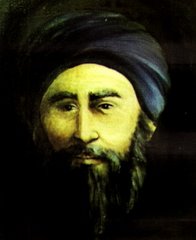
Wolfe’s characters include Ibn Battuta (Islam’s very own Marco Polo) who travelled by land and sea during the 14th century over some 75,000 miles and over a period of 30 years. Also included are “fake” pilgrims who smuggled themselves into Mecca defying its ban on non-Muslims entering its gates, such as Englishman Joseph Pitts who managed to sneak into Mecca undetected in 1685.
The journeys recorded also include the diary entries of an Australian woman Winifred Stegar who married an Indian merchant in Singapore. Her pilgrimage was performed in 1927, with she and her Indian husband running out of money and having to leave some of their children behind along the way.
Wolfe’s own Hadj journey, described in his book 1993 “The Hadj – An American’s Pilgrimage to Mecca”, was a much safer affair. Like most modern pilgrims, he travelled by air. The grandson of an Orthodox Jewish religious scholar, Wolfe adopted Islam after spending time in Morocco.
In many Muslim cultures, Hadj represents the culmination of a lifetime of devotion with the “Hadjis” (as those making the journey are called) leaving the journey until later years. It is said that a person’s entire adult life of sins is erased by a successful Hadj.
On the other hand, the delayed Hadj is also the subject of wry humour. Hadjis are often jokingly regarded as veteran sinners seeking a “quick fix” to their perilous spiritual status. An Urdu saying goes: “After eating several thousand mice, the elderly cat finally decides to set off for Hadj!”
But with hundreds of elderly Hadjis dying each year, and with an increased sense of religiosity amongst young Muslims, the average age of pilgrims appears to be decreasing.
In Malay and Indonesian cultures, it is traditional for Hadj to be performed in one’s early adult years. And amongst Australian pilgrims, young adults are also heavily represented.
Sydney’s Sun-Herald reported on December 11 2005 of a group of young Muslims from the Sydney Muslim heartland of Lakemba making preparations for the journey. One of them was Omar Abas, a 26 year old software engineer and a personal friend of the writer.
Omar’s father first went to Hadj at age 65, and his own decision to go for Hadj relatively young is unusual in the context of his parents’ Lebanese heritage wherein leaving Hadj to the end of one’s life “was the traditional Lebanese mentality. You live your life and do what you want, and then go to Hajj.
“For my parents' and grandparents' generations, religion played a small part in their upbringing. Today it’s different. Religion is very important to young Muslims because it is a way of life.”
For those Muslims not at Hadj, the time is one for feasting with family and friends. Non-Muslim readers with Muslim work colleagues should remind them of this fact at next week’s work lunch. But sorry, most of us won’t buy you a ham sandwich or a schooner of VB!
Words © 2006-09 Irfan Yusuf

Bookmark this on Delicious


Wednesday, January 28, 2009
FILM: Journey to Mecca: In the footsteps of Ibn Battuta
Here is the text accompanying the trailer. Hopefully this will hit the Sydney IMAX. Find out more about the movie at the website here.
Journey to Mecca tells the story of Ibn Battuta, (played by Chems Eddine Zinoun) a young scholar, who leaves Tangier in 1325 on an epic and perilous journey, traveling alone from his home in Morocco to reach Mecca, some 3,000 miles to the east.
Ibn Battuta is besieged by countless obstacles as he makes his way across the North African desert to Mecca. Along the route he meets an unlikely stranger, the Highwayman (played by Hassam Ghancy) who becomes his paid protector and eventual friend. During his travels he is attacked by bandits, dehydrated by thirst, rescued by Bedouins, and forced to retrace his route by a war-locked Red Sea.
Ibn Battuta finally joins the legendary Damascus Caravan with thousands of pilgrims bound for Mecca for the final leg of what would become his 5,000 mile, 18 month long journey to Mecca.
When he arrives in Mecca, he is a man transformed. We then experience the Hajj as he did over 700 years ago, and, in recognition of its timelessness, we dissolve to the Hajj as it is still performed today, by millions of pilgrims, in some of the most extraordinary and moving IMAX® footage ever presented.
Ibn Battuta would not return home for almost 30 years, reaching over 40 countries and revisiting Mecca five more times to perform the Hajj. He would travel three times farther then Marco Polo. His legacy is one of the greatest travel journals ever recorded. A crater on the moon is named in his honour.
And here is a video showing the making of the film.
Bookmark this on Delicious
Friday, December 12, 2008
OPINION: An Irreverent Guide to the Aussie Hajj ...

Recently one of my favourite editors announced he was packing his bags, partner and kids off to the Iberian peninsular. I was a little confused at first as to why he was going. I thought it might be some kind of pilgrimage.
I went to his farewell at his house in the inner-city of Sydney . Lots of wine and beer was flowing, none of it down my throat but plenty of its fumes up my nostrils. Once we were in a sufficient state of intoxication, I think I remember us having the following conversation:
HIM: So are you gonna visit me over there?
ME: Maaaate [in Tony Abbott style], I'll only go if you take me on pilgrimage on the road to Santiago de Compostella.
HIM: Mate [this time less like Tony Abbott], when are you taking me to Mecca ?
ME: You've got a point there. Still, they should let you in this time, now that you've grown a beard!.
I guess that's the problem many non-Muslims face. They simply can't get into Mecca even if they wanted to. I mean, I'm sure plenty of Aussies would absolutely relish the opportunity to spend a fortnight in a desert wilderness enjoying the 45-plus degrees celcius heat (without having an ice-cold VB as a consolation prize), the noise, the crowds, the pick-pockets, the rudeness of Saudi customs officials and police etc etc. What better way to spend Christmas?
An Aussie Hajj-a-holic's guide to the pilgrimage
For those of you who ever wondered what it was like to go on the Hajj - the Muslim pilgrimage to Mecca, now located in the modern (and I use that word in its broadest possible sense) Kingdom of Saudi Arabia - here is a step-by-step guide to the experience.
No, not my experience. I've never been. In fact, I'm not allowed to go until I've paid all my debts. Though my exceptionally South Asian mum has. In fact, she's already been there three times. And worse still, she wants to go again! I reckon it's because she wants to commune with God. Though I could be wrong.
I vaant to go a-ghen, to get aveh frum yoo and yoor faadhar. Olvez mek
me doo-ing iss-stoopid cooking!
(Trans: I'd go again just to get away from you and your father! When are
you two gonna learn to cook??)
Yep, she's a bit of a Hajj-a-holic.
The crowd
The first problem mum points out is with the crowds. If Byron Bay and Sunshine coast locals thought they had it bad with schoolies and toolies, they should spare a thought for the people of Mecca. Each year, over 5 million people visit this sacred Muslim city.
The biggest numbers are at the time of Hajj, the sacred pilgrimage all able-bodied Muslims who can afford it are expected to make at least once in their lifetime. This year, over 2.7 million people are expected to converge on this ancient city for this annual assembly of monotheism.
The pilgrims come from just about every part of the planet. Despite the enormous cultural, linguistic and sectarian differences amongst Muslims, there is a surprising degree of consensus when it comes to the rituals of the Hajj. These ancient rites date back 1,400 years and are based on an even older story.
The Hajj story
Some people in Australia talk about "Judeo-Christian" values, as if they haven't quite figured out that there are at least 3 monotheistic faiths that emerged from the Middle East. And that's not including all the other monotheistic faiths (such as Sikhism).
Really, what we should be talking about are "Abrahamic" values. The triplet faiths of Islam, Christianity and Judaism all respect and honour Abraham, an Iraqi chap regarded by all three traditions as the father of ethical monotheism.
According to Islamic tradition, Ibrahim (Abraham) married an Egyptian woman named Hajira (Hagar) who bore him a son named Ismail (Ishmael). He also took a second wife Sarah (pronounced slightly differently in Biblical English) who bore him a second son Ishaq (Isaac).
For some domestic reasons, Ibrahim feels the need to leave his first wife in a desert valley named Bakkah with the baby Ismail. Like all good mums, Hajira's primary concern is the survival of her toddler. But where will she find water in this wilderness?
The well and the cube
She heads for a hill, finds nothing and so heads in the opposite direction to another hill. She again finds nothing. In desperation, she runs back and forth around 7 times before setting eyes on her young boy kicking the ground to uncover a spring. Quickly she builds a make-shift well.
Within a short period, the well attracts the attention of other travellers through this area. Hajira watches her son become a grown man, and receives a visit from Ibrahim again. Ibrahim and Ismail are ordered to build a temple in honour of the one true invisible God. The temple was a simple cubic structure, in the direction of which people would pray.
The valley of Bakkah eventually became known as Mecca. The cubic temple is known as the Kaaba (an Arabic word which just means "Cube"), and is traditionally draped in a black embroidered cloth. The well kicked to the surface by the infant Ismail is known as the Well of Zam Zam.
The age of pilgrims
The elders teach that the reward for a successful Hajj is nothing less than forgiveness of all sins and paradise. In many Muslim cultures, this means people tend to leave performing Hajj to the end of their life. In the Indian sub-Continent, where my parents come from, people tend to perform Hajj after their kids have grown up, married and left home. Cynics (like my dad each time his wife books her Hajj package at the travel agent) recite an old Hindi/Urdu phrase which can be roughly translated as:
After eating several thousand mice, the fat cat finally decides to head off for Hajj!
In places closer to our shores, people tend to go much earlier. In Malaysia, it's common for young couples to treat the Hajj as a kind of spiritual honeymoon. According to the Prophet Muhammad, a person who married has completed half the faith. So if you're a boofy bloke like me and you are lucky enough to marry some gorgeous Malay (apologies for the tautology) princess, it's like a heavenly 2-for-1 deal. You've got guaranteed loss of your virginity, gain of half your faith and your sins forgiven in one go!
And for those who believes neo-Con fictions about Islam, the deal doesn't even include the fictitious 72 heavenly virgins!
Multicultural Aussie Hajj
Each year Australia sends a few hundred people to perform Hajj. When they come back, they're given the honorific title of "Hajji" or "al-Hajj". If their Hajj was successfully completed, they should come back with their sins are washed away and as pure as the day they were born.
(Anyone who has had to deal with Saudi officials at Jeddah airport will know why forgiveness of one's sins is furnished so readily.)
In Australia, the Hajj trip is performed by people of various ages. More young people accompany their elderly parents on this difficult journey.
Then there are the different nationalities and their interesting idiosyncrasies.
Hajj Hansonisms
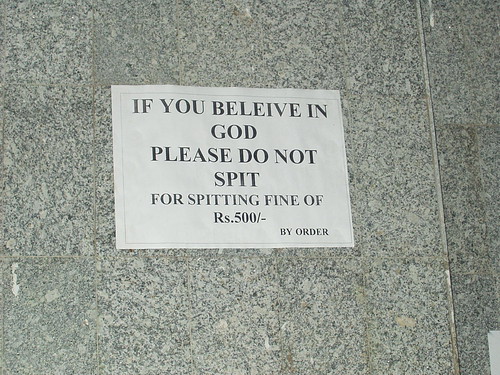
In Mecca, all street signs are in various languages. But there are certain signs you'll only find in Urdu, Bengali and Hindi. These signs simply state: "Spitting here is forbidden!". Or something like that.
Why? Across the Indian sub-Continent, people chew a special blend of nuts and paste wrapped in leaf known as paan which they chew and spit out into gutters or even against walls, leaving a nasty and distinct reddish-brown stain.
Turks travel in large groups and are extremely fussy about cleanliness. In one part of the Hajj, all pilgrims stay in tents on a plain called Mina for the night. The place becomes tent city for the night, with a range of facilities including toilets and kitchens. You know you're in the Turkish section because tents look shiny-new, the sand looks like someone has rubbed Mr Sheen into it, and the toilets are spotless to the extent you could make a sandwich on their floors.
Cronulla rioters will be pleased to learn that according to a reliable source (my mum), Lebanese pilgrims basically spend most of their Hajj sitting around cracking jokes and drinking coffee strong enough to keep you awake until the next Hajj.
Nigerians are tall and heavy-set. A major part of the pilgrimage is to circle the cubic temple seven times in an anti-clockwise direction, all the while shouting "Labayk! Allah humma Labbayk!" (roughly translated as "I'm here, Oh Lord, I'm here" though if you're on the receiving end of the rampage, you should read "My God! Here they come!!"). It's generally not advisable to slip if you find yourself in their path. When you see a group of them with arms clasped rushing toward you screaming the prayer, it's scarier than seeing 500 All-Blacks doing the Haka.
I have no idea what Kiwi pilgrims are like. I doubt they scream the Haka at any stage of the rituals. Plus people at Hajj tend to use sheep for slaughtering purposes.
And what the dinky-di Australian pilgrim do at Hajj? Maybe throw a halal shrimp on the bbq, have a game of sand cricket and sink down a few non-alcoholic VB's.
Hajj dress code
Despite the weird and wonderful characteristics of various cultural groups at Hajj, everyone dresses the same. Blokes wear a white-coloured two-piece towel thing, and ladies wear some additional stuff which is also white coloured. If you landed in Mecca at Hajj time and you didn't know where you were, you'd think it was a huge toga party. Except at this party, everyone is praying and no one gets pissed or stoned.
Despite this, Mecca does have some rather nasty features found in big secular cities. UK stand-up comic and columnist Shazia Mirza often talks about her Hajj during her routine. She was circling the Ka'aba when some dude pinched her behind. She turned around but couldn't recognise the culprit in a sea of sacred togas. She kept going when, within a moment or so, it happened again. She turned around, and again she couldn't locate the deviant.
Later, Shazia caught up with her sister, who also complained of being pinched. Shazia then relates to her audience: "We both concluded it was the Hand of God".
Boom boom!
(Don't panic. I didn't just let off a bomb.)
Meanwhile, back home...
Believe me, the party isn't just happening in Mecca. Across the world, Muslims celebrate their own party. In fact, it's the biggest feast of the year, and is known as Eid al-Adha (or Bayram for Turks, Hari Raya for Indonesians/Malays, Baqrah Eid for South Asians etc).
Thankfully, this year Eid and Christmas (or Hari Natal for all you Indonesians out there) are both happening around the same time. But for Aussie employers with Muslim employees, it's a huge pain in the butt. Here's why.
Aussie Lunar-tics
I'm sure all you (non-Orthodox) Christians find celebrating Christmas fairly straight forward. For a start, you at least know when it is. But spare a thought for us Muslims. The absence of any central priestly or scholarly authority in Aussie Islam means that we simply cannot agree on when the feast is to be celebrated.
Imagine being office manager in a medium-sized law firm in Sydney's CBD. It's Tuesday afternoon. Sekire (pronounced "Shakira"), a law clerk of Turkish ancestry, approaches you to confirm her leave on Wednesday to be at home helping mum with the cooking while her fiancé, brothers and dad go to the mosque for Bayram prayers. Her community's imams have settled religious festival dates until 2,987 A.D.
Then high-powered solicitor Suraina approaches you on Wednesday morning to take Thursday off for Hari Raya Haji. Her family and her metro-sexual husband (apparently the managing director of Petronas) are flying in from KL for the occasion. She only found out last night it was Hari Raya. She assures you a barrister had been briefed and will attend her hearing on Thursday.
Then on Friday morning, you get a call from the barrister's clerk. Thursday's hearing was adjourned to this morning, and the barrister Mr Yusuf can't make it as he heard last night that the Bakra Eid moon has been sighted.
But heck, don't blame us lay Muslims. Blame our lunar-tic mullahs, imams, sheiks, hojjahs, maulanas etc who can't seem to agree on how to calculate the beginning and end of lunar months!
The End
So that's the end of my slightly irreverent look at Hajj. For more information, go to your local mosque and convert. Then get on the first plane you can to Mecca, and you might arrive in time for the last rites.
First published in ABC Unleashed on 19 December 2007.
Words © 2007-8 Irfan Yusuf
Bookmark this on Delicious
Subscribe to:
Posts (Atom)