Showing posts with label UK. Show all posts

Sunday, February 06, 2011

COMMENT: Reading Quilliam ...


Over the next few weeks, I've set aside time to read the various papers produced by the Quilliam Foundation, a thinktank which was co-founded by Mohammed Mahbub ("Ed") Husain and Maajid Nawaaz. These two gentleman claim to have been senior members of Hizb ut-Tahrir in the UK.

Ed Husain authored a book called The Islamist. I use the word "authored" in its broadest possible sense. A reliable source close to his publishers has advised that in fact a ghost writer wrote most of the book. It isn't clear whether the ghost writer merely provided words or also contributed ideas. The ghost writer did seem to do a good job, and I gave the book a relatively positive review when it was first published in Australia.

The book was written before QF was founded and before it became the darling of cultural warriors and UK politicians hell-bent on marginalising certain minorities. QF has been criticised by many in the UK "islamic industry", and I am not so naive as to accept everything self-appointed leaders have to say on these matters. So I've decided to research the matter in detail for myself.

UPDATE: It also turns out Husain is a Senior Fellow at the U.S. Council on Foreign Relations. You can watch a video of him talking about Egypt here.


Words © 2011 Irfan Yusuf

Delicious Bookmark this on Delicious Digg! Get Flocked

Stumble Upon Toolbar

Friday, June 12, 2009

VIDEO: BBC report on the Allah Made Me Funny tour ...

Here's a report from BBC about the UK tour of that awesome threesome known as Allah Made Me Funny from 17 April 2009.


Delicious
Bookmark this on Delicious

Digg!

Get Flocked

Stumble Upon Toolbar

Friday, January 16, 2009

OPINION: Third Column in Crescent Times - Muslims in Australia have no rights!

I have some terrible news for you all. Muslims in Australia have no rights.

This is no joke. And as if to make matters worse, Christians also have no rights. Nor do Hindus, Buddhists, Jews, Sikhs or even atheists. In fact, no one in Australia, no Australian citizen or permanent resident, has any rights.

And no, I’m not writing this because I have gone stark-raving mad. I’m giving you free legal advice. I’m telling you this as a lawyer, so you can trust me on this one.

When I was in first year uni, my law lecturer told me that Australia’s legal system is based on the English Common Law tradition. There are a number of countries that follow this tradition, including many Muslim-majority states like Malaysia and Pakistan. Of course, it’s no mystery to many of us that Muslims living in many Muslim countries have few if any rights. Recent media reports suggest Malaysian Muslims don’t even have the right to engage in yoga.

Then again, I doubt that the Malaysian Common Law could improve some of the wackier declarations of Malaysian muftis. Returning to that first year law class, my lecturer told me that the Common Law tradition doesn’t grant rights. Instead, it grants citizens these interesting legal creatures called “liberties”.

Citizens can always decide to limit or even dispense with these liberties. How so? By electing members of Parliament to represent them who decide to legislate these liberties out of existence.

But why would citizens wish to deprive themselves of their own liberties? There could be any number of reasons. People might decide that there are internal or external threats that need to be dealt with. Before it was unceremoniously booted out of office, the Howard government kept telling us that it needed to implement a range of strategies to meet the apparently new threats of al-Qaeda terror. This included starting a war in Iraq that created enough chaos to enable al-Qaeda to establish a new front, to wreak havoc in yet another Muslim country. No doubt Osama bin Ladin was clapping his hands in glee when Messrs Howard and Downer joined Messrs Bush and Blair in that disastrous invasion.

The Howard government also kept reminding us that the terrorists hate us because of our values and our liberty. And what better way to protect that liberty than by legislating it almost out of existence?

The weird thing is that Australia claims to be a liberal democracy. Now liberalism is a political philosophy that places emphasis on the rights of individuals to be free of the coercive power of the state wherever possible. But the Common Law gives a sovereign parliament the right to limit the freedoms and liberties of individuals. MP’s can make laws that take away our liberties. But they can also make laws to create rights.

By now, some readers will be completely confused. So let me get to the point. We need a Charter of Rights. Or perhaps we need what citizens of the United States take for granted – a Bill of Rights. The US Bill of Rights hasn’t stopped the Bush administration from implementing draconian laws. But it has provided US citizens with a means to challenge and fight these laws in the courts.

Catharine Branson QC was a Federal Court Judge for 14 years. She is now president of the Australian Human Rights Commission. In a December 2007 speech, she made this startling remark:

... neither Australian lawmakers nor those who make decisions under Australian laws are sufficiently conscious of people’s rights. I have experienced lawmakers restricting freedom of speech. I have experienced public decision-makers making incorrect decisions with harmful consequences for people.

We’re fortunate to live in a country where we have at least some say over the decisions made by our governments. But having elections every 3 years isn’t enough to establish or protect human rights. It certainly hasn’t been enough to stop our government from locking up children in detention centres or deporting citizens. Victoria and the ACT both have a Charter of Rights. The United Kingdom has implemented a Charter of Rights, as has Canada and New Zealand. In fact, the Commonwealth of Australia is one of the few English-speaking democracies without such a charter.

The risk in having a Charter is that it gives unelected judges the power to disrupt the law making processes of our elected representatives. In any event, this is a debate in which Muslim Australians have much at stake. Unfortunately Muslims are frequently used as political and legislative footballs. We often feel our rights are trampled on. The national consultation and debate over a possible Commonwealth Charter of Rights is one process we need to become involved in.

First published in the January 2009 edition of the Crescent Times.

Delicious
Bookmark this on Delicious

Digg!

Get Flocked

Stumble Upon Toolbar

Wednesday, November 26, 2008

BOOKS: Ed Husain and political engagement ...

Well, I did say that I’d be focussing on posting old stuff. So much for that.

Hopefully I’ll be getting my manuscript back on Monday. I’ll then have 14 days to do the final editing and chiselling of the text.

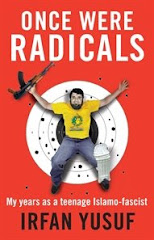
My book is about how young Muslims I grew up with during the 1980’s and 90’s navigated our way into, through and out of various forms of political Islam. No doubt some will compare the book with Mohamed Mahbub (Ed) Husain’s The Islamist: Why I joined radical Islam in Britain, what I saw inside and why I left, which was published by Penguin in the United Kingdom in 2007.

Husain claims to have spent five years dabbling in various forms of political Islam, from the Jamaat-i-Islami style of Sayyid Maududi to Hizbut Tahrir (HT). He says that he felt compelled to leave after he witnessed someone at his college being murdered. It isn’t clear exactly how this murder was in any way related to HT, apart from the person alleged to have been the culprit having a particular mindset that was apparently fostered by HT.

Husain’s preface outlines the purpose of his book ...

This book is a protest against political Islam, based on my own experience as a British Muslim who grew up in London, became an extremist – an Islamist – and saw the error of his ways ... This is the story of my journey from the inside, in the fullest sense of the word: inside today’s Islam, inside Britain’s Muslim communities, inside my own heart.
I can’t but help wonder if Husain’s work is less one of analysis and more of hubris. Just how many British Muslim communities was he exposed to? Just how many forms of political Islam did he encounter? To what extent was he really a leader in any group?

The utility of Husain’s book is that he explores his own thinking with a fair degree of honesty, warts and all. However, I wonder whether it was the various forms of political Islam that is at issue here or rather his own interpretation of them?

In saying all this, I am in no way suggesting that Husain’s work can be dismissed. I’ve reviewed Husain’s book here and here. However, I did make some critical notes about the book which I was unable to incorporate into these reviews due to word-count restrictions.

Husain claims that his parent’s Islam had little or no political content. He appears to have come from a family that followed the Barelwi school of thought, and speaks about frequent mawlid gatherings in his home and dhikr sessions at the Brick Lane mosque. His parents followed a Bangladeshi Islamic scholar and sufi shaykh named Abdul Latif Fulthali (or “Abd al-Latif Fultholy” as spelt by Husain). On page 9, Husain describes Fulthali as

... a master of five Muslim mystical orders, as well as the founder of over 400 religious seminaries in India and Bangladesh.
Husain says that both his father and Shaykh Fulthali were critics of Sayyid Maududi and the Jamaat-i-Islami. On page 10 he writes:

I heard names such as ‘Mawdudi’ being severely criticised, an organisation named Jamat-e-Islami being refuted and invalidated on theological grounds. All this was beyond me.
I also heard similar stuff throughout my time and still do. However, I eventually learned that much of the attack on Maududi was based not just on theology but also on political grounds.

One chap I met in Sydney during the early 1990’s was named “Sufi Javed”. He was founder of the Australian branch of a mild Barelwi group called Idara Minhaj al-Qur’an. But Sufi Javed was anything but mild. The first time I sat with him, I was with an old friend of Fiji-Indian background I refer to in my book as “Shaf” and another friend of Lebanese extraction nicknamed “Shamir Yahood” (his actual name in Arabic rhymed with this). Sufi Javed’s words in Urdu are still ringing in my ears:

Maududdi bohot bara aalim tha. Aur bohot bara CIA agent bhi tha! ("Maududi was a big scholar. And also a big CIA agent!")

Apparently being a CIA agent was regarded as a bad thing. It probably still is. I’m sure glad I’m not one.

Sufi Javed also hacked into other groups. Shaf was a huge fan of the Tablighi Jamaat (TJ) and a staunch critic of Maududi. Shaf was smiling broadly when he heard Sufi Javed declare Maududi to be a CIA agent. His smile didn’t last for long when Sufi Javed proclaimed the founder of the TJ, Muhammad Ilyas Kandhalwi, to be an Angrezo ka jaasoos ("spy to the British"). Kandhalwi founded the TJ in Delhi before Indian independence and Partition.

This kind of sectarian and political hyperbole was common in Muslim discourse, at least in Sydney. And apparently in India and Pakistan also. Kandhalwi’s son-in-law, Muhammad Zakariyya, wrote a book called Fitnat-i-Maududiyyat (literally “the Chaos resulting from Maududiism”), which Shaf often harped on about. I never could locate an English language edition of the book, but I did read badly-translated excerpts in a book many years later.

So much of this hyperbole was just sheer hypocrisy. Ed Husain seems to suggest his father’s spiritual guide (or pir), Shaykh Fulthali, was not interested in politics. I’ll believe that when someone can convince me that John Howard and Pauline Hanson are both members of the Aeora Aboriginal nation.

Husain was very fortunate to be in the company of a pir from a young age. But his family pir clearly had a deep interest in politics. Shaykh Fulthali stayed with Husain’s family in the summer of 1990. At the time, Husain was 15 years old and preparing for his GCSE exams. However, studies didn’t concern Husain as much as the Iraqi occupation of Kuwait and the resulting war.

Husain refers to Shaykh Fulthali as “Grandpa”. He writes on pages 16-17:

Saddam Hussein, the former Iraqi president, had invaded his small neighbour. Grandpa would return home every night and ask me for the latest news. The first time he asked, I had no idea where Iraq was on the map, let alone what its leader had done.

Very quickly I sharpened up my geography of the Middle East. But that was not enough. The following day he asked me how the international community had responded. What was going on at the UN? What were other Arab governments saying? Astounded, I wondered how I was supposed to know. But I knew I had to know. Pleading ignorance was not an option.

I grabbed pen and paper and started watching news bulletins in the mornings and afternoons. I took copious notes. I did this for about five months while Grandpa stayed with us, providing him with the details of Saddam’s rhetoric, Tareq Aziz’s interviews and John Simpson’s bomb-ducking analyses. ... Before my sixteenth birthday my father’s interest in current affairs and Grandpa’s delegation of news monitoring to me meant that I had become politicized.
This degree of political engagement with overseas conflicts would never have been tolerated by my Jamaat-i-Islami relatives so close to major exams. It would never have been tolerated under any circumstances in the TJ.

To be continued ...

Words © 2008 Irfan Yusuf

Delicious
Bookmark this on Delicious

Digg!

Get Flocked

Stumble Upon Toolbar

Thursday, October 23, 2008

COMMENT: Social Cohesion's misleading report on FGM ...

Allegedly conservative UK Thinktank Civitas has produced a report entitled Crimes of the Community. The report deals with various forms of violent crime typically perpetrated against women.

I cannot comment on the entire contents of the 169 page report. However, I have read a section on what Islam says about Female Genital Mutilation (FGM).

A large number of Muslimphobic and jaundiced pundits have made it their business to claim that Islam endorses any and all forms of FGM. There is no doubt that FGM of various kinds is practised in certain parts of the Muslim world, including Indonesia, Malaysia, Egypt and other parts of Africa. It is also true that some Muslim religious authorities have justified this practice, as have religious authorities of other faiths in places where FGM is common.

The Social Cohesion report cites the views of a Shafei jurist (Ahmed ibn Naqib al-Masri) contained in his Umdat as-Salik, which has been translated and edited by Shaykh Nuh Keller). The report then speculates as to why Shaykh Nuh Keller would include the section on FGM whilst leaving out sections of ibn Naqib's book dealing with slavery.

The clear imputation is that Shaykh Nuh wishes to promote ibn Naqib's viewpoint. Perhaps the report's authors are even trying to suggest that Shaykh Nuh endorses FGM. No other evidence is provided to support these imputations.

The report then cites an opinion of Yusuf al-Qaradawi, who is described as "the spiritual leader of the Muslim Brotherhood". No evidence is provided from any MB source to confirm this claim.

The report then provides a reference to page 24 of Anne Sofie Raold's book Women in Islam: The Western Experience as source for the claim that:

The Hanafi and Maliki schools traditionally also regarded FGM as ‘noble’.
Roald's book is freely available on GoogleBooks. Nowhere on page 24 is FGM mentioned even once. Either this is a misprint or a complete fabrication.

What isn't mentioned is the attitude of Hanafi scholars in the Indian sub-Continent or Turkey to FGM. The report does acknowledge that the practice is rare in South Asian Muslim communities, who make up around 25% of the entire Muslim world. No South Asian religious texts or South Asian scholars are cited at all. No authorities from the Barelwi or Deobandi schools of thought are mentioned.

Further, no mention is made of what Shia religious authorities have said on the subject. This despite the fact that Shia Muslims represent at least 10% of the Muslim world and are increasing in number in Western countries.

All in all, the report attempts to show that the dominant position in Muslim communities and amongst religious authorities is that FGM is condoned. The enormous number of religious scholars and authorities who have actively campaigned against the practice is conveniently ignored.

The report ignored an international conference held in Cairo in November 2006 which condemned the practice. The report does mention Shaykh Tantawi, but doesn't mention Egypt's Grand Mufti Ali Gomaa whose views were reported by the BBC as follows ...

Ali Gomaa, Egypt's top official Islamic scholar, or grand mufti, told the gathering no examples of the practice could be found in the Prophet Muhammad's life.

The authors of the report journalists and include one Arabic speaker named Salam Hafez. Both are ex-employees of al-Jazeera. The only article of Salam Hafez I could find on the al-Jazeera site was about Dutch bikies. Further, as an Arabic speaker, one wonders whether Hafez would have been capable of reading influential books on Hanafi law written in Urdu or Turkish.

Words © 2008 Irfan Yusuf

Delicious
Bookmark this on Delicious

Digg!

Get Flocked

Stumble Upon Toolbar

Friday, July 11, 2008

COMMENT: Cohesion or incoherence?

I've just visited the blogsite of the so-called Centre for Social Cohesion, started by the allegedly conservative and allegedly liberal UK thinktank Civitas.

And what is the common theme of this blog? Any mention of the British National Party? Any discussion on developments in Northern Ireland? Any word on poverty? Unemployment? Any comments on the recent controversy concerning the Australian staffer of the London mayor?

Nope. It's all about Muslims, Islam, sharia, honour killings, caliphate websites, public libraries conspiring with al-Qaeda, etc etc. The implication is clear - these dirty dark-skinned ugly Mozzlems are a threat to social cohesion. Charming.

Is this the best that so-called conservatives in the UK can come up with? Have they completely lost the plot? Are they obsessed with finding Muslim conspiracies as some Germans (and at least one Austrian) were with identifying Jewish conspiracies some 60-70 years ago?

This kind of thinking seems to have become mainstream in the United Kingdom. It isn't helped by irresponsible comments by self-declared Muslim spokespeople. But it also isn't helped by the hysteria generated by wacky media commentators and thinktanks.

Reuters recently reported comments made by Britain's first government minister of Pakistani Muslim heritage, Shahid Malik ...

Muslims in Britain feel like aliens in their own society and say they are targeted like "the Jews of Europe", the country's first Muslim government minister said.

International Development Minister Shahid Malik painted a bleak picture of the integration of 1.8 million Muslims, three years after Islamist suicide bombers killed 52 people on London's transport system ...

Malik, who has been the target of race attacks including a firebombing of his family car, said some media coverage "makes Muslims feel like aliens in their own country."

"If you ask Muslims today what do they feel like, they feel like the Jews of Europe," he told a documentary to be shown on Channel 4 television next week, marking the third anniversary of the attacks on July 7, 2005.

"I don't mean to equate that with the Holocaust but in the way that it was legitimate almost -- still is in some parts -- to target Jews. Many Muslims would say that we feel the exact same way."

An ICM survey done for the documentary shows a narrow majority of 51 percent of Britons blame Islam to some degree for the bombings.


Islam is to blame for the bombings? Which Islam? The Islamic heritage of the 5 or so people who died in the bombings? The Islam of the first victim to be buried?

Are groups like the Centre for Social Cohesion really promoting social cohesion? Or are they really just adding oxygen to the fires of hatred and prejudice?

Words © 2008 Irfan Yusuf

Stumble Upon Toolbar

Saturday, May 24, 2008

COMMENT/UK: Extremists going for the vulnerable?

Nick Reilly, a 22 year old man with a history of mental illness caused injuries to himself when his explosive device caused a mild explosion. It appears the young man was trying to detonate the bomb inside a busy family restaurant in the town of Exeter in England.

Here’s how Reuters reported the police explanation of the incident:

“Our investigations so far indicate Reilly, who has a history of mental illness, had adopted the Islamic faith,” said Tony Melville, deputy chief constable of Devon and Cornwall police.

“We believe, despite his weak and vulnerable state, he was preyed upon, radicalised and taken advantage of.”


Thankfully no one else was hurt in the blast.

It’s impossible to tell whether the man belonged to any particular group. It is also unclear exactly what kind of mental illness the young man had and how the illness affected his behaviour.

The UK Daily Telegraph reports that neighbours believed the young man, who suffered severe facial wounds in the blast, suffered from schizophrenia. They also report that he had the mental age of a 10 year old.

The young man’s defence lawyer said that Reilly used cannabis and would often steal to finance his habit.

Police believe the young man was radicalised by young Muslims who allegedly brainwashed him outside a fish and chip shop in his home town of Plymouth.

A close friend of Reilly said that he was on heavy medication and had tried to commit suicide on numerous occasions. She told the Daily Telegraph:

“He has been sectioned for self-harm, cutting his arms and overdosing on pills but this was some time ago, maybe five years. He has scars all over his arms.”

If it’s true that this young vulnerable man was preyed upon by radicals, one wonders the extent to which this radicalising factor reinforced a pre-existing disposition toward violence. Either way, questions need to be asked about what kinds of messages were being given to this poor young man. What also needs to be explored is what kinds of support networks exist for the mentally ill in the young man’s region. It seems his neighbours were familiar with his condition.

While local police investigators are mentioning the young man adopting Islam, I don’t see any hint of them suggesting that the young man’s conversion in and of itself was the cause of his actions.

Certainly from an Islamic theological perspective, one wonders whether the young man’s conversion was voluntary or even necessary. Anyone with even basic knowledge of Islamic sacred law would know that persons suffering from severe psychiatric illnesses have legal and moral responsibility for their actions suspended to the extent that they are affected by their illness.

Yet as is so often the case with modernist radicalised Muslim youth, Islamic traditions and juristic consensus mean little.

UPDATE: Check out the insensitive and offensive comments appearing on the News Limited tabloid Daily Telegraph Opinion Editor's blog here. There's no point reading the comment publication and moderating guidelines. Clearly no one at the Daily Telegraph gives a rat's backside about them.

Words © 2008 Irfan Yusuf

Delicious
Bookmark this on Delicious

Digg!

Get Flocked

Stumble Upon Toolbar

Wednesday, January 23, 2008

QUOTE: In fighting terror, we must stop focussing on Islam ...

London experienced the new terrorism on 7 July 2005 when four bombs were detonated around the city. In the debate and discussion that followed I noticed that there was too much focus on Islam as a religion and Muslims as a community, as if each deserved examination as a likely pathology.

... what caused the terrorism was not Islam as a religion or even the lifestyle and culture of Muslims in Britain but an ideology, Global Islamism, whose nature had to be grasped if we were to fight terrorism.

... the ideology bin Ladin has fashioned, Global Islamism, remains a powerful force that will outlive him. Al-Qaeda is a threat not because it has training camps, finance and bombs, but because it is a brand of ideology which, like a virus, can spread globally ... [I]n fighting terrorism, we need to grasp the nature of the ideology, which is easy to spread and difficult to counter.

Meghnad Desai, Rethinking Islamism: The Ideology of the New Terror (2007) IB Tauris, London; Preface.

Stumble Upon Toolbar

Friday, September 07, 2007

CRIKEY: The Middle Eastern Gerard Henderson?


Imagine writing a monograph on Islam in Australia: Democratic bipartisanship in action including interviews with prominent players in law enforcement and politics but without interviewing a single Muslim, and launching the monograph in ... of all places ... the United Kingdom!

I was a little sceptical yesterday when I was forwarded an e-mail announcing the launch of Gerard Henderson’s monograph published by UK conservative thinktank Policy Exchange.

Especially when the study claimed that Australia actually had a "model" to "approach its Muslim population". (I feel so special knowing Dr Henderson has identified a special model to approach me!) Yet only four of the eight points in the model actually mention Islam or Muslims.

The first three points deal with security and the fourth tackles the end (well, sort of) of multiculturalism. Muslims are only involved to the extent that they do not

... fail to uphold core Australian values of citizenship ...
and
... it is not enough for self-appointed Muslim community leaders to oppose violent and aggressive jihad in Australia whilst supporting it beyond the shores of the Commonwealth.
In short, Muslims are a security threat to be managed. They aren’t people to be consulted or involved or even understood.

I felt it important to show Henderson the respect he failed to show the subjects of his monograph. I telephoned Henderson to ask about his study. He told me the original title was Islam and Democracy: The Australian Experience.

When I asked him whether there was any reason for not interviewing Muslims (or at least Reference Group members), Henderson became rather Middle Eastern.
Are you lecturing me? Who are you to tell me what I should write? What sort of question is that? This is most unprofessional.
Henderson claims the first Muslims to emigrate to Australia were Afghan cameleers. For someone with a PhD in history, this is a serious error. Indeed, Henderson need only look back to the speech delivered at his thinktank by West Australian author Dr Nahid Kabir.

Still, that’s neither here nor there. What is strange is that Henderson, a fellow with no serious knowledge of Australia’s Muslim communities only cites Kabir once. He doesn’t cite any other scholar on Muslim communities. I don’t expect Henderson to cite sycophantic non-critical writers. But Policy Exchange describes itself as taking an

... evidence-based approach to policy development … in partnership with academics and other experts.
Henderson is no expert on the topic, and he reaches questionable conclusions without citing experts. For instance, Henderson makes claims concerning Lebanese Muslims without citing a shred of evidence. He claims (on p10) that many of Australia’s Lebanese Muslims live in south west Sydney and that ...
... [n]o other Muslim group is so concentrated in a specific area.
He obviously hasn’t been to Auburn (known to many as "little Istanbul") or Coburg. Henderson’s ignorance of Australia’s Muslim organisational landscape especially became evident when he claimed (on p24) that ...

... the Howard government consciously chose not to consult with existing Muslim groups ... Instead the Prime Minister set up the Muslim Community Reference Group.
I’m sure many on the MCRG would find such claims amusing. If anything, the Group was deliberately stacked with existing religious organisational heads and stereotypical imams (like Hilaly). Among those invited by the PM to his Muslim leaders’ summit was Shafiq Khan, a prominent Saudi financier. In fact, Henderson feels quite able to write about the MCRG without even interviewing a single member of the group.

Further, his claim that

... the criticisms which John Howard ... levelled at al-Hilali’s January 2007 outburst created a climate in which Muslim Australians felt freer to state their own views than would otherwise have been the case.

So Aussie Mossies weren’t criticising religious leaders before January? Which planet has Henderson been living on? And as if we needed Howard’s blowing of the dog whistle to release us from our shackles!

If anything, Muslim critics of Hilaly were wishing Howard would shut up and let them deal with the issue. Howard’s interventions made things only more difficult. The study includes interviews with law enforcement, intelligence and political leaders. Instead of asking Muslims in Lakemba for their thoughts, Henderson interviews Bob Carr and Tony Burke (MP for Watson). Instead of asking anyone from the MCRG how they viewed the process, Henderson asks Andrew Robb.

Henderson suggested I "go and write a rant for The Age or the Canberra Times" before hanging up.

He may well find Aussie Muslims aren’t as rude. Assuming, of course, he bothers to talk with them and not just at or about them.

An edited version of this was first published in the Crikey daily alert on Thursday 6 September 2007.

Words © 2007 Irfan Yusuf


Stumble Upon Toolbar

Saturday, July 07, 2007

BOOKS: Rageh Omaar and Somali Muslim asylum ...

I've almost finished reading Rageh Omaar's excellent semi-autobiographical work Only Half Of Me: Being A Muslim In Britain. The book was published only in 2006 and provides a window to the experiences of a community many Muslims choose to ignore.

Rageh Omaar was born in Mogadishu in 1967. He worked for many years for BBC World, and was the BBC's main correspondent during the Iraq war. Unlike other journalists, content to remain safely "embedded" in Western armies, Omaar chose to travel to different parts of Iraq and report independently on the impact of the war on ordinary Iraqis.

Omaar frequently risked life and limb to bring the true story of the human cost of this war. Choosing to embed himself with ordinary Iraqis, Omaar's reports earned him an Emma award for best TV journalist in 2002 and 2003, as well as the prestigious award of broadcast journalist of the year by the London Press Club in 2004.

I've already reviewed his amazing 2004 work Revolution Day - The Human Story of the Battle for Iraq here. That book is a must-read for anyone trying to get a true taste of the high price ordinary Iraqis have had to pay for the imposition of "freedom and democracy". Don't expect this book to be on Alexander Downer's reading list.

Omaar's latest book talks about the experiences of his middle-class Somali family, forced to flee by political instability. What makes the book particularly interesting is Omaar's personal reflections on how Somali instability and asylum have affected the visions of two Somalis settled in the West - Yassin Hassan Omar and Ayaan Hirsi Magaan.

Yassin was identified by British police as one of those responsible for organising a failed suicide bombing attack in London exactly 14 days after devastating 7/7 attacks that killed over 50 people. Yassin was one of a group described by Omaar as

... child immigrants who had arrived in Britain ten years earlier, fleeing wars in the Horn of Africa. Their terrifying journey from conflict in their home country to life in Britain was shared by hundreds of Somali families and children.
Omaar speaks of Yassin growing up in the Ogaden region of Ethiopia, in the frontier town of Harar (from where Abdullah al-Harari, founder of the Lebanese al-Ahbash movement, emerged). He provides an interesting history of Harar and its place as a trading town and a place for Arab settlers. Eventually, it became a centre of Islamic culture and religion on the Horn of Africa.

Yassin arrived in the UK in 1992 with his sister and her husband. This was hardly a desirable family situation for the young boy, and he found the transition difficult to make.

They had witnessed a civil war, passed through vast refugee camps and suddenly arrived in the United Kingdom, having up until then known little about the world outside Ethiopia and Somalia. Yassin was one of those who could not adapt. The following year, at the age of twelve, he was taken into care. He was not placed with another Somali family or with Africans or Muslims but with a Christian Afro-Caribbean family. This move marked the beginning of a relentless cycle of different foster families and care homes. He would live like this for six years.
This isn't the sort of detail you'd read in a tabloid newspaper. Instead, all you'd read is "Muslim terrorist". Yet the reality was that Yassin had by now lost all links to his family and his cultural ancestry. Instead, he lived on his own in a one bedroom flat. During this period, he met Ibrahim Mukhtar Said, a refugee from the conflict between Ethiopia and Eritrean independence fighters. Said had a similarly troubled history, an addiction to cannabis and had been jailed for five years in 1996 for a violent armed robbery. Said's sole family was a host of youth gangs, having run away from home many years before.

Omaar provides this crucial background, but not as an excuse.

These stories are not intended to argue that social deprivation or alienation are somehow solely to blame for terrorist acts by young British citizens and residents ... Failing to adapt, isolation from family and home, exposure to older and intimidating people from a similar background are only some of the factors that lead a young man to commit horrific crimes. There are hundreds of thousands of other child refugees ... who have endured the same experiences, but have not headed in the same direction, just as there are thousands of white teenagers from foster homes who do not end up in young offenders' institutions or become violent criminals.
In a future post, I will insh'Allah (God-willing) talk about Rageh Omaar's reflections on Ayaan Hirsi Magaan/Ali.

Words © 2007 Irfan Yusuf

Delicious
Bookmark this on Delicious

Digg!

Get Flocked

Stumble Upon Toolbar

Thursday, June 28, 2007

COMMENT/PROFILE: Mahbub (Ed) Husain and Islamic Zionism

Some years back, I wrote an article on Margo Kingston's webdiary in which I referred to political Islam as "Islamic Zionism". That really set the cat among the pidgeons, with some claiming that the similarities between political Islam and Zionism were only superficial.

Now Ed Husain, the author of The Islamist, has taken up that theme in a column for The Guardian. Here's his argument in a nutshell ...

... are Islamists and Zionists really all that different, despite their blatant enmity? I think not.

Zionism and Islamism are both political perversions of ancient Abrahamic faiths of Judaism and Islam. They were both born out of protest and anger: Zionism in response to tsarist pogroms and Islamism as a retort to colonialism. The heavy political content of both ideologies came from men who had no theological training in the centuries-old traditional understanding of the Torah or the Koran.
This is an area that needs to be explored further. Political Islam is dangerous because it is a perversion. Yet more and more Jews are beginning to realise that political Judaism can be just as dangerous.

Words © 2007 Irfan Yusuf

Delicious
Bookmark this on Delicious

Digg!

Get Flocked

Stumble Upon Toolbar

Saturday, June 18, 2005

REFLECTION: A Shaykh Dies

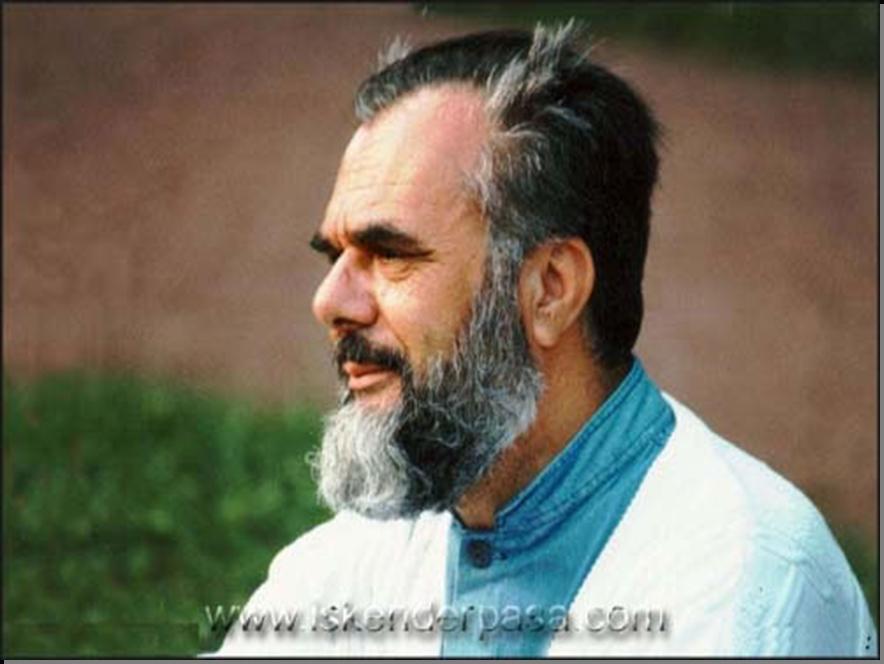
May 12 was a sad day for Muslims. Across the world, Muslims mourned the passing of one of the greatest scholars of classical Islam. This shaykh, known to his Muslim readership as Abu Bakr Siraj ad-Din, wrote one of the definitive books on the life of the Prophet Muhammad. He also wrote 11 other books, including one with the defiant title of Ancient Beliefs and Modern Superstitions.

I remember first hearing about Shaykh Abu Bakr. One of my father’s good friends mentioned the shaykh and praised his biographical work on the prophet. Some years later, I bought a set of 20 tapes of lectures by an American Imam named Hamza Yusuf. The lectures were based on a study of the shaykh’s biographical work.

I joined millions of Muslims around the world in mourning the death of Shaykh Abu Bakr. Yet hardly any western newspaper mentioned his passing. It was as if the event went unnoticed. Britain’s left-leaning The Guardian newspaper did publish a short obituary. Much of the material for this article has been taken from that obituary, written by British author Gai Eaton.

I am not aware of any other western newspaper which mentioned his passing.

So who was this mysterious shaykh that most Muslims have heard of and most non-Muslims seem to ignore? Was this Shaykh Abu Bakr the leader of a terrorist outfit from Indonesia or Iraq? Was he a nasty beedy-eyed chap of Middle Eastern appearance who gave speeches in rolling Arabic?

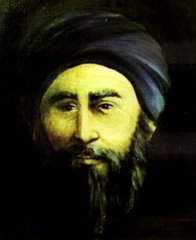
Shaykh Abu Bakr was born on January 24, 1909. He was born in a place called Burnage in Lancashire. His parents christened him "Martin". His family name was Lings. Out of respect for the deceased and those who mourn him, I will refer to him simply as “the Shaykh” (the term Shaykh is commonly used as a title for spiritual elders).

The Shaykh spent his early years in the United States. Later, he returned to England where he attended Clifton College, Bristol. He was head prefect at this exclusive English private school (or public school for any UK readers).

The Shaykh’s tertiary studies commenced at Magdalen College, Oxford. He studied English, and became a close friend of the famous C.S.Lewis. In 1935, the Shaykh taught English courses in Lithuania.

In 1940, during the early years of World War II, the Shaykh travelled to Egypt to visit a friend who lectured in Cairo. As fate would have it, the Shaykh’s friend died in a motor accident, and the Shaykh was offered the teaching post. He stayed in Egypt until the early 1950s.

At this time, Gamal Abdel Nasser came to power and whipped up nationalist frenzy among young Egyptian students. Three of the Shaykh’s colleagues were killed. The Shaykh and his other colleagues of British origin were summarily dismissed. After 17 years of living in a village at the foot of the Pyramids, the Shaykh and his wife, Lesley Smalley, returned to England.

The post-war period was one of economic downturn for England and the rest of Europe. Work was hard to come by, and the Shaykh was forced to resume his studies. He followed up his BA in Arabic studies with a PhD thesis on the life of Algerian Sufi Ahmed al-Alawi. His wife, a physiotherapist, returned to work.

In 1954, the Shaykh found employment at the British Museum as assistant keeper of Oriental printed books and manuscripts. He held this position for about three decades, and the quiet reclusive work situation allowed the Shaykh to enter his most productive period of writing.

In 1983, the Shaykh published his best-known work. Muhammad: His Life Based On the Earliest Sources is regarded as a masterpiece of English and Islamic scholarship. Millions of copies have been sold across the world, and a copy can be found in just about any Muslim household where English is spoken.

Apart from writing and reading, the Shaykh was an avid gardener. His home in Kent was a place where plants and flowers from across the world bloomed. The Shaykh was also passionate about Shakespeare, carrying on a passion he had developed while teaching in Egypt, where his students under his direction would perform a Shakespeare play each year. During the mid-90s the Shaykh wrote a book on the spiritual side of Shakespeare’s work.

Shaykh Martin’s books have been translated into more than a dozen languages. The UK-based newspaper, The Independent, described Shaykh Martin as “One of the most eloquent and serene Western voices in the Islamic world”. The British Muslim magazine Q-News carries on its website photos of the Shaykh delivering a series of lectures on Shakespeare and Islam in November 2004 at the Globe Theatre, the place where Shakespeare first made a name for himself.

Some readers will find it strange that Muslims would mourn the passing of someone who, by all accounts, might be considered little more than just another eccentric English academic. Yet the fact remains that Western and European scholarship forms an essential part of the corpus of Islamic discourse. When Muslims think of travel writing, two names immediately come to mind. One is Michael Wolfe, the other William Dalrymple. Only one is known to be a Muslim.

The Imam Hamza Yusuf Hanson is an American Muslim of Greek heritage. Another Greek Muslim of British heritage, Yusuf Islam, has made an outstanding contribution to Islamic musical expression, just as he did when he was known as Cat Stevens. He has teamed up with musicians, Muslim and non-Muslim, from such far away places as Turkey, South Africa and Malaysia.

In the fields of spirituality (tasawwuf) and legal sciences (fiqh), it would be impossible to speak of 20th century developments without mentioning the name of an American by the name of Nuh Ha Mim Keller. And in Australia, the only published textbook on Islamic law has been written by Jamila Hussain, an Anglo-Australian Muslim teacher at the University of Technology, Sydney.

All of these writers, scholars and artists, including Shaykh Martin Lings, are proof that the modern Muslim mind has allowed itself to be open to influences from all cultures. As the prophet himself is quoted as saying: "Knowledge is the lost property of the believer. Let him take possession of it regardless of where it is found".

Muslims respected Martin Lings, notwithstanding the humiliation he received at the hands of a popular Muslim political figure like Gamal Abdel Nasser. The passing of a scion of British aristocracy, a former head student at an English public school, a Shakespearean scholar and an avid gardener brought together Muslims to pray for his soul in mosques and homes across the world, from Sarajevo to Sydney and from Oslo to Cape Town. May God bless and honour Shaykh Martin with the highest station of paradise. May God provide comfort to the Shaykh's family and loved ones and to the millions of Muslims who mourn his passing.

(This article was published at Online Opinion on June 16 2005. The book is available for purchase in Sydney and online from the Andalus Bookstore.)

Words © 2005 Irfan Yusuf

Delicious
Bookmark this on Delicious
Digg!

Get Flocked

Stumble Upon Toolbar