Monday, January 25, 2010

OPINION: Thirteenth Column in Crescent Times: Why should we bother writing for a Muslim newspaper?


One of the best books I’ve read this year is entitled Leave to Remain. It’s a memoir by an associate professor of environmental engineering at the University of Sydney. The author talks about his experiences growing up in a country wracked by civil war, his studies and work in the United Kingdom and his eventual settlement in Australia. Of particular interest to me was reading about how the author gets along with people of his own ethnic and religious heritage.

That author’s experiences are somewhat similar to my father’s. Dad completed his PhD in Canberra during the 1960’s before moving back to his home country of Pakistan. He was about to be transferred to what was then East Pakistan when he was offered a job in Sydney. Had that job offer not come through, he and his family may have been caught up in a civil war.

My father has an Indian Muslim heritage. He privately practices his faith. The author of Leave to Remain, Dr Abbas El-Zein, has Lebanese Muslim heritage. He publicly professes to be a non-believer. They could both be described as “Muslim migrants”. They both migrated in similar circumstances.

But can these migration experiences really be compared? Isn’t it like comparing chalk
and cheese? And isn’t comparing one Muslim experience to another a little silly?

Greg Sheridan, the Foreign Editor of a foreign-owned newspaper calling itself The Australian, doesn’t seem to think so. Recently he wrote a column suggesting we need to have a debate in this country about the desirability of having Muslim migrants. Or migrants from Muslim backgrounds. Or migrants from Muslim-majority states. He message wasn’t very clear.

Sheridan’s editor gave him the headline of “Uncontrolled Muslim influx a threat”. He acknowledged in the 4th paragraph that:

It is extremely difficult to talk honestly about Muslim immigration. All generalisations about it are subject to countless exceptions. Muslims are very different from each other.

Sheridan then proceeded to praise a book which made all kinds of outlandish generalisations in the service of a conspiracy theory that Muslims are on the verge of taking over Europe. It was real “Eurabia” stuff.

Apparently Muslim migration leads to certain problems for host societies that Sheridan describes as “the Muslim problems”.

These problems include: they outbreed us; they tend not to integrate, they have a strange kind of victimhood, they all seem to hate Jews.

Sheridan says that the solution is that we should not have uncontrolled Muslim immigration. Since when has Australia had uncontrolled Muslim immigration? Indeed, since when has Australia had an immigration policy that is built on religion? Yes, we had the White Australia Policy. But this policy did not stop Albanian Muslims from migrating here in the 1920’s or Yugoslav Muslims in the 1940’s and ‘50’s.

You’d think an experienced editor of a national newspaper would get his facts right. But sadly when it comes to issues even vaguely related to something vaguely related to something deemed Muslim, facts and logic are thrown overboard. This is what happens when we allow others to write our story instead of writing it ourselves.

If for no other reason than this, we need a national newspaper that reflects the diversity of opinion among those Australians who feel inclined to tick the “Muslim” box on their census forms. The newspaper you are holding in your hands or reading on your screens is put together by a bunch of writers and editors who disagree on more things than they agree on.

Yet we still are civil in our disagreements and appreciate each other’s criticisms. After all, as the greatest of men said, disagreements among his followers are a mercy from God.

So celebrate the first anniversary of the Crescent Times. And if you disagree with anything I or anyone else writes here, put pen to paper (or fingers to keyboard) and give readers a piece of your mind. You’ll only be adding to our collective store of divine mercy.

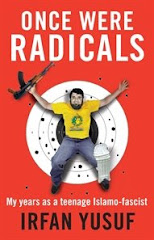
Words © 2009-10 Irfan Yusuf

Delicious
Bookmark this on Delicious
Digg!

Get Flocked

Stumble Upon Toolbar

OPINION: Fourteenth Column in Crescent Times: How to burn Swiss chocolate?


Next week, I’m organizing a huge bonfire. Hundreds of people dedicated to freedom of religion will be joining me. We have decided to show our solidarity with four Swiss minarets by burning the symbols of Swiss culture at our disposal.

Some will bring chocolate to burn. Others will turn the bonfire into a huge toasted sandwich by emptying their fridges of imported cheese.

Still others will be targeting cuckoo clocks. The wealthier ones will bring records of their secret bank accounts (I assure readers I’m not in that category).

I’m shocked that Muslims are not repeating the imbecilic spectacle that accompanied (or rather, that followed by 6 months) the publication of the Danish cartoons. Remember the burning of embassies? Remember the huge protests in Arab and other nominally Muslim countries where normally you cannot even sneeze without the secret police reading the contents of your handkerchief to make sure the blood and mucus don’t spell some criticism of the king or general or emir?

I doubt any crazed crowds will be protesting or burning Swiss embassies. Why? Because let’s be frank and honest about this. Where will the corrupt Muslim rulers store their ill-gotten and embezzled wealth if they tell their people to boycott all things Swiss? Which other country has such liberalized banking laws that allow corrupt despots to hide their loot?

Swiss Muslims are largely of indigenous European - Albanian, Bosnian and Turkish – extraction. Their mosques are likely to be designed along Ottoman lines, with flat domes and skinny minarets that look like scud missiles (and would probably be about as inaccurate if filled with explosives and launched). Ottoman mosques are modeled on the St Sophia’s Orthodox Basilica in what was once Constantinople. Apparently when the city was taken over by Fatih Sultan Mehmed, he ordered the Basilica to be surrounded by a bunch of minarets but otherwise left the structure intact. He also ordered mosques across the empire, including in European cities like Sarajevo, to be designed to resemble the cathedral/mosque.

And so mosques across the Ottoman empire resemble Eastern Greek churches. But where did Fatih Sultan Mehmed get the idea of minarets anyway? After all, the first mosques built by the Prophet in Quba did not have big tall minarets. Neither did his mosque in Madina. The minarets were added after he passed away.

So where did the minarets come from? Well, when the first generations moved out of Arabia, they modeled their mosques on the existing architecture. One of the oldest mosques in existence can be found in China. It was built by a companion of a companion (tab at-tabi’i). If you walked in the street where it was located, you could not tell it was a mosque from its architecture. Why? Because it looks just like a Chinese pagoda.

Similarly, mosques in Syria were modeled on existing Byzantine churches, which had towers for bells. Muslims also decided to build towers for their muezzins.

And so the minaret is little more than an act of architectural plagiarism. Muslims added minarets to mosques so that they did not stick out like sore thumbs in the environment.

The early Muslims were happy to build mosques that looked like the houses of worship of the dominant cultures where they settled. Australian Muslims, of course, don’t need to follow this precedent. We prefer building mosques that look like something out of 1965 Karachi. We cry “racism” when residents get upset at our insistence at always being different. Then we spend tens of thousands of dollars taking local councils to court. All for the right to build domes and minarets that our ancestors copied from churches and synagogues anyway.

Still, try telling moronic Swiss voters that they are seeking to maintain their Christian heritage by objecting to what are essentially (or at least historically) Christian religious symbols. It isn’t just their clocks that have gone cuckoo.

Words © 2010 Irfan Yusuf

Delicious
Bookmark this on Delicious
Digg!

Get Flocked

Stumble Upon Toolbar

Saturday, January 09, 2010

OPINION: Fifteenth column in Crescent Times - Bloody politics of division in my birthplace ...


One of my relatives is visiting my birthplace of Karachi at the moment. She hopes to see siblings she hasn’t seen for years, in some cases, decades.

Visiting Karachi at this time is always a little risky. The city is an ethnic and sectarian melting pot. Ethnic Pathans (also known as Pushtuns) dominate the transport industry. Most other businesses are owned by so-called Muhajir - Muslims who migrated from various parts of India after the 1947 Partition. There are large Shia communities of various denominations, and the Sunnis are also fragmented in various ways. To give readers an idea of just how prevalent the sectarian divide is, the last time I was in Karachi during the mid-90’s, my cousin took me for Friday prayers one day. We had to walk past 3 mosques to get to the mosque. I asked my cousin what was wrong with the first three. “One is barelvi, the other is shia and the third are ahl-i-hadis.”

Back then, Karachi experienced a multilayered civil war. No one quite knew who fought who or why. There was conflict between rival factions of the Muhajir political party. Then there were Sunni and Shia groups fighting a proxy war on behalf of their respective Saudi and Iranian sponsors. One anti-Shia party called ASSP (which probably stood for the “Absurdly Silly Saudi Party”) fought pitch battles against the Shia TNFJ (which probably stood for “Totally Nuevo Funky Jihad”).

Exactly whose side you fought on depended on which conflict you were fighting. One day, you’d be in a trench with Ahmed shooting in the general direction of Javed and Ali from that nasty Muhajir splinter group. The next day, you and Javed were in the same trench shooting in the general Absurdly Silly direction of those nasty pro-Iranian TNFJ infidels Ahmed and Ali.

Now things have taken a definite turn for the worse. For my elderly relative to visit Karachi during Muharram took plenty of guts. Like many traditional Sunni families, we commemorate Muharram in certain ways. We fast on Ashura (the 10th day of Muharram when Imam Hussain was martyred along with most of his family at Karbala) and we also refrain from certain forms of entertainment.

Pakistan TV channels frequently have religious programs commemorating Muharram, which my parents in Sydney get to watch thanks to the dish on their roof. But this time Muharram in Karachi is bloodier than ever. Much blood is spilt during religious processions when men and boys perform rituals that many Shia religious authorities condemn as innovation. Still, these practices have entered South Asian Shia culture in much the same way as circling and prostrating to the graves of saints has entered South Asian sunni culture.

Thousands take part in these processions. Sometimes sectarian riots take place. But Pakistan right now has much bigger worries than sectarian rioting. When even traditionally anti-American religious party leaders are using phrases like “war on terror” in a serious fashion to describe the fight against the renegade Taliban, you know there’s an unusual level of strife.

According to one Pakistani politician, in thelast year Pakistan has now had more suicide attacks than Iraq and Afghanistan. One recent attack targeted the women’s section of the Sharia Faculty at the International Islamic University of Islamabad. Talk about the Taliban implementing sharia! More recently, the notoriously anti-Shia Taliban attacked a Muharram procession in Karachi, killing over 40 people. And the most recent episode was an attack on a volleyball game that killed over 80.

So will we have special security set up for mosques (especially Shia ones), educational institutions and volleyball grounds? No way. Don’t be surprised if Murdoch bloggers start suggesting it’s more important for our security that we perform cavity searches on non-white people for explosive underwear.

Pakistan’s terrorist attacks have received little coverage and have led to little reconsideration of our policy toward that troubled country. Pakistan is always blamed for terrorism in various parts of the world, and it’s as if Pakistanis dying from suicide attacks is treated as a case of “serves you right”.

Still, for my relative in Karachi, the inconvenience to her schedule has been most disturbing. She may not be able to see third cousins she hasn’t seen for 40 years, presuming she even knows they exist. Which hopefully means her kids can remain single until the next trip.

First published in the January 2010 edition of the Crescent Times.


Words © 2009 Irfan Yusuf


Delicious
Bookmark this on Delicious

Digg!

Get Flocked

Stumble Upon Toolbar

Sunday, January 03, 2010

CONGRATS: To Mustafa ...

Mustafa Qadri is a lawyer and an upcoming journalistic voice who has been published in the UK, Australia and online. He recently got married to another young lawyer who once presided over the same campus Muslim Students' Assoc as yours truly. She also doesn't mind being referred to as an "Aussie Mossie".

Congrats to both, and we hope they have a long life together.

Words © 2010 Irfan Yusuf

Delicious
Bookmark this on Delicious

Digg!

Get Flocked

Stumble Upon Toolbar

Saturday, December 26, 2009

COMMENT/MEDIA: On Afroz Ali, Saudi qualifications & the ABC Compass Progam cont ...

Readers may recall this post regarding "imam" Afroz Ali's appearance on the Compass program on ABCTV in 2007.

Yours trully contacted the Compass program and there was some exchange of correspondence which I will reproduce here. The initial contact was as follows:

2 December 2007

G'day,

I occasionally write for various places (including NewMatilda.com). I noticed that in a recent edition of the Compass program, the following was said ...

Imam Afroz Ali is founding president of the Al-Ghazzali Centre for Islamic Sciences and Human Development in Sydney’s south-west. Imam Ali has qualifications from Saudi Arabia and he’s studied in other significant centres of Islamic learning. At the Al Ghazzali Centre he teaches Islamic sciences, jurisprudence, ethics and corporate citizenship.

Can you please advise as to where you obtained this information from. Was it provided to you by Mr Ali and/or someone from the Al Ghazzali Centre? Did Mr Ali advise you of which qualifications he completed in Saudi Arabia?

Regards
Irfan Yusuf


I have received a response from Sharon Connolly, the Story Editor, as follows:

6 December 2007

Dear Irfan,

Many thanks for your inquiry about the Compass program One Vote, Which Values.

Information about Imam Ali and his qualifications was provided firstly by Imam Ali himself in an interview with Compass producer Peter Kirkwood published in Tomorrow’s Islam, G.Doogue & P. Kirkwood, ABC Books, 2005, and from information provided on the Al Ghazzali Centre website last August (unfortunately the site seems to be under reconstruction at present).

My understanding is that Imam Ali has studied in a number of centres, including Saudi Arabia, the US, Yemen, Mauritania and, most recently, at Al-Azhar University in Egypt.

Whilst I am not aware of which of his qualifications come from Saudi Arabia , I understand that Imam Ali is qualified to teach in various Islamic Sciences.

Please let me know if I can be of further assistance,

Sharon Connolly
Story Editor


I responded to Ms Connolly as follows:

5 December 2007

Dear Sharon,

Thank you for your response.

Did Mr Ali state that he had obtained a university degree from Saudi Arabia? Did he mention any specific university from which he graduated? Did he provide the year of graduation and the specific degree he obtained? Did he advise if the degree was an undergraduate or postgraduate qualification?

Regards
Irfan Yusuf


Ms Connolly responded as follows:

6 December 2007

Dear Irfan,

I am afraid that both you and Imam Ali have now alerted me to an inaccuracy in the narration for One Vote, Which Values.

In response to your email yesterday I was about to revisit the research files for the program this morning when I received an email from Imam Ali. He is currently in Cairo and though I have sent him a DVD copy of the program he has not yet received it. However as you’ll see in his message (the relevant passage of which I have copied below), Imam Ali has read the transcript of the program on the Compass website.

Imam Ali’s clarification is as follows:

Also, just as a quick note for your records, in the intro part of the transcript i was introduces as holding "qualifications" from Saudi Arabia . I just want to clarify that whilst i have studied in Islamic University, Madina, I did not complete my studies (due to a Wahhabist leaning of the teaching when I was there), nor do I reallu rely on that knowledge base. My qualifications as an Imam comes from Traditional source of one-on-one with Scholars. Just for future reference, if you need me for an interview again!!!!

I regret that there appears to have been a misunderstanding on my part, and hope that the above information clarifies the position.

Yours sincerely,
Sharon Connolly
Story Editor,
Compass


What a strange coincidence. Anyway, more questions were put to Ms Connolly.

6 December 2007

Dear Sharon,

Thank you for that. I would still be interested to know if at any stage Mr Ali did represent to you or anyone else that he had completed a degree or other qualification.

It is a representation that has been made in the past. For instance, in 2005 in New Zealand ...http://www.scoop.co.nz/stories/PO0506/S00251.htm

... Mr. Afroz Ali of Sydney, also well versed in inter-religious matters, holding degrees in Islamic Studies and Shari'ah from Islamic University, Madina, Saudi Arabia, thereafter continuing through traditional Islamic learning styles under scholars such as Shaykh Hamza Yusuf of the United States, Shaykh Salik bin Siddina and Shaykh Murabtal Hajj of Mauritania.

... and at the University of Western Sydney in 2004 ...

Mr Ali graduated in Islamic Studies - Sharia after studying in Islamic University, Madina Saudi Arabia ...

This shows the problems arising from the absence of a proper system of accreditation of imams. Perhaps an idea for a future episode?

Regards
Irfan Yusuf


Ms Connolly responded:

6 December 2007

Dear Irfan,

I haven’t myself seen a description of Imam Ali’s qualifications like those that you quote. I think my ideas about his qualifications came from the program researcher’s notes which say that he is a “qualified Imam” and that he “received licence to teach in various Islamic Sciences.” Those notes contain no more specifics about the qualifications, simply a list of countries (not universities) in which he studied.

I have been unable to contact the researcher concerned as she is no longer working with the ABC. However I understand that her information came from the sources I mentioned to you in an earlier email; basically the Al Ghazzali centre website, Tomorrow’s Islam and from discussion with Imam Ali.

There is however nothing in the material I have revisited to suggest that Imam Ali has misrepresented the case; rather I have erred (as his email points out) in suggesting that he has qualifications from Saudi Arabia. As I said earlier, I think this is a case of misunderstanding on my part.

I agree with you that - to the uninitiated at least - the system for conferring qualifications upon Imams is not perhaps as clear as for some other denominations, and have mentioned your program idea to the Compass Executive Producer.

Regards,
Sharon Connolly
Story Editor,
Compass

Perhaps the contents of these e-mails can be discussed separately.


Delicious
Bookmark this on Delicious

Digg!

Get Flocked

Stumble Upon Toolbar

Saturday, December 12, 2009

COMMENT: Fair Dinkum Pilgrimage

The following piece was published on the Aussie Mossie blog on Monday 9 January 2006.


In the past few days, around 2.5 million Muslims from across the globe have converged on the ancient city of Mecca in central-west Saudi Arabia to perform the various rites that form part of the Muslim pilgrimage tradition known as the “Hadj”.

On Tuesday 10 & Wednesday 11 January millions more will attend prayer services and gatherings in their local areas for the feast of sacrifice (known in Arabic as “Eid al-Adha”), the most important religious and cultural festival of the Muslim calendar. The feast commemorates an event mentioned in both the Old Testament and the Koran.

The Old Testament recounts how God ordered Abraham to show his devotion by sacrificing his own son Isaac. The Qur’an is silent on the identity of the son, though Islamic tradition suggests the proposed sacrificial son was to be the elder Ishmael.

Just as Abraham places the blade on his son’s throat, the command is given to sacrifice a ram instead. The rites of the Hadj conclude with pilgrims sacrificing an animal, following the example of Abraham. Hadj also involves a variety of other acts commemorating the sacrifices made by Abraham and members of his family to establish monotheism in the region.

These acts include circling a cubic structure known as the Kaaba (believed to have been built by Abraham) which is draped in fresh black embroidered cloth each year. Near the Kaaba are two hills (named “Safa” and “Marwa”), between which it is believed Ishmael’s mother ran to fetch water for her infant child. Pilgrims run between these two hills following in Hagar’s footsteps.

The highlight of the Hadj is the assembly on Mount Arafat, regarded as a preliminary to the gathering of all humanity on Day of Judgment. In January 2005, TVNZ reported that over 20,000 buses were used to carry a portion of the millions of pilgrims who made the journey last year.

At one time, travel to Hadj was a difficult and dangerous journey. American Muslim writer Michael Wolfe recounts the pre-jet-age perils of pilgrims in his book “One Thousand Roads To Mecca”, an anthology of 10 centuries of Hadj travel writing.

Wolfe’s characters include Ibn Battuta (Islam’s very own Marco Polo) who travelled by land and sea during the 14th century over some 75,000 miles and over a period of 30 years. Also included are “fake” pilgrims who smuggled themselves into Mecca defying its ban on non-Muslims entering its gates, such as Englishman Joseph Pitts who managed to sneak into Mecca undetected in 1685.

The journeys recorded also include the diary entries of an Australian woman Winifred Stegar who married an Indian merchant in Singapore. Her pilgrimage was performed in 1927, with she and her Indian husband running out of money and having to leave some of their children behind along the way.

Wolfe’s own Hadj journey, described in his book 1993 “The Hadj – An American’s Pilgrimage to Mecca”, was a much safer affair. Like most modern pilgrims, he travelled by air. The grandson of an Orthodox Jewish religious scholar, Wolfe adopted Islam after spending time in Morocco.

In many Muslim cultures, Hadj represents the culmination of a lifetime of devotion with the “Hadjis” (as those making the journey are called) leaving the journey until later years. It is said that a person’s entire adult life of sins is erased by a successful Hadj.

On the other hand, the delayed Hadj is also the subject of wry humour. Hadjis are often jokingly regarded as veteran sinners seeking a “quick fix” to their perilous spiritual status. An Urdu saying goes: “After eating several thousand mice, the elderly cat finally decides to set off for Hadj!”

But with hundreds of elderly Hadjis dying each year, and with an increased sense of religiosity amongst young Muslims, the average age of pilgrims appears to be decreasing.

In Malay and Indonesian cultures, it is traditional for Hadj to be performed in one’s early adult years. And amongst Australian pilgrims, young adults are also heavily represented.

Sydney’s Sun-Herald reported on December 11 2005 of a group of young Muslims from the Sydney Muslim heartland of Lakemba making preparations for the journey. One of them was Omar Abas, a 26 year old software engineer and a personal friend of the writer.

Omar’s father first went to Hadj at age 65, and his own decision to go for Hadj relatively young is unusual in the context of his parents’ Lebanese heritage wherein leaving Hadj to the end of one’s life “was the traditional Lebanese mentality. You live your life and do what you want, and then go to Hajj.

“For my parents' and grandparents' generations, religion played a small part in their upbringing. Today it’s different. Religion is very important to young Muslims because it is a way of life.”

For those Muslims not at Hadj, the time is one for feasting with family and friends. Non-Muslim readers with Muslim work colleagues should remind them of this fact at next week’s work lunch. But sorry, most of us won’t buy you a ham sandwich or a schooner of VB!


Words © 2006-09 Irfan Yusuf

Delicious
Bookmark this on Delicious

Digg!

Get Flocked

Stumble Upon Toolbar

COMMENT: No time to whinge

This comment was published on the Aussie Mossie blog on Friday 24 February 2006 ...

My immediate response to the comments on Muslims and Australian values was shock, dismay and disgust. It made me sick in the stomach that 2 prominent political leaders could express such ignorance on fundamental Islamic concepts such as sharia and jihad.

Of course, we all know they are doing this as a diversion to other emerging issues and scandals. But I think Muslims need to also consider why they can get away with expressing such divisive views.

The fact is that probably most Australians agree with the views expressed by Messrs Howard and Costello. Aussie Muslims know that Costello’s remarks on sharia evidenced near-chronic ignorance on his part.

They also illustrate our near-chronic laziness and inability to communicate our values to the broader Australian community. If the broader community understood what sharia really is and what it means to Aussie Muslims, the Howards and Costellos of this world would never be able to use such issues as a successful diversion.

We know that Muslim mobs rioting and burning embassies were being manipulated by their leaders to divert attention away from more pressing issues. Costello and Howard are using the same device in Australia.

Or are they? When was the last time a group of Muslim Australians sat down and explained to Mr Howard what sharia actually means? When was the last time a Muslim group even bothered to invite Mr Costello to one of their functions?

Our disappointment with our political leaders is understandable. But what else can we expect when we allow our fellow Australians to be bombarded with only ignorant views about our faith and cultures?

The time has come for Muslims to come out of the spiritual closet and to be proactive about their religious responsibilities. Our primary religious responsibility in Australia is to inform people about who we are and what we believe.

The Arabic word “dawah” is often used to describe Muslim outreach and educational activities. We know dawah is a religious imperative upon all of us. It is now becoming an imperative for our national security and our social cohesion. We cannot afford to sit back and complain about the ignorance of wedge-creating politicians. Now is not the time to complain. Now is the time to talk and act.


Words © 2006-09 Irfan Yusuf

Delicious
Bookmark this on Delicious

Digg!

Get Flocked

Stumble Upon Toolbar

Monday, November 09, 2009

COMMENT: Rachael Kohn on imam con-artistry ...


According to ABC Radio National religion presenter Dr Rachaael Kohn, it is the responsibility of Muslims in Australia to expose some wacky Iranian self-proclaimed Ayatollah they probably have never heard of except through the news.

In the many media conferences and interfaith meetings I've attended, Muslims have regularly complained that the media cast them in a poor light.

However valid that complaint may be, it loses all credibility when they don't go after the radicals in their community.

If they don't, the media will do it for them.

Indeed. And when the media does it, it's likely that it will be the first time even the most well-connected Muslims will learn about the person in question. But what if Muslim religious leaders go further and actually request law enforcement agencies to do something about it? As Kohn herself notes:

Almost two years ago, Richard Kerbaj [The Australian, Jan 28 2008] reported that the Melbourne based Shia Muslim leader, Kamal Mousselmani, urged the Australian Federal Police to investigate Sheik Haron, whom Mousselmani claimed was not a genuine religious leader.


Did you read that, Rachael? Almost two years ago. Perhaps you should be directing your inquiries to AFP.

Still, Rachael does have one point:

But one issue remains outstanding: just who is a genuine religious leader in the Muslim community and who is monitoring their output to young Australians?

I've been making that precise point in the matter of Afroz Ali. But then, Afroz doesn't exactly go around preaching suicide bombing. I don't think someone who promotes feeding the homeless and getting involved in climate change activism could be described as a threat to our national security even if he isn't as qualified to teach religion as he claims to be.

You'd think a religious reporter from Radio National would be able to make such distinctions and address such issues. Still, you don't need to know much about Islam or Muslims to get a job in the Religion department there. Indeed even Afroz Ali wouldn't be silly enough to object (as Kohn once did) to using the term "unitarian Islam" (or something similar) to describe wahhabism. A bit like objecting using "lawyer" to describe a legal practitioner.

Read this paragraph and wonder:

Yet it would seem that with the rapid growth of storefront prayer halls, it is time to ensure that all the independent sheiks who garner a following be known and when necessary reined-in by a body that represents the interests of Australian Muslims.

It's hard not to be flippant about Kohn's claims. Yes, these shopfront prayer hall sheiks are breeding like rabbits, popping up all over the place. And as we all know, Muslim youth are so damned vulnerable that they can be brainwashed into doing just about anything. I mean, we've all heard of those genetic deficiencies, haven't we?

Seriously, Rachael, if you want to hold me and 359,999 other Australians who tick the "Muslim" box on their census forms responsible for the wacky remarks of some wacky dude we know bugger-all about just because our unelected self-appointed leaders do bugger-all about him, you might consider resigning from Radio National and move to 2GB where people holding such silly views do their broadcasting.

Words © 2009 Irfan Yusuf


Delicious
Bookmark this on Delicious
Digg!

Get Flocked

Stumble Upon Toolbar