Politics and foreign policy can be so confusing. Let's look at Iraq, for example. The conventional wisdom is that we went to war against Saddam Hussein in 2003 and overthrew his government for a variety of reasons, including that Iraq was a crucial battleground in the so-called war on terror. The former Iraqi dictator is said to have had direct links with an Islamist terrorist organisation, al-Qaeda. We were at war with al-Qaeda. Hence we had to make war on Saddam.
Now let's move to the present and another conflict. Israel claimed to be fighting a war on terror of its own recently in its bombardment on Gaza. Israeli spin doctors told us that their war wasn't against the people of Gaza but against Hamas, an Islamist terrorist organisation dedicated to Israel's destruction through firing thousands of rockets and sending suicide bombers into Israel.
See the connection? The war on terror is always a war on political Islamists. It isn't a war on Muslims as such, nor is it a war on the Islamic religion or on nominally Muslim countries. The battle we wage is against political Islam, an ideology that seeks to establish an Islamic state.
That's the rhetoric. But what is the reality?
Before the outbreak of the first Palestinian intifada in 1987, what we now know as the virulently anti-Israel militia Hamas was created from an Israeli-backed network of social welfare projects (including clinics, schools, libraries and other facilities) operated under the auspices of the Muslim Brotherhood, an Islamist movement founded in Egypt by one Hasan al-Banna. At the time, Israel and the Tunis-based PLO had not signed the Oslo Agreements. Israel's line was that it would not negotiate with Yasser Arafat's PLO because it was a terrorist organisation. Israel also knew that the Brotherhood' s reputation for scrupulous honesty would make it an excellent alternative to the PLO.
So when it suited Israel's desire to drive a wedge between Palestinians living in the Occupied Territories and the Palestinian diaspora-based PLO that Israel then labelled a terrorist organisation, Israel was quite happy to deal with another organisation it now labels terrorists.
The Muslim Brotherhood's Islamist credentials and ideology weren't seen as an obstacle to its establishing a host of institutions in the West Bank and Gaza.
But don't take my word for it. A report from United Press International on June 18, 2002 cites documents obtained from the Israeli-based Institute for Counter Terrorism to the effect that Hamas was legally registered in Israel in 1978 by Sheik Ahmed Yassin, the movement's spiritual leader, as an Islamic association by the name of Al-Mujamma al-Islami, which widened its base of supporters and sympathisers by religious propaganda and social work.
The report also cites US administration officials saying funds for the movement came from the oil-producing states and, directly and indirectly, from Israel.
Back to present-day Iraq. Thousands of US and British soldiers have lost their lives defending a democratically elected Iraqi Government. After the 2003 invasion and the toppling of its Ba'athist regime, an Iraqi Governing Council was set up and an interim constitution drawn up, which became the basis for Iraq's current constitution. Among the experts assisting in the drafting of this document was Noah Feldman, Rhodes scholar and Harvard University professor of law and Islamic studies.
Feldman is hardly what some might describe as an apologist for political Islam. He has intimate first-hand knowledge of Iraqi governance and law. Feldman openly says Iraq's constitution establishes an Islamic state. Coalition troops are putting their lives on the line to defend the very political agenda the war on terror was supposedly designed to fight.
In other words, all this hysteria about political Islam is little more than a rhetorical cover for what are really just the usual political manoeuvrings one expects in relations between states.
This isn't so much about defending our freedoms against those who allegedly hate our way of life though in the case of anarcho-Islamist syndicates like al-Qaeda and Jemaah Islamiah the rhetoric largely reflects reality.
What we need to understand is that political Islam isn't in itself the enemy. If it were, American and British troops wouldn't be in Iraq today. And if, as President Barack Obama has promised, US troops are withdrawn, it will not be because the US has abandoned Iraq's democratically elected Islamist Government. Indeed, President Obama has indicated that US troops from Iraq will more than likely be deployed in Afghanistan to fight combined Taliban and al-Qaeda forces and the odd insurgency movement. Even in Afghanistan, our allies, led by President Hamid Karzai, are (at least on paper in the Afghan constitution) committed to maintaining Afghanistan as an Islamic republic, albeit a democratic one. The Afghan Government consists of the remnants of old Afghan jihadi factions which once waged war on the Soviet Union, again with support from the West.
In his 2008 book The Fall and Rise of the Islamic State, Professor Feldman argues that the struggle is not between secularism and theocracy. Religion and government are not necessarily seen in many Muslim-majority states as polar opposites. Instead, in the primary battlegrounds of Afghanistan and Iraq, democratic political Islam is allied with the West against what are in essence forces of anarchy.
Being moderate isn't the same as separating mosque from state. Saudi Arabia is classed as a moderate ally of the West but could hardly be described as secular. Muslim-majority states such as Indonesia, Turkey and Kosovo are fiercely secular, even if religion plays a significant role.
With George W.Bush back at the ranch and his neo-conservative advisers and their array of think-tanks and mercenary commentators (including pundits who during the US presidential campaign were obsessed with the Democratic candidate's middle name) largely discredited, now is a good time to adopt a more nuanced approach to our relations with Muslim countries, among them our closest neighbour, Indonesia, which also happens to be the world's most populous Muslim nation.
As President Obama said in his inauguration speech, we in the West must seek a new way forward, based on mutual interest and mutual respect.
That can be achieved only when we seek to understand the interests of Muslim electorates and to respect their political aspirations, whether these have more secular or religious outcomes.
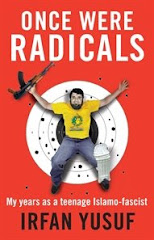
Irfan Yusuf is a Sydney lawyer and author of the forthcoming book Once Were Radicals. First published in The Canberra Times on 30 January 2009.
Bookmark this on Delicious