One of my favourite sayings of the Prophet Muhammad (peace and blessings be upon him) goes something like this: “Wisdom is the lost property of the believer. Wherever
you find it, grab it”.
Yet for some reason, I don’t seem to find much wisdom at religious gatherings in Sydney. I don’t know what it is about Sydney Muslims – we seem to do things differently, in a more culturally fractured, more divisive fashion. I’m not averse to religious gatherings as such. In the past 12 months, I’ve been to a fair few events. But they’ve all been in Canberra, Brisbane or Melbourne.
And when you’ve represented so many religious institutions as a solicitor, you get to know enough about the religious establishment that watching these people talk piety compromises your faith.
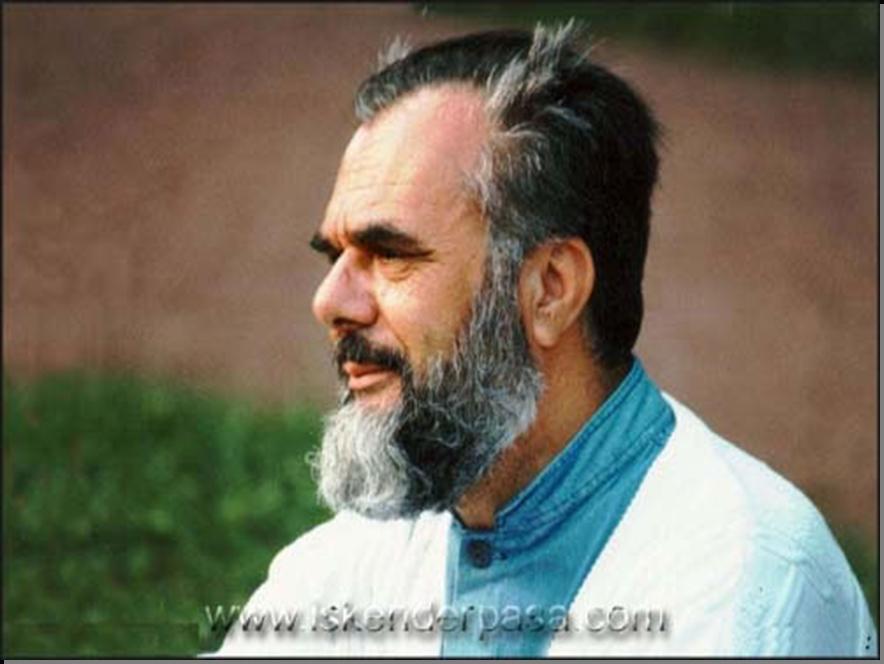
There is one Sydney gathering I don’t mind attending. Perhaps it’s because I’ve never acted for him or his organisation! Dr Mohsin Labban is an elderly chap in Sydney who has been hosting Friday night gatherings for as long as I can remember. He once taught econometrics at the University of New South Wales. He’s now in his late 70’s or early 80’s (I’ve heard different ages from his regular attendees), and despite having two strokes Labban is still zealously spreading what he sees as a more nuanced and less “extreme” (whatever that means) form of Islam.
Around 150 men and women from all walks of life, all ages, all ethnic backgrounds and all religions attend these gatherings, held at a community centre in the outer-western suburbs Sydney. Perth readers might find the idea of a city having “outer-western suburbs” rather odd. Like I said before - we insist on doing things differently in Sydney.
Dr Labban speaks at a soft, measured, almost leisurely pace. If you’re looking for a firebrand sheik to compromise your eardrums, you’d better not waste your time with Dr Labban. I have no idea what Dr Labban’s religious qualifications are. And quite frankly, I don’t particularly care. I’ve never known him to claim he’s a religious scholar. It’s admirable that an elderly gentleman would spend his precious time sharing his knowledge with people. I’m not aware of Dr Labban entering into any controversies about moon sighting or the other silly stuff that so many imams and religious elders seem to harp on about.
So last Friday I joined an old friend to attend Dr Labban’s talk. We were running late, and arrived at the venue only to be told proceedings would commence in 20 minutes. Muslim standard time! When Dr Labban finally sat on stage, he started talking about the Taliban. I was about to switch off my brain when he said something quite profound.
He said that after the Soviet occupation of Afghanistan and the civil war that followed, the small rag-tag Taliban army emerged with super-dooper weapons and just took over the place. He also told us that the word “Taliban” meant “students”. He kept stressing this fact. A part of me wanted to scream out: “Dehhh! Of course that’s what Taliban means”.
I wrote it down anyway when the penny dropped. Students are people who should be studying. The Taliban were students from religious colleges in Pakistan. Here they were, trying to play politics and establish order in a civil war zone. They didn’t seem to notice that they were also manipulated by forces outside Afghanistan. They didn’t seem to care either.
Students of religion, establishing religious law before their religious studies have been completed? You can imagine what kind of strange and demented understanding of religion they must have had. Dr Labban claimed that no other religious group in 14 centuries of Islamic history came up with a justification for stopping women from pursuing even basic school education.
And to think that those enforcing such ignorant rules were themselves students. Perhaps they weren’t listening too carefully in class. Or perhaps their education didn’t involve too much wisdom. Now they, or people like them, are repeating the same madness in a gorgeous part of Pakistan called the Swat Valley.
When half-learned scholars implement half-baked sharia schemes, they make a mockery of religious law. The result is profound injustice and chaos. Makes sense? See you next month!
First published in the Crescent Times on 6 April 2009.
Words © 2009 Irfan Yusuf
Bookmark this on Delicious
Friday, August 14, 2009
OPINION: Sixth column in Crescent Times - Half-Baked Taliban Wisdom?
Friday, January 30, 2009
OPINION: No such thing as a monolithic Muslim state of mind ...

Politics and foreign policy can be so confusing. Let's look at Iraq, for example. The conventional wisdom is that we went to war against Saddam Hussein in 2003 and overthrew his government for a variety of reasons, including that Iraq was a crucial battleground in the so-called war on terror. The former Iraqi dictator is said to have had direct links with an Islamist terrorist organisation, al-Qaeda. We were at war with al-Qaeda. Hence we had to make war on Saddam.
Now let's move to the present and another conflict. Israel claimed to be fighting a war on terror of its own recently in its bombardment on Gaza. Israeli spin doctors told us that their war wasn't against the people of Gaza but against Hamas, an Islamist terrorist organisation dedicated to Israel's destruction through firing thousands of rockets and sending suicide bombers into Israel.
See the connection? The war on terror is always a war on political Islamists. It isn't a war on Muslims as such, nor is it a war on the Islamic religion or on nominally Muslim countries. The battle we wage is against political Islam, an ideology that seeks to establish an Islamic state.
That's the rhetoric. But what is the reality?
Before the outbreak of the first Palestinian intifada in 1987, what we now know as the virulently anti-Israel militia Hamas was created from an Israeli-backed network of social welfare projects (including clinics, schools, libraries and other facilities) operated under the auspices of the Muslim Brotherhood, an Islamist movement founded in Egypt by one Hasan al-Banna. At the time, Israel and the Tunis-based PLO had not signed the Oslo Agreements. Israel's line was that it would not negotiate with Yasser Arafat's PLO because it was a terrorist organisation. Israel also knew that the Brotherhood' s reputation for scrupulous honesty would make it an excellent alternative to the PLO.
So when it suited Israel's desire to drive a wedge between Palestinians living in the Occupied Territories and the Palestinian diaspora-based PLO that Israel then labelled a terrorist organisation, Israel was quite happy to deal with another organisation it now labels terrorists.
The Muslim Brotherhood's Islamist credentials and ideology weren't seen as an obstacle to its establishing a host of institutions in the West Bank and Gaza.
But don't take my word for it. A report from United Press International on June 18, 2002 cites documents obtained from the Israeli-based Institute for Counter Terrorism to the effect that Hamas was legally registered in Israel in 1978 by Sheik Ahmed Yassin, the movement's spiritual leader, as an Islamic association by the name of Al-Mujamma al-Islami, which widened its base of supporters and sympathisers by religious propaganda and social work.
The report also cites US administration officials saying funds for the movement came from the oil-producing states and, directly and indirectly, from Israel.
Back to present-day Iraq. Thousands of US and British soldiers have lost their lives defending a democratically elected Iraqi Government. After the 2003 invasion and the toppling of its Ba'athist regime, an Iraqi Governing Council was set up and an interim constitution drawn up, which became the basis for Iraq's current constitution. Among the experts assisting in the drafting of this document was Noah Feldman, Rhodes scholar and Harvard University professor of law and Islamic studies.
Feldman is hardly what some might describe as an apologist for political Islam. He has intimate first-hand knowledge of Iraqi governance and law. Feldman openly says Iraq's constitution establishes an Islamic state. Coalition troops are putting their lives on the line to defend the very political agenda the war on terror was supposedly designed to fight.
In other words, all this hysteria about political Islam is little more than a rhetorical cover for what are really just the usual political manoeuvrings one expects in relations between states.
This isn't so much about defending our freedoms against those who allegedly hate our way of life though in the case of anarcho-Islamist syndicates like al-Qaeda and Jemaah Islamiah the rhetoric largely reflects reality.
What we need to understand is that political Islam isn't in itself the enemy. If it were, American and British troops wouldn't be in Iraq today. And if, as President Barack Obama has promised, US troops are withdrawn, it will not be because the US has abandoned Iraq's democratically elected Islamist Government. Indeed, President Obama has indicated that US troops from Iraq will more than likely be deployed in Afghanistan to fight combined Taliban and al-Qaeda forces and the odd insurgency movement. Even in Afghanistan, our allies, led by President Hamid Karzai, are (at least on paper in the Afghan constitution) committed to maintaining Afghanistan as an Islamic republic, albeit a democratic one. The Afghan Government consists of the remnants of old Afghan jihadi factions which once waged war on the Soviet Union, again with support from the West.
In his 2008 book The Fall and Rise of the Islamic State, Professor Feldman argues that the struggle is not between secularism and theocracy. Religion and government are not necessarily seen in many Muslim-majority states as polar opposites. Instead, in the primary battlegrounds of Afghanistan and Iraq, democratic political Islam is allied with the West against what are in essence forces of anarchy.
Being moderate isn't the same as separating mosque from state. Saudi Arabia is classed as a moderate ally of the West but could hardly be described as secular. Muslim-majority states such as Indonesia, Turkey and Kosovo are fiercely secular, even if religion plays a significant role.
With George W.Bush back at the ranch and his neo-conservative advisers and their array of think-tanks and mercenary commentators (including pundits who during the US presidential campaign were obsessed with the Democratic candidate's middle name) largely discredited, now is a good time to adopt a more nuanced approach to our relations with Muslim countries, among them our closest neighbour, Indonesia, which also happens to be the world's most populous Muslim nation.
As President Obama said in his inauguration speech, we in the West must seek a new way forward, based on mutual interest and mutual respect.
That can be achieved only when we seek to understand the interests of Muslim electorates and to respect their political aspirations, whether these have more secular or religious outcomes.
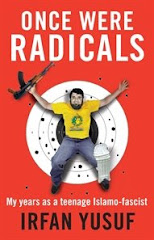
Irfan Yusuf is a Sydney lawyer and author of the forthcoming book Once Were Radicals. First published in The Canberra Times on 30 January 2009.
Bookmark this on Delicious
Saturday, November 15, 2008
VIDEO: Extremists attack Afghan schoolgirls with acid ...
A group of girls determined to receive an education have been scarred for life in southern Afghanistan.
They were walking to school in Kandahar when battery acid was thrown into their faces by two men. Three of the girls are now in hospital with serious burns.
Bookmark this on Delicious
Friday, September 19, 2008
COMMENT: Fascinating seminar on History, Modernity and the Muslim World between Europe and Asia ...
I've spent the last few days at an academic symposium on Muslim societies being held at the University of Sydney. It's not often that I get to go to these events, many of which are held in Melbourne.
One session was held on Thursday night, with a paper delivered on the protrayal of North African (mainly nominally-Muslim) migrants in French cinema. More and more children of North African migrants are involved in film, whether in documentaries or dramas. Much of their work deals only with Islam as an influence on their ancestral culture.
Another paper delivered by an academic researcher from Aceh discussed the evolving and changing role of religious institutions in Aceh. It was interesting to learn that the ulama (religious scholars) played a leading role in the struggle for independence from the Dutch. Further, the speaker was of the view that the impact of the tsunami was to generate increased goodwill toward the West, especially to the United States and Australia. Acehnese feel genuinely grateful to the defence forces of both nations for their work in the weeks and months after this traumatic event. The tsunami also led to a genuine wish for peace among Acehnese, with former supporters of the Acehnese independence movement placing pressure on the movement to reach peace with the government.
One paper delivered by prominent British-Iranian academic Elaheh Rostami-Povey dealt with the experiences of woemn from the Afghan diaspora in Iran, Pakistan, UK and North America.
Today, a postgraduate student at the University of Sydney delivered a fascinating paper on the involvement of Muslim women in the public sphere. One interesting point she made was that increased prejudice faced by Muslim women has led them to become more active and less tolerant of what some describe as a "victim mentality".
Another researcher delivered an interesting paper comparing the activism of Muslim women in mainstream politics in Australia and Canada. I never knew that at least one Muslim women has served in the Canadian Senate and another in the lower house. The speaker also said that Canadian Muslim women's groups tend to focus less on welfare-related issues and more on civil engagement, lobbying and media work.
I have recorded the presentations. Hopefully, I'll learn one day how to upload them onto this blog so that people can download and listen.
Words © 2008 Irfan Yusuf
Thursday, October 06, 2005
COMMENT: Government’s Hand-Picked Muslims Oppose Human Rights
Last night, I attended a meeting at the Sydney Town Hall. Speaking at the meeting were representatives from politics, business, media and community. The meeting was to launch a new Human Rights Bill to protect the human rights of all people in Australia.
Former Prime Minister Malcolm Fraser joined Greg Combet and Susan Ryan. People of all ethnic and religious backgrounds were present to pledge their support for the Bill which sought to overcome the rigours of proposed anti-terror laws.
The meeting was organised by the online magazine New Matilda. The meeting heard a moving speech by a young Australian Year 12 student who spent years in immigration detention. Her crime was to escape the Taliban regime in Afghanistan and seek asylum in Australia.
Nahid Karimi attends Holroyd High School. She is of Afghan origin and wears a piece of cloth on her head consistent with her Afghan ethno-religious customs. Nahid was preparing to break her fast as she spoke of watching 3 persons commit suicide before her eyes at the detention centre.
I have never seen such an enormous outpouring of compassion from decent Australians as I saw last night. Nahid is just one of many thousands of people who will need immediate protection from a Human Rights Bill.
Malcolm Fraser also spoke passionately about the need for the Bill. He gave listeners some indication of the draconian nature of the measures contained in existing and proposed anti-terror laws. He was followed by former departmental head and New Matilda Chair John Menadue, who confirmed that any such laws would compromise civil liberties in ways unimaginable.
The Human Rights Bill was drafted by a panel of prominent lawyers led by a respected legal academic from La Trobe University. Both lawyers and activists were at the heart of the drafting process.
Compare this to the hand-picked Muslim Community Reference Group (MCRG) which consists of non-lawyers who are relying on one briefing from the Attorney-General and are backing laws whose provisions have not even been drafted.
The rhetoric of the MCRG is typical of what the government expects from this group. Following the Group’s meetings in Canberra, President of the Australian Federation of Islamic Councils Dr Ameer Ali expressed satisfaction with the safeguards contained in proposed legislation.
Dr Ali’s language must have re-assured the government enormously. His choice phrases included:
“We can now sell these laws to our community.”
“We put our trust in the government.”
“Discrimination is against the constitution. We are happy with the safeguards.”
Having acted as legal adviser for AFIC, the Islamic Council of NSW, three Islamic schools and 4 mosque managing societies, it seemed clear to me that Dr Ali had not obtained any legal advice before making his remarks.
It also seems clear that Dr Ali has not consulted with members of his community. His entire focus is on selling the new legislation to Muslim Australians. How he will do this remains to be seen.
In NSW, the state that has the greatest number of Muslims, AFIC appears unrepresented. Having created 2 dummy councils, it appears neither have AFIC’s stamp of approval. Dummy councils have also been created in other states.
AFIC’s website allows readers to download the latest edition of its newspaper, the Australian Muslim News. And when was this edition published? November 2002.
AFIC has never commissioned any study of Muslim Australians, their views and attitudes and their demographic and other trends.
In the last 20 years, AFIC has not had a single female executive member. Women make up over 51% of the Muslim Australian community.
The MCRG consists of representatives from various Muslim groups. The majority of the Group were born overseas and are aged over 40.
Yet the most recent community study (conducted by Professor Abdullah Saeed from the University of Melbourne and funded by the Department of Immigration) shows that the largest ethnic block of Muslim Australians were those born in Australia. Further, over 50% of Australia’s Muslims are aged under 40.
The government has therefore received a rubber stamp from a Group that is unrepresentative and not reflective of the reality of Muslim Australia. That Group has chosen to endorse legislative provisions which at this stage do not exist.
So who will protect the rights, interests and liberties of Muslim Australians? Will the Group have the ability to communicate the safeguards contained in laws which it has not yet seen? Will the Group and the Attorney General make public the briefing received before the Group endorsed the proposed package of legislative provisions?
Who knows? What we do know is that we have been told by the good folk at NewMatilda.com what their Human Rights Bill has to say. And as an Aussie Mossie, I think I have more faith in Susan Ryan, Malcolm Fraser and the Bill’s supporters than in the Reference Group.
Words © 2005 Irfan Yusuf
Bookmark this on Delicious