Tuesday, June 10, 2008

COMEDY: Robert Spencer completely loses it ...


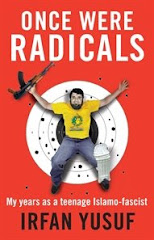
Robert Spencer is absolutely fuming over my book review in The Australian. In fact, fuming is probably an understatement. And what makes him especially angry is that I refer to him by the title of ... wait for it ... a Catholic.

Poor fellow. He now gets a taste of his own medicine. This is the same Robert Spencer who regularly attributes acts of violence to the faiths and cultures of 1.2 billion people. And all disguised as "scholarship".

... at Jihad Watch I provide on a daily basis mountains of evidence, cascades of evidence, for the reality of Islamic supremacist activity around the world ... the extent of jihadist activity and sympathy in the Islamic world ...

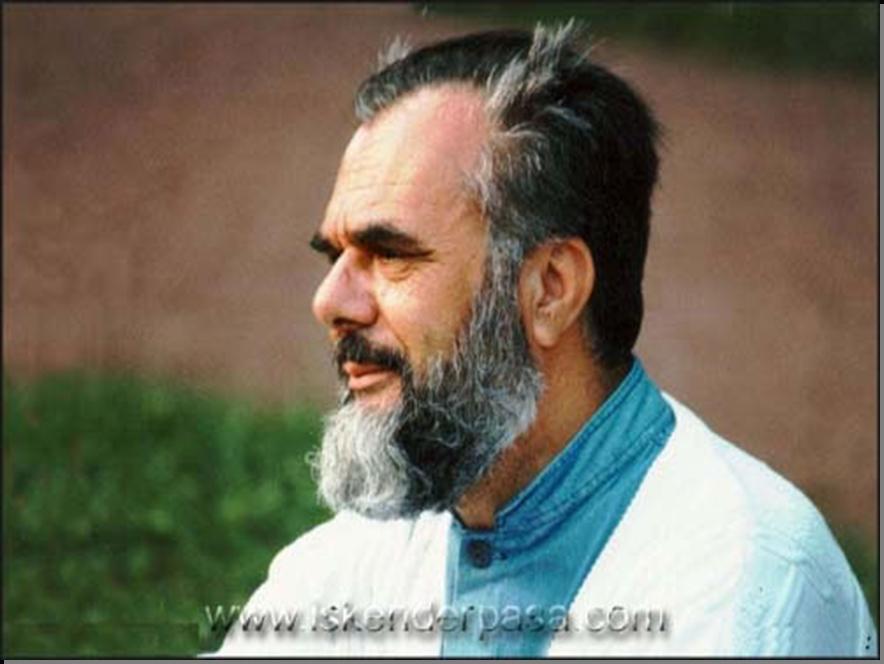
What the ...? Evidence? All Spencer does is trawl through newspapers and websites and search for anything even resembling intolerance or violence by people with some link to Muslim communities. In fact, he doesn't do much of the trawling. His army of fellow hate-crusaders like this chap (who even thinks actor Omar Sharif is part of a grand Islamist conspiracy) do all the trawling for him.

I refuse to believe that each and every Catholic is guilty of the excesses of a few. I understand that group responsibility is a concept which went out of fashion after the Holocaust. The tabloid media that paints the stereotype of Islamic terrorists is the same media which reminds us of pedophile Catholic priests. But don't expect me to set up a blog filled with innuendo and smear or suggesting that pedophilia is supported within "the Catholic world" (if such an entity existed).

So what was it that has angered poor Robert? The answer can be found in these paragraphs ...

WE don't often associate the skin tones, exotic culture and poverty of the world's largest Catholic continent with Catholicism.

Few Australian Catholics would recognise the popular beliefs and practices of their Latin American co-religionists.

So if I were to make an ambit criticism of Christianity based on the extreme poverty and draconian politics of Latin America, Catholics would be justified in poking their fingers at me and ridiculing my simplistic reasoning. But among those pointing at me in ridicule would be the polemicists and cultural warriors with three fingers pointing back at themselves. Google jihad. Featuring prominently is JihadWatch, a blog moderated by far-right Catholic polemicist Robert Spencer.

It takes a certain degree of intellectual laziness (often combined with irrational prejudice) to attribute negative characteristics to an entire group of people, especially when members of this group rarely, if ever, regard themselves as sharing some uniform identity.

Do entities such as the Muslim community or the Muslim world really exist? Do all Muslims regard themselves as belonging to the same community of believers? Indeed, do all Muslims regard each other as Muslims? If so, how do we explain the rhetoric of Iraqi Sunni groups who attack Shia Muslim shrines with a view to destroying the infidel? And how do we explain that an elderly Lakemba-based imam who once claimed the title of mufti of Australia, New Zealand and the South Pacific wasn't recognised by many Australian Muslims as playing any religious role whatsoever?

Yet we still see, hear and read of the Muslim community and the Muslim world having a uniform manifestation of faith in a monolithic (usually violent and hostile) manner. We so easily lump together 1.2 billion people in the same category.

What is so contentious about claiming that it's almost impossible to generalise about 1.2 billion people? Where is the controversy in suggesting that a Muslim in Malaysia probably has more in common with a Singaporean Catholic than a Muslim in Morocco? What is so offensive about suggesting that, culturally speaking, Robert Spencer has more in common with former boxer Muhammad Ali than Indian cricketer Yusuf Pathan?

I'm not sure. But I do know this: If the likes of Robert Spencer are angered by what I write, it means I must be on the right track.


Words © 2008 Irfan Yusuf

Stumble Upon Toolbar

Saturday, June 07, 2008

COMMENT: Malek Fahad Islamic School, double-dipping and public funding ...

Congrats to the Sydney Morning Herald for resisting the urge to turn this story into another Muslim-bashing exercise.

The Herald reports today of a Sydney private school which is fobbing off its weaker students to the publicly-finded TAFE system ...

Private school sends strugglers to TAFE
Anna Patty Education Editor
June 7, 2008


YEAR 12 students at a private school in Sydney are forced to complete HSC subjects at TAFE if it appears they will not score high marks.

Malek Fahd Islamic School, in Greenacre, joined the top 10 HSC performers in the Herald's league table for the first time last year, ranking ninth - a jump from 15th position the previous year.

Malek Fahd students, who pay fees to attend the school, make up close to half the free HSC chemistry class at Bankstown TAFE this year.

Ken Enderby, who co-ordinates the Bankstown TAFE HSC program, said in recent years students had told him they had to take HSC subjects at TAFE because they could not sit them at Malek Fahd. He said one Malek Fahd student who was asked to leave the school achieved a lowest score of 60 per cent and a highest score of 72 per cent at TAFE.

"I have had parents in tears because their children have not been allowed to sit subjects at the school," he said.

"I'm happy to have those kids here. These are very good students - well behaved and a pleasure to teach."


Here's how one subscriber to the "Sydney Muslims" yahoogroup responded ...

Of course by sending the strugglers elsewhere they aren’t counted n Malek Fahd’s scores and don’t bring the average down. This boosts the schools position on the HSC league table. No doubt other private schools do the same regardless of which religion they subscribe to.

The disturbing thing about this is that the school a recipient of $12.9 million in taxpayer largesse last year sees fit to fob off its weaker students to the publicly funded TAFE system. This is even more galling when the $3.4 million surplus for 2006 is considered. Why is this money not being put into helping the weaker students boost their performance? The school should cater for all its students and not be a cash cow for its masters.
Is he right? I think he has a point.

Words © 2008 Irfan Yusuf

Stumble Upon Toolbar

BOOKS: What does it mean to be Islamic now?

Inside Muslim Minds
Riaz Hassan
MUP, 380pp

Who Speaks For Islam: What A Billion Muslims Really Think
John L Esposito & Dalia Mogahed
Gallup Press, 204pp


We don’t often associate the dark skin, exotic culture and third world poverty of the world’s largest Catholic continent with Catholicism. Few Australian Catholics would recognise the popular beliefs and practices of their Latin American co-religionists.

So if I were to make an ambit criticism of Christianity based on the extreme poverty and draconian politics of Latin America , Catholics would be justified in poking their fingers at me and ridiculing my simplistic reasoning.

Among those pointing at me in ridicule would be polemicists and cultural warriors with three fingers pointing back at themselves. Visit the Google search engine and type in “jihad”. Featuring prominently is “JihadWatch”, a blog moderated by far-Right Catholic polemicist Robert Spencer.

It takes a certain degree of intellectual laziness (often combined with irrational prejudice) to attribute negative characteristics to an entire group of people, especially when members of this “group” rarely if ever regard themselves as sharing some uniform identity.

Do entities such as the “Muslim community” or the “Muslim world” really exist? Do all Muslims regard themselves as belonging to the same community of believers? Indeed, do all Muslims regard each other as Muslims? If so, how do we explain the rhetoric of Iraqi Sunni groups who attack Shia Muslim shrines with a view to destroying the infidel?

And how do we explain the fact that an elderly Lakemba-based imam who once claimed the title of “Mufti of Australia, New Zealand & the South Pacific” wasn’t recognised by many Australian Muslims as playing any religious role whatsoever?

Yet we still see, hear and read of the “Muslim community” and the “Muslim world” allegedly having a uniform manifestation of faith in a monolithic (usually violent and hostile) manner. We so easily lump 1.2 billion people together in the same category.

Riaz Hassan, a sociology professor from Flinders University , argues that the tendency to generalise about Muslims is caused largely by the lack of empirical research. As someone familiar with the literature in this area, Hassan is well-placed to suggest that “sociologically informed analysis that explores the nature and content of Muslim piety remains very underdeveloped.”


Hassan’s recently published Inside Muslim Minds outlines some of the results of a comparative study of Muslim religiosity that began some 12 years ago. Just under 6,400 Muslims from seven Muslim-majority countries (Indonesia, Malaysia, Pakistan, Egypt, Iran, Turkey and Kazakhstan) were interviewed on propositions covering the nature of jihad, blasphemy laws, segregation and the role of Islam in politics.

Unfortunately Hassan's propositions do not (and perhaps cannot) factor in the notion that different religious terms conjure up different meanings and images in the collective minds of Muslims from different regions. For instance, most respondents agreed strongly with the proposition that Muslim societies must be based on the Qur'an and sharia law. On the surface, this may suggest widespread support for theocratic Islamist political parties and opposition to secularism.

However, Islamic sacred law means different things to people from different cultures. In Pakistan, even the most secular parties would not dare oppose the operation of courts that decide on family law and inheritance matters based on the “shariat” (as it is referred to in Urdu). Meanwhile, in a conservative (yet ironically matriarchal) mercantile societies such as West Sumatra, the idea of governments not pursuing policies that support usury-free financial products based on (to use Bahasa Indonesia spelling) “syariah”-compliant economics would be an anathema to entrepreneurs, many of whom are women.

Further, while public manifestations of sharia law may signal theocracy for some, it may merely refer to increasing religious observance in civil society for others.

Hassan’s conclusion from his research is that the near-theocratic “safafabist” (a term he borrows from American Islamic jurist Kaled Abou El-Fadl) religious mindset is alive and well in Muslim communities across the world. Abou El-Fadl identifies 8 characteristics of this mindset, including “patriarchal, misogynistic and exclusionary orientation”, “profound alienation … from Islamic heritage and tradition” and “denial of universal moral values and rejection of the indeterminancy of the modern world”.

El-Fadl is a well respected Islamic jurist in the West with a strong grounding in both the classical tradition and modernist “Salafi” or “Wahhabi” (the terms are often used interchangeably, though this isn’t always accurate) thinking. A lay reviewer is hardly in a position to dismiss his work lightly.

Still, one would expect that strong salafabist tendencies translate into an increase in electoral support for parties espousing the 8 salafabist attributes. If recent elections in Pakistan , Indonesia and Malaysia are anything to go by, such tendencies are certainly resisted at the ballot box. Still, Hassan’s results seem to explain why a more liberal Islamist party with strong roots to classical Islam as espoused in Sufi orders has made electoral history in Turkey . Hassan’s sample of Turkish Muslims displayed among the weakest salafabist tendencies.

The size of the sample is also problematic. Do some 6,400 persons’ views reflect the allegedly common collective religious sentiment of 1.2 billion people spread across every nation on the planet?

Notwithstanding, I still find Hassan's analysis very useful. Without wishing to be a bush anthropologist, my own travels through some of the countries surveyed and my exposure to young Australian Muslims leads me to believe that many misogynistic and narrow-minded forms of theology are alive and well in many Muslim communities.


John Esposito and Dalia Mogahed, co-authors of Who Speaks for Islam: What A Billion Muslims Really Think, aim to give voice to what they described as “this silenced majority” of Muslims. Their source material is the research findings of “tens of thousands of hour-long face-to-face interviews with residents of more than 35 nations that are predominantly Muslim or have substantial Muslim populations”.

The research was conducted between 2001 and 2007, using a sample which represented “residents young and old, educated and illiterate, female and male, and from urban and rural settings … representing more than 90% of the world’s 1.3 billion Muslims … the largest, most comprehensive study of contemporary Muslims ever done”. The goal of their research is to “democratise the debate” on issues relating to Muslims.

The outcomes would surprise those regularly pontificating on Muslims on the opinion pages of metropolitan broadsheets. So much of what we read about who Muslims are, what they think and how they live is based on speculation laced with understandable yet unhelpful emotional responses to attacks by extremists acting in the name of Islam.

The irony is that when extremist groups set out to harm the “infidel”, they include in this category ordinary Muslims who refuse to join their pseudo-jihad. It’s little wonder the survey confirms results from other studies of Muslim opinion – that many Muslims may sympathise with the causes cited by terrorist groups (Palestine , Kashmir etc) but they strongly oppose the methods used by these groups.

Like Hassan, Esposito & Mogahed cover a wide range of topics – democracy versus theocracy, gender issues, radicalism and relations with the West. However, their focus isn’t so much on religiosity than on contemporary issues going to the heart of alleged civilisational conflict. Their results evidence a majority Muslim sentiment not hostile to the West but seeking to emulate the West’s liberal democratic freedoms without the baggage of moral decay which even Western conservatives and liberals would wish to remove.

Both works emphasise greater emphasis on empirical evidence in debates on Islam’s relations with the West. Or as Esposito & Mogahed plead: “Let the data lead the discourse”. It’s not a message extremists from either side wish to dominate the dialogue between civilisations. But then, since when have extremists ever been interested in dialogue?

Irfan Yusuf is a Sydney lawyer and recipient of the 2007 Allen & Unwin Iremonger award for public affairs writing. An edited version of this article was published in The Weekend Australian, 7-8 June 2008.

Words © 2008 Irfan Yusuf

Delicious
Bookmark this on Delicious

Digg!

Get Flocked

Stumble Upon Toolbar

Thursday, June 05, 2008

HUMOUR: The tablighis and the sadhu ...


A young man sits at the bus stop. He is wearing tracksuit pants and a long white kurta, tabligh jamaat style. He has a small cap on his head which is surrounded by a small turban. We'll call him T1.

Another tablighi chap comes to the bus stop and sits with him. This tablighi (let's call him T2) has a larger turban on. They exchange salams. T2 asks T1: "Where are you off to?", to which T1 responds: "I am going in the path of Allah for 3 days insh'Allah". T2 says "Mash'Allah. I'm going for 40 days".

Within minutes, a third tablighi chap ("T3") comes to the bus stop and sits with them. His turban is even larger, perhaps 80 cm in diameter. T2 and T1 look at him and his curiously large turban. T3 tells them: "I am going out in the path of Allah for 4 months, insh'Allah".

Then a 4th and final tablighi chap (T4) wearing a turban so big, he can hardly balance his head. A bit like the cat shown above. There isn't enough room for him to sit in the bus stop. He looks at the others and proclaims: "I am going in the path of Allah for a whole lifetime, insh'Allah".

The bus is running late. A naked Hindu sadhu (mystic) walks toward the bus stop. His hair is long and dishevelled, and he carries the trident of the Hindu god Shiva.

The 4 T's look at him in a confused manner. He proclaims: "Why are you looking at me so strangely? I am Swami Sivagurusitambhangrawalanihari, and I am going in Allah's path for 40 lifetimes!!"

Words © 2008 Irfan Yusuf


Stumble Upon Toolbar

Friday, May 30, 2008

COMMENT: AFIC’s commitment to save Muslim youth from the clutches of bin-Ladin


Members of AFIC's interim executive after a recent meeting.

__________________________


Ikebal Patel, alleged President of the Australian Federation of Islamic Councils seems to be suffering from the same foot-in-mouth disease as former alleged mufti Sheik Hilaly.

Patel’s brainless contribution to the Camden debate is being reported across the world as a “warning” that Muslim kids might start learning Islam in people’s backyards and garages.

I’m shivering with horror. Imagine the spectre of the 90% of Muslim kids who don’t attend Muslim schools learning about their faith next to a barbecue. Or learning about it whilst vacuuming their mum’s car in the garage. Seriously, what strange ideas could they pick up over a few snags or with the combined noise of a vacuum cleaner and AC/DC blurting out of the car stereo?

Of course, what Patel is really suggesting is that AFIC-managed Muslim schools are a panacea to Muslim kids becoming addicted to the drug of radical Islamism. Patel’s own organisation has, of course, done plenty to stop that process.

AFIC has encouraged its member councils and societies to get involved in its workings. AFIC loves to involve young Australian-born Muslims who speak English as their first language. Just look at all the young females on AFIC’s interim executive. So much fresh blood. Not a hint of musical chairs.

Ms Hafez Malas is a female with extraordinarily good English skills. She is in her early 30’s, and has worked for years as a project manager for a major IT corporation.

Mohammed Berjaoui, 35, brings with him strong management credentials, having worked for 10 years as a project manager for a major Canberra-based building corporation.

And there’s so much more fresh young faces who reflect the youth and diversity of Australia’s Muslim communities.

So Patel and his colleagues are well-placed to ensure young Muslims don’t fall into the lap of radical Islamism, as seems to be their genetic predisposition unless the Federal Government pays AFIC trillions of dollars so they can bid against other non-AFIC schools at land auctions.
_____________________________


Muslim youth from non-AFIC schools at a recent jihadi barbecue.

Words © 2008 Irfan Yusuf

Stumble Upon Toolbar

Saturday, May 24, 2008

COMMENT/UK: Extremists going for the vulnerable?

Nick Reilly, a 22 year old man with a history of mental illness caused injuries to himself when his explosive device caused a mild explosion. It appears the young man was trying to detonate the bomb inside a busy family restaurant in the town of Exeter in England.

Here’s how Reuters reported the police explanation of the incident:

“Our investigations so far indicate Reilly, who has a history of mental illness, had adopted the Islamic faith,” said Tony Melville, deputy chief constable of Devon and Cornwall police.

“We believe, despite his weak and vulnerable state, he was preyed upon, radicalised and taken advantage of.”


Thankfully no one else was hurt in the blast.

It’s impossible to tell whether the man belonged to any particular group. It is also unclear exactly what kind of mental illness the young man had and how the illness affected his behaviour.

The UK Daily Telegraph reports that neighbours believed the young man, who suffered severe facial wounds in the blast, suffered from schizophrenia. They also report that he had the mental age of a 10 year old.

The young man’s defence lawyer said that Reilly used cannabis and would often steal to finance his habit.

Police believe the young man was radicalised by young Muslims who allegedly brainwashed him outside a fish and chip shop in his home town of Plymouth.

A close friend of Reilly said that he was on heavy medication and had tried to commit suicide on numerous occasions. She told the Daily Telegraph:

“He has been sectioned for self-harm, cutting his arms and overdosing on pills but this was some time ago, maybe five years. He has scars all over his arms.”

If it’s true that this young vulnerable man was preyed upon by radicals, one wonders the extent to which this radicalising factor reinforced a pre-existing disposition toward violence. Either way, questions need to be asked about what kinds of messages were being given to this poor young man. What also needs to be explored is what kinds of support networks exist for the mentally ill in the young man’s region. It seems his neighbours were familiar with his condition.

While local police investigators are mentioning the young man adopting Islam, I don’t see any hint of them suggesting that the young man’s conversion in and of itself was the cause of his actions.

Certainly from an Islamic theological perspective, one wonders whether the young man’s conversion was voluntary or even necessary. Anyone with even basic knowledge of Islamic sacred law would know that persons suffering from severe psychiatric illnesses have legal and moral responsibility for their actions suspended to the extent that they are affected by their illness.

Yet as is so often the case with modernist radicalised Muslim youth, Islamic traditions and juristic consensus mean little.

UPDATE: Check out the insensitive and offensive comments appearing on the News Limited tabloid Daily Telegraph Opinion Editor's blog here. There's no point reading the comment publication and moderating guidelines. Clearly no one at the Daily Telegraph gives a rat's backside about them.

Words © 2008 Irfan Yusuf

Delicious
Bookmark this on Delicious

Digg!

Get Flocked

Stumble Upon Toolbar

Thursday, May 22, 2008

AFIC: Rotting carcus?

OK, here's one that will raise some eyebrows. Yesterday I used some fairly colourful terms to describe the Australian Federation of Islamic Councils (AFIC). Here's a taste:

But Sydney-based writer ... Irfan Yusuf says the change in AFIC's leadership will have little effect on muslim communities in Australia.

He says federation members are out of touch with those they claim to represent.


YUSUF: It's dominated by middle aged migrant males - first generation migrant males - many of whom have poor english skills who many of whom don't understand mainstream Australian life very well. And again it's a problem of representation: they don't really reflect the reality of muslims, at least 50% of whom are female, most of whom are brought up in Australia and are under the age of 30.

He says another problem is that the organisation only represents religious institutions.

YUSUF: Muslims by and large are fairly sort of, you know, like the rest of the population, they are fairly secular - some of them are interested in religion, some of them are not.

Despite it's apparent narrow representation, the federation is also an advisory body to state and federal governments.

But Irfan Yusuf says that doesn't matter.


YUSUF: I think governments tend to talk to AFIC because they have to be seen to be talking to AFIC, but I think they know quite well that this is an organisation that has had its day and it's really irrelevant, largely.

AFIC also manages over $50 million of assets, mostly land housing Muslim schools.

But Irfan Yusuf says muslim communities see little benefit from the money earned by AFIC in the form of grassroots community projects.


YUSUF: A lot of AFIC's money has gone into litigating, a lot of their litigation is pretty much intra council litigation - they have tried to kick out state councils and introduce new ones and then kick them out , then they have to go to court - so I guess really the people who are benefiting the most from AFIC are the private legal profession, so I guess for he sake of those for those lawyers I think AFIC should continue to exist, because otherwise I guess those lawyers would be out of a job.

He says there is not much the group can do to save it's reputation.

YUSUF: I guess there is really not much AFIC can do I think it's pretty much a rotting carcass and perhaps the best thing that can happen is that it is buried.


Am I exaggerating?

Words © 2008 Irfan Yusuf

Stumble Upon Toolbar

Wednesday, May 21, 2008

COMMENT: Sadanand Dhume - another Daniel Pipes?

Sadanand Dhume is a journalist who has worked for a variety of international newspapers and media organisations. He is also the author of a book about Indonesia called My Friend the Fanatic, as well as a variety of op-eds published in major newspapers across the world.

In his writing, Dhume doesn't hold back. His criticism of what he sees as political Islamism is unrelenting. But does his criticism turn into an obsession with Islam itself? Has Dhume become just another Daniel Pipes?

It's hard to tell, and it would be unfair to pass judgment without reading his book and his other writings on Muslim societies. However, one could argue that Dhume's singular obsession with Muslim extremism (as opposed to other forms of extremism) is problematic in the same way as one could argue that those who parrot on about Israel's human rights violations but ignore violations of its neighbours are being anti-Semitic. Certainly Barry Cohen has used this argument today in The Australian.

The New York Times columnist Thomas Friedman responded: "Criticising Israel is not anti-Semitic and saying so is vile. But singling out Israel for opprobrium and international sanction, out of all proportion to any other party in the Middle East, is anti-Semitic and not saying so is dishonest."

It's the double standards by which Israel is judged that incenses Jews and their supporters ...

Selective indignation, dear readers, is anti-Semitism.

Applying the same logic, could one argue that journalists who focus on Islamist extremism but ignore the excesses of the Hindutva hounds or American Christians conservative war-mongers are being Muslim-phobic?

Certainly Dhume is no stranger to this line of questioning. Just over 12 months ago, Dhume was interviewed by Nermeen Shaikh in New York. Here are some excerpts from that interview.

In all your articles, you speak in rather alarmist language about Islam and Muslim societies in general, without trying to give a serious political account for why Islamist movements (both violent and non-violent) all over the world have been growing in recent decades. The most striking silence, in this regard, both in the context at least of Indonesia and Pakistan, has to do with the consequences of the Cold War. This is apparent also in your review of Musharraf's In the Line of Fire where, in the first paragraph, you say that the Taliban were armed and funded by the ISI, which is why, of course, it is difficult for them to disentangle now. But the ISI would simply not have been able to do that without being a part of the largest covert operation in the history of the CIA. The fact that you don't mention this is rather odd. Why are you so conspicuously silent on these facts?

I know where you're coming from and I think it's a fair question. Let me tell you broadly where I stand on this. There are two ways, if you like, to sort of boil this down to extremes, here are the two prisms you can bring to this issue. You can say that, well - and I'm making this a little bit of a caricature, which is for the sake of argument or simplicity - it's all America's fault, or it's not America's fault at all.

But in fact I will acknowledge and I do write about this in my book, that for example what happened in Indonesia - and you could argue that obviously what happened in Afghanistan also [in the 1980s and 90s]- was a result of US policy. Definitely, but I don't buy the idea that it was primarily because of the US.

What is happening with Islam in the world, whether it's Wahhabism or similar strains, I don't believe that this is something that is America's fault. So you can say that particular policy decisions, for example in Indonesia support for Islamists or troubles with the left-leaning Sukarno government, had consequences. Absolutely, you saw the textbooks change in schools and so on. There are very few people who would disagree with that. But I don't believe that America is the major engine of this change. Is it a factor? Of course. Is it the factor? I don't believe so.

There are many factors. I would say in Indonesia the single biggest factor was massive dislocation. If I had to point to one thing I would say massive dislocation combined with enforcement of uniform religious education.

To what extent does your position on the "Muslim question" draw from the policies and insights of parties such as the BJP in India or the neoconservative wing of the Republican party in the US?

You'd find very few people in either the Republican party or in the BJP who advocate in favor of either Playboy or many of the other things I do.

On the Muslim question, not in general.

It's a loaded question. I personally don't see any particular parallel but perhaps you can point something out to me and I will be able to answer that better.

Why for example do you argue that Islamists of any variety - violent or non-violent -- should not even be engaged with?

I believe they should be opposed. So it's not about engaging. But if you can engage them to change their mind, sure. But I think the ideas that they hold are terrible ideas.

But not all Islamists hold the same ideas.

What is my definition of an Islamist? A person who believes that Sharia should order all aspects of human life. That's my definition. That's my working definition. I think that's a terrible idea and it should be opposed. It's very straightforward.
I'll reserve my judgment until I meet the man and read the book. Meanwhile, here is an interesting discussion in which Dhume recently took part.

UPDATE: An interesting discussion on Barry Cohen's anti-Semitism thesis is being conducted at an online forum here.

Words © 2008 Irfan Yusuf

Delicious
Bookmark this on Delicious
Digg!

Get Flocked

Stumble Upon Toolbar