Tuesday, December 20, 2005

Flippant thoughts on Cronulla from Kiwistan

I’ve just arrived back from New Zealand after spending 5 days driving with relatives around North Island. During that time, I saw many geysers, lots of Maori names for townships and suburbs and no shortage of sheep grazing on rolling green plains.

I was also able to gauge the responses of Kiwi newspapers and TV journalists and a few ordinary Kiwis to the Cronulla riots. Most Kiwis I spoke to were simply unimpressed.

Both the New Zealand Herald (for whom I occasionally write) and the Dominion Post reported the rioting in similar manner. Both highlighted the role of Sydney shockjocks in stirring up the riots, with one paper devoting at least 5 paragraphs to excerpts from comments made by Radio 2GB’s Alan Jones.

I received a call from a reporter from New Zealand’s publicly owned radio station. Our conversation went something like this.

“Hello, Mr Yusuf. We’ve read some of your pieces in the Herald. We wanted to get your views on the recent race riots.”

“Wow, do you guys get the Sydney Morning Herald?”

“No, I meant the Auckland Herald. Anyway, what do you think of the suggestion made by the NSW Police Commissioner that some Middle Eastern people hate Australian culture?”

When I told the reporter I had just arrived in Auckland that afternoon and hadn’t had a chance to see what Aussie papers were saying, he started to lose interest. And after telling him the whole thing was a law and order issue and not one of race or culture, the reporter politely ended the conversation.

Some Kiwi beaches are known for getting their human inhabitants into hot water. A friend of mine who’d lived in North Island for 4 years before settling in Sydney suggested I visit Hot Water Beach on the north-east end of North Island. “Dig into the sand and you’ll get hot water from thermal springs under the ground. You can mix the thermal water with the cold sea water and make your own natural spa!”.

But I doubt the hot water on New Zealand beaches will involve young man with hotted up cars, bad attitudes and even worse haircuts assaulting lifeguards or insulting female bathers. Nor is it likely to involve inebriated and intoxicated mobs baying for the blood of anyone resembling Jesus Christ or any other Middle Easterner.

The closest thing I saw to a riot in New Zealand was in Napier. I was walking with two female relatives, both clothed in traditional Muslim headscarves. We were walking down the main street in search of breakfast. I noticed we were getting dirty looks from the locals.

Naturally, I presumed the looks were the result of my Aussie mum and LA aunt wearing their exotic head gear. I was soon faced with the real reason for the stares when one gentleman who resembled something from a Bondi Beach pub fight screamed out:

“What are yoh do-ung hair wierung thet fruggun jersey?” [trans: “What are you doing here wearing that friggin jersey?]

I looked down and noticed the green and gold Wallabies jersey sticking out like a sore thumb.

The indigenous people of New Zealand, known to most of us as Maoris, have managed to negotiate a much more powerful role in mainstream New Zealand society. I haven’t read a lot about New Zealand history, and I still haven’t finished that book on “Community Issues in New Zealand” I was supposed to review for the Law Society Journal (they sent me the book back in 1997!).

However, my good Kiwi friend “Brudgette” (as I sometimes call her) gave me a few clues about how the Maoris made it big in Kiwistan. Now Brudge is of Scottish ancestry and hails from some town outside Christchurch famous for having a lighthouse. She uses somewhat funkier language than the rest of us.

“Basically what happened, babe, is that the Maoris smashed the crap outta the Poms and even managed to teach them a thing or two about trench warfare. The experience proved useful when the Poms went onto get hammered in subsequent WWI battles. Is that clear, gorgeous?”

(Or something like that. I was jetlagged at the time she told me this.)

The Maoris subsequently signed the Treaty of Waitangi in the 1830’s and secured a fairly generous settlement of land and other contentious issues. At least that’s what I think they did. Though a Maori Land Court still exists to settle outstanding land claims.

The point is that the Poms in Kiwistan were far more respectful toward the natives. Perhaps this respect has translated itself into greater tolerance toward subsequent arrivals. The cultural tang of Waitangi continues to taste fresh and seems to enable all sectors of Kiwistan, indigenous and not-so-indigenous, to enjoy themselves in piece and share the Kiwistani beaches and hot springs.

Perhaps if Australia’s settlers and convicts had entered into a similar treaty with our indigenous peoples, the subsequent arrivals may have had a better reception. If Aussie Muslims think they have it rough, spare a thought for the Aboriginal and Torres Strait Islanders who are still the most disadvantaged of ethnic groups in Australia.

© Irfan Yusuf 2005

Stumble Upon Toolbar

Wednesday, December 07, 2005

AFIC ignores youth projects

Last week, 66 young Muslims aged 12 to 29 from across Australia gathered for a summit in Sydney. The summit was sponsored by the Federal Government and organised by the Australian Multicultural Foundation.

Why would the government sponsor an event like this? Isn’t it the role of Muslim leadership bodies to bring young Muslims together? After all, that’s what peak bodies from Jewish, Christian and other faith communities do.

All the major political parties have a youth wing, and young people are represented on the party executives and in pre-selections.

Over 50% of the Australian Muslim community were born in Australia and are aged under 40. Over 50% of the entire Muslim community are women. Yet these 2 key groups are not represented in the national Muslim body, the Australian Federation of Islamic Councils (AFIC).

You would think AFIC would spend money on organising activities and initiatives to combat the problems of Muslim youth. You’d think AFIC would at least bother to do some research and consultations to find out what the problems facing Muslim you are. Think again.

AFIC’s executive consists entirely of middle-aged men, most of them first-generation migrants with poor English language skills. These men manage millions of dollars in assets and income. How is that money spent? Who is it spent on? What share goes to Muslim youth projects?

Recently, reports surfaced that AFIC was investing around $2 million in a new Muslim school in Victoria. You’d think spending money on a Muslim school was a youth project. Think again.

There are plenty of Muslim schools in Victoria. Many of these schools are struggling to reach enrolment quotas. In what way could an additional school benefit young Muslims, many of which have already left school?

Further, AFIC schools have refused to join the Australian Council of Islamic Education in Schools. Further, AFIC schools have refused to sign a charter of the Council opposing terrorism and all forms of extremism.

And given the attitudes displayed by AFIC spokesmen toward women, one wonders what sort of values would be taught at such schools. Who could forget AFIC President Dr Ameer Ali lecturing Australian model and Muslim convert Michelle Leslie on what she should and shouldn’t wear?

AFIC has not conducted any studies on the supply and demand for independent Islamic schools in Melbourne. Yet it expects Australian tax payers to provide it with funding for a proposal which Australia’s peak Muslim educational body opposes. I hope Education Minister Dr Nelson is reading this.

So what do Muslim youth really want? The communiqué from the National Muslim Youth Summit lists a number of items. These include real and pressing issues such as drug abuse, family violence, parenting programs and pre-marriage counselling. The summit also called for increased funding for media projects, apprenticeships, employment services, youth camps and youth services.

These projects cost money. AFIC has the money. $2 million could go a long way toward managing and funding such projects. At the very least, AFIC could resume holding a national youth camp, the last of which was held in 1987.

Instead of providing funding for such projects, AFIC expects the Australian government to cough up the money. As a Muslim, I am disgusted that a body claiming to represent me will not fund projects for an age bracket that makes up the majority of Muslim Australians. As a taxpayer, I am horrified that my taxes will be paid to private communal projects that should be funded from that community.

Instead, we see similar and much-needed services and projects being provided by groups led by radical sheiks in Melbourne and Sydney. I recently paid a visit to one youth centre in South Western Sydney. I found gym facilities, a tuckshop, a bookshop, internet terminals and a large hall that doubled up as a prayer room and indoor soccer facility.

But if I go to most mainstream mosques affiliated with AFIC, I find imams and leaders who cannot speak English and are almost completely disinterested in the needs of women and young people. It is these leaders whose delegates make up AFIC and who choose the AFIC executive.

Muslim leaders are refusing to provide much needed services to their communities. And taxpayers of all faiths are footing the bill. It is time Muslims took control of their leadership bodies from the increasingly irrelevant migrant men who currently rule the halal roost.

The author is a Sydney-based lawyer, a former Federal Liberal candidate and former President of the Islamic Youth Association of NSW. iyusuf@sydneylawyers.com.au

© Irfan Yusuf 2005

Stumble Upon Toolbar

Tuesday, December 06, 2005

NZ Muslims must act now to secure release of Sooden

Australian are all too familiar with the gut-wrenching experience of watching a fellow Australian being paraded on amateur video and used as a pawn by terrorists. Iraqi terrorists from a shadowy group known as the “Shura Council of the Mujahideen of Iraq” held Douglas Wood directly hostage for 47 days, issuing threats and impossible deadlines and releasing videos of the captured Australian.

They also indirectly held Mr Wood’s family and the nation hostage. The Wood family were forced to employ measures which, at the time, they must have thought of as desperate.

The Sydney Morning Herald reported on May 8 2005 that members of the Wood family travelled to the Imam Ali ben Abi Taleb Mosque to speak with the controversial Sydney Sheik Tajeddine el-Hilaly, whose various titles include “Mufti of Australia and New Zealand”.

The term “Mufti” literally means someone who is qualified to give authoritative legal opinions on novel questions of Islamic law (known in Arabic as “fatwas”). It is a title usually reserved for the most senior imam in a community.

Following the recording of a plea to the hostages in Arabic, Sheik Hilaly surprised media present by announcing he would personally fly to Iraq in an attempt to speak with the captors and secure Mr Wood’s release.

Sheik Hilaly was touched by the plight of Mr Wood, with whom the Sheik shared a common age and heart condition. Notwithstanding the Sheik’s precarious health situation, he literally risked his life to travel to Iraq to save the life of a fellow Australian and a fellow human being.

And Sheik Hilaly was not the only person involved in the effort. Australians from all walks of life came together and worked to secure Mr Wood’s release. Australian efforts included Foreign Minister Alexander Downer appealing on al-Jazeera Television for Mr Wood’s release.

The Wood family themselves worked closely with the Australian contingent, including Imam Hilaly. They produced a website with tributes to Mr Wood and with photos of him with his family. A number of advertisements were also placed in Iraqi newspapers calling on Iraqis to assist with Mr Wood’s release and pleading with the kidnappers to return him to his family.

Australians of Muslim background were sickened to see another innocent civilian suffering due to the acts of criminals committing crimes against humanity in the name of Islam. Despite his being subject to Muslim criticism due to irresponsible statements over the years, Sheik Hilaly won the hearts of Muslim and non-Muslim Australians through his mission.

Sheik Hilaly was provided with support and assistance by the Muslim peak body, the Australian Federation of Islamic Councils (AFIC) who worked closely with the Australian Department of Foreign Affairs & Trade (DFAT) and Iraqi officials.

The kidnapping of New Zealand resident and Canadian citizen Harmeet Singh Sooden and other members of the Christian Peacemaker Teams (CPT) has some parallels to the treatment of Australian civilian hostage Douglas Wood.

New Zealand Muslims, like their Australian counterparts, cannot and should not be held responsible for the actions of ideologically charged maniacs who attack the lives of innocent people and hold families and nations hostage. But like their Australian counterparts, New Zealand’s Muslim leaders may be able to take certain active steps.

The peak New Zealand Muslim body, known as the Federation of Islamic Associations of New Zealand (FIANZ), should work with AFIC and the Canadian Islamic Congress to secure the services of Sheik Hilaly or other suitable mediators in an effort to secure the release of Mr Sooden and other hostages.

Whether Imam Hilaly is recognised as Mufti by New Zealand’s Muslim communities is uncertain. However, his role (even if minor) to secure the release of Douglas Wood was recognised by Prime Minister Howard in his address on June 15 2005 to the Commonwealth Parliament announcing the release of Mr Wood.

Such efforts on behalf of the Australian and New Zealand Muslim communities are essential given the natural abhorrence Muslims have (or at least should have) toward terrorism. Moreover, the kidnap of members of the CPT movement does not in any way further the cause of Iraqi self determination.

The CPT movement were always known for their opposition to the invasion of Iraq by Coalition forces. Their work has not been confined to Iraq. The CPT have played a major role over the years in protecting and campaigning for the rights of Palestinian Muslims and Christians in the Occupied Territories, a cause close to the heart of Muslims in New Zealand and across the world.

Unlike other evangelical groups, CPT has shown enormous respect for the faiths and cultures of Muslim communities with whom they work. CPT works at a grassroots level, refusing to accept money from any government. Mr Sooden’s own devotion to the cause of justice was shown in his participation in numerous rallies in support of Palestinian rights in New Zealand.

In its press release dated December 5 2005 calling for the release of Mr Sooden and his colleagues, the Canadian Islamic Congress noted: “CPT members do not proselytize or ever attempt to "convert" those for whom they offer support. Rather, they are individually and collectively motivated by their faith to devote their lives to helping the oppressed, working for justice, and fighting against war by peacefully "getting in the way" of violence against the innocent.”

The press release goes onto acknowledge CPT members “took on their duties with one simple and courageous purpose: to bear witness to injustice and to sincerely work alongside the people of Iraq for justice and peace.”

New Zealand Muslim leaders, in conjunction with their Australian and Canadian counterparts, must take a leading role in assisting where possible to secure Mr Sooden’s release. They should use whatever influence and contacts they have in Iraq and the broader Arab and Muslim world to impress upon the hijackers that any harm done to CPT in effect harms work from which millions of Iraqis and other Arabs benefit. Not to mention the enormous grief such harm would bring to Mr Sooden’s family and millions of New Zealanders who stand with them.

A precedent has already been set by the Australian Muslim community in seeking the release of Australian hostage Douglas Wood. It is hoped FIANZ can follow the lead of AFIC and other Australian Muslim peak bodies and offer whatever assistance they can.

The author is a Sydney-based lawyer and columnist for altmuslim.com. iyusuf@sydneylawyers.com.au

© Irfan Yusuf 2005

Stumble Upon Toolbar

Sunday, December 04, 2005

Rumi was no suicide bomber

I am Australian. My parents are from Delhi. My ancestry is Mughal. I am basically a Turko-Mongol. Or a Mongol-Turk. Depends on my mood.

My ancestors were not nice people. In fact, they were pretty damned awful. The Mongols turned war crimes and terrorism into an art form and a sport, all at once. They plundered cities, burnt buildings, massacred men and children and raped women before killing them.

Mongol atrocities make my hair stand on end when I read about them. They used to grab infants and babies by the feet and smash them against the wall to make their skulls crack open. They used to cut foetuses out of the wombs of mothers using swords. These were sick people.

When they reached Baghdad, it was the London or New York of its day. They just decimated the place. Baghdad was a city boasting thousands of libraries. Virtually all books were burnt. Jews and Muslims fled to India and other places.

The Mongols were my ancestors. Comparable to the Coalition forces in Iraq? Comparable to the Israeli forces in the West Bank and Gaza? Worse. Much worse.
My grandfather was a lawyer. He is one of my heroes, though I never met him.

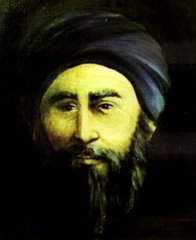
Actually, my greatest hero (after the Prophet Muhammad) was also a lawyer. His name was Jalal ad-Din.

Jalal ad-Din was born in a place called Balkh, now in modern day Afghanistan on 30 September 1207. As a young boy, he was exposed to the horrors of the Mongol invasion. His parents fled with him to the safety of a city called Konya in what is now Turkey.

Jalal saw his family members and friends butchered as he was fleeing the Mongols. He was among a large group of asylum seekers that arrived in Konya, then the capital of the Seljuk Turkish Empire. Jalal’s father was a lawyer, and Jalal was trained to be a lawyer.

And he was no ordinary lawyer. Jalal had a phenomenal intellect. He was an awesome writer, a great judge and a brilliant teacher. He was perhaps the greatest lawyer of his time. He was a senior judge, a professor of law and had thousands of students. He also received a generous stipend from the state, a house and servants. Jalal lived the highlife.

Then at age 37, at the height of his career, Jalal met a man who … um … I’m not exactly sure what the man did. The man’s name was Shums. He was an asylum seeker from a place called Tabriz, a city also ravaged by the Mongols. Who knows what horrors Shums had seen. He was old and dishevelled. Most people in Konya looked upon Shums with disdain, especially when he made an appearance in the esteemed presence of Professor Jalal ad-Din.

The Professor didn’t see it that way. I believe one reason for this was that Professor Jalal ad-Din recognised the reasons behind the dishevelled appearance and the painful eyes. This man was a holocaust survivor, just as Jalal was.

But the people of that time were truly amazing. This man and Professor Jalal both had every reason to hate the Mongols. They had every reason to attack Mongol lands and terrorise the Mongol hordes. They even had the backing of powerful states.

These men had every reason to preach a theology of hatred. Instead, Professor Jalal learnt from Shums the message of divine love. That love was and is so powerful that to this day people of all faiths are benefiting from the message of Mevlana Jalal ad-Din Rumi.

Yes, that Professor Jalal is none other than Rumi, the great Muslim mystical poet. He started out as an asylum seeker, rose to the top of the worldly ladder and then left it all behind temporarily to learn the message of divine love. Had he not joined the dishevelled Shums, he would have remained Professor Jalal.

But filled with divine love, he became the Mevlana, the spiritual leader of millions of people across the world. Now, almost 900 years after his birth, people are still discovering the Islam of surrendering to divine love through Rumi’s words.

Rumi returned from his spiritual retreats completely transformed. He taught and wrote with such force that his lengthy Mathnawi is often described as “the Persian Qur’an.”
Eventually the Mongols caught upto the region of Rum, the old Byzantine Roman heartland conquered by the Seljuks. One of Rumi’s students is believed to have set a noble example of kindness and generosity to the Mongol leader who felt inspired to adopt Islam. His entire army did the same. They settled down and intermarried with Turkish Muslims.

The ancestors of these converted Mongol Turks eventually came to India and conquered the place. Had they not been inspired to put down their weapons, the Mongols may have raped and pillaged as far as Paris or London. Instead, they founded one of the greatest and most tolerant Muslim civilisations India had ever witnessed.

So now, reader, you might be able to guess why Mevlana Jalal ad-Din Rumi is my hero. He taught a message that was more powerful than all the suicide bombers and all the terrorist attacks in the world. He taught a message that defeated the enemies by transforming them into friends and brothers.

Rumi had every reason to hate the Mongols. They killed half his family. They almost killed his spiritual teacher Shums. But neither Shums nor his student were students of hatred, vengeance and violence. They were students of divine love.

If the Muslims of Rumi’s time could win over the Mongols, what is there to stop us living in the relative freedom of the West from winning over our countrymen and women? Filled with divine love, we can win over anyone with God’s permission.

Terror pushes the hearts away from God. Terror breeds hatred and more terror. But love is the divine magnet that drags people back to their Lord. Love turns your worst enemy into your bosom friend.

As Saul of Tarsus wrote in his letter to the people of Corinth:

If I speak in the tongues of men and angels, but have not love, I have become sounding brass or a tinkling symbol. And if I have prophecy and know all mysteries and all knowledge, and if I have all faith so as to remove mountains, but have not love, I am nothing. And if I dole out all my goods, and if I deliver my body that I may boast but have not love, nothing I am profited.

Love is long suffering, love is kind, it is not jealous, love does not boast, it is not inflated. It is not discourteous, it is not selfish, it is not irritable, it does not enumerate the evil.It does not rejoice over the wrong, but rejoices in the truth

It covers all things, it has faith for all things, it hopes in all things, it endures in all things.

Love never falls in ruins; but whether prophecies, they will be abolished; ortongues, they will cease; or knowledge, it will be superseded. For we know in part and we prophecy in part. But when the perfect comes, the imperfect will be superseded.

When I was an infant, I spoke as an infant, I reckoned as an infant; when I became [an adult], I abolished the things of the infant.

For now we see through a mirror in an enigma, but then face to face. Now I know in part, but then I shall know as also I was fully known.

But now remains faith, hope, love, these three; but the greatest of these is love.

And as Mevlana wrote in his Diwan-i-Shums:

Love means to reach for the sky and with every breath to tear a thousand veils.Love means to step away from the ego, to open the eyes of inner vision and not to take this world so seriously.

Congratulations dear heart;You have joined the circle of lovers, tell me in your own words when did this throbbing begin?

“I was absorbed in my work in this world but I never lost my longing for home.One day, exhausted with no strength left, I was lifted suddenly by the grace of Love.To describe this mustery there are no words”

(translated by Maryam Mafi & Azima Melita Kolin)

Two men, one message. The time has come to use the weapons of divine love to win the hearts of our country men and women.

(This article is written for my noble sister Yasmin, may God lighten her burdens.)

Irfan Yusuf is a Sydney-based lawyer and occasional lecturer in the School of Politics at Macquarie University. He is a columnist for the Australian Islamic Review, Online Opinion and altmuslim.com. He is also 1 of 3 Muslim Ambassadors for the 2005 White Ribbon Day campaign in Australia.

© Irfan Yusuf

Stumble Upon Toolbar

Monday, November 28, 2005

Hands Off Michelle

What’s happened to some of our cultural Muslim leaders? Have they taken rocks out of their head (used by many for rock storage) and started throwing them at Aussie Muslim converts again? Hasn’t anyone reminded them yet that people in glass houses shouldn’t throw stones? Or should that be glass mosques?

Some years back, Michelle Leslie decided it was time for a change. According to friends, she was going through a difficult period in her life. One of her friends happened to be a Muslim.

Perhaps Michelle’s friend lent her a Quran (the Muslim scripture). Perhaps Michelle was taken to Sydney’s gorgeous Ottoman-style Gallipoli Mosque. Perhaps Michelle dated a Muslim guy.

In any event, this underwear and swimsuit model decided Islam was for her. She made the decision to convert, told some family and friends, and basically kept it to herself.

Michelle didn’t fundamentally change her career or her lifestyle. Why? Who knows. And more importantly, who cares.

But some Muslim leaders and commentators believe Leslie owes Muslims an explanation. Journalist and representative of the Forum of Australia’s Islamic Relations (FAIR), Salam Zreika, writes in the Australian and the Herald-Sun that Leslie has effectively snubbed her fellow Muslims by her inconsistent dress sense.

Meanwhile, Muslim leader Dr Ameer Ali says that Leslie should make up her mind whether she wants to be Muslim or not. He suggests she will have to change her career if she is to remain Muslim.

Huh? I was always taught by my observant Muslim mum that what makes you a Muslim is what you believe, not what you do. And at the end of the day, what you believe is between you and God.

The comments of those Muslims choosing to play God (or “Allah” as Muslims refer to God) are almost laughable if they weren’t hurtful. No Muslim is perfect. Neither is any Catholic or Anglican or Jew. Or even any Callithumpian.

Speaking from experience, when I experience difficulties in life, my religious observance tends to skyrocket. But when the going doesn’t get as tough, I slacken off a little. And I know that if I found myself in a prison cell in Bali, I would do anything to get God on side.

Those claiming Michelle Leslie wore a hijab (head scarf) and a burqah (full head covering) to win sympathy from the court should get a reality check. Indonesia may be the world’s largest Muslim majority country. But Bali is a Hindu-majority island. And the judge who sentenced Schapelle Corby (and who was probably the one who found Michelle guilty) was Christian.

But the comments of cultural Muslim leaders are also hypocritical. Anyone who went to the Multicultural Eid Festival at Sydney’s Fairfield Show Ground on Sunday would have seen thousands of young Muslim women wearing singlet tops and hipster jeans.

These are the same girls who would wear them up and down Sydney Road in Melbourne or Auburn Road in Western Sydney. The same Muslim girls who dance the night away at a Turkish dance party to celebrate the end of Ramadan.

Why isn’t Dr Ali pointing the finger at them? Is it because they, like he, are cultural Muslims for whom Islam is little more than their name being Fatima or Yasmin or Mariam.

But then, perhaps the Yasmin in the mini-skirt may in fact have a greater degree of faith in her heart than Dr Ali could even dream of. Perhaps the same Fatima prays regularly when she can. Perhaps God hears her prayers and not those of her accusers.

And why should the reality of Muslim dress surprise anyone? Many Muslim Australians have been part of the mainstream since the 1960’s (especially Turks and some Lebanese), and some since the end of the Second World War (Bosnians and Albanians).

And these Muslim girls who follow the latest fads and fashions are just as Muslim as anyone else. I used to have trouble getting up before sunrise to say the morning prayer (I still do). I asked my Muslim friend who works behind a bar. She suggested that when my alarm clock goes off, I sit up in bed and meditate. Sure enough it worked. So now in the Muslim scheme of things, she is getting rewarded by God for all my morning prayers.

Islam is not just a function of what you wear. It is a function of what you believe and how you behave with others. My barmaid friend’s miniskirts don’t bother me. But her advice and wisdom are a blessing in my life.

Muslim leaders should stop trying to act like Sophie Panopoulos and Bronwyn Bishop and let Muslim women dress as they please. Instead of lecturing Michelle Leslie, they should consider campaigning on more pressing issues such as the massive increase in domestic violence across all Australian communities.

Last Friday was my mum’s birthday. It was also White Ribbon Day, the UN’s designated International Day for the Elimination of Violence Against Women. On this day, men wear a white ribbon to signify their refusal to sit back and tolerate when other men are abusive and violent to women.

Perhaps more Muslim leaders and imams could have led by example. Perhaps more Sydney imams could have devoted their Friday sermons to reminding their congregation of the severe divine punishment that await men who are abusive to their mothers, wives, sisters and daughters.

Perhaps those same imams can still wear white ribbons to show that they are far removed from that small minority of Muslim men who claim physical and sexual assault is part of their religious culture. Certainly these steps would make more sense than giving Michelle Leslie and her family a hard time.

The author is a Sydney lawyer and an ambassador for 2005 UNIFEM White Ribbon Day campaign.

© Irfan Yusuf 2005
Stumble Upon Toolbar

Tuesday, November 22, 2005

OPINION: Violence Against Women - Be part of the solution, not the problem

by Salam Zreika and Irfan Yusuf

YOU may have been shocked to see the most recent TV commercial for White Ribbon Day. In case you haven't seen it and are wondering what everyone's talking about, here is a brief summary.

A husband and wife are eating a meal quietly together in their home until they are disturbed by the sound of their neighbour shouting at and beating up his female partner repeatedly.

After a few moments of hearing screams and shouts as they try to eat, the husband picks himself and a baseball bat up, knocks on his neighbour's door and hands the offending male the bat, saying something like "here - this will help".

The message backing this disturbing ad is simple: "If you stay silent about violence against women, you may as well lend a hand. Or a baseball bat."

These days, we often see women working their way up in the world, showing success and gaining respect from their male colleagues.

Take one of us, for example. When she isn't bossing her husband around, Salam works in a senior role in a major financial institution. She also has martial arts training, and is quite confident she could defend herself against a male trying to assault her.

What we both have in common is we are Aussie Mossies, young Muslims brought up in Australia. One was born here, the other missed out by around five months. But we both know how prevalent domestic violence is in our own and other faith communities.

This year, one of us will join two other Muslim men and numerous other prominent men as ambassadors for White Ribbon Day in Australia.

Part of that role includes encouraging imams in Australia to devote their sermons this Friday to tackling the issue of domestic violence.

White Ribbon Day started in Canada in 1991. It was the initiative of a small group of men who wanted other men to speak out more about violence against women. But after 14 or so White Ribbon Days, there is still an big rise in violence against women, both in domestic and public settings, and across all faith communities.

It is actually quite disgusting to think that there are many men out there who still think it is all right to physically or emotionally hurt women because they believe they have the power or the right to do so.

Many people are oblivious to how common violence against women is.

Studies have shown more than a million Australian women experienced violence during a relationship with 600,000 women claiming they have lived in fear during a relationship. Worse, 20 per cent of women were pregnant when the violence first occurred!

Many victims are too frightened to report, and suffer in silence.

Friday November 25 is White Ribbon Day, the UN's designated International Day for the Elimination of Violence Against Women.

This year, men are being asked to wear white ribbons as a symbol they will no longer condone or stay silent about this issue. Whatever you think of the UN, no one can doubt the importance of this day and the urgency of this issue.

(This article is to be published in the Daily Telegraph on 23 November 2005)

Delicious
Bookmark this on Delicious

Digg!

Get Flocked

Stumble Upon Toolbar

Tuesday, November 15, 2005

COMMENT: Young Turks poised to take over Islamic Council of NSW

On Monday night, 14 November 2005, I witnessed a welcome sight at an open forum organised by the Islamic Council of NSW. After more than 2 decades of dominance by what could be described as “the Lebanese Mafia”, the ICNSW was showing signs of generational change.

I remember as a teenager watching a video of the Yusuf Islam tour to Australia which happened during the early-to-mid-1980’s. The former English pop star was invited as a guest of AFIC and the Islamic Council of NSW to advise on establishing Muslim independent schools.

A video of that tour was taken, and was entitled “Walking In the Light”. Appearing in that video was a much younger Lebanese migrant leader who even back then was heading the Islamic Council of NSW. And up until 2003/04, he was still heading the organisation. He is now Principal of a school controlled by the ICNSW. He does not hold an HSC, let alone a degree in educational administration.

But last night, it was very clear who was in charge. And it certainly wasn’t the same Lebanese family and their allies. It seems the power has moved firmly from the ghetto of Greenacre and Lakemba to Auburn and Bonnyrigg. This can only be described as a promising development.

The new generation in the ICNSW are educated and professional Australian Muslims of Turkish background. Turks have tended to be loyal by default to the Lebanese mafia families, allowing them to squander resources so long as Turks are left alone to do their own thing.

Turks are perhaps the most established, well-integrated and well-organised ethno-religious Muslim community in NSW (if not Australia). They have the largest network of mosques. One of their religious foundations runs schools with campuses in Prestons, Auburn and Shellharbour. Another of their groups has established sufi hospices in the countryside.

Turkish Islam is more orthodox, more spiritual and less influenced by extreme Wahhabist tendencies. It is also more tolerant and pluralist. Turkish culture is more European, and historically Turks have engaged with Europe more successfully than Arabs. Turkish Muslim outlook is less hostile and more Western. This makes Turks a far more integrated group than the Arabs.

Further, Turks have been in Australia much longer than the bulk of the Lebanese. They have built mosques and religious institutions in major and regional cities. Their fundraising is almost exclusively local. You don’t see Turkish Muslim leaders naming their mosque or school after a Saudi monarch or a Gulf Sheik.

Further, whilst Turkish mosques tend to have imams trained in Turkey, these imams have a much greater understanding of the needs of Muslims living as migrants in liberal democratic societies. In fact, if they do not already speak fluent English and/or German, most Turkish imams make a point of learning English.

While Sheik Hilali is wasting everyone’s time making silly media statements, Turkish imams are busy in Abbeys Bookshop buying up works on mainstream Australian culture, society and politics. Turkey’s imams are heavily influenced by the modernist vision of the new Turkish conservative government which has strong ties to Turkey’s sufi orders.

Perhaps the best feature of Turkish mosques is that they all make a point of establishing committees for women and youth. Turkish women and youth are actively involved in the affairs of their local mosques. Turkish mosques participate in mainstream Turkish-Aussie activities including soccer clubs and cultural activities.

When I became involved in political and business activities in Auburn in 2001/02, I was able to learn more about how Turkish Australians manage their religious affairs. I could now understand why the generation gap between elders and youth was far less pronounced amongst the Turks than other ethnic Muslim groups. Turkish elders had a far better understanding of Western culture, and most had successfully integrated into their adopted Australian environment.

Further, Turkish elders were more welcoming of young people. Turkish elders tended to have a much more strategic vision for their institutions, and realise that without involvement of young people the mosques will become stagnant and redundant.

Turks are the great Aussie Muslim success story. Their religiosity is very European, and they do not subscribe to the isolationist theology that infects many Arab Muslim migrant groups. As such, the increasing involvement of Turkish Aussies in the management of the Islamic Council of NSW is a welcome development.

Most promising is the presence of businessman Alf Coruhlu. Mr Coruhlu was brought up in Australia and is married to a Sri Lankan convert. He has close links to a broad range of Turkish groups and imams, and has served on the Bonnyrigg Mosque executive for a number of years.

Alf is also an investor in the Islamic Realm (iR) project which is seeking to invite sensible Muslim speakers to tour Australia and speak at major venues. iR’s most recent tour was that of Dr Tariq Ramadan (from Switzerland) and Mr Gary Edwards (from the United States). iR is developing close links with sensible Muslim institutions in Europe and North America.

Alf represents the new generation of Turkish Aussies who don’t just think outside the square but also act and live outside the square. His business acumen and ability to project manage will be a huge asset to the ICNSW.

Leading and assisting Alf in the reform process is the multi-talented ICNSW Chairman Kemal Ismen, a retired union delegate and organiser. Kemal has lived in North America and Australia, and brings a wealth of knowledge of Muslim religious institutional management in Western environments. Kemal speaks fluent English in a New Jersey accent.

The Turkish Muslim sector has always been active in mainstream Australian affairs. It has tended to shy away from migrant-dominated Islamic peak bodies. Turks have lived in Australia since the 1960’s, and are now into their 3rd and 4th generation. They are beginning to realise that they too are affected by the incompetence of peak bodies based in Sydney. Turkish involvement is a welcome development.

Words © 2005 Irfan Yusuf

Delicious
Bookmark this on Delicious

Digg!

Get Flocked

Stumble Upon Toolbar

Sunday, November 13, 2005

COMMENT: Moustapha al-Akkad - Sharing the Prophet in name and in film

Every life lost to terror is precious. Whether it be Sydney footballers or an anonymous London travellers, terror always claims innocent victims. But one recent terrorist incident should have really shaken the few Muslim left who only reluctantly condemn the terrorists.

Moustapha al-Akkad was no small fish in Hollywood. He was executive producer of the successful Halloween series of movies, from which he made millions. Halloween was released in 1978, and has regularly featured in lists of all-time great horror movies. The film had 7 sequels, the most recent of which was released in 2002.

Akkad was an American national. He had decided to move to Lebanon, taking advantage of the Mediterranean surrounds and the relative peace following decades of civil war and occupation. He was in Amman with his family to attend a wedding.

Akkad was born in the city of Aleppo in Syria, a Muslim town which provided shelter to thousands of Armenian refugees fleeing persecution during the last days of the Ottoman Empire. He moved to the United States at 18 years, and is said to have had only $200 and a Qur’an in his pocket when he arrived in Los Angeles.

Akkad studied film at UCLA, graduating in 1958. He completed his Masters from the University of Southern California where he focussed his attention on documentary making. Akkad went onto make documentaries for CBS across the world.

Despite being held captive to the American dream, Akkad never forgot his roots to his Syrian homeland or his Islamic faith. He used his directing skills to produce two movies regarded as classics across the Muslim World.

In 1976, Akkad produced and directed “The Message”, a film about the life of the Prophet Muhammad. He gathered actors of the calibre of Anthony Quinn, who played the Prophet’s uncle Hamza. Quinn also played the lead role in Akkad’s 1981 film “Lion of the Desert”, which portrayed the life and death of Libyan anti-colonial fighter Omar al-Mukhtar.

In a 1977 interview about “The Message”, Akkad described his reasons for making the film and his vision of his Islamic faith.

I did the film because it is a personal thing for me. Besides its production values as a film, it has its story, its intrigue, its drama. Beside all this I think there was something personal; being a Muslim myself who lived in the West, I felt that it was my obligation, my duty to tell the truth about Islam. It is a religion that has a 700 million following, yet it's so little known about, which surprised me. I thought I should tell the story that will bring this bridge, this gap to the West.
Akkad’s vision of Islam was as a faith which built bridges between hearts and civilisations. Like most Muslims, Akkad wanted to use his faith to be a source of peace, not conflict. The only terror (if one could call it that) Akkad wanted people to experience was from his horror movies.

Akkad was attending a wedding in Amman, Jordan when terrorists struck. He was standing outside the hotel where the wedding was being held. His 34 year old daughter, Rima Akkad Monla, was inside the hotel and was amongst those instantly killed in the blast. Akkad was severely injured and died in hospital on Friday.

Across the Arab world and the United States, tributes have been pouring in on this proud son of Aleppo. The Daily Star of Beirut, Akkad’s adopted city, writes:

Remembered by his friends and family here as a humble man whose words spoke volumes, he lived life to the fullest always loving the art of filmmaking and never stopped in his pursuit of bringing a true and peaceful image of Islam to the West. It is the most tragic of ironies that he died a victim of fellow Muslims claiming to fight in the name of the religion he so loved.
Akkad was planning to produce a movie on medieval Kurdish general Salahuddin (known in the West as Saladin) who defeated the Crusaders and drove them out of Jerusalem. Firas al-Atraqchi from al-Jazeera writes on 13 November 2005:

It was only two years ago that I sat across from him and his son Malek as he discussed the challenges he was facing in arranging financing for his new epic project – Salahuddin. Sitting comfortably in a leather chair in the lobby of the Grand Hyatt in Cairo, Egypt, with a pipe in his hand, Akkad described his Salahuddin troubles as nearly synonymous to the challenges he faced when trying to put together a script for The Message – a film about the rise of Islam and the teachings of the Prophet Muhammad.
Atraqchi goes onto describe the problems Akkad faced in trying to convince the fringe Wahhabi religious establishment of Saudi Arabia to approve the making of a film about the Prophet Muhammad. The sunni scholars of al-Azhar and shia authorities of Southern Lebanon had given their approval. Only the wahhabi's were holding back.

The same ideology held back Akkad from completing his Salahuddin project. The al-Qaida terrorist network, an offshoot of the wahhabi cult, took responsibility for the Amman blasts which killed Akkad, his daughter and over 50 others.

In his book The Great Theft – Wrestling Islam from the Extremists, UCLA Law Professor Khaled Abou el-Fadl laments how contemporary attention on Islam focuses on the actions of fringe groups such as wahhabi's and al-Qaida. The result, argues el-Fadl, is that “the most emphatic moral values taught by Islam … mercy, compassion, and peace” are readily ignored.

This struggle between the violent fringe and the moderate mainstream continues. It continues to claim victims of all faiths and no faith in particular. It has now claimed Moustapha al-Akkad, a man who devoted much of his creative talent and wealth to building bridges between Muslims and the rest of humanity. Muslims in Australia , New Zealand and across the Western world owe it to humanity to continue his legacy.

Words © 2005 Irfan Yusuf

Delicious
Bookmark this on Delicious

Digg!

Get Flocked

Stumble Upon Toolbar