Friday, April 22, 2005

COMMENT: Some Crazy Thoughts On Progressive Islam

These days, every Muslim with any public profile is tripping over him/herself to jump off any band wagon labelled ‘extremist’ islam or ‘islamism’ or other undesirable nametag.

This has led to the growth of a whole raft of groups struggling to monopolise on terms such as ‘moderate’ and ‘progressive’.

The events of September 11, 2001 may have caused 4 domestic airplanes and a few buildings to collapse in the US. But in the Muslim world and in Muslim communities across the western world, that one terrorist attack caused a huge ideological earthquake whose aftershocks are still being felt.

And after all the allegedly sophisticated rhetoric and clumsy linguistic gymnastics that have gone into writing the first 3 paragraphs of this article, I would like to ask a simple question. What on earth is a ‘progressive’ Muslim?

Is a progressive Muslim someone who reads and/or writes for a particular online rag (e.g. MuslimWakeUp.com)? Or is it an unreconstructed Marxist ? Or is it a member of the Pakistan Peoples Party or the Pahlavi Shah’s entourage who fled to the West in their private jet when marshal law and/or the revolution finally arrived?

Is a progressive Muslim someone who believes that sharia should recognise matrimony between same-sex couples? Or someone who wants to make wholesale changes to 14 centuries of liturgical consensus?

Many of the so-called progressive Muslims I see resemble little more than the infantile ranters of campus socialism. Which is scary, since campus socialist groups have an uncanny ability to splinter. And I would hate for people 2,000 years from now to be making a film about Muslims similar to the Life of Brian ...

Brian: “The People’s Progressive Front of Islam? Who are they?”

Ahmed: “There he is over there!”

Everyone: “Splinter!!”

Unless progressive Muslims define exactly what it is that makes them progressive, they might soon end up hacking into each other. And their opponents may just sit back and watch the circus get progressively more entertaining.

A tragic outcome would be if all those progressive activists wasted their limited energies on factional war, leaving them with no energy to re-join the bigger struggle.

I personally find the adjective “progressive” quite offensive. Then again, what do you expect? I am, after all, an old-style social conservative. But beyond that, I seriously have problems with this label. It suggests that anyone who is not in the group is reactionary or entrenched in old thinking or old-fashioned.

Some progressives love having a go at people like the Zaytuna Institute crowd. An article appearing in MWU! entitled “Zaytuna’s Smelly Kebabs” comes to mind. But how regressive are the Zaytuna people? And why is it that many “conservative” Muslims in Australia think people like Hamza Yusuf are too “modern”?

Many progressives accuse ‘traditionalists’ of being locked in Islamic tradition, never reaching out to non-Muslim traditions. Yet I have rarely heard a lecture of Hamza Yusuf which does not refer to some linguist or philosopher or poet or writer from a non-Muslim tradition. And when Shaykh Nuh Keller is not comparing a sufi principle to some Tao or Buddhist concept, he loves talking about life as a commercial fisherman.

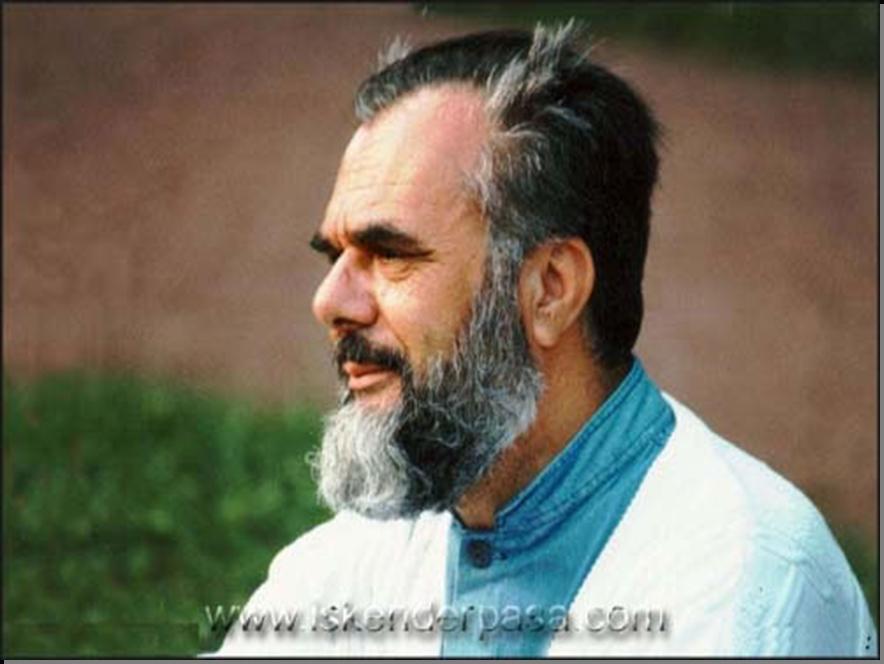
My own shaykh, the late Professor Mahmud Esad Cosan (pronounced ‘Joshan’) used to spend much of his time telling his students to go out and make some serious cash. He used to frequently tell us about his first property deal. We needed an interpreter to understand what he said. Though when he was in Germany, the youngsters used to relish his speeches given in fluent German.

If progress is about being prepared to borrow from other traditions, then traditional Islamic scholarship is perhaps the most progressive force in the Muslim world today. And this is not a recent phenomenon.

OK, that’s my thoughts for the day. Time to go and eat a doner kebab. Why? Because of all things, weight loss must be progressive.

Words © 2005 I Yusuf

Stumble Upon Toolbar

Tuesday, April 19, 2005

OPINION: E ...

assalamu alaykum.

muslims are a funny bunch.

because we speak in all sorts of strange languages and dialects, our way of greeting each other is affected.take south asians, for example. the typical pakistani girl wearing a dupatta over her shoulders will greet with "sla lekoom". the typical punjabi merchant in lahore will greet with "ass-slaam-laekoom".

then, across to turkiye, you might hear "selamunaleykooom". or if you manage to make it through in one piece to the Miniyeh (a village just outside of tripoli in lebanon where people are allegedly more inbred than in the rest of the country), you will hear "salem '3aleyqum".

here in australia (where i come from), young mossies (as we call ourselves) have combined all sorts of accents. and to make things worse, we have also managed to abbreviate the salam to 2 or even 1 syllables.

i have a south african friend in melbourne who greets me with something resembling "sai-km". a lebbo (as we call them) mate greets me with "shla' laykm".

these abbreviations spread like wildfire. eventually, mossies got sick of the spare 2nd syllable and settled for super-abbreviated salams.

residents of mosques in sydney would feel so good seeing a bunch of trendily-dressed youngsters (and in my case, a shabbily-dressed overweight oldster) enter Allah's house with smiles beaming from their faces. What nur al-huda (light of guidance) had brought za yooss (arabic for "the youth") to za mazjid (or gid for masri folk)?

but the good feelings would quickly be replaced by demons of bidah as these youngsters would address each other with "slang" and "schleh". Followed by responses of "wang" and "weh" respectively.

then one day, this noblest of all greetings was dealt a savage blow. a student of a famous american shaykh living in brisbane (the student. as if american shaykhs would live in brisbane!) joined forces with the writer to invent a new language based upon a famous pakistani uncle who often acted as master of ceremonies at community functions. this uncle spoke in a combination of urdu, punjabi and broad australian accents. "Ladoos and gentlemoon, plooz taak your soots".

the accent became known as "punjaboriginal", sounding like a combination of punjabi and indigenous aboriginal dialects. punjaboriginal even contained its own translation/abbreviation of salam. and what was this beautiful greeting? how did the practitioners of punjaboriginal greet each other?

"e".

and so, dear readers, i greet you with the noble universal greeting translated into punjaboriginal.

e.

and how should you respond? walaykum what? forget the walaykums. just respond with ... wait for it ...... e!

everytime this brisbane murid rings me, the first thing i hear is "e". a few moments later, i hear the "e" in a higher pitched voice.

"who was that?", i ask him.

"just my wife", he responds proudly. he knows he has trained her well!

hopefully my next contribution to this magnificent blog will prove much more beneficial.

ma salama (or should that be ma e)

Delicious
Bookmark this on Delicious

Digg!

Get Flocked

Stumble Upon Toolbar

Sunday, April 17, 2005

OPINION: Progressive Islam's Smelly Kebabs - Honest Thoughts on Allegedly Feminist Friday

So a university professor of Islamic Studies who just happens to be female decides that she will give a sermon and lead a small group of Muslims in a prayer service in New York. So what? What’s all the fuss about? It’s a free country, after all.

(Well, it was until a bunch of idiots decided to fly a plane into a pair of skyscrapers in the same city.)

For average Americans or Australians or Europeans, Muslim or non-Muslim, watching or reading or hearing about Feminist Friday at that Anglican Church in New York (and the following fracas with the 10 or so demonstrators outside, according to the al-Jazeera report), the first paragraph of this article probably represent the first thoughts that came to mind.

Many would compare it to the debate over female priests in the Anglican Church. Others will have recalled Barbara Streisand dressed up as a rabbinical scholar in that movie which was so forgettable that I cannot recall its name (it definitely was NOT the equally forgettable movie called Meet the Fockers!).

What follows in the next few paragraphs is my attempt to understand my own feelings toward the event. I have spent hours arguing and debating the issue on the internet. Many will have been offended by my posts on the issue on this website. And others on more “orthodox” websites will be wondering why I still bother to stand on my cyber-milk-cart and shout like Abdul Rahim Greene here.

Smelly Kebabs

Some months back, on this website, someone published an article on the ‘smelly kebabs’ of the Zaytuna Institute. In relation to that article, I can make my first real confession. If Islam were Turkish cuisine, I would much prefer the smell and taste of Zaytuna kebabs over the slush of 'progressive' salad.

And for all of you who think you are progressive, listen up. I believe Zaytuna is the epitome of genuinely progressive Islam. Why? Because they seek and find progress WITHIN their tradition. They are happy to engage with other traditions. And they appreciate that many traditions share common features.

But what is the point of trying to get beyond ‘traditional’ Islam when you have not bothered to master that tradition? If you try to walk forward without knowing where you came from, you probably don’t know where you are going. So you might as well walk off the edge of a cliff without a parachute.

It’s easy to take elements of different trendy vegetarian ideas, put them together into some kind of ideological salad, add a bit of media-frenzy dressing and start munching. It may taste fresh, but it won’t necessarily be good for you.

Which leads me to acknowledge my own biases.

Confessions

I believe it is essential that all you boys and girls out there in the Islamic cyber-State know where I am coming from. I make my prejudices public and resent those (progressive or otherwise) commentators on this issue who claim to be totally objective.

So let me start with a few confessions.

I am Muslim. I am a male. I live in Sydney, Australia. I practise law.

Is that it? No, there’s more.

In matters of fiqh (personal religious law), I follow the school of the ahnaaf (often incorrectly referred to as the ‘hanafi’ school). Most of my teachers were from the deoband tradition of North Indian hanafi sunni Islam, though I have been known to shed a tear or two whilst watching videos of Dr Tahir al-Qadri (from the allegedly competing barelwi tradition) speaking in his gorgeous Urdu on the status of our Prophet Muhammad (peace & blessings of God be upon him).

I believe in what is popularly known as “traditional” Islam. That does not mean that I agree with everything that every traditional scholar or writer has ever written or stated. For instance, like many followers of the orthodox naqshbandi tradition, I have serious problems with some “haqqani” elders. Especially after one of them decided to go to the US State Department and call most North American groups (including presumably the Zaytuna Institute) supporters of extremism and terrorism.

I have also had no problems in questioning some criticisms of Maulana Farid Esack made by Shaykh Abdal Hakim Murad (Tim Winter). And I told Shaykh Tim this when he visited Sydney last year.

But by and large, I regard traditional Islam as the most suitable and progressive form of Islam, flexible enough to be just as much at home in a deobandi madressa (or a Barelwi one for that matter) in Karachi as in a halaqa of Young Muslims of Australia (http://www.yma.org.au/).

OK, those are my cards on the table. What does that make me think of Professor Amina Wudud Muhsin and the allegedly first mixed congregational prayer to be led by a woman?

The First Time …

MWU! and other organisers of the event told us that this would be the first time in history that a woman would be leading the salat al-jumuah (Friday congregational prayer) and delivering a khutbah (sermon that forms part of the prayer) in over 1,400 years of Islamic history. They waxed lyrical about the whole ‘first time’, until at one stage I thought it was Roberta Flack who would be leading the prayer.

Really? Are you sure this was the first time? I certainly wasn’t. I thought I had better check things out.

In the West, when you see something weird, you predict that it will probably have something to do with the United States. “Only in America!”, we often here. In the Muslim world, the weird things often seem to happen in Turkey. So asking Turks was a good start.

I rang my mate Alf, a Turkish Aussie who has sat with numerous Turkish scholars (including my own late teacher). Alf asked around a few of the hocas in Sydney. He then came back to me.

“Irfan, these guys who claim it is the first time in history are spinning sh#t. One hoca [Turkish for “imam”] told me these stunts were happening in Turkey 20 years ago! And also, there was that thing in South Africa that the funny dude was talking about”.

The thing in South Africa? That funny dude? I guessed Alf was talking about Maulana Farid Esack. I looked up the index of his book “On Being A Muslim” (which I reviewed on this very website) and found references to both Amina Wudud and Shamima Shaikh (may God have mercy on her) having something to do with mixed congregational prayers.

Then someone sent me something about mosques in China built specially for women. Women giving khutba on Fridays and leading prayers. Admittedly blokes probably weren’t on the invitation list there.

Ok, I know some of you will be saying that these other incidents did not contain all the same features as the recent service led by Professor Wudud. But I think it was a bit misleading for the organisers to claim they were making history.

Sharia Arguments

I am no scholar of sharia (Islamic legal traditions). I have no ijaza (permission to teach) from another expert also possessing ijaza as part of a chain (sanad) of ijaza going all the way back to the Messenger of God (peace and blessings of God be upon him and his family). I also have not graduated from any Islamic or other university. Nor have I studied Islamic Studies at a western university or other institution.

As such, I cannot comment on whether Professor Wudud’s arguments have some basis within sharia. Many of those making outlandish comments and giving blank cheque fatwas on behalf of either side of the argument should have the guts to make the same admissions.

I have seen elsewhere that Imam Ibn Rushd, an expert on comparative systems of understanding sharia in the Sunni school, has cited the opinion of the famous Imam Tabari which lends support to the recent service led by Professor Wudud. And many have pointed to this opinion.

Imam Tabari was well-known in his time. He was also well-respected. If he had openly expressed such an opinion, we might safely presume that somewhere some woman in his community led the Friday prayers. This further undermines the “we were first” claims.

Some have been arguing that sharia is sexist and that women were rarely allowed to be scholars. What, then, have we to say about Imam Shafei (God have mercy on him) who admitted having been taught by over 20 female scholars? And what do we make of our spiritual mother Aisha (God be pleased with her) who taught us so much about the more private aspects of sharia and who is regarded (at least in the Sunni school) as one of the greatest hadith scholars and jurists of her time?

But even if I were to agree that the entire evolution of sharia kept women out of the scholarly loop, does it make sense for me to look within that same tradition for an opinion supporting my case? And an opinion from a male?

It’s a bit like the late Ahmed Deedat (God have mercy on him) disputing the authenticity of the New Testament, but then using the same inauthentic document to prove his case against the crucifixion.

Minority Opinions

Legally, one thing is certain. If you stray from the mainstream, you are swimming in dangerous waters. This applies to any legal tradition, whether common law or continental law or sharia law.

In Nigeria, Amina Lawal was the victim of a magistrate with little knowledge of sharia trying and sentencing her in accordance with a minority and largely discredited opinion of the Maliki school of law.

Minority opinions are dangerous because they have rarely been tested and applied. This in itself does not make them wrong. It also does not make them completely without basis. You cannot say the recent Friday service was without basis when someone of the calibre of Imam Tabari was prepared to stick his scholarly neck out over one millennium ago and support the idea.

Minority opinions can be dangerous. And when used to support noble intentions and agendas, they can cause more damage than good to the cause they are being used to serve. Which leads me to my main point.

Amina Is Not Helping Amina

I have no doubts about the sincerity of the organisers of the recent Friday service, their supporters and all those who agree with Professor Wudud’s position.

The Prophet (peace and blessings of God be upon him) once said: “The best of you is he who is best to his wife”. He also said: “Paradise is under your mother’s feet”.

Yet look at how our communities across the world treat their wives, sisters, mothers, aunts. Anyone who claims Muslims respect human rights must be joking. How can you claim to respect human rights when you discriminate against over 50% of your community? I’ve heard of oppressing minorities, but this is gender apartheid and it is just ridiculous.

How often do you see Punjabi Muslim men being gang-raped or shot or stoned for talking to a female? How often do you see a middle class Karachi kid being whipped for sneaking out of a video-hire place with pornographic DVD’s? Why do prostitutes in Dhaka get punished and ostracised but not their clients?

I have heard of Amina Lawal. Where is Ahmed or Muhammad or Tariq or Irfan Lawal?

When it comes to human rights, we have reached crisis point. When we Muslim men mistreat our wives and our mothers, we are clearly not the best among men. And we are certainly not deserving of the paradise that lies under the feet of our mothers.

This, I believe, was the real motivation of Professor Wudud and those behind her (both at the Friday service and otherwise). Their intentions are noble and necessary. But the prayer service itself was not.

Yes, we sitting in our middle class homes in air-conditioned comfort eating micro-waved meals and typing words on the latest computers as we illegally download songs from LimeWire, we might think our well-intentioned acts reach out and touch the lives of millions.

But how many of us have been to Muslim societies and Muslim countries and really understood the core of the problem? Are Muslim women oppressed because they may or may not be allowed to lead congregational prayers?

The causes for women’s oppression are many and varied. Muslims are not a monolith. Our understanding of Islam and what it has to say about gender relations is conditioned by our cultures, our climate, our history, our interactions with non-Muslim cultures, our exposure to mass media etc.

Liturgy and procedures of ibada (formal worship) are not necessarily the only cause. And not all Muslim women necessarily feel oppressed by our traditional liturgy.

And our solutions may not suit all Muslim communities. In South Africa, many Muslim women are struggling just to get into the mosque. In most mosques in Sydney, women are given the smallest and smelliest places for prayer. In some mosques, cars are parked in nicer spots than the places where women are expected to worship their Creator.

Did traditional Islam lock these women out of the mosque or confine them to such small and smelly spots? Did traditional Islam empower village elders to gang-rape women? Did traditional Islam allow a lowly Nigerian magistrate to wrongly sentence a woman to death?

Muslim women in Aceh trying to re-build their lives destroyed by the tsunami probably could not care less about events in New York. Muslim women in Pakistan in hiding from honour-killing male relatives won’t feel any less insecure thanks to Professor Wudud being an Imam. Amina Wudud has not helped Amina Lawal.

Yes, we are told. This is all true. But the Friday prayer of Professor Wudud was a start in the process of liberation. Really?

Are we to presume it is only mad mullahs who are offended by this event? I don’t think so. Many Muslim women are speaking out against the prayer, and they do so for a variety of reasons. Writers here might express disdain for those reasons. But the onus is on those introducing this practice to convince their sceptical critics.

How to Lose Friends & Infuriate People

And why shouldn’t the critics be sceptical? Many Muslim women find it offensive that one woman feels she can re-invent the salat/nemaz/ritual worship wheel. They also feel offended that those involved are taking credit for liberating Muslim women whilst the reality on the ground is so stark.

You cannot expect to be able to liberate women by offending them and their sensibilities. You cannot expect to implement change by belittling people’s beliefs and core practices. Unless, of course, if you want to look like Hizbut Tahrir or al-Muhajiroun, trying to convince people to adopt Islam by telling them their entire system is evil and should be crushed.

Changing established rules of fiqh to get a good write-up in the NYT is not my idea of a sound prescription for reform of any legal system. Do-it-yourself sharia for publicity should be left to the experts, along with flying jets into skyscrapers.

Then again, in a community with as little intellectual vigour as ours, you could come up with a most eminently sensible view and have scholarly views and sources to back up your argument, and people will still call you nasty things. Look at poor Dr Ramadan and his view on the suspension of capital punishment in Muslim countries. Even those claiming to follow his grandfather are opposing him.

So I guess a good way to lose friends in our society is to speak your mind. It infuriates people and gives them the sh#ts. I may not agree with Professor Wudud, but I am sure both of us sleep very comfortably at night.

(This article has been submitted to www.MuslimWakeUp.com, a sensationally honest and provocative online magazine that we all love to hate but which serves so many useful purposes. MWU decided not to touch it, but an edited version was published by the North American Naseeb Vibes and can be accessed at http://www.naseeb.com/naseebvibes/prose-detail.php?aid=3764)

Words © 2005 Irfan Yusuf

Delicious
Bookmark this on Delicious

Digg!

Get Flocked

Stumble Upon Toolbar

Saturday, April 02, 2005

OPINION: Anwar Is Proof That Ramadan Has a Point

Two prominent Muslims recently graced Australian shores.

Tariq Ramadan delivered lectures and moderated workshops in Sydney and Melbourne. He brought a message of Muslims needing to engage in and with the societies in which they live. He also gave us a taste of the inner aspects of faith, the tasawwuf (often misnamed as 'sufism'), that his grandfather (the late Imam Hasan al-Banna) so thoroughly reflected.

Months later, Anwar Ibrahim visited Australia and spoke to packed audiences in Melbourne, Sydney and Brisbane. These included 2 public lectures specifically targeted at Muslim communities.

Anwar delivered a similar message to his Muslim audience – that we need to engage with non-Muslims, that we need to stop pretending we are not part of the communities we live in and benefit from.

Recently Dr Ramadan has made the headlines with his claim that there should be a moratorium on corporal punishment, stoning and the death penalty (collectively known as hudud) in the Islamic world. His comments have been condemned by Muslim writers and scholars, including those claiming to follow the legacy of Dr Ramadan’s grandfather.

I am not qualified to speak on the legal validity of Dr Ramadan’s proposal. I do not hold any formal qualifications in sharia law, nor am I a graduate of an Islamic university. I have rarely set foot in any madressa (except to learn how to read the Qur’an in Arabic). I have no ijaza (permission to teach) from a scholar himself (rarely herself) possessing an ijaza as part of a chain (or sanad) of ijaza going back to the Prophet Muhammad (peace & blessings of God be upon him).

But I do know something about the administration of criminal justice. I also know a little about politics and public relations. And I would humbly submit that unless our scholars handle themselves properly, we might be headed for another public relations disaster.

Sharia is not just about criminal justice, stoning adulterers or chopping hands and heads off. Sharia is a complex and sophisticated legal tradition encompassing a broad range of opinions from things as fundamental as how rules are derived to things more mundane as where to place your hands when praying the salaat or nemaz. Hudud punishments are a small portion of the corpus of sharia.

But the way some of our scholars are reacting, one would think that perhaps all those News Limited columnists are right and that sharia is little more than nasty punishments.

Criminal justice does not just exist in statute books or scholarly dissertations. Between crime and punishment is a whole series of steps. The person must be apprehended and charged. A decision needs to be made on bail. Then there are issues relating to court evidence and procedure. Finally, upon conviction, there must be sentencing guidelines for the judge to follow. Not every theft leads to an automatic amputation.

All this requires specially trained law enforcement agencies. In the case of Anwar, the law enforcement agencies were specially trained to deliver him a black eye and serious injuries that will affect him for life. He was lucky. Had he been Mamdouh Habib (the Australian citizen recently released from detention at Guanatanamo Bay), he may have been shipped to Egypt where the law enforcement would have been less gentle.

And imagine if hudud punishments were applied to Anwar after being wrongly convicted of sodomy. We would not have been listening to him some weeks back. All that we could have seen of him would have been a gravestone with his name engraved onto it.

Also required are qualified and independent judges. I have relatives in Pakistan who are lawyers. They tell me how wonderfully independent judges there are – to the highest bidder. The judge initially hearing Anwar’s case was also totally independent in doing the bidding of the government.

Before pro-Ikhwan writers attack Dr Ramadan over his proposal, they should provide one example of a Muslim country where the rule of law is supreme, where judges are qualified to understand and justly enforce hudud and where police and other law enforcement agencies are relatively corruption-free. Sharia may be (and I believe is) a divinely-inspired legal system. But in the hands of the wrong people, it’s criminal punishments can become part of the devil’s handiwork.

The late Syed Maududi, a chief proponent of the introduction of sharia into Pakistani law, was also strongly opposed to the introduction of hudud until the moral, social and educational conditions were right. No point chopping hands for theft when the entire economy is based on a reverse Robin Hood system – stealing from the poor majority to give to the rich minority.

And what a nightmare it would be if the proponents of sharia turn out to be the ones behind the creation of a system in which sharia lost all credibility in the eyes of the people it was meant to guide and save. Imagine an international Muslim community fillied with millions of Amina Lawals.

Caliph Umar had the right idea. He suspended the punishment for theft during times of severe poverty arising from a famine. When people are forced to steal just to survive, amputating their limbs hardly seems just.

When Muslim scholars take absurd positions and oppose anything that resembles compromising (a portion of) sharia, they undermine their own credibility. For many, it also involves them speaking and judging in areas beyond their expertise. The trial judge who sentenced Amina Lawal on the basis of a minority (and largely discredited) position within the Maliki school of law was a classic example of this.

These scholars also make it hard for other scholars, writers, professionals, business people and other ordinary Muslims who are busy trying to engage with their fellow humans. It is hard to tell someone that your intentions are peaceful when your religious scholars are intent on imposing criminal sanctions seemingly based on mindless violence. So much being able to fruitfully engage with non-Muslims!

Of course, our scholars could always just state the truth. They could acknowledge that there are serious obstacles to be overcome before any aspect of sharia is implemented on a national level in any Muslim country. They could also acknowledge that sharia is not just concerned with criminal justice but also with economic, political, social, educational, matrimonial and every other form of justice. Sharia is as much about curbing anti-competitive behaviour in the market or ensuring mediation becomes a primary means of settling commercial disputes as it is about punishing criminals.

Law does not exist in a social vacuum. Let's get our Muslim societies in order before we start drastically increasing the severity of our criminal punishments. Let's ensure we have in each Muslim country an independent judiciary, a corruption-free police force, court officials who do not take bribes, politicians who feel the full force of the law and social conditions which mitigate against theft, murder and every other crime the subject of hudud.

Tariq Ramadan has a point. And Anwar Ibrahim is living proof that no Muslim country is ready for hudud. Let the Muslim country bound by the rule of law cast the first stone.

(This article was first published on April Fools Day 2005 on the US-based website AltMuslim which can be accessed at www.altmuslim.com. The funky folks at Naseeb Vibes then reproduced and published it 4 days later with plenty of reader feedback which can be seen at http://www.naseeb.com/naseebvibes/prose-detail.php?aid=3726. It finally found a home at the Adelaide-based Australian Islamic Review.)

Words © 2005 Irfan Yusuf

Delicious
Bookmark this on Delicious

Digg!

Get Flocked

Stumble Upon Toolbar

Tuesday, March 22, 2005

BOOKS: The More Regimes Change, The More They Stay The Same

Revolution Day – The Human Story of the Battle for Iraq
By Rageh Omaar
Viking, 2004
250pp


This is not your average account of the Iraq War and its aftermath, a process often labelled “regime change”. Most reporting and writing on Iraq has focussed on the sayings and actions of world leaders, defence and foreign ministers, military commanders, weapons inspectors and UN officials.

As the main correspondent covering the war for BBC television, Omaar will have been tempted to stick to the same formula. Thankfully he resisted the temptation. The end result is a book genuinely attempting to see the war and its aftermath through the eyes of ordinary Iraqis.

Omaar’s own parents were refugees from the civil war in Somalia. Despite having spent most of his life in the UK, Omaar speaks fluent Arabic.

One of the main themes of the book is how the Coalition forces failed to save Iraqi infrastructure and institutions from looting and arson. Thousands of priceless ancient Mesopotamian relics were stolen from the National Museum, and key ministries were ransacked. The building blocks of any future government were largely destroyed. Even Iraq’s Reserve Bank was looted and millions of US dollars stolen.

None of this seemed to phase the Coalition troops, who watched Iraq’s culture and wealth being looted whilst guarding the Iraqi Oil Ministry.

Omaar also witnesses many Iraqis welcoming the invasion thinking it would bring them liberty, peace and security. They were soon disillusioned as their sons, husbands and other male relatives were carted off. Many have not resurfaced. Others are only seen in photographs taken in the Abu Ghraib Prison.

Saddam Hussein, the man who built Abu Ghraib, ruled Iraq using terror and torture. His regime humiliated ordinary Iraqis and forced them to face the brunt of sanctions that killed hundreds of thousands of children. Many highly educated Iraqis were forced to sell their valuables to UN officials and foreign journalists at secret auctions. Meanwhile, Saddam and his cronies continued to live the good life in huge palaces.

With the fall of the Baathist government, the United States installed another Baathist, Iyad Allawi. And if the Americans refuse to accept the results of the Iraqi election, they might just have to have another round of “regime change” to install yet another Saddam to do their bidding.

Read Omaar’s book and share his disgust at how the resources and wealth and culture and health and human capital of ordinary Iraqis is being plundered yet again. To think more of our own troops are being sent into this sickening process.

(This review first appeared in the Sydney-based Australia FAIR newspaper.)

Words © 2005 Irfan Yusuf

Delicious
Bookmark this on Delicious

Digg!

Get Flocked

Stumble Upon Toolbar

Monday, February 07, 2005

REFLECTION: Ramadan Does Boxing Day In The Sydney Opera House

Don’t kid yourself. This article is not about fasting. Nor is it about breaking one’s fast in one of the most recognizable landmarks in my hometown. Nor indeed is it about watching a violent sport in that landmark during Ramadan. And I know all this interfaith stuff is trendy nowadays, but I am definitely not talking about placing one’s Christmas presents in boxes to be packed away on the day after Christmas.

This year, I spent Christmas midnight for the first time at midnight mass at Sydney’s St Mary’s Cathedral. For me, this can be regarded as being a near-sacrilege given my education at the evangelical Anglican St Andrew’s Cathedral School. You see, St Mary’s is Roman Catholic. And it is anything but evangelical. I wanted to do something different for Christmas. Watching the majestic organs of St Mary’s playing whilst the magnificent choir circled the isles of the Cathedral was a truly amazing spiritual experience.

Watching the statue of Mary almost brought tears to my eyes. What an embodiment of chastity and grace she was, so humble despite being (in the words of the Qur’an) “chosen above the women of all the ages.” Eventually we sang a Christmas carol about Bethlehem. At that moment, I could see, hear and touch Christmas. It was as if we were all transported back 2,000 years ago to the town known as the abattoir of Palestine, the House of Meat (hence the name “Beyt al-Lahm”), watching the scene for ourselves.

Interestingly, the word “catholic” means literally “universal.” And that Christmas night at St Mary’s, I was putting into practice some of the universalism I had learnt from a certain Swiss citizen whose name appears in the heading.

Tariq Ramadan did not just come to Australia to enjoy a holiday with his family. He came to deliver a message. Had his journey been a mere holiday, he perhaps would have been one of the thousands of anonymous visitors to one of Australia’s cultural icons, the Sydney Opera House (SOH). But on the night of Boxing Day, 26 December 2004, Ramadan addressed a near-packed concert hall of the SOH.

Ramadan was accompanied by two other speakers and a moderator (who was in fact the President of the Uniting Church). The topic of the Symposium was a simple one – “Does God Exist?” Ramadan was last to speak, and thankfully turned the topic on its head.

Ramadan repeated the same questions he has asked Muslims in numerous talks he has given, articles he has written and books he has penned over the years. How do we understand our faith in such a way that it really does become a universal faith? How do we as a Muslim community become truly accommodating, or need I say, truly Catholic in its literal sense?

It was refreshing to hear the grandson of Imam Hasan al-Banna citing the Brazilian Paulo Coelho’s book The Alchemist to illustrate a subtle shade of Qur’anic meaning. And in doing so, those who understand the message of Ramadan’s grandfather would know that he would not be turning in his grave at his grandson’s grabbing of a piece of wisdom that, like wisdom everywhere, is the believer’s lost property.

Ramadan spent a substantial amount of his address re-defining basic terms we use so often – taqwa, jihad, rahman. For Ramadan, taqwa is not some kind of fear we have of a headmaster. Rather, it is more reverence, a fear that arises from love. As for jihad, its goal is not killing a maximum number of non-Muslims. Rather, its goal is resistance.

Ramadan said that there can be no islam without jihad. Islam is peace, and so the goal of jihad must be a resistance that leads to peace. Resistance is the name of the game. And it does not just stop at one’s soul.

In this respect, Ramadan laid out a ground plan of how Muslims can practice jihad in their own communities and nations. How? By joining other Muslims to root out social problems in the Muslim community, problems such as racism. And also by joining with non-Muslims in peaceful action toward social change.

This is jihad and this is islam according to Ramadan. It is not just about the outer aspects of sunna or prophetic tradition. It is about implementing the simple principles of islam in a complex world. And it is about doing all this in a way that emphasises what we have in common with others.

Ramadan laments the fixation which Muslims in Europe and Australia have with being minorities. It’s as if we want to receive strange looks because we are dying to be different. Yet we simply are not strong enough to achieve the goals of jihad. Yes folks, our jihad is to be conducted WITH non-Muslims, NOT AGAINST non-Muslims.

So my jihad has to be conducted not just with Tariq Ramadan’s audience at the SOH but also with the thousands who joined Cardinal Pell at St Mary’s Cathedral at Midnight Mass. Put another way, jihad is spiritual love. And love is not just some flimsy emotion from a Robbie Williams song. Love is a spiritual struggle against its opposite and all that resemble that opposite. Negativity is so easy. For many of us, it is our position of inertia. If you want to unite a large group, invent an enemy. Being Daniel Pipes is easy. Being Tariq Ramadan is very hard.

Being a true lover and a true mujahid means being prepared to move beyond hate and resentment and negativity. It means finding commonality with people. It means learning to work with people of all colors, sects, faiths, religions, nationalities, genders … and yes, I will say it … sexual orientations.

That means that I, as a socially conservative Muslim, should be prepared to work with a leftist Catholic and a politically neutral Jew if all three of us believe that certain proposed legislation will curtail civil liberties and human rights. And I should oppose this legislation if the first people whose human rights are affected are refugee animists from Papua.

But try getting most Muslims to understand this sort of thinking. Try getting them to understand that good citizenship is part of taqwa, that there is even an ecological jihad. I could lament and go on and on for fifty more paragraphs, and achieve nothing. I just hope that perhaps Dr Ramadan has the good sense to give the United States the flick and migrate to Australia instead. True, the skiing here is not as good as in the Alps. But since you Yankees already have Farid Esack and Hamza Yusuf Hanson, allow us to enjoy Ramadan all year round!

Words © 2005 Irfan Yusuf

Delicious
Bookmark this on Delicious

Digg!

Get Flocked

Stumble Upon Toolbar

Wednesday, August 20, 2003

ESSAY: God's Whores


Back in the days when I was young and innocent, mum would regularly seat me in front of the VCR and force me to sit through a 3-hour Urdu/Hindi movie. It was mum’s way of getting her piyara beta (allegedly beloved son) to brush up on his language skills. It was also her attempt to immunize me from totally assimilating into local ways (which in my white Protestant sectarian retro-Aussie neighborhood meant ensuring I did not hate Catholics too much).

After 10 of these awful sessions, I knew the drill. I could predict the story, the actors, even the playback artists. I knew that Muhammad Rafi was dead, and that chances were his amazingly sweet and versatile voice would be replaced with that of Kishore Kumar, a gentleman mum often referred to as the dude with avaare ki avaaz (the voice of a lecher). I could even measure how far the fist of the ghunda (gangster) was from the victim’s face during a fight scene. And up which trees the orchestra was hiding when the couple were dancing and singing in the park.

But then one day mum showed me a movie whose story line still haunts me. It haunted her when she first read the novel as part of her undergraduate studies at Aligarh Muslim University. The story was yet another illustration of what an awful deal corrupt and violent men dish out to women. And that includes Muslim men.

Umrao Jan Ada (or Umrao Jan’s Tale) is said to be a masterpiece of Urdu literature. It is set during the eve of the East India Company’s move out of Calcutta and across the rest of northern and central India. These were the last days of the decaying and decadent Mughal Empire. Yes, they were tolerant (apart from Aurangzeb who mercilessly massacred the followers of sufi-inspired Guru Nanak and pushed them beyond the fringes of the Indian Muslim community). Yes, they were cultured. Yes, they were rich. Yes, they were my ancestors.

And yes, they were decadent. Many a courtesan entered the Mughal court. Religion and religiosity did not seem to matter when it came to sexual pleasure. But I guess the Mughals were just following what everyone else did.

Visiting courtesans and prostitutes was a gentleman’s game. The great nawabs and princes would gather at the mahkhana (glorified brothel) where they would marvel at the poetic skills, the linguistic masonry and the sheer intelligence of girls who were usually kidnapped from their families at a young age and trained by poets and musicians and other cultural technicians on the art of being a respectable courtesan.

Of course, my semi-drunken Mughal ancestors weren’t just interested in the great minds and sweet words of these highly cultured women. For a few bags of gold, they had access to other treasures. Although the men had to prove themselves worthy, and this was not just an issue of money.

Umrao Jan Ada has been cinematized in both Pakistan and India. Mum reckons the Pakistani version has better ghazals (lyrical songs), but the Indian one is more true to the novel. I beg to differ. But that is not the point of this article.

The point is that the character of Umrao Jan is so typical of the hypocrisy many have toward women (and in some cases, men) who work. Yes, it is true that this is a most oppressive and exploitative industry. Yes, women are often physically and psychologically abused. But they are still women. They have made their choice. And some may not have even had a choice.

Umrao Jan was kidnapped in her early teens. She had just been engaged to a young chap. Her dad had an argument with someone who had Umrao Jan kidnapped and sold to a randi (a term used to refer to a female pimp, also a term of abuse) to be raised as a thawaa’if (courtesan). Umrao lived in this brothel environment for some 6 years, during which she was taught classical music, poetry, etiquette and other culturally seductive arts.

Eventually, Umrao was unleashed upon an unsuspecting community of male admirers who had never seen anything like her. She was a princess. And like all princesses, she attracted a prince. He wooed her, seduced her, promised her his heart and then dumped her when his mummy found him a more ‘decent’ girl (ironically one of Umrao Jan’s friends who grew up with her in the brothel but who never appeared as a courtesan).

The town where Umrao stayed was attacked by the British, and she joined a convoy of refugees. One night she found herself in a town that looked ever-so-familiar. Some of the refugees asked her to sing for them. She sang of the familiarity of the place. In the audience was a young handsome man whom she felt she had seen before.

After the performance, Umrao went walking and found a house she recognized and an old frail woman who she had seen many years ago. The old woman recognized Umrao as her own daughter. She told Umrao of her father’s death from the grief of her kidnapping. Then the young handsome man in the audience appeared. The old lady said to him: “Look, son! Your sister has returned!”

The boy looked at her scornfully and said words that represent the attitudes many of us have. “She cannot be my sister. She is Umrao Jan. She is just a prostitute”.

Umrao Jan left after hearing these words. The Indian version of the movie ends by showing Umrao looking at herself in the mirror and touching the mirror. The novel says that she committed suicide.

So how should we see Umrao. How should we allegedly pious and spiritually astute people view someone like Umrao Jan? I guess the first step will be to declare that prostitution is haram (legally forbidden) and that prostitutes will go to hell. And that society should reject and shun prostitutes.

But let me ask all you mullahs and mullettes this. Why do prostitutes exist? Why is there a plentiful supply of sex-on-tap? Simply because there is plentiful demand. And who are the clients? Usually the respectable people, the judges and politicians and businessmen and lawyers and doctors. And priests and rabbis and maulanas also.

So why are the customers, the clients, the real reason for prostitution to exist let off the hook so easily? And why are the workers, the service providers, the women with often multiple mouths to feed condemned?

And why is it that a prostitute is so dirty and awful whilst a girl who sleeps with some dude she just met at a bar or club and who bought her a drink so clean and wholesome? It reminds me of this female stand-up comedian I once saw who had this to say: “I cannot understand you men. Like, I go to a bar. And I sit there and one of you comes and buys be a drink. And then he expects me to sleep with him. Now tell me this – which prostitute would sleep with you for four dollars and twenty five cents?”

Among those of you reading this will be people who claim to believe in Jesus (peace be upon God’s Noble Messiah). And some who even claim to be following him. Now I ask you this. Who was Jesus’ closest female companion? Who was the one who went to the Garden where his tomb was to rub herbs on his body in accordance with Jewish custom? Who was the one who spent so many hours and days with him? Who was the one who shared his own blessed mother’s name?

Jesus had two Mary’s in his life. One was his mother, the one who miraculously conceived him whilst she was still a virgin. The one about whom the Qur’an says that she was chosen over and above the women of all nations. And the other Mary?

She was a prostitute.

Real Islam, indeed real religion is designed to rid us of the pomposity and self-righteousness that plagues so much religiosity. The prophets of God sat with and made time for those whom society pushes away. Christ spent time with tax collectors, fishermen and prostitutes. Christ did not go to King Fahd of his day and seek a few measly riyals in return for loyalty.

We know that the Prophet Muhammad (peace and blessings of God be upon him) was known to spend time with a woman in Madina who suffered from schizophrenia. He also had a close friend Julaybib who had no known ancestry and apparently suffered from some physical deformities. And he was so fond of a black woman whose name has not come down to us but whose place in paradise is assured since she spent so much effort sweeping the Prophet’s mosque. And where did the great sufis come from? They originated from those poor starving semi-naked People of the Bench (‘ashab as-suffah’), the equivalent of today’s street people.

We don’t look up to street people or schizophrenics or cleaners. We look up to scholars and philanthropists and martyrs. Yet the Prophet told us that a person from each of these honored categories will be amongst the first to be dragged into hell.

He also told us about the prostitute. The one who finished her shift and went to the well. She saw a dog that was dying of thirst. She took pity on it, dropped her shoe into the well and dragged it out full of water for the dog. For showing kindness to a dog, the prostitute earned God’s mercy and forgiveness.

During his recent tour to Sydney, Shaykh Nuh Ha Mim Keller referred to this incident. And he made a comment to this effect: “How I wish I was that prostitute. We should all wish we could have been her. She understood the reality of things. May God give all of us the understanding possessed by this woman”.

Yes, God created whores too.

First published in MuslimWakeUp.com (a website now sadly no longer active) on 25 June 2003.

UPDATE I: This was also published in the Friday Times. You can find their take here.

UPDATE II: A Scottish academic also reproduced the article on his blog. Some historical corrections can be read in the comments.

Words © 2003-10 Irfan Yusuf

Delicious
Bookmark this on Delicious

Digg!

Get Flocked

Stumble Upon Toolbar

WHY TURKS ROCK

In Egypt, the followers of Hasan al-Banna ask: "What professional organization will we stack out and take over next before the upcoming elections when Uncle Husni throws us in jail to secure his 99.9996% majority?"

In Pakistan, the followers of Sayyid Maududi ask: "What clause of the constitution will we islamize next while we still have a military dictatorship to suck up to?".

In Indonesia, the followers of Abdullah Sungkar ask: "Which nightclub shall we bomb next?"

In Turkey, the followers of Esad Cosan and Said Nursi and Fethullah Gulen and every other Islamic activist-scholar ask: "When am I going to make my next million??"

Turks rock. And they know it. Pity the rest of the Muslim world don’t wake up to it (and to themselves) and realize there is something in these ex-Ottomans that makes them special.

My ancestors were Turks. One of my grandfathers was Mirza Yusuf Baig (or Bey), and the other was Mirza Yaqub Baig. Typical Turkish names. So how on earth did I end up being born in that jungle of rotting fruit, half-built bridges and loud rikhshas that is Karachi?

The Turks traveled everywhere. They came, they saw, they conquered. They missed out on Vienna by some fluke of history (from memory, it had something to do with Suleiman being given the wrong sauce on his kebab). They civilized much of Central Asia. But then some of them met and inter-married with Persians and Mongols. The result was a lecherous group known as the Mughals.

Now these Mughals had huge ego problems. One of them, a dude called Babur, decided he was not happy being the ruler of the rich city of Herat. He also must have found Indian women attractive. Within a few months, he was king of Delhi. Meanwhile, his relatives and subjects in Herat were ignored, eventually being forced to convert to Shiism under the Safavids. Today we know them as the Hazaras, those enterprising people who were persecuted under the Taliban and are now persecuted by the Minister for Immigration, Multicultural & Aboriginal Affairs in Australia who locks them up in concentration camps out in the middle of the desert. It’s great to see conservative governments in Australia and Afghanistan have so much in common.

Getting back to Babur, his son Akbar decided being king was not enough. So he declared himself the founder of a new religion which he labeled Din-e-Ilahi (the Divine Faith). And who was to be the prophet of this faith? Conveniently, Akbar himself.

The ulama (religious scholars) did not seem to mind, especially after he fed and clothed them all. But the more orthodox sufis were furious. One of their senior guys, an indigenous Indian named Ahmad Sirhindi, declared Akbar to have left Islam. Akbar, being the tolerant and liberal king that he was, threw Shaykh Sirhindi in prison.

My favorite Mughal was Shah Jahan. Now here was one guy who knew how to please a woman. The problem was that she kept needing to call on her midwives. She died after giving birth to her 39th royal toddler. The Shah was stricken with grief. He did what every self-respecting Mughal does when stricken with sadness--he turned to opium, wine, Persian poetry and fab music (accompanied by even more fab dancing girls). And by the way, he also built the Taj Mahal.

His son Aurangzeb was a pretty decent bloke. But he was not very fond of a small group of Sufis and their followers who were based in Lahore. He showed his displeasure by slaughtering them and forcing them to set up their own community. Today they are known as the Sikhs. Had Aurangzeb been a little more thoughtful, they would be known as Muslims.

Anyway, now that I have totally ruined my chances of marrying the daughter of a Mughal, I might as well get back to my original topic.

So why do Turks rock? And why have they been quietly rocking away throughout most of the 20th century?

Many Muslims (especially Indians who resent Kemal Ataturk after so many Indians sent him money and jewelry to support the Ottoman Caliphate, only to find him using it to prop up his anti-caliphate republic) see Turks as complete sellouts. They wonder why Turks are so materialistic and so damned keen to join Europe.

Many of us see Europe as the antithesis of everything Islamic. But Turks know better. Turks know from their history that Europe has to be engaged, not fought all the time. Turks are Muslims who have come to terms with Europe. And let’s be frank. Most modern Turks have European ancestry anyway.

What makes me admire Turkish Islamic activists is their realism and their spirituality. Turks know about jihad. And they know that the modern jihad is to be fought not with swords or huge cannons but with dollars and euros. While Arabs and Pakistanis have been shouting slogans and getting themselves arrested, Turks have been making truckloads of money.

Go to Pakistan today. What do the Minhaj al-Qurans, the Jamaat-e-Islamis and other Muslim groups own? How big are they in the mainstream? Yes, they can attract 40,000 kids to a jihad rally. But what impact are they having?

But in Turkey, the “green” sector is propping up the economy and employing millions of Turks. Turkish businessmen and women are bankrolling the various religious groups and parties to the tune of billions of dollars. The secular fundamentalist kemalists just cannot keep up (or they had too many araks last night to know what is going on).

At the same time, Turkey’s Muslims did not throw away their Sufi heritage. Rather, they adapted and are using it to suit their modern conditions. Again, here we find a common misconception. Many of us think that Turkish Sufism is all about some Cypriot dude with a turban big enough to fit in a double decker bus and a beard that looks like something out of a ZZ Top video. Some guy who claims to be the head of all Naqshbandis in the galaxy. And whose North American representative thinks that the best way to follow Ahmed Sirhindi’s approach to corrupt rulers is going to the US State Department and calling every mainstream Muslim group terrorists and Wahhabis and extremists.

But what is the status of the dude I speak of? Talk to Turks and you will find out most have never heard of him. The ones who do know him say he is regarded in Turkey as a joke, a cross between Mullah Nasruddin and Ali G.

Today, Turkey’s most prominent Naqshbandi Sufi leaders are not sporting mammoth turbans and beards down to their knees. Today’s Turkish Sufis prefer to wear Italian suits or smart leather jackets with Bolle sunglasses and Doc Martin shoes. Their beards are trimmed, and many of them have MBA’s from American universities. They run massive business enterprises, they tour the world looking for investment opportunities and they spend lavish amounts developing institutions.

These guys know the importance of communication. So they own TV and radio stations. One group has the largest small goods operation in the world. Another is building huge shopping malls across Europe.

They are jokingly labeled by their secular fundamentalist opponents as the “millenium hojjas.” And as always, the hojjas are having the last laugh.

Millions of Turks are flocking around these men and women. Why? Because everyone wants to know you when you are successful. When you feed someone and give him a job and guarantee his livelihood and provide him with a ladder to climb, he will support you in just about every way. "Thanks for the pay raise, sir. And yes, my 5-year-old has become a hafiz."

Turkish Muslim groups are making a positive contribution to Turkey and to the region as a whole. In government today, they are proving to be responsible, sensible, patriotic and loyal. Even Daniel Pipes is finding it hard to say something nasty about them.

Seriously, this article is getting too long. So let me finish with an incident that just summarizes all that is great about Turks. I was at the funeral of the prominent Turkish Sufi Mahmud Esad Cosan (pronounced Joshan in case you wondered) at the Gallipoli Mosque in Sydney 2 years ago. The imam was lining everyone up for the janaza (funerary) prayer. I was standing at the end. When he was satisfied our lines were straight, the imam stood in his place. He then did nothing but look toward the horizon as if waiting for someone.

After about 30 seconds, I hear this loud noise. It was a Harley Davidson. Riding it was some dude who looked like he had just left a Bon Jovi concert. He had tattoos up and down his arms, was wearing black jeans, big black boots and a black t-shirt. He got off his bike and walked toward me. I stood there, wondering whether I had said or done something to him in a past life. I was shaking as he strode toward me. And he walked straight past me, stood next to me, took off his helmet and put it on the ground. The imam waited for the fellow to signal his readiness, and before I knew it, we were all lifting our hands in unison with “Allahu akbar!”

That dude was a local Aussie Turk. He was from a bikie gang. He was also one of Shaykh Cosan’s favorite students. And as I saw the coffin being placed in the hearse, I saw something I have never seen in my life. I saw a Hell’s Angel shed a tear for a Saint.

Stumble Upon Toolbar