These comments are out of order … He is an Australian citizen and he is eligible to play cricket for Australia and he has been selected to play for Australia irrespective of his religious beliefs. He is an Aussie and he is welcome to play cricket for his country and any suggestion to the contrary we are strongly opposed to. Some people have used this issue to move away from the central debate, which is largely a commercial issue about sponsorship and taken that into a space as to whether he is entitled to play cricket for Australia or live in Australia and is just rubbish. They are bigoted views.
Sunday, September 08, 2013
SPORT: Fawad Ahmed and the beer logo ...
Sunday, September 01, 2013
HUMOUR: Another round of Ramadan lunar-cy
This week, a fair proportion of 400,000-odd Australians who tick the 'Islam' box on their census forms will mark the start of Ramadan.
Ramadan is the 29 or 30 days when Muslims are supposed to refrain from eating, drinking, smoking and intercoursing between sunrise and sunset. If they can be bothered getting up in time, they have a light breakfast. At the end of the day, they have a small meal followed by their sunset (maghrib) prayers and then dinner. After dinner, people head to the mosque for extra prayers that can take anything from 30 minutes to two hours (depending on which mosque you go to). We then hit the sack and get ready to do it all again the next morning.
The whole exercise is supposed to fine tune your soul, weaken the ties binding you to your physical appetites and test your religiosity. You do it for a whole month, and you do it at the same time as the entire Muslim community. Ramadan is a lunar month, and this month unites Muslims around the globe in an envelope of piety and mercy.
At least that's the theory.
Christians, unless they're Orthodox, know that Christmas is on 25 December each year. But Ramadan in fact starts at different times, depending upon when the moon is sighted. Now you'd think that after 1400 years, Muslims would have figured out how to perform the simple task of sighting the moon. Think again.
My mum's Ramadan calender states that Ramadan begins on Tuesday 9 July 2013. I picked up this calender for her from a Lebanese restaurant in south western Sydney. Had I picked it up from a South Asian spice shop, the start date would have been perhaps one or two days later. If I'd visited a mosque managed by the Turkish government-aligned Diyanet Vakfi (Religious Trust), I could purchase a calender which determines all lunar months for the next few decades, if not centuries.
Turks 'sight' the moon by relying on astronomical calculations. They think that since science has progressed so far that man can now walk on the moon, it seems a bit pointless to insist on sighting it with your naked eye. Cypriots, Bosnians and Albanians agree.
Muslims of Indo-Pakistani, Bangladeshi, South African and Indo-Fijian backgrounds insist on sighting the moon with their naked eyes. Their Ramadan usually begins one or two days after the Turks. Indonesians and Malaysians tend to follow the Arabic-speakers who generally start their Ramadan on the same day as the Turks. Some nationalities follow the fatwas of overseas religious authorities such as Saudi Arabia or Malaysia.
Aussie converts tend to be confused by the whole confusing spectacle of lunar-cy. That, or they start with whichever community is least condescending and most welcoming to them. It's amazing how universal religion can bring out the nationalism and cultural chauvinism in many Muslim migrants.
Then there is the issue of eating. Muslims aren't the most punctual people on the planet. But when it comes to a fast-opening (iftar) gathering, they're always on time, because they know that a huge feast awaits them on arrival. The real test during Ramadan is how on earth all that food is going to be finished. Pakistani iftar gatherings are especially ghee-filled affairs with up to 20 separate dishes filling the smorgasbord.
Most Muslims break their fast with a single date and a glass of water before spreading the mats out for the sunset prayer. Indo-Pakistanis prefer to stuff their faces with a fruit salad called chaat and deep-fried spicy potato cakes called pakora. The chaat salad is composed of three parts chopped fruit, two parts lemon juice, four parts curry powder and approximately 500 parts sugar. A duty free sized block of Toblerone would be lighter on the aorta.
And so for most of us, Ramadan is the month of massive weight gain.
For iftar gatherings earlier on in Ramadan, the blokes somehow roll their way to the mosque for the long tarawih prayers. The process of merely bending over to perform ablutions and walking up a few flights of stairs can be a struggle. But imagine standing in prayer in a row of blokes burping the contents of their iftar with some frequency. Still, why try beating them when you can join them?
In Melbourne, where Muslims are somewhat less disorganised, corporate iftar parties are all the rage. SBS, ABC, various banks and telcos hold iftar parties for leading members and hangers-on in the community. Imagine the view they must enjoy over the Melbourne Harbour footbridge or whatever it's called.
Canberra is the land of embassy iftar parties. Some years ago I hosted a morning drive show on a Ramadan radio station. I accidentally deliberately read an article on air which described Syria as a police state. Someone from the Syrian ambassador showed his devotion to free speech by ringing up the station organiser and making all kinds of threats. A few days later, I attended an iftar party at the Syrian embassy. The Lebanese food was scrumptious. The ambassador and all his staff were very polite. Perhaps I really do have the perfect face for radio.
As Ramadan comes to an end, people plan their day off; for the big day of Eid (or Bayram if you're Turkish, Bosnian or Albanian). Employers across the nation, take note: don't be surprised if your Muslim employees ask for different days off. The lunar-cy of determining the beginning of Ramadan is repeated at the end. I know some Sydney lunar-tic authorities who can't tell you when Eid is until the morning of Eid! One enterprising service sends you notice of the naked eye sighting of the moon by text message.
So welcome to Ramadan Aussie style in what would have to be the most disorganised congregation in the country. Anyone waiting for us to have the organisational skills to establish sharia government will have to wait until well after the next Ice Age. First published in Eureka Street on 08 July 2013.
EGYPT: Irrational fear of the Muslim Brotherhood
Dr Mohamed Morsi, Egypt's first elected president since independence, was not perfect. He inherited a basket case economy dominated by family and friends of Egypt's top army brass, among them former dictator (and ally of both the United States and Israel) Hosni Mubarak.
Morsi tried and failed to unite various elements of Egypt's civil society, even failing to get other religious parties (such as Saudi Arabia's salafist allies) on board. Morsi wasn't the most polished performer overseas. At home, he was viciously lampooned by satirists on TV, radio and in print. In his clumsily fitting suit and poorly-trimmed beard, he looked more like Yogi Bear than a statesman.
Egypt has been longer a home of Christianity than Islam. Six decades of military rule haven't made Egyptian Christians feel safer, especially with allegedly secular military strongmen using their power to spread anti-Christian hatred to deflect attention and manufacture religious scapegoat. This isn't a peculiarly Muslim or Egyptian phenomenon. Billy Hughes and John Howard each had pieces of Gamal Abdel Nasser and Hosni Mubarak in them.
But to many of Morsi's opponents inside and outside Egypt, his biggest imperfection was his affiliation to the Egyptian branch of the pan-Arab social movement calling itself al-Ikhwan al-Muslimeen (the Muslim Brothers or MB). The exact extent of his affiliation isn't very clear. Was he as close to the MB spiritual leadership as, say, Tony Abbott was to Cardinal Pell or the late Bob Santamaria? Or was he just one of those leaders who liked rewarding his political allies with cushy jobs, again something hardly unknown to Australian readers.
Some may find such comparisons offensive. They will insist there is a huge difference between Islamic chalk and Christian cheese. Christians don't declare jihad on other countries, nor do they seek to impose their theocratic politics on others. The MB is an Islamist organisation, much like to other Islamist organisations such as al-Qaida and Hezbollah and the Indonesian JI. Islamists aren't really committed to democracy. Islamists are theocrats at heart.
It's little wonder that those insisting on such reasoning will have little sympathy for any group meeting their label of Islamist. Which leads me to wonder: on what basis do we label individuals or groups 'Islamist'? Or 'fundamentalist'? Or 'extremist'?
How many times need it be said that it is impossible to have a monolith amongst a set of congregations making up almost one quarter of the world's human population? Further, when will anti-'Islamists' recognise that the history and politics and economics of Muslims is just as complex and complicated as the variations of history and politics and economics of Catholic communities? Political Catholics (or Catholic politicians, whatever) in El Salvador has different priorities to those in Germany to those in East Timor to those in Australia.
So if we want to get an understanding of why we should all be concerned with events in Egypt, let's start by removing our sectarian blinkers. This applies not just to anti-'Islamists' but also to the many Shia Muslims that perhaps regard Morsi as a Sunni sectarian fanatic for his opposition to Iranian and Lebanese Shia forces supporting the Syrian government. It applies also to other sectarian and political groupings across the Muslim world who have been fervently critical of Morsi and his government.
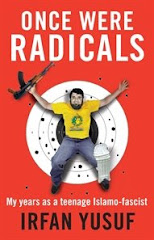
It also applies to people like me, people who were once 'radicals' and who once supported 'Islamic' movements (of which MB was one) largely because we were taken in by the Afghan jihad against the Soviet Union. We then became disillusioned with MB-style politics after seeing movements becoming embroiled in the Afghan civil wars that erupted after the Soviets withdrew and the American cash dried up.
In Egypt, many 'Islamists' also became disillusioned with and left the MB. But groups like MB never left their communities. Even when they ceased their political role, successive Egyptian dictators saw the MB as useful for providing social services – medical clinics, legal aid services, etc. The MB has been performing this role for decades. Its grass roots outreach is stronger than any purely political secular grouping in the country. Little wonder one of its allies won the presidential election.
When an elected government proves unpopular and incompetent, we only expect the army to intervene and a coup to take place if the country involved is Pakistan or Bangladesh or a central African nation. Indeed, these days it is rare even in Pakistan, Bangladesh and many parts of Africa. So why should our leaders speak almost approvingly of such a process taking place in Egypt?
It must seem hypocritical to the average person from a Muslim party, to the average cadre who would otherwise be volunteering in a health clinic or legal aid centre in downtown Cairo or Karachi or Jogjakarta. Or indeed Baghdad. The West can encourage democracy. It will even force-feed democracy (as in the Gulf War). It will jail hundreds of innocent people in Guantanamo Bay and in secret camps to protect what is left of its own democracy.
But woe betide any vaguely 'Islamist’ group which tries to democratise itself and its nation.
First published in Eureka Street on 20 August 2013.
Monday, July 29, 2013
IMAMS: Some old papers
How did an obscure Sydney architect become an overnight religious figure? Well, it's been going on for some time now.
Thursday, July 04, 2013
REFLECTION: Australian Muslim Migrants & Cultural Integration
Monday, July 01, 2013
POLITICS: Seated at the front
Edham Nureddin (or "Ed" for short) Husic, the Federal Labor member for the Western Sydney seat of Chifley, has moved to the front bench today. He is now the Parliamentary Secretary to the Prime Minister and for broadband.
It is a massive milestone for Husic and the nation. Husic is of Bosnian Muslim heritage.
Husic's political career has suffered some setbacks along the way. His road to Federal Parliament was rocky thanks to prejudice from certain pundits and political operatives who distributed a fake election brochure when he ran in the 2004 election in the seat of Greenway where he grew up.
You can read Husic's thoughts on the 2004 election and the broader issue of Muslims in politics here.
Sunday, June 30, 2013
COMMENT: imam Afroz Ali and the 100 extremists
News Limited tabloids report that allegedly qualified imam Afroz Ali has said some 100 extremists live in Western Sydney.
"We have had a program for the last seven years now in which we have had 240 people who were considered to be moving in a direction which may have led them to violent radicalisation - to terrorism ...
"What we have found is, of the 240 people, 120, exactly half of them, are people who have changed their thinking, their mindset. That is something that I don't necessarily share too widely in public, but I am happy to share it here."
Mr Ali made these remarks to a consultative committee of Imams. He himself is not a member of any board of Imams in Sydney or Melbourne.
A video of his presentation is reproduced below.
UPDATE I: Many Imams I have spoken to have openly questioned Afroz Ali's qualifications. I myself have serious reservations. To this day, he has not responded to this open letter.
Sunday, March 10, 2013
PAKISTAN: Vein hope for minorities

Nations can be likened to human bodies. Injury or pain to one part can affect the rest. Key arteries and veins often lay hidden among more visible skin and bones and are only visible in our most vulnerable locations; when cut, the blood flow is almost always fatal.
The most vulnerable and largely hidden parts of Pakistan are its minorities. Pakistan's founder Mohammed Ali Jinnah, himself from the Shia Muslim minority and Pakistan's first governor-general, guaranteed the rights of minorities. In his speech of 11 August 1947, Jinnah declared:
'You are free ... to go to your temples ... to go to your mosques or to any other place of worship ... You may belong to any religion or caste or creed — that has nothing to do with the business of the State.'If Pakistan is to remain a nation with something resembling a soul and true to the vision of its founding fathers, it must protect its ethnic and religious minorities. But as with its neighbour India, it continues self-harming by bleeding its minorities. It isn't just extremists engaging in the self-harm. It happens at all levels of society.
In theory, Pakistan is a democracy with free elections, functioning political parties and a free and diverse press. Minorities are represented in public life. The recently retired Chief Justice of Pakistan's Supreme Court, the highest court in the land, was a Hindu. Hindus and Christians have allotted seats in the Federal Parliament.
But Pakistan was a nation carved out of British India at the beginning of the Cold War, a time when any enemy of communism was seen as a good friend. Muslim fanatics in Pakistan intolerant of non-Muslims were courted and funded because of their intolerance of the Kremlin.
The phenomenon became acute when Soviet forces entered Afghanistan. The US, its Arab allies and Pakistan's military dictator General Zia-ul-Huq encouraged fervour for anti-Communist jihad and introduced a process of 'Islamisation' that saw the partial introduction of sharia criminal law and major changes to the education system.
The position of minorities has worsened as the letter of Sunni Islam (but not its spirit) has transformed Pakistan. Key institutions and personalities allied with the sufi-inspired South Asian Sunni traditions deobandi and barelwi have used domestic and overseas provocation to attack Pakistan's Christian, Hindu, Ahmadi and other minorities.
An amateurish YouTube video produced by a Californian in 2012 somehow led a crazed crowd to attack a Hindu temple on the outskirts of Pakistan's southern port city of Karachi. Pakistan's Dawn newspaper reported that the attack
... took place in late September on the Day of Love for the Prophet, a national holiday declared by the government in response to an anti-Islam film made in the US ... Pakistan's Hindu community says it faces forced conversions of Hindu girls to Islam, a lack of legal recognition for their marriages, discrimination in services and physical abuse when they venture into the streets.And where do we start on Pakistan's Christian minorities? A demented version of religious law, in the form of an amendment to the Pakistan Penal Code designed to punish blasphemy, has now encouraged the collective punishment of Pakistan's tiny Christian communities.
The case of Asia Bibi, an illiterate farmhand from Punjab, illustrates this phenomenon. Charged with blasphemy and facing the death sentence, her most powerful supporter was the Muslim Governor of Punjab, Salmaan Taseer. His support led to Taseer's own bodyguard pulling the trigger.
As if to underscore just how far the bodyguard's fanaticism had reached, supporters at his hearing included lawyers who only recently had marched in favour of the Rule of Law and the reinstatement of the Chief Justice of Pakistan's Supreme Court.
Religious leaders and even respected mainstream journalists and commentators accused Taseer himself of blasphemy.
Muslim minorities are not exempt from this kind of murderous hysteria. Sectarian and ethnic minorities such as the Hazara, an Afghan Shia community settled largely in the north western city of Quetta, have been the subject of an organised campaign of killings. Given the scale of the attacks and the fact that they target a single community, one wonders how, as Pakistani journalist Kiran Nazish explains
... the media, particularly television media in Pakistan had been ignoring the issue ...
when smaller-scale loss of life, cricket scores and Bollywood starlets are readily reported.
The Lashkar-i-Jhangwi, a Sunni militant group outlawed in Pakistan, has been carrying out these attacks for months with complete impunity. Little has been done by the provincial government to protect the victims. In the most recent attack, over 100 Hazara citizens were gunned down in Quetta.
Hazara community members are conducting a constant vigil with the coffins of the dead. For these devout Muslims, whose faith requires almost immediate internment of the dead, refusal to immediately bury their martyrs is a powerful symbol of protest.
The Hazaras, like their Christian, Hindu and other Pakistani brethren, are bleeding thanks to the intolerance (or at least the silence) of the majority. The nation is dying as a result. Perhaps this is why the Hazara of Quetta chose to brave sub-zero temperatures and sit with coffins they have draped in Pakistani flags.
It was only after nationwide protests that the federal government in Islamabad agreed to Hazara demands for the provincial government to be sacked. Only time will tell whether such steps will stem Pakistan's bleeding.
This article was first published in Eureka Street on 20 January 2013. Since then, there have been fresh attacks on Shia communities in Karachi and Christian communities in Lahore.