Tuesday, June 27, 2006

Sheik Yahiya Howard?

So that Indonesian Sheik who shares his surname with the New South Wales Governor has invited John Howard to become a Muslim. Sounds pretty halal to me. But there might be a few hitches.

For a start, Mr Howard might be expected to change his name. Some Muslims seem to think that converting to Islam means having to de-Anglicise your name.

My old mate Gazza, a member of the Socialist Left of the ALP, tells me that he had to de-Anglicise his name. So he changed from Gary to Adam.

Huh? Why Adam? Gazza relates that he first converted to please his somewhat feisty Fiji-Indian wife. He would have remained a lapsed Anglo-Catholic (i.e. a left-wing atheist) except that she had led him astray. Hence he named himself after the first man to be led astray by a woman.

Gazza now finds himself pissing off even more Muslims (and no doubt a fair few Christians also) with his public claims that Creationism and Intelligent Design is a load of bollocks.

Speaking of which, many Muslims expect male converts to undergo some Sharia-compliant surgery.

In this respect, Gazza is quite lucky. His Catholic dad and Anglican mum decided to have him circumcised back in the early 1950’s when he was a wee-toddler. Though I doubt they did so with a view to his conversion to the ways of those heathen “Moslems”.

Another convert mate of mine, Mahmud, also married a Fiji-Indian woman. He converted from Soccerism (he is Italian) to Islam. His parents didn’t have as much foresight and allowed his foreskin to remain. His wife wasn’t as tolerant.

Conveniently, Mahmud had to get his haemorrhoids operated on. His Jewish surgeon offered a complementary cut of the excess foreskin. Mahmud happily went under the knife.

Now Mahmud had given his wife strict instructions not to tell anyone about the surgeon’s offer. My folks tell me about visiting poor Mahmud in hospital. He was clearly in excruciating pain. His wife just couldn’t keep a secret. The conversation went something like this …

DAD: So how is Mahmud feeling?

MAHMUD: Can’t talk much. Too much pain.

MRS MAHMUD: What can I say? Mahmud can’t lay on his back or his stomach!

So if John Howard decides to take up Sheik Bashir’s offer, he can look forward to a possible change in name. “John” is easy. We just call him “Yahiya” (the Koranic name for John the Baptist). But what about “Winston” and “Howard”? Perhaps we might just name him “Yahiya bin Bush”.

A bigger (and indeed more painful) obstacle will be the Sharia-compliant surgery referred to earlier. Now we all know that Peter Costello wants to see Sharia banned in Australia. Perhaps the Treasurer could allow an exemption to be granted to the new Muslim convert Yahiya bin Bush, especially if it means Sheik Yahiya vacating Kirribilli House.

Who knows? Maybe Sheik Yahiya might decide to give up Kirribilli for the less salubrious surrounds of the Imam Ali Mosque in Lakemba. (Then again, given Mr Howard’s love for being seen with the diggers, he’ll probably prefer staying at the Gallipoli Mosque.)

But was Sheik Bashir merely seeking to have Mr Howard’s frontal bits compromised? My mate Gazza reckons a more thorough circumcision was what Bashir had in mind.

“Maybe he wanted Howard to be circumcised from the neck up. Politically speaking, of curse”, Gazza remarked as he stroked his ALP membership card.

I wonder how Mr Howard’s ministers and Parliamentary colleagues would react to his conversion. Mrs Howard would need to put up with competition from three more child-bearing wives needed for our good Sheik Yahiya to lead by example and ensure Australia reaches Danna Vale’s target of becoming an Islamic State within 50 years.

Bronwyn Bishop once complained that Muslim men refuse to shake her hands. She also described the writer once in Federal Parliament as a “Muslim activist known for his abusive attitudes to women”. Perhaps with Mr Howard’s conversion, she would now have her own Prime Minister refusing to shake her hand. Then again, Howard and Bishop were never known to be good buddies.

Perhaps the most interesting reaction (or lack thereof) would come from Attorney General Phillip Ruddock. It wouldn’t surprise me if early one morning ASIO raided Kirribilli House to pounce on the latest terror suspect as he was getting ready for his early morning walk around Sydney Harbour dressed in long white robes.

I can just see Mr Ruddock at the press conference announcing the arrest of Sheik Yahiya Howard: “The suspect is believed to have made numerous trips to training camps in Iraq”.

No doubt, Defence Minister Brendan Nelson would be asking Mr Howard to subscribe to the values of the English illegal immigrant Simpson (of donkey fame) or to just “clear off”.

The local Islamic community will, no doubt, welcome having an Islamic Prime Minister. Mufti Taj Hilaly would no doubt give a statement that none of us would understand. The Presidents of the Australian Federation of Islamic Councils would probably criticise him for not wearing a burqa.

And what would my old mate Gazza do? “Me? Sharing a religion with John Howard? Forget it! I might just have to see if Cardinal Pell and Dr Jensen will take me back!”

(The author is a Sydney lawyer and former Liberal Candidate for the seat of Reid in the 2001 Federal election.)

© Irfan Yusuf 2006

Stumble Upon Toolbar

Monday, June 26, 2006

Understanding Iran through its bloggers

Iran is a rogue state. It is ruled by mullahs who support and sponsor terrorism and who are not to be trusted. Iran represents a threat to the West. If Iran does not agree to perfectly reasonable demands concerning its nuclear program, the rest of the world should punish it. That punishment should start with economic sanctions and perhaps even include all-out war and regime change.

This is what we in the West have been taught to believe. This is also what neo-Conservative propagandists want us to know. This is also the accepted wisdom as propagated by the foreign affairs establishment and by newspapers owned by News Limited.

But how much of this picture of clichés tell us about the real Iran? What do we know about Iranian society? What do we know about the everyday lives of real Iranians?

One way to learn about Iran is through its bloggers. Conventional journalists may frown on blogging as the journalistic sport for amateurs. But blogging is one of the few means open and available to people to project their genuine sentiments on cyberspace.

We Are Iran is a book published in the UK and authored by Iranian expatriate Nasrin Alavi. The book is a frank look at Iranian politics and society through the eyes of its bloggers.

And why should Iranian bloggers matter? Well, for a start, we need to understand something about Iran’s population. 70% of Iranians are aged under 30. Literacy is over 90%. The majority of Iranians attending tertiary institutions are women. Adult and computer literacy in Iran are higher than in any other Middle Eastern country and than in many European states.

Farsi is the language of Iran. It is also the 4th most frequently used language for keeping blogs. There are more Farsi blogs than blogs in Spanish, German, Italian, Chinese or Russian. And there are more Iranians able to access blogs than other people in the region. 2001 data from the World Bank shows that Iran has more personal computers per 1,000 people than the regional average.

As at the time Alavi’s book was written (2005), there are hardly 50 known blogs identifying their authors as Iraqis. Compare this to more than 64,000 Farsi blogs.

For many Iranians, blogs provide a means of communicating views deemed too subversive by the powers-that-be. Iran has been described by “Reporters Without Borders” as the biggest prison for journalists in the Middle East. In the last 6 years, some 41 newspapers have been closed by the regime. Many more magazines have been closed.

Alavi’s book is useful because it provides a peep inside the Iran which neo-Con commentators rarely allow. Iranian bloggers portray the youthfulness of ordinary Iranians, their irreverence to religious authority and their feelings about a political process they feel has failed to reflect their wishes.

Iran is a country whose population is dominated by people who came of age after the 1979 revolution which swept Ayatollah Khomeini to power. They are not necessarily loyal to the Islamic Republicanism of the current Iranian government.

At the same time, Iranians are also resentful of some political currents in the United States which seek war and conflict with Iran at all costs. Iranians are not overly religious, but they love their country and faith enough to resent attempts to demonise all Iranians and all Muslims.

Nasrin Alavi’s book is well worth reading. It provides a look into Iran’s future. If the Farsi bloggers are any indication, the West and the rest of the world have little to fear from ordinary Iranians.

© Irfan Yusuf 2006

Stumble Upon Toolbar

Friday, June 09, 2006

On Cardinal Pell’s Islam Sources

Neo-Conservatives and their fellow travellers will tell you that terrorism and violence is an inherently Islamic phenomenon, one that finds its basis in the religious texts and laws of the faith of 1.2 billion Muslims.

The May 2006 edition of the allegedly conservative magazine Quadrant includes three articles on “The Challenge of Islam”. One is the text of Cardinal Pell’s address to a group of Catholic businessmen in the United States in February.

Pell claims that his “sixty or seventy pages” of reading the Qur’an led him to an unidentified number of “invocations to violence”. He doesn’t advise if he read the Qur’an in its original Arabic or whether he used a translation. Presuming the latter to be the case, Pell also doesn’t advise on which translation he uses.

Perhaps more troubling is the fact that this prominent Catholic theologian is satisfied with reliance upon the most rudimentary research which represents an insult to both his congregation and to his own obvious mastery of theology. Despite having access to numerous works on Islamic theology and history authored by prominent Christian scholars (such as Karen Armstrong), Pell chooses to use the works of journalists and propagandists such as Paul Stenhouse and Daniel Pipes.

Stenhouse has himself authored a piece in the March 2006 edition of Quadrant. He claimed that Islam only sees the world in a bipolar fashion, divided along the lines of Dar al-Harb (the abode of war) and Dar al-Islam (the abode of Islam). His entire article is based on the work of one Maliki jurist (as quoted by Bernard Lewis) and 2 20th century journalists (Abul A'la Maududi and Syed Qutb).

Stenhouse was called to appear for the controversial Catch The Fire Ministries Inc and Pastors Daniel Nalliah and Daniel Scott in the prosecution brought by the Islamic Council of Victoria pursuant to the Racial & Religious Tolerance Act 2001 (Vic). . He was to appear as an expert witness for the Ministries. His qualifications and alleged expertise were subject to the usual examination by the Court. According to supporters of the defendants, Justice Higgins ruled that Dr Stenhouse's evidence "would not be allowed".

Cardinal Pell also uses the work of Bat Ye'or, especially Ye'or's concept of "dhimmitude" used to describe the status of non-Muslims under a theoretical Islamic state. Ye-or is also author of the "Eurabia" thesis, according to which Europe and the Arab world are involved in creating an anti-American alliance that will lead to Europe eventually being transformed into an "Islamic state".

Ye'or is a close colleague of Robert Spencer, the author of the Jihad Watch website and hardly a site one would refer to if seeking to make an earnest inquiry about Muslim opinion and Islamic theology.

Spencer explains the purpose of the site as being: “Because the West is facing a concerted effort by Islamic jihadists, the motives and goals of whom are largely ignored by the Western media, to destroy the West and bring it forcibly into the Islamic world - and to commit violence to that end even while their overall goal remains out of reach. That effort goes under the general rubric of jihad.”

Spencer’s vision involves imposing the most fringe ane extreme views on mainstream Muslims. He projects an image of Islam as being inherently against the West and its allegedly Judeo-Christian roots. His site gives the following assessment of the role of violence in Islam:

“Violent jihad is a constant of Islamic history … a major element of the motivation of jihad warriors worldwide today. No major Muslim group has ever repudiated the doctrines of armed jihad. The theology of jihad, with all its assumptions about unbelievers‚ lack of human rights and dignity, is available today as a justification for anyone with the will and the means to bring it to life.”

For Spencer, this reality of “violent jihad” in the theology of 1.2 billion Muslims represents “the true nature of the present global conflict”. It is a phenomenon that affects how all Muslims behave in their approach to non-Muslims.

The titles of Spencer’s books say it all. One is entitled Onward Muslim Soldiers – How Jihad Still Threatens America and the West. Another is The Myth of Islamic Tolerance. A third is entitled The Politically Incorrect Guide to Islam (and the Crusades). Its cover provides themes hardly conducive to constructive dialogue:

“Islam teaches that Muslims must wage war to impose Islamic law on non-Muslim states.”

“American Muslim groups are engaged in a huge cover-up of Islamic doctrines and history.”

“Muslim persecution of Christians has continued for 13 centuries and still goes on.”


Two of Spencer’s monologues are entitled The Islamic Disinformation Lobby and Islam vs. Christianity.

This conspiratorial nature of Spencer’s message is clear. Muslims are not to be trusted when speaking about themselves, their faith and their culture. Muslims are inherently violent, psychopathic and dangerous. Islam is at war with the West. Islam is the enemy.

Spencer’s work represents the worst excesses of conspiracy propaganda. His message echoes the messages used by German writers (including German Catholic writers) to describe Judaism and the Jews during the 1920’s and 30’s.

Cardinal Pell claims that his recent remarks represent an attempt to genuinely understand the role of violence and terrorism (if any) in Muslim cultures. But by relying on the works of amateurs with axes to grind, Cardinal Pell is exposing himself and the Catholic Church to ridicule.

Any serious theologian would at least seek to understand the sources of the faith s/he studies. Cardinal Pell clearly hasn’t done this. His failure reflects more on what might be described as chronic intellectual laziness than on the faith of 1.2 billion people.

© Irfan Yusuf 2006

Stumble Upon Toolbar

Wednesday, June 07, 2006

The Man returns to footy?

It seems Anthony Mundine isn’t just handy with the boxing gloves. The man who prefers to be called “The Man” has now re-entered the rugby league arena.

The Rear Window column of the Australian Financial Review (on 5 June 2006) reports Mundine is preparing to inject some badly-needed cash into a regional rugby league club near Griffith in the Riverina.

The Three Ways United Club is a largely Aboriginal team captained by Robbie Simpson who used to play with Mr Man at the St George club in south western Sydney during the late 1990’s. Simpson is also a big supporter of Mundine’s boxing exploits, and AFR reports Simpson as being in Mundine’s corner during his recent victory over Danny Green.

AFR quotes one source as suggesting Mundine might cough up as much as $20,000. Mundine and his family are active in indigenous issues, including health and sports. One of Mundine’s aunts is known to be a prominent administrator in Aboriginal health issues, and has worked with ATSIC, at least 2 state governments and 1 territory government. His uncle is National President of the Australian Labor Party and a fellow ambassador for the White Ribbon Day campaign.

The Man’s rise as a premier Australian athlete has even earned him praise from unusual and unexpected quarters. Not exactly known for her great love of Muslim cultures, even allegedly conservative Fairfax columnist Miranda Devine praised the “teetotal, non-smoking Aboriginal Muslim-convert” Mundine for being an excellent example to all Australian youth.

© Irfan Yusuf 2006

Stumble Upon Toolbar

Monday, June 05, 2006

7 Days in Malaysia

I’ve recently been informed that I’ll be joining a delegation of Australians visiting Malaysia as part of an exchange program organised by the Australia Malaysia Institute. The delegation will be in Malaysia during late June and will spend some 7 days or so meeting people from across the spectrum of Malaysian society.

This will be my first trip to Malaysia, a country that has proven a popular holiday and honeymoon destination for Aussie Muslims.

Hopefully over the next few posts, I will explore the various cultures and religions of Malaysia. Many readers will already be familiar with Malaysia’s multi-ethnic and multi-confessional composition.

I’d also invite readers to share their own experiences of Malaysia via the comments section of this blog.

© Irfan Yusuf 2006

Stumble Upon Toolbar

Tuesday, May 30, 2006

Indonesia's City of Soul in Mourning

If you wish to discover the real spirit of Indonesia, you need to look beyond the beaches and nightclubs of Bali. You also have to look beyond the traffic jams of Jakarta or the art deco conference halls of Bandung. Indonesia’s real cultural and spiritual heart is Jogja.

Like their Aussie neighbours in the global village, Indonesians love to abbreviate names. “Jogja” is the shortened name for Yogyakarta, the historical capital of an old Javanese Sultanate and the hub of ancient and modern Indonesian culture.

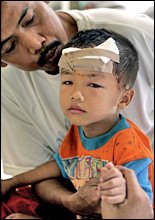
But as a result of the recent earthquake, large parts of Jogja and surrounding villages have been transformed into hills of rubble. At the time of writing, the death toll has climbed well over 5,000.

Visiting the City of Soul

In January this year I was part of a delegation of five young Australians on a leadership exchange program sponsored by the Australia Indonesia Institute (AII). We spent almost a week of our 14-day tour in Jogja.

(Currently, a number of young Indonesian leaders are visiting Australia, including at least one with family in Jogja.)

During our pre-trip briefing by AII officials, we were told we’d probably find Jogja more laid-back compared to the rush of the capital Jakarta. Jogja is a university town, with over 50 institutions of higher education. It is also a place of fine arts, culture and music.

By day, the streets outside the universities and in the heart of town are filled with food stalls. By night, the food stalls become tent cities where locals and tourists sit on the ground to savour the local culinary delights.

Our delegation dined in one of these tents one night. We were entertained by a small group of buskers consisting of a guitarist as lead singer and two backing vocalists, playing and singing everything from the Beatles to Bon Jovi.

One City, Many Faiths

We also visited a number of universities including the famous Gadjah Mada State University , ranked one of the top 100 universities in the world. There, we visited a special research centre devoted to inter-faith studies. We also visited a women’s research institute devoted to improving the status of Indonesian women and run wholly by Muslim women.

Jogja is a progressive and open-minded town. Transsexual musicians openly walk the streets even during the day. Our delegation visited a private university managed by Protestant Christians and catering for Jogja’s large Christian community.

A large number of NGO’s operate in Jogja. Among them is Interfidei, an organisation managed by people of all faiths devoted to promoting religious tolerance. An Interfidei t-shirt shows a young child asking the question: “Mummy, what is God’s religion?”. One Muslim Interfidei activist told us of her project to have Indonesia’s tiny Jewish community receive official recognition by the government of this, the world’s largest Muslim country.

Rifka Annisa

We also visited an NGO managed by Muslim women’s activists. Called the Rifka Annisa, the organisation runs a crisis centre and refuge for women and children who are victims of domestic and other violence.

The workers of Rifka Annisa educate and lobby governments, judges, religious organisations and community leaders on issues relating to violence against women. Their crisis centre provides counselling and support services to women of all faiths and from all sectors of Jogja society.

Rifka Annisa workers told us of their most painful work in Jogja’s red light district. They told us of otherwise religiously observant women of all faiths forced by poverty to become sex workers, either on the streets or in brothels. Many such women suffer violence at the hands of clients including a large number of foreign tourists.

During our Q & A session, I asked the Rifka Annisa workers whether they faced resistance from conservative sectors of Indonesian society. One told me: “If we were in Jakarta or elsewhere, that might happen. But Jogja is different. People here aren’t afraid of reality.”

Respecting Cultural Heritage

Perhaps the most awesome experience was watching a ballet of the ancient Hindu epic known as the Ramayana. The ballet was performed in a small auditorium in the shadow of an ancient complex of Hindu temples. Part of the temple was damaged in the recent earthquake.

The Ramayana is the story of an Indian prince Rama whose wife Sita (or “Cinta” in Indonesian) is kidnapped by a demon Ravana. Rama fights Ravana with the assistance of an army of monkeys and rescues his princess.

The birthplace of Rama is a North Indian town known as Ayodhya. This has been the scene of bloody rioting between Hindus and Muslims after a mosque there was destroyed by Hindu extremists in 1992.

The Ramayana story may be the basis for rioting in Lord Rama’s birthplace. But in the city of Jogja, Muslim artists regularly perform the Ramayana ballet in the shadow of the city’s Hindu temple and to a mostly Muslim audience.

The Followers of Muhammad

And in case anyone thought Jogja was just a place for Muslims to celebrate Hinduism, it is important to note that Jogja was also the place where the progressive yet orthodox Muhammadiyah movement was founded in November 1912.

The movement was started by Shaykh Ahmad Dahlan in the humble Kauman district of Jogja. Its emphasis was on al-Maun, a concept of small kindnesses expressed in Chapter 107 of the Qur’an. The Shaykh taught his young students this chapter of the Qur’an repeatedly, telling them that the essence of Islam is to serve and care for others and to be aware of the needs of the broader community.

Shaykh Dahlan established this small movement, hardly 3,500-strong at the time of his death in 1923. Today, it has a membership of over 29 million, making it one of the largest Islamic organisations in the world.

Pray and Donate

The vibrant, progressive and lively city of Jogja is now overcome with grief following the massive loss of life from the recent earthquake. Yet for anyone who has spent time in Jogja, it isn’t hard to imagine this cultural heartland of Indonesia reviving itself from amongst the rubble.

Yet this revival needs our help. A number of aid agencies are already working in Jogja. These include the International Red Cross & Red Crescent Societies, Islamic Relief and local Indonesian organisations. Our prayers should go to those who are left homeless and have lost loved ones. But prayers need to be combined with hard cash.

One Australian Dollar equates to some 7,000 Rupiah. We are fortunate that even our spare change could make a world of difference to the inhabitants of Indonesia’s City of Soul.

© Irfan Yusuf 2006

Stumble Upon Toolbar

Friday, May 26, 2006

Australian Muslims – The Next 10 Years

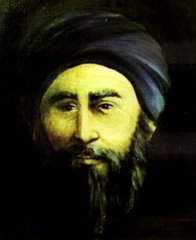
On the eve of the fanatical European Catholic Crusaders landing in his town, the writer and philosopher Abul Hasan Ali al-Ma’arri summed up the state of people in his troubled times: There are only two classes of people in the world: those who have religion but not much brains, and those who have brains but not much religion!”

The same comment could just as easily be made about Aussie Muslim peak organisations in the 21st century as they could about Syrian Muslims in the 11th century.

Tomorrow night, a number of speakers representing the new generation of Australia’s Muslims will be addressing a packed crowd in Melbourne University’s Copeland Theatre to discuss their vision of where their community will (or should) be in a decade’s time.

The speakers include Dr Zachariah Mathews, a former executive member of the Federation of Australian Muslim Students & Youth (FAMSY). Dr Mathews is a senior pharmacist who has worked in the public hospital system for many years. He originally hails from South Africa, and has studied in the United States.

Also speaking will be Waleed Aly, perhaps Australia’s most articulate Muslim voice. A versatile communicator, Mr Aly is currently media spokesman for the Islamic Council of Victoria. He works in Melbourne for a major commercial law firm, and appears regularly in various newspapers including The Age and The Australian.

A chap named Abu Hamza will also be appearing. He is a speaker who lectures at the Islamic Information & Services Network of Australia (IISNA), a salafi/wahhabi organisation that tends to distance itself from more radical salafi groups. Abu Hamza is not in any way related to the blind Sheik Abu Hamza al-Masri, formerly of London.

It is significant that this topic is being discussed without the presence of any representatives from the peak Muslim body known as the Australian Federation of Islamic Councils (AFIC). In recent times, AFIC’s affairs and scandals have been splashed across the pages of The Australian.

Thus far, it seems only The Oz is covering the story. Neither the Fairfax press nor the tabloids are touching the story. As if Muslims are the only religious congregation with trouble, scandal and disputation at the highest levels. Why should Muslims especially make the news?

(It might be argued that this fascination of The Oz with Muslim affairs is reflective of the fact that, at least in its editorial and op-ed policies, The Oz has a distinctly monocultural agenda. In recent times, The Oz has allowed its pages to be polluted with xenophobic and feral articles demonising both Muslim and indigenous cultures and communities.

The Oz has now jumped onto the absurd bandwagon of forcing judges to ignore peculiar cultural factors when sentencing offenders. It is always the first newspaper to bash any minority deemed vulnerable and unfashionable.

Yet the Fairfax press aren't exactly averse to Muslim-bashing either, although they tend to show a little more sophistication.)

However, the fact remains that AFIC is in an incredible degree of strife. One need not go over the numerous fatal weaknesses of the organisation. AFIC’s inevitable demise leaves a huge vacuum in Muslim community leadership. This poses enormous challenges but also substantial opportunities.

For years, Muslim institutions have been dominated by the most observant yet least competent. Muslim institutions have failed to understand the communities they claim to represent. They have been dominated by persons with little interest in building strong and viable institutions that service the needs of an increasingly younger and home-grown community.

Of course, there are exceptions. The Islamic Council of Victoria has initiated its Grassroots youth programs. It has copped some criticism from more conservative and/or pro-Ikhwan (Muslim Brotherhood) elements in organisations such as FAMSY and IISNA.

What these conservative groups fail to appreciate is that allegedly ideologically purer activities have failed to make any real or lasting difference in the lives of a substantial proportion of young Muslims. Despite its bombastic name, FAMSY has managed to attract few real youth, and its executive has tended to be dominated by middle-aged overseas PhD students from Arab countries.

IISNA is a breakaway organisation from the one headed by Sheik Mohammad Omran. It is more moderate in its theology, and has tended to shy away from political controversies. However, its insistence on limiting itself to conservative Saudi scholarship has rendered it almost irrelevant to the uniquely Australian problems faced by young people.

Perhaps the biggest challenge facing Australia’s Muslims is how to come to terms with the fact that not all Muslims regard Islam as the primary source of their identity. Muslim organisations need to make up their mind on whether they are to ignore or reflect this spectrum of religiosity.

Muslim institutions need to attract the most talented elements of the Muslim community. They need to look to the example of their Jewish cousins who have ensured that their best and brightest are heavily involved in community management. Involvement in Muslim institutions should no longer be seen as the pastime of those with not much else going for them in life.

We need to understand that often our best and brightest aren’t always the most observant people on the planet. Some will be engaged in lifestyles or activities that are not exactly orthodox. However, if such persons wish to share and contribute their expertise and resources to help the cause, we should be the last to come in their way.

This especially applies to public relations. While some elements of the media are worth writing off, there are plenty of opportunities for well-spoken and articulate Muslims to make their mark. Such people should be encouraged and coordinated, not shouted down for being not observant enough.

There are so many challenges facing Muslim Australia. Yet public relations and community management are the immediate matters to be dealt with. Let’s hope tomorrow night’s discussion will yield some real results.

© Irfan Yusuf 2006

Stumble Upon Toolbar

Tuesday, May 23, 2006

Breaking the Stereotypes

I am a bit over writing and talking about stereotypes. The way Muslims keep harping on about stereotypes, you’d think they were the only group subject to them.

But I guess the word is here to stay. Though I’d much rather refer to them as simply untruths or simplifications or myths or even … another dreaded cliché … as generalisations.

Whatever you want to call them, the best antidote is the facts. When John Howard and Peter Costello (who now seems to be Rupert Murdoch’s favoured choice as PM in the new year) made their woefully ignorant and imbecilic remarks about Muslim Australians and their religious symbols, many Muslims were in shock.

Similarly, when Cardinal Pell showed a most unscholarly attitude toward a non-Catholic scripture in his treatment of his alleged 70 or so pages of Qur’anic readings, Muslims were astounded.

Yet we shouldn’t be astounded. Their ignorance is a symptom of our laziness in educating and “mainstreaming” our cultures.

It seems absurd that at the beginning of the 21st century, mainstream Australia regards Islam as a threat to “Judeo-Christian values”. Anyone with even rudimentary knowledge of Islamic beliefs and practices and scripture and law would see enormous similarities between Islam and its Abrahamic spiritual near-twins.

Indeed, many writers and theologians hostile to Islam keep harping on about how it plagiarised so much of itself from Christianity and Judaism, how the Prophet copied his teachings from Christian sources and how Islamic texts are little more than a re-hash of Talmudic and Apocryphal sources.

Yet at the same time, these same writers and theologians (and their fellow travellers) then claim that Islam (and, by extension, its followers who have migrated to the West) is alien to Judeo-Christian values.

Seriously, you can’t have it both ways. Either Islam is similar to Judeo-Christian values or it isn’t. If you claim Islam is plagiarised from existing religious cultures, you can’t then turn around and claim it is nothing like them.

Of course, Muslims believe that the similarity between Islam and its two elder-statesmen faiths is caused by all three having a common origin – Abrahamic monotheism. For this reason, we need to emphasise the similarities and educate people about them.

Last December, I managed to get 3 versions of an article on the Qur’an’s account of Christ’s birth published in three separate publications – Sydney’s Daily Telegraph, the New Zealand Herald (reproduced at Online Opinion) and NewMatilda.com.

In response to those articles, I received many e-mails from readers expressing surprise and dismay at the extent to which the New Testament and Qur’anic versions of Christ’s birth were similar. Many weren’t even aware that Muslims honoured Jesus and Mary or that Muslims believed Christ was conceived miraculously.

But it isn’t just Christ’s story where so many similarities lay. The Qur’anic account of the life of Prophet Yusuf (Joseph) is virtually identical to that contained in the Old Testament. Then there are the stories of Musa (Moses) and Firaun (Pharaoh), of Yunus (Jonah) and the whale, and of Yahya (John the Baptist).

Similarly, Islamic spirituality (known as tasawwuf in the sunni school and 'irfan in the shia school) shares much in common with the few remaining remnants of Christian Gnosticism largely confined to the Eastern Orthodox Churches.

Perhaps one way to illustrate this could be for Muslim scholars to study Musa bin Maymun al-Qurtubi’s work on comparative religion. Translated into English as “Guide to the Perplexed”, this Arabic work is a classic of Andalusian spirituality and religious philosophy. It was read and admired throughout the Arab world, despite being authored by a prominent Jewish physician (known in the West as Maimonides) and sought to establish that Judaism was superior to Islam and Christianity.

(Perhaps it is a reflection of how low we have sunk that a modern-day Musa bin Maymun would probably be lynched or sentenced to death if he were to write a similar book today.)

With an exposition of the facts and an open mind, we can change people’s perceptions about ourselves. But that involves reading and research beyond the usual stuff we find in (allegedly more) Islamic bookstores and written by (allegedly more) Islamic writers.

© Irfan Yusuf 2006

Stumble Upon Toolbar