Monday, April 10, 2006

Mr Trad & Theocracy

On Wednesday evening March 29 2006, a group known as The Round Table Forum organised an evening forum on the broad topic of “God in Politics”. The forum was held at the NSW Parliament House.

Three speakers were invited to address the forum. These included Keysar Trad from a relatively unknown group called the Islamic Friendship Society of Australia. Mr Trad is a former executive member of the Lebanese Moslems Association, a body which manages a portfolio of properties in South Western Sydney including the Imam Ali ben Abi Taleb Mosque.

Also speaking was Dr Peter Slezak from the School of History & Philosophy of Science at the University of New South Wales. Dr Slezak is coordinator in the Graduate Program in Cognitive Science and the Academic Director of Continuing Education. His teaching and research interests are many and varied, from Descartes to the sociology of scientific education.

The final speaker was Mr David Clarke MLC, a convert from Anglicanism to Catholicism and a supporter of the Catholic lay order Opus Dei. Clarke is also a senior figure in the Religious Right of the NSW state branch of the Liberal Party of Australia.

The promotional flyer of The Round Table Forum stated that each speaker would be given around 25 minutes to speak. I have been sent by Mr Trad a copy of his speech, and will be approaching the organisers to see if copies of speeches of the remaining speakers can be made available.

Over the next few days, I hope to read Mr Trad’s speech and comment on it. The MS Word file containing Mr Trad’s speech was entitled “Speaking for Islam”, perhaps a somewhat presumptuous claim and one which might concern the many Muslims who disagree quite strongly with the way Mr Trad has projected the “Muslim” view on issues in the media for the past few years.

Mr Trad concludes his speech with what appears to be a call for a more God-centred approach to law-making in Western democracies. In a rather convoluted way, he claims that the “Islamic perspective” requires that law making become “a model where laws are put to a Scriptural test before they are introduced, whether these laws are to criminalize, decriminalize, promote, sanction, or discourage certain behaviours, they would need to be put to an ethical test to see where they fit within the Divine guidance, are they fair, equitable and constructive, or do they favour one section of society over another?”

Trad’s model theocracy is certainly no right-wing dream. There is a strong emphasis on the rights of minorities. This seems to reflect Trad’s understanding of classical Islam which placed enormous emphasis on minority rights and whose prescriptions were (and in some cases still are) frequently ignored and flouted by Muslim rulers.

Neo-Conservatives tend to ignore minority rights, insisting that the Rule of Law in effect means the Rule of Parliament elected by majorities and reflecting majority wishes regardless of commonly-held ideals.

The reality is that minority rights are guaranteed by our present system of liberal democracy and the rule of law. I doubt many Muslims would want to see this system eroded. Certainly many Muslim asylum seekers who risk their lives to seek refuge in Australia prefer our political system to the systematic abuses they left behind.

Personally, I think Mr Trad should avoid discussing these issues. His limited formal training in law and government, even notwithstanding his years in the Commonwealth Public Service, are not enough for him to address such sensitive issues. Further, I think Mr Trad has relied too heavily on a small range of Muslim political thinkers from a more “Islamist” strand.

I personally find the word “Islamist” troubling, thought it is useful to the extent that it is an alternate adjective to “Islamic” which is often used to describe more orthodox and mainstream ideas. When I use the term “Islamist”, I refer to those who tend to politicise (in a modern sense) Islam and who write on behalf of “Islamic movements” such as Pakistan’s “Jamaat-i-Islami” and Egypt’s “Ikhwan al-Muslimeen”.

Much of the literature emerging from these movements is focussed upon specific political struggles of the host countries of these movements – Pakistan, Iran, Egypt etc. Such struggles have little or no relevance to the sorts of struggles faced by young Australian Muslims. Hence, the approaches contained in Islamist literature are inappropriate to the Australian Muslim experience.

More importantly, offshoots from Islamist groups have produced a host of violent heterodox groups engaged in politically motivated violence including terrorist attacks targeting civilians. Further, the views of many Islamists are regarded by mainstream Muslim theological authorities as often being of questionable orthodoxy.

I think Mr Trad needs to be very careful with what ideas he passes off as Islamic orthodoxy. Perhaps he should consider limiting his public speaking engagements to those areas where he is able to competently project views more reflective of mainstream Muslim opinion.

© Irfan Yusuf 2006

Stumble Upon Toolbar

Thursday, April 06, 2006

Is the burqa a traffic hazard?

The President of the NZ Police Association, Greg O'Connor, was reported by NZPA on 5 April as suggesting that the tiny minority of women who choose to wear the burqa shouldn't be allowed to drive in New Zealand.

Some Muslim women are understandably upset with his comment as reported. Surely it isn't for the police to seek to control what women wear. Further, there is no empirical evidence to support the notion that women in burqa pose a danger to themselves or other road users.

Indeed, where identification of a driver needs to take place, it can in most instances be done by a female police officer, thereby not compromising the burqa-wearer's religious scruples. In any event, even that tiny minority of women wearing the burqa would agree that Islam places a higher importance on public safety than on dress code.

The President of New Zealand's Muslim peak body indicates he sees no problem with a change in traffic laws requiring women wearing face veils to remove their covering for identification purposes. He suggests hardly 30-40 Muslim women wear anything resembling the burqa in New Zealand, out of which only a handful drive.

Across the Tasman, the burqa has also made waves, starting with Australian swimwear model Michelle Leslie's decision to don the full face covering during her narcotics trial in Bali last year. In an interview with Sky News in late February, Prime Minister Howard described the burqa as "confronting", a view which he claimed was shared even by many Australian Muslim women.

On that occasion, however, Howard said governments should not legislate against the burqa. "You don't ban what people wear and you don't pass laws on what people can and can't do with their clothing."

Virtually all Australian states require photo identification on drivers' licenses to show the license holder's face. However, as far as the writer is aware, there are no traffic laws forbidding women from wearing the burqa whilst driving.

In Australia, small numbers of burqa-wearers are often seen in Muslim neighbourhoods walking the streets and driving without any evidence of their face covering posing a problem. During my recent trip to Indonesia, I saw Indonesian women in burqas navigating motor cycles through Jakarta's legendary traffic jams.

In this respect, it is important to note the various kinds of face coverings common amongst the minority of Muslim women who wear them.

The burqa is a single head covering which covers the entire face whilst providing a screen to enable the wearer to see. Then there is the niqab, which covers the hair and all parts of the face except the eyes. Finally, there is the hijab, perhaps the most popular choice for Western Muslim women insistent on covering their heads.

Women who regard the head covering as a religious requirement tend only to do so when leaving their homes or in the company of men outside their family. Although there have been no formal studies undertaken in this regard, anecdotal evidence suggests that overwhelming majority of Muslim women do not wear any head covering.

Indeed, in some parts of the Muslim world, women only cover their heads during ceremonial occasions or when entering the mosque.

The practise of covering the face arose 14 centuries ago during the time of the Prophet Muhammad. The Prophet's wives were forbidden from re-marrying after his death, and they are still described as "Mothers of the Believers" to express their status as spiritual aristocracy. They rarely if ever appeared from their homes and would speak to men outside their immediate family from behind a curtain.

This requirement of extra covering and segregation was followed by other Muslim women. Eventually, extra covering became a symbol of more worldly aristocracy. Women covered their faces more as a status symbol than as an act of piety.

Different Muslim cultures display varying attitudes to covering both hair and face. The complete burqa is worn mainly in rural areas of the Indian sub-Continent as well as in Afghanistan. It is also worn to a limited extent in Saudi Arabia, where the law bans women from driving.

The niqab (covering most of the face except the eyes) is commonly worn in the Indian sub-Continent and some parts of the Arab world. It is regarded by a minority of Islamic religious scholars as compulsory under religious law, this view only being current amongst scholars influenced by the puritanical Wahhabi sect which is the official religion of Saudi Arabia.

The hijab covering the hair and leaving the face exposed is worn across the Muslim world. Malay, Turkish and African American Muslim women are known for their fashionable and brightly-coloured hijab's.

It is therefore arguable that the burqa is more of a cultural than religious practice. The majority of modern Muslim religious scholars do not regard face-covering of any form as a religious requirement for Muslim women.

As a policy proposition, it is difficult to argue that banning burqa-wearers from driving for safety and law enforcement reasons discriminates against Muslim women per se. During an interview on TVNZ’s Breakfast program on April 6, both Mr O’Conner and Muslim lawyer Anjum Rahman agreed that public safety on roads requires identification to be carried out more easily.

Which means now Police can spend their valuable time and resources fighting the overwhelming majority of offenders who prefer to wear socks or stockings instead of burqa's on their faces.

(The author is a Sydney lawyer. An edited version of this article was published in the Wellington-based Dominion-Post on 7 April 2006. iyusuf@sydneylawyers.com.au)

© Irfan Yusuf 2006

Stumble Upon Toolbar

Wednesday, April 05, 2006

Pro-Israel writer issues fatwa against FAMSY

The Australia-Israel Jewish Public Affairs Committee is one of a number of Jewish organisations claiming to speak for Australian Jews. Though in its treatment of its critics from within the Jewish communities, one would have to doubt its credentials. And if you don't believe me, just ask this chap.

The reality is, of course, that AIJAC is more concerned with identifying (and at times defaming) even the midlest critics of a certain Middle Eastern country. At times, it does provide useful material on a range of anti-Semitic activities. However, it also provides space in its publications for a range of other anti-Semites, which undermines its claims to being a force against racism.

In recent times, one of AIJAC’s front men has refused to disassociate himself from vile racist remarks made about Muslims and Arabs by people supporting his viewpoints on the forums of Online Opinion. It is difficult to know what to make of this refusal. I guess sometimes silence speaks louder than words.

A cursory glance at these forums shows this fellow's aversion to the "r" word (r for racism) which he sees as a politically correct tool used by people on the left of the political spectrum. Again, this aversion to identifying racism reflects poorly on AIJAC.

Now an article in the April edition of AIJAC’s Review declares war on a small Muslim youth and student body which does little more than organise an annual conference, publish a magazine entitled Salam (meaning literally “Peace”), sell devotional books and invite speakers from the UK and US to lecture in Australia.

AIJAC accuses the ambitiously named Federation of Australian Muslim Students & Youth (FAMSY) of being a front for that nebulous entity known as “radical Islam”. AIJAC’s main source is the notorious Steve Emerson, a Muslim-hater frequently sprouting conspiracy theories about Muslims in North America and Europe. For AIJAC to cite Steve Emerson as a source would be akin to my citing David Irving on the Holocaust.

AIJAC’s other source is Robert Spencer, whom, they describe as a “Middle East expert”. In reality, Spencer is an inveterate Islam-hater who is associated with a number of pro-Israel and/or Christian fundamentalist organisations from the deep-south of the United States. He is also known to be linked to Opus Dei, a catholic lay order whose supporters include a NSW MP named in the Australian Jewish News for his links to far-Right anti-Semitic individuals and groups.

The fact that AIJAC regards such extreme Islam-haters as “authorities” and “experts” on Islamic movements is an indication of perhaps AIJAC's own thinly-disguised hatred toward even the most moderate forms of Islam. And if it isn’t, AIJAC’s governing board should act swiftly to distance themselves from the offending article in the same manner that Mr Downer distanced himself from a provocative cartoon published recently in The Australian.

Given that members of AIJAC’s governing board include prominent members of the Jewish community involved in inter-faith and anti-racism issues, their response to what is clearly an offensive and defamatory article will be seen by mainstream Muslim Australians as a litmus test of the value AIJAC officers place on maintaining good Jewish-Muslim relations in Australia.

In the past, AIJAC has allowed the pages of its publications to be polluted by anti-Muslim extremists such as Mark Steyn and Daniel Pipes. Mr Pipes, of course, is known for an article in which he called for the lynching of Muslim minorities as a means to combat kidnapping of Western civilians by Iraqi dissidents.

The article in the April edition of AIJAC’s Review features a photograph of respected Muslim speaker and pharmacist, Dr Zachariah Mathews. Dr Mathews migrated to Australia from South Africa and has been involved in numerous youth and inter-faith initiatives across Australia and New Zealand. He is a former editor of the Australian Muslim News, the official publication of the Australian Federation of Islamic Councils. Dr Mathews is one of the most respected Muslim leaders in Australia.

Yet the article seeks to paint Mr Mathews and FAMSY to al-Qaida and other extremist groups. It does so by claiming that FAMSY is inspired by the Muslim Brotherhood, which is in turn apparently responsible for inspiring Usama bin Ladin.

Of course, such reasoning could just as easily be used to link AIJAC to extreme Jewish terrorist groups inside Israel who, like AIJAC officers, are inspired by the philosophy and activism of Theodore Herzl.

What the Review article fails to mention is the bin Ladin was never a member of the Brotherhood. Indeeed, one could just as easily argue that the Holy Qur’an inspired al-Qaida. Does that mean that the Qur’an should be exposed as an extremist text?

The entire piece is laced wth a combination of far-fetched associations and half-sourced quotations more befitting of tabloid publications than of serious public affairs writing.

I am reluctant to write much further on this topic given my past experiences with a predecessor organisation to AIJAC known as "Australia-Israel Publications". This small unincorporated body threatened myself and the editors of a small newsletter known as "The Muslim Monitor" with defamation proceedings back in 1995. That matter did resolve itself.

Time will tell if AIJAC instructs solicitors to write to me seeking a retraction and apology for this blog entry. I will keep you all posted. Be sure that any and all correspondence from AIJAC and/or their solicitors will be posted on this blog. I will also keep readers informed of possible moves by FAMSY and its various bodies to proceed against AIJAC and the author of the defamatory Review article.

© Irfan Yusuf 2006

Stumble Upon Toolbar

Saturday, March 25, 2006

Abdul Rahman and Afghan Islam

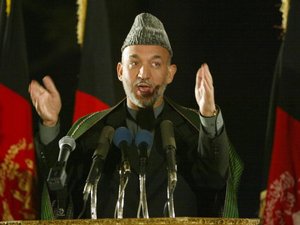
The case of Abdur Rahman, an Afghan citizen arrested and being tried for apostasy, raises some serious issues about the new Afghan government of former restauranteur Hamid Karzai and its commitment to overturning the strictures of the Taliban regime.

To understand Islam in Afghanistan, it is necessary to understand something of the competing strains of Islam operating there. Islam is perhaps the only unifying factor amongst Afghanistan’s many tribes who find themselves almost perpetually in some kind of violent conflict.

I am no expert on Islam in Afghanistan, but I have read quite a bit on the Deoband school of Northern India which continues to have a pervasive influence on Afghani understandings on religion, the state and the interpretation and application of sharia law.

This piece will be written in short bursts. The Abdur Rahman trial continues as we speak and the verdict is expected within a week. No doubt, there will be substantial international outcry. Much of this will be quite legitimate, though some will arise from sectarian monoculturalists who congregate around the Op-Ed pages of various newspapers with neo-Conservative and/or anti-Islam and/or fringe sectarian agendas.

I will endeavour to refer to materials easily available on the web. I welcome comment and feedback from people on this issue. I may also be writing and submitting on the issue to a number of mainstream newspapers in Australia and New Zealand. Much of the material on this blog will be used to generate some understanding on the many issues surrounding the Abdul Rahman case.

One of the most contentious issues in sharia law debates today relates to whether there exists a crime of pure apostasy. There is also a related debate on whether capital punishments should be applied in Muslim-majority states where an environment of corruption and sectarian hysteria often exist. These issues will be canvassed here.

But first it is important for us to gain some understanding of the peculiar political, cultural, theological and historical context within which this case finds itself unfolding.

The Deoband school

Under the Taliban, Afghanistan was ruled by a small group of religious elders and scholars trained in the traditional Deobandi madressa system in Pakistan. The training provided in these madressas is based on a narrow set of approaches to sharia law, many of which represent the most draconian and fringe interpretations producing the most oppressive results.

The Taliban were dominated by one tribal group. Their version of Islam excluded those regarded as heterodox – Shia Muslims or Muslims following any school other than the most unusual form of Deobandi theology.

The Deoband school of Sunni Islam started in India. It represents a very classical strain of Islam, and was started by Sufi scholars from the Chishtiyya tradition of Islamic spirituality.

Deoband is the name of a town in Saharanpur in North-Western India. Deobandi scholars are those associated with the Deoband program of Sufi-based reform. The Deoband movement was a largely peaceful educational movement, its leaders tending to have little interest in political activity.

The Deoband movement first appeared in the late 19th century. Some excellent work on the Deoband school is available in the English language. Especially useful are works by Barbara Daly Metcalfe, who has translated an important Deobandi manual on Islamic law entitled “Bahisht-i-Zewar” (literally “Heavenly Ornaments”) and written specially for women.

Afghan Islam and the Madressas

The madressa system is known largely in the context of Islam in India and Pakistan. Travel writer and historian William Dalrymple has written a lengthy (if somewhat biased) expose on the madressas and their influence in the Indian sub-Continent.

(to be continued …)

© Irfan Yusuf 2006

Stumble Upon Toolbar

Monday, March 20, 2006

When Ignorance Certainly Isn't Bliss

Over the weekend, I found myself in Wellington to avoid the damned Flying Tram Games. I just can’t seem to find sports such as synchronised tap-dancing on ice all that riveting.

On Sunday night, I joined some friends at a Wellington cinema for the 9pm session. We had 20 minutes to spare, and decided to check out the bookshop-cum-newsagency, where I picked up the New Zealand edition of Investigate magazine.

I can’t say I’m a regular reader of this allegedly conservative glossy rag. I did once see its Australian editor, James Morrow, give a speech in Sydney at a book launch organised by the Centre for Independent Studies. Pakistan and Kashmir had just experienced a nasty earthquake in which over 50,000 had lost their lives.

Mr Morrow told his audience that a similar earthquake in San Francisco of similar intensity had only killed 10% as many people. He said this proved conclusively that western capitalism was superior to eastern allegedly non-capitalist Islam.

Morrow was talking about Islam as some kind of eastern and non-European phenomenon. Seated next to me at the time was an Aussie businessman of Bosnian Muslim origin who graduated from the Faculty of Theology at the University of Sarajevo and had also studied at the old Ottoman Gazi Husrev Beg Islamic seminary. Honestly, you’d only need to take one look at him to realise this very capitalist imam wasn’t exactly Kashmiri.

That first brush with Investigate left me a little sceptical. But the front page of the Kiwi edition of Investigate promised some hot goss about a NZ Labour MP who apparently has been accused of doing things with schoolgirls and tennis balls.

The editorial by “Ian and Heidi” was entitled “Turban-charged motions”. Its first half had some useful comments to make. The editors stated that one doesn’t need to publish cartoons to understand why they might be offensive. “We see people charged with child porn. We don’t need to see what they’ve done”. Can’t argue with that.

But the second half of the editorial should have been headed “Protocols of the Learned Mullahs of Islam”. It claimed that violent responses of a minority of Muslims were sufficient evidence to show that Muslim migrants will never be able to live in a modern liberal democratic nation-state.

The attitudes of this tiny minority who took part in violent demonstrations and burning embassies were then imposed on the entire corpus of Islamic theology in all its permutations and combinations. The editors asked “why Islam reacted as it did”, and then made the absurd claim that “Islam doesn’t recognise national borders”. It even said “no devout Muslim would consider himself Egyptian first and Muslim second”.

The closing paragraphs made the stupendous claim that Islamic political theory only recognises God as ruler and that “there are only two states in the world: Muslim and infidel”. It then suggested that Muslim migrants “don’t respect the nation-state model. Where there’s a conflict of allegiance, the nation state will always lose.”

The offensiveness of these claims makes the Danish cartoons pale into insignificance. The editors are effectively attributing fringe al-Qaida thinking to millions of Muslims living peacefully across the Western world (including New Zealand). Yes, it is true that some Muslims have this kind of thinking. These are the same Muslims who strap bombs to themselves and commit terrorist acts in which Muslim casualties far outnumber non-Muslims.

Investigate claims to be a conservative publication. One would expect ideological conservatives to be actively courting followers of a socially conservative religious congregation.

In Australia, conservative politicians and writers are making the same error of playing wedge-politics and seeking to demonise followers of perhaps the most disorganised socially conservative congregation in the country. Conservative writers have been attempting to generate support for the idea that Muslims are all plotting and planning to undermine “Australian values”.

This sort of thinking also poses a challenge for Muslims on both sides of the Tasman. Despite their obvious social conservative leanings, many Muslim migrants find it unusual that their cultures are maligned by social conservatives.

Perhaps the clue to this conundrum lies in the fact that so few ordinary Aussies and Kiwis have even a working knowledge of Islam. The Sydney Morning Herald reported on March 20 the release of a study by University of NSW geographer Kevin Dunn showing over one third of Australians admitted to knowing nothing about Islam and its followers.

Sadly, migrant-dominated Muslim groups spend more money taking each other to court than informing their fellow citizens about themselves and their rich heritage. Recent events at the Christchurch mosque are further evidence of the near-irrelevance of Muslim institutions.

Islam is misunderstood by most people. Muslims can take a number of approaches. They can cry foul and blame their fellow citizens for being so ignorant. Alternately, they can invest time and money in ensuring their faith and values are at least understood before being criticised.

Fear of Islam in the present age is largely fear of the unknown. The onus is on Muslims themselves to dispel that fear by making themselves and their faith understood.

© Irfan Yusuf 2006

Stumble Upon Toolbar

Saturday, March 11, 2006

Lessons from the City Circle

Last weekend, I attended the monthly meeting of the Melbourne City Circle, an initiative of a group of young Muslim professionals and students. Each month, City Circle’s well-educated and well-heeled members hold a workshop to discuss important issues affecting Australia.

The workshop I attended was led by 2 Australian-born youth workers from the Islamic Council of Victoria (ICV). The ICV is perhaps the only peak Muslim body in Australia completely managed by Australian-born Muslims. Most ICV board members are in their 30’s. Both genders and all ethnicities are represented. The Chairman and CEO are both Anglo-Australian.

The meeting was an opportunity for ICV workers to consult with more educated and perhaps less observant Muslim Victorians often ignored by other peak bodies. Their audience consisted largely of Australian-born Muslims under 40, a group poorly represented on the PM’s Muslim Community Reference Group yet who constitute at least half of Australia’s Muslim communities.

The issues raised were not unique amongst 2nd generation migrant groups, and reflected the concerns of so many young people caught in what Mr Costello described in his recent controversial address as “the twilight zone” – alienated from their parents’ culture and mainstream Australia.

In a few weeks, a group of middle-aged men will gather for a national summit which will almost certainly ignore those in the twilight zone. For most young Muslims, the Imam’s summit organised by the Australian Federation of Islamic Councils (AFIC) will discuss issues of near-complete irrelevance.

The Australian Federation of Islamic Councils (AFIC) claims to represent Australia’s 300,000 or so Muslims. In reality, it is a federation of state Islamic councils consisting of select mosque organisations.

AFIC is holding a summit for imams (male religious scholars) from across Australia. I specify male as I’m yet to meet a female religious school employed by a mosque management organisation.

Most imams cannot speak English, employed by mosque committees dominated by first generation migrants who themselves have limited English language skills and little interest in youth affairs.

AFIC was supposed to have held the summit last month. However, Muslim women lobbied the PM’s office to ensure that the summit also includes women.

AFIC officials and imams are likely to be shown up by the mothers, wives, sisters and daughters of Muslim Australia who tend to be tertiary-educated, English-speaking and better able to engage with the broader community.

AFIC hasn’t had a female executive member for over 20 years. It has no formal structures to enable the views of young people to be considered. AFIC’s constitution makes it mandatory for it to ensure a national Muslim youth and student body has the same voting power as a state council. Yet no such national body has been consulted for at least 5 years.

Recent comments by AFIC executive members show how out-of-touch with Muslim youth reality they are. It took AFIC 21 days to issue a letter calling on imams to condemn the extremism that led to the London bombings, but hardly 20 minutes to condemn young Aussie Muslim Michelle Leslie whose jeans and singlet top mirror the dress sense of Muslim women whether in Jakarta, Auburn or Broadmeadows.

The only person advising AFIC on youth affairs is in his mid-60’s and doubles as Mufti of Australia & New Zealand. Though I doubt any Kiwi Muslims have even heard of him.

Unlike most of his colleagues, Sheik Hilaly at least tries to ingratiate himself with women and young people. He regularly attends Muslim youth camps, and holds regular classes for youth. He is also a founding member of Sydney’s Muslim Women’s Association, supporting the establishment of Sydney’s Muslim women’s refuges. His sermons regularly deal with sensitive issues such as domestic violence.

Yet he holds a position without a job description. In Muslim countries, the Mufti is someone authorised to give “fatwas” or non-binding opinions on novel questions of religious law. The Mufti is not the equivalent of an Archbishop as some have suggested. Nor is the Mufti a spiritual leader or media spokesman.

Victoria has a Board of Imams. NSW and other states are following suit. The AFIC Imams summit could form a national board of Imams, effectively making the Mufti’s position redundant. Up until now, with no job description and no resources, the position is largely irrelevant.

This may explain the Sheik’s most recent posturing, though he is effectively talking his role into irrelevance. Perhaps the Mufti should realise it’s time to retire. He could focus on documenting his years of experience in trouble shooting and problem solving in his mainly Arabic-speaking congregation.

The role of Mufti is largely redundant. Then again, with the exception of the Islamic Council of Victoria, so are the peak Muslim bodies governing the affairs of Australian Muslims. If women and young people continue to be sidelined by migrant male leaders and imams, Islam will continue to be treated as an alien force in Australia’s spiritual landscape.

© Irfan Yusuf 2006

Stumble Upon Toolbar

Tuesday, February 28, 2006

Miscellaneous Feedback Received

The following items of feedback were received. The identity of the authors has been kept as vague as possible.
__________________

On the Courier-Mail article ...

HI Irfy ,

May Allah increase you in wisdom.You have spoken the minds of thousands of Muslims in Australia. I am sure the PM will appreciate your clarification.

MD


Hello Irfan

I wish you could have mentioned Howard’s non intervention in relation to the behaviour of his mate Alan Jones for his comments directed at Middle Eastern communities and indirectly at Muslims in general. Allan Jones made some very racist, and hateful comments and his comments incited and fuelled the troubled waters at Cronulla.

Howard talks about the Muslim leaders in Australia should exercise responsibility – we are yet to hear of Howard’s condemnation of the comments by Alan Jones. It is not just the Lebanese boys who behave badly towards the women – its also the “Australian” boys who make racist comments and shout abuse at Muslim women.

I was called a Terrorist as I was about to board a train in Richmond – only because I had a scarf over my head. My sister-in-law who wears the head cover was abused with obscenities and was shouted to remove the “bloody head gear you bitch”.

Muslim women have learnt not to complain like the Ozy girls on the beaches for fear of repercussions from the Ozy louts because they are told by the likes of Alan Jones to behave in that way and encouraged by the words of Mrs B Bishop who condemns women wearing the head gear.

That’s enough from me today. I hope you are keeping well. We should catch up soon.


Regards
G


Dear Irfan Yusuf,

I have just read your article in Brisbane's Courier Mail entitled Bad boys exception, not rule. I really enjoyed what you wrote and found it to be explanatory and addressed an issue that needs attention immediately so that it does not rage out of control like an Australian bushfire.

It would be beneficial to the issue if some second and third generation migrants to Australia actually realised what a great country this is, that we are all migrants or sons and daughters of migrants who have arrived in the country since the British took the country from its native inhabitants in 1788..

I personally am of Anglo-Indian heritage and regard my progenitors and their cultural gift to me as a bonus. I fully embrace the "Australian way of life" including the fantastic surf beaches we have in this country and the opportunities this country affords its people. I thank my migrant progenitors for choosing Australia as their emigrant destination; it's a great place to live.

I am not Muslim but I do appreciate the right of all people to worship God each in their own way, as I do. As a university graduate myself my belief is that the key to removing ignorance is education. From having an education springs a person's self esteem, the ability to gain useful employment, and thus find and establish for themselves a respected place in Australian mainstream society. Australia is the land of opportunity, but education is the key to opportunity.

Sadly Australia's media have demonised some residents of the migrant enclaves in the western and south western suburbs of Sydney and Melbourne. Unfortunately these happen to be young men who have developed a "siege mentality" because they "appear" to culturally isolate themselves within their own ethnic group, and apart from the mainstream Australian population.

Like you indicated in your article these young men, many born in Australia, who contribute to the vilification of Islam, are even out of touch with the Third Millennium cultural norms that have evolved within the country of their own ethnic/cultural origin.

Thank you once again for your great journalistic contribution in Brisbane's newspaper, The Courier Mail. It was educational, balanced and informative. I look forward to reading more of your newspaper articles in the future.

Respectfully,

TF
Brisbane


Hello

I'll keep this short as I'm sure you are going to get a lot of e mails today. I've read your article and am impressed with everything that you said. I'm a 27 year old blonde, blue eyed kiwi girl living in Brisbane and I've been fortunate enough not to experience anything like the riots but watching the riots and then the channel 9 forum was just awful and there is a long way to go before I think everyone can live with peace and tolerance. I'd be interested in finding out the opinions of the parents of everyone involved in the riots.

Please continue your good work and lets hope things dont get that out of control again!

B

_____________

On Peter Costello and sharia

Hi Irfan

I have thoroughly enjoyed reading the articles - Congrats to you.

I have been enlighten on Sharia and its practice - I whole hearted agree that Muslims don’t know the principles of their religion – particularly the so called imams and mullahs – they have such limited knowledge re history of Islam and the development of Islamic Sharia Law and they have virtually no knowledge and understanding of other countries’ laws, traditions and cultures – so their sermons are limited to the interpretations of Islamic sharia or for that matter the Quranic laws through and with knowledge and understanding of their local views, cultures and values.

That is why most of the time when I listen to some of the preachings of some experts from Pakistan, and other Muslim countries I feel what they are saying is not really Islamic because it lacks common sense and scientifically untrue.

Regards
M

Stumble Upon Toolbar

Sunday, February 26, 2006

Actually, Costello is right. Here's why ...

I have a confession to make. The previous entry on this blog was made after I had read all the various media reports from the Fairfax and Murdoch press. I also read and saw the reactions of the usual migrant Muslim self-appointed leaders that love responding in a stereotypical manner that reinforces misconceptions and marginalises Aussie Muslims even more.

However, there was one document I hadn’t read. Guess what it was.

Have you given up? The document I had not read was Mr Costello’s actual speech!

The speech was finally e-mailed to me by someone late on Friday night. I read it and thought about it. I spoke with some more educated and wise Muslims from Canberra whom I was visiting over the weekend. I formed my own view, a version of which can be found here.

What this entire episode illustrates is how migrant Muslim leaders (whose knowledge of English, media, politics and public policy processes is at best minimal) have once again completely misunderstood the mood of Australia’s leadership and the nation.

Migrant Muslim leaders continue to sit on their perches, refusing to allow more sensible and aware Muslims from second and third generations to take on the role of community spokespeople.

These migrant Muslim leaders represent the epitome of mushy multiculturalism. Their hysterical antics are when give Muslims and multiculturalists a bad name. They have displayed a complete inability to address the understandable concerns and fears of ordinary Australians.

Mr Costello spoke of a twilight zone that can affect the children of migrants. Thousands of Muslim youth are part of that twilight zone. But migrant Muslim leaders like the middle aged Indian Muslim men’s club that is the Australian Federation of Islamic Councils (AFIC) refuses to assist those in the twilight zone.

AFIC overseas a system of Islamic societies that manage mosques along irrelevant ethnic, linguistic and sectarian lines. Rarely are sermons given in English whilst women and youth are made to feel unwelcome at most mosques.

AFIC has not had a female on its executive for over 2 decades. It has no formal structure for the representation of women or English-speaking Muslim youth. Yet the AFIC president chairs the Prime Minister’s Muslim Reference Group.

Peter Costello has done Muslim youth a favour by highlighting the dangers of this twilight zone. Yes, he made some errors in his understanding of sharia. But apart from that, his speech was a breath of fresh air and represented a genuine attempt to articulate the frustrations of ordinary Australians including many 2nd and 3rd generation Aussie Muslims.

Instead of criticising Mr Costello’s speech, perhaps Muslim leaders should ponder on the values Mr Costello expressed so well. These leaders might then compare these values to Islamic values and realise Mr Costello is in essence espousing the values of sharia. Maybe these leaders could invite Mr Costello to address their dinners and functions instead of just inviting the Immigration Minister to lobby for the visa applications of their relatives.

© Irfan Yusuf 2006

Stumble Upon Toolbar