They argue there has been a retreat from multiculturalism especially when it comes to Muslims. The irony is that these same Muslims by and large are not beneficiaries of multiculturalism in the sense of being recipients of government settlement services. They have by and large settled and access the same government services as other settled Australians. Yet they are still seen as beneficiaries of multicultural policies.
Tuesday, September 21, 2021
PhD: To what extent does a retreat from multiculturalism really affect Muslims?
Monday, September 20, 2021
PhD: The Gap between scholarship and everyday interaction
So in a sense Muslims are cosmopolitan in their outlook toward their fellow Australians. They are more nation-centric than umma-centric.
[02] A retreat from multiculturalism especially when it comes
to Muslims. The irony is that these same Muslims by and large are not
beneficiaries of multiculturalism in the sense of being recipients of
government settlement services. They have by and large settled and access the
same government services as other settled Australians. Yet they are still seen
as beneficiaries of multicultural policies.
A retreat from multiculturalism especially when it comes
to Muslims. The irony is that these same Muslims by and large are not
beneficiaries of multiculturalism in the sense of being recipients of
government settlement services. They have by and large settled and access the
same government services as other settled Australians. Yet they are still seen
as beneficiaries of multicultural policies.
John S. Dryzek & Bora Kanra (2013), Muslims and the Mainstream in Australia: Polarisation or Engagement? Journal of Ethnic and Migration Studies, 40:8, 1236-1253
Turkish Muslims and the Diyanet
"… the transnational activities of the Diyanet,
established in 1924 to reorganise Islam for service to the new nation-state … The
Foreign Affairs Department of the Diyanet was opened up in Cologne in 1984, yet
the institution ‘initiated a foreign program as early as 1971 to offer
religious services and education for Turks abroad’ … it has become the key
objective of the Diyanet to suffocate unauthorised religious groups both at
home and abroad who do not subscribe to the regime’s ideology" (p385).
(Senay, B; Seeing for the state: Kemalist long-distance
nationalism in Australia (2013) 19 Nations and Nationalism 376-394)
PhD: Notes on the 2013 Parliamentary Committee report on Migration & Multiculturalism
The House of Representatives Joint Standing Committee on Migration held an Inquiry into Multiculturalism in Australia. Its report, entitled Inquiry into Migration and Multiculturalism in Australia was tabled on 18 March 2013.Chapter 4 of the report was entitled “Religious diversity: questions about Islam”.
That an entire chapter (out of a total of 12) had to be devoted to Islam in such a report is quite extraordinary and an indication of just how hot a potato Islam and Muslim communities in Australia had become embroiled in debates about the desirability or otherwise of multiculturalism. The report noted that Muslims were the 4th largest religious group in Australia (behind Christians, no religion and Buddhists) (para 4.7) and that Islam was the 4th fastest growing religion in Australia behind Hinduism and Sikhism (para 4.8).
Australian multiculturalism focuses on provision of services for newcomers (para 4.13). Hence arguably it is not relevant to the study of Muslims born and/or brought up in Australia who generally do not consume such services.
Threats to Muslim identity from ideological shifts from conservative overseas trends. This view was expressed by Ms Asha Bidal from the Islamic Women's Welfare Council of Victoria (para 4.48). Hence Muslim recognition that overseas trends and groups may pose a threat to local Muslim identities.
Many submissions to the inquiry (including from Muslim representatives) stated that "the terrorist attacks of September 2001, and the perceived rise of political Islam following, have had a transforming effect on attitudes to, and within, Islamic communities in Australia" (para 4.53). The term "political Islam" has not been defined though no doubt it would encompass jihadist movements such as AlQaida and ISIL.
Unlike many European countries, Australia's migration policy has been predicated on nation building and integration via permanent migration and pathways to citizenship (para 4.59). Full citizenship was offered to migrants in 1973 and dual citizenship in 2002 (para 4.60).
Attorney-General's CVE Unit established in 2010 (para 4.89). Doesn't focus on any particular ethnic, religious or cultural group. Believes "the poor and marginalised are the most susceptible to radicalisation" (para 4.90).
Wednesday, May 13, 2020
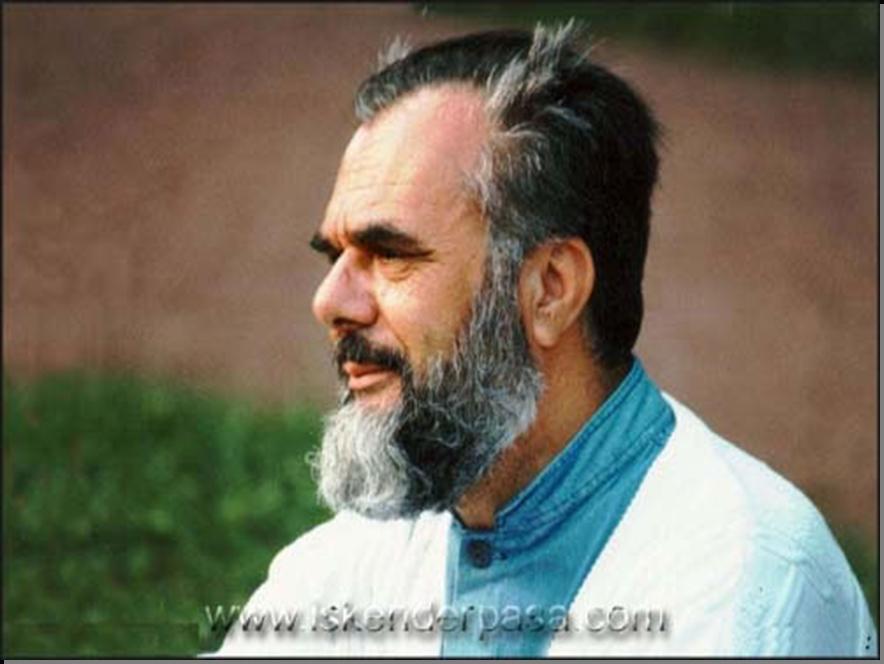
OBITUARY: On the Passing of Shaykh Esad
On Sunday afternoon, 4 February 2001, just outside the town of Dubbo in country New South Wales (Australia), four persons were travelling in a car along the highway. The car was involved in a collision with a semi-trailer. 2 persons aboard were immediately killed.
One of those persons was Professor Mahmud Esad Cosan (pronounced ‘Joshan’).
Shaykh Esad (or ‘Murshid Effendi' as he is known to his students) was one of the most prominent leaders of the Islamic movement in Turkey. He was the khalifa (spiritual successor) of another respected Turkish Islamic scholar, the late Shaykh Muhammad Zahid Bursawi (rahimahullah).
Shaykh Esad was not only one of Shaykh Bursawi’s favourite students but also his son-in-law. Amongst Shaykh Bursawi’s other students was Turkey’s former Islamist Prime Minister, Necmettin Erbakan.
Shaykh Esad travelled frequently to visit Muslim communities living in Western countries. He spoke fluent German, and was a frequent visitor to Germany and Sweden. He had a special affection for the people of Australia. One of his goals was to establish Muslim communities in various regional and country towns.
During his lifetime, Shaykh Esad established cultural and social service foundations in Turkey and abroad. He was particularly fond of publishing, and encouraged his students to spread Islam through the written word.
Shaykh Esad was also a man of his time. He encouraged Muslims to keep up with modern methods of communicating the message. He was not averse to using radio, television and cyberspace. He also encouraged Muslims to be economically independent.
Shaykh Esad understood that much jihad (struggle) to be fought in this time was in the marketplace. He encouraged his followers to actively pursue business opportunities.
Shaykh Esad was a follower of the path of sulook, the spiritual tradition of Islam referred to by some as sufism. The main school of sulook which he focussed upon was the ‘naqshbandi’ tradition, known for its emphasis on strict adherence to the Sunna and active involvement in the affairs of the community. Previous masters of this path have included Ottoman political leaders and generals, scholars from the Indian sub-Continent imprisoned by British colonial authorities and even the great independence fighter of Chechnya Imam Shamil.
May God have mercy on Shaykh Esad and fill his grave with Divine Light.
(first published Monday 5 February 2001)
Wednesday, March 13, 2019
PhD: Some notes on identity
Bilgrami distinguishes between subjective and objective identity, the distinction based on deliberate as opposed to not quite deliberate identification.
Subjective identity exists when a person deliberately chooses to identify with a particular characteristic, be it religion or race or language.
Objective is when a person doesn't necessarily identify with a characteristic.
Generally a subjective leads to political action. Hence we have identity politics which is so often criticised.
The sense of belonging to the umma can be subjective in that it relates to characteristics that a person actually has and with which that person chooses to identify with. It can also be objective in that it may relate to characteristics that a parson may or may not identify with. Identity of membership of the umma can be accidental or a deliberate act of identification.
Or must it be one or the other?
Bilgrami also mentions nationalism which he describes as a ...
... self-conscious majoritarian identity-formation ...... involving the identification of some kind of internal enemy (usually a minority with something in common with an outside enemy) and causing it to be subjugated. This usually causes the minority to react.
The existence of multiple identities in a person does not mean that a certain identity cannot come to the fore and lead to political action. Though I wonder if it is really about choice and deliberation. What if the choice is forced upon you? What if you are a reluctant Muslim which your interest is more in your profession or your language? What if you, act as an act of defiance to majoritarian pressure, feel a moral obligation to set aside your preferred layer of identity in favour of Islam?
And to what extent does this make you feel part of some kind of umma?
JM Bernstein, A Ophir & AL Stoler (2018) Political Concepts – A Critical Lexicon, Fordham University Press
Tuesday, November 14, 2017
PhD: Islam in the West
Here are some notes on the Routledge Handbook of Islam in the West, a tome I am currently reviewing. It was published in 2015. The first set of notes are from the Introduction by Roberto Tottoli, the editor.
[01] So often do we hear about these entities "Islam" and "the West". The idea of "Islam" refers to a religious entity while "the West" is more of a geographical entity, a place. Islam is a faith and a community, an umma. I personally wonder whether this is (or at least was) the case. The umma represented a place where Muslims ruled, even if they were not in the majority. An example of this was the Mughal Empire which maintained a Hindu majority. Even Muslim Syria in its early days had a Christian majority.
[02] Tottoli writes of the ...
... supposed Islamic roots in the West.
Islam has been in the West for only 3 centuries less than Christianity. In many parts of Europe, Christianity only spread after the conversion of the Roman Emperor Constantine. Indigenous European Islam existed in Spain as well as Bosnia and Albania, Macedonia, Greece and Kosovo, not to mention Russia. To suggest Islam has no roots in Europe is akin to suggesting Judaism has no roots in Europe.
[03] Tottoli speaks of ...
... outer and Western umma.Yet he denies the existence of a geographical umma. Furthermore some 6% of Muslims live in Europe. Indeed, the minority Muslim experience will soon become the norm as the country with the largest Muslim population is likely to be India in 2050. Then again, India will also have more Christians than any other nation. Exactly where is the outer or inner of Islam and/or Christendom?
[04] There is an enormous difference between looking at Islam in the West and Islam and the West. The former inquiry is far more nuanced.
More to follow.
Monday, March 13, 2017
PhD: On Umma
We generally imagine ourselves to be citizens of a state or country to which we owe ultimate allegiance. But most of us also have other allegiances that go beyond the state. Such "transnational" allegiance and solidarity can include language, culture and even religion.
In some Muslim societies, this can include allegiance to a broader Muslim or Islamic space or sense of belonging.
Yet this broader sense, religious belonging beyond the nation state must inevitably be influenced by the nature of the nation state from which it emerges.Transnational religious culture is built upon national or regional religious culture as well as other forms of culture.
Your "Muslim"-ness or "Islam"-ness isn't purely related to doctrine.
Saunders (2008) argues that the identity based on umma membership is fast morphing into a form of nationhood. He makes an argument for
... treating the ummah (the transnational community of Muslim believers) as a nation.
This is something new, and has only been made possible by
... a potent nexus of information and communications technology (ICT), emergent elites, and Muslim migration to the West ... globalisation, Western media practices, and the nature of European society allow 'ummahist' elites to marginalise other voices in the transnational Muslim community.
That may be the case in Europe, but what about Australia? Do the forces of umma represent Muslim elites? Is this happening more and more thanks to media practices? What about the nature of Australian society?
Saunders (2008) concludes that we
... need to recognise ummah-based identity as more than just a profession of faith - it represents a new form of postnational, political identity which is as profound as extant nationalism.RA Saunders, The ummah as nation: a reappraisal in the wake of the 'Cartoon Affair' (2008) Nation and Nationalism 14(2), 303-321
... To be continued
J Piscatori, "Order, Justice, and Global Islam Justice in International Relations" in R Foot, J Gaddis & A Hurrell, Order & Justice in International Relations (2003) Oxford University Press