Pakistan is a nation upto its eyeballs in crisis. Hundreds of thousands of its people continue to suffer from the aftermath of the devastating earthquake. At least 40% of the population cannot read or write. People with postgraduate qualifications are forced to drive cabs due to the lack of work.
Corruption at all levels of government is rife. The country is effectively ruled by a military dictator. Its currency is in deep trouble. Women, especially in rural areas, are subjected to violence and sexual abuse with little recourse to justice.
With all this happening, you’d think the ulama (religious scholarly class) would be flat out trying to help resolve social and educational problems. You’d think they, like their colleagues in Indonesia, would be busy establishing and improving facilities in their private boarding schools and using their considerable influence to fight corruption and develop a strong sense of civil society.
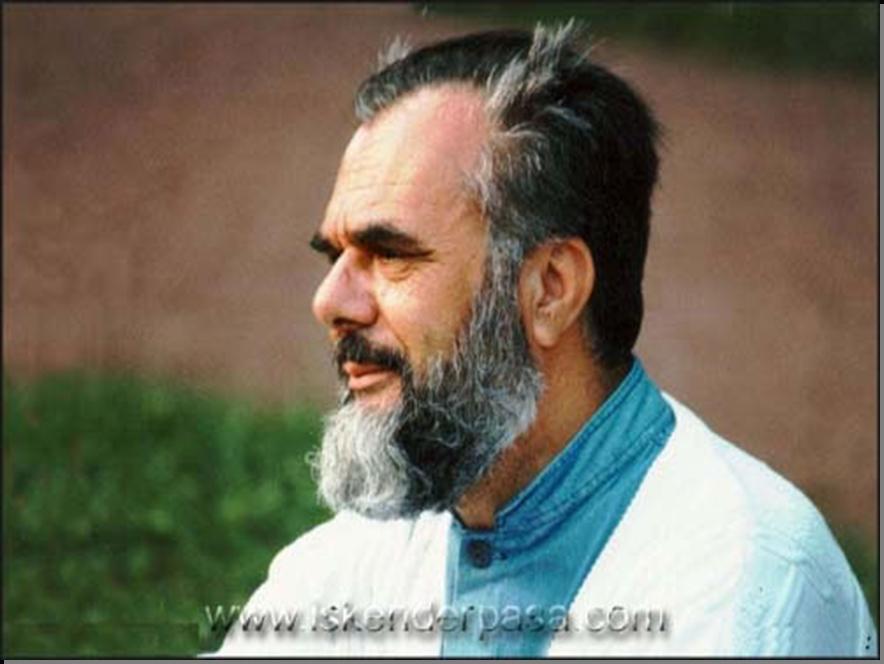
And no doubt, many Pakistani religious scholars are doing this. Until recently, virtually all emergency vehicles (ambulances etc) were provided by a private foundation established and managed by the religious scholar Maulana Abdus Sattar Edhi.
The Edhi Foundation manages a variety of other charitable and socially useful projects, and provides essential infrastructure that governments were incapable of providing. It performs this role not only in Pakistan but other countries also. During the war in Bosnia, Edhi ambulances were even seen in Sarajevo and other cities transporting the wounded to the relative safety of hospital beds.
Other scholars and religious foundations are doing the same. Many are operating on shoestring budgets and are reliant on volunteers, local and overseas. Yet for at least one Pakistani religious scholar, money is best spent rewarding people for flouting Islamic law.
Maulana Yousef Qureshi is reported to have personally offered the sum of 500,000 rupees to anyone able to successfully murder a Danish cartoonist. Two of his congregation put up additional bounties of $1 million and 1 million rupees plus a car.
The religious scholar leads the congregational prayer services at the Mohabat Mosque in Peshawar, the provincial capital of the North West Frontier Province which borders with Afghanistan. The imam was reported by Reuters to have said:
“If the West can place a bounty on Osama bin Laden and Zawahri we can also announce reward for killing the man who has caused this sacrilege of the holy Prophet.”
Pakistan’s military strongman, General Pervez Musharraf, has the ability to put a stop to such infantile pronouncements. However, his government and the provincial governments appear to be creating an environment which encourages the protesters on to more radical action. Pakistan’s Foreign Ministry announced that it had recalled Pakistan’s Ambassador in Copenhagen “for consultations”. The Ministry has refused to elaborate further on the announcement.
Pakistan is officially an Islamic state. But Islam is not being evidenced in the rhetoric and actions of some mullahs. The pronouncements of Maulana Qureshi are a far cry from the persevering spirit of the early Muslims who withstood a barrage of persecution far more painful than a dozen cartoons to defend their Prophet’s honour and the quiet practice of their faith.
One would expect religious scholars, regarded as the inheritors of Prophetic knowledge, to act in a manner more befitting of their status. Islamic theology elevates religious scholars because of their knowledge, piety and character. However, there is ample material in the sayings of the Prophet which record him warning religious scholars to set a proper example or face the flames of hell.
Murder is a crime punishable by death under Islamic law. Scholars of Islamic law and other religious sciences should be the last people to be encouraging acts of extra-judicial killing. Unless the cartoonists have been tried and convicted in a properly constituted Sharia court in a properly established Islamic state, most Sharia lawyers would regard the shedding of the cartoonists’ blood as unlawful. Maulana Qureshi will know of this. Or at least he should.
Further, bin Ladin and Zawahari are hardly authorities on Sharia and its intricacies. One is a civil engineer, the other a physician. Neither has any expertise or training in Islamic law. Their actions may send shivers down the spines of their victims (most of whom have proven to be Muslims anyway), but they are hardly a precedent for Sharia-compliant action.
Pakistan is not a Sharia state. It may have Islamic courts with jurisdiction in certain “personal law” areas such as family law and deceased estates. However, despite the existence of a criminal offence of blasphemy, thus far no Pakistani courts have placed any Danish cartoonists or European newspaper editors on trial. It is unlikely they ever will, if for no other reason than want of jurisdiction. In terms of the limited Sharia law applied in Pakistan, the pronouncements of Maulana Qureshi are, with respect, fanciful.
Sadly, Maulana Qureshi’s pronouncement is more reflective of an attempt to drum up an increased support base than offering any sensible solution to the crisis. Because the real crisis in Pakistan runs far deeper than the blasphemy of 12 cartoons published thousands of miles away.
The rhetoric and actions of people like Maulana Qureshi provide a useful diversion for Pakistani federal and provincial government ministers and officials busy siphoning away public moneys into their overseas accounts. Similar riots in Egypt, Syria and elsewhere are also orchestrated (or at least encouraged) by governments to divert their peoples’ attention away from the bigger issues.
In all societies, when people begin to think about big issues, they ask big questions of people in high places. In Muslim countries where people have the freedom to ask the big questions, the protests (if any) have been far more peaceful.
In Indonesia, protests over rising fuel prices forced President SBY onto the streets of Jakarta to face angry questions from merchants and ordinary workers. But when a few hundred protestors stormed a building housing the Danish embassy (but couldn’t get past Indonesian police and security to reach the embassy offices on the 29th floor), it hardly registered on the President’s political radar.
(It still didn't stop Denmark from closing its Jakarta embassy. Given the attacks on its embassies in Damascus and Beirut, this is completely understandable.)
If the violent protests sweeping some parts of the Muslim world prove anything, it is that many Muslim communities are still living in ignorance – both of their own religious principles and of the stark social and economic realities facing their communities.
© Irfan Yusuf 2006
Sunday, February 19, 2006
Avoiding the Bigger Issues in Pakistan
Tuesday, February 14, 2006
Muslim babies behind the Vale
There’s nothing like a good dose of Anglican education to give you a healthy understanding of Christian dogma. After 10 years at St Andrews, I thought I knew all the subtle nuances of Protestant theology. Though one teaching I always struggled with was the notion of original sin.
I probably still don’t understand it properly, as the only image the original sin conjures up in my mind is otherwise innocent babies being born in the shadow of their Grandpa Adam’s sin and being sentenced to eternal hell. I’m not sure at what stage the sin is inherited – is it before or after birth?
What I do know is that the theology I was taught at home and at the various Muslim camps I attended led me to believe that babies are born sinless. And not just Muslim babies either. The word “Muslim” literally means “the one who submits to God”. New-born babies are in a completely natural state, and therefore completely surrender to he forces of nature (a pseudo-scientific word often used to describe God). By definition, this makes them “Muslim”.
When it comes to babies and toddlers, Islam knows no demarcation between the faiths. In fact, kids have limited legal responsibility under classical Islamic law until they reach the age of puberty. When it comes to sectarian conflict, Islamic theology tells all parties involved to leave the kiddies out of it.
Baby religion and the abortion pill mass debate
Yet now it seems that religious affiliation and culture are being attributed to babies and even to the unborn. And all this in the context of what is fast becoming a mass debate over the RU482 pill and whether the Health Minister or experts from the Therapeutic Goods Administration (TGA) should have the final say.
Liberal backbencher and Member for the Federal Seat of Hughes in south-western Sydney Danna Vale is part of a push by five female Coalition Members of the House of Representatives to amend the Private Members Bill on abortion drugs.
The original PMB says that the Health Minister should not have the final veto on use of abortion drugs. The amendment seeks to place one more obstacle in the way of using the drug by enabling Parliament itself to have a say. Or something like that.
I think we were almost accustomed with the PMB when the otherwise completely inoffensive Danna Vale decided to open her mouth. Following her latest forays, the debate has transformed itself from one about ovaries being strangled by rosaries to one about the need to inject pregnant Muslim women with abortion drugs. Or something like that.
Sectarianism in the mass debate
Sectarianism isn’t a stranger to this debate. Earlier, a Greens Senator was accused of stirring sectarian feeling by wearing a t-shirt requesting Health Minister Tony Abbott (and presumably all observant Catholics) to “keep your rosaries off my ovaries”.
The t-shirt, worn by the Senator, took the form of an apparently sincere request that he remove his “rosaries from our ovaries”. For obvious reasons, I’m unable to comment on how it feels to have one’s ovaries trampled on by the humble string of beads. However, according to the Prime Minister and Coalition MP’s, the feelings generated may be described as bigoted in a sectarian and blasphemous way.
That American newspaper known as The Australian also weighed in on the debate. One of its regular contributors, Adelaide Review editor Christopher Pearson, said the Senator’s wearing of the t-shirt showed that bigotry was making a comeback.
(Admittedly, it also published an article by Democrats Senator Lyn Allison that said the Health Minister’s veto should be abolished. But then, the real issues are way too boring and complicated for most punters. Getting back to the mass debate …)
It was quite amusing to watch a host of conservatives suddenly deciding that freedom of speech must apply to cartoonists but never to t-shirts. It seems the religion of Tony Abbott deserves more reverence than that of Muhammad bin Abdullah al-Hashimi (the full name of the Prophet Muhammad).
Australiastan
As if the mass debate on t-shirts wasn’t enough, Danna Vale has now decided to claim that Australia was in risk of becoming like just about every other country in our region – a Muslim-majority state!
She went one step further than the hysterical claims of Dr Janet Albrechtsen, pseudo-conservative commentator and ABC Board Member, who claimed in her February 8 column that a single piece of Victorian Legislation threatened to turn Victoria into Victoristan. According to Albrechtsen, the religious vilification laws “make the place look like an Islamic state-in-waiting”.
But for Danna, the abortion tablet is even more dangerous than legislation. She wants to make sure an amendment to the PMB goes through so that in half a century’s time we aren’t staring down the barrel of Australiastan.
The evidence
I understand that before entering Federal Parliament, Ms Vale was a Sydney solicitor. Which means she was (and perhaps still is) a colleague of mine.
Most solicitors I know are fairly fussy when it comes to evidence. They tend to insist on seeing evidence from their clients before filing proceedings in court. In fact, the Civil Liability Act requires solicitors to file a certificate together with a summons or statement of claim that seeks compensatory damages. That certificate says that the solicitor believes that the state of the evidence and the law ensure that the proceedings have merit.
Parliamentarians, however, aren’t required to file such certificates before commencing a trial-by-media. And from what I have read in the papers thus fair, the evidence produced by Ms Vale certainly makes her case lack merit.
Samantha Maiden, reporting in The Australian on Valentines Day (February 14), said that Ms Vale’s remarks on abortion were based on “economic grounds.”
And what was her economics? Was it Keynesian? Was she reading Milton Freidman? Or Galbraithe?
Nope. It seems Ms Vale relies on the expertise of the Lakembian school of economics. Here are her words …
“A certain imam from the Lakemba mosque actually says Australia is going to be a Muslim nation in 50 years time … I didn't believe him at the time. But when you look at the birth rates ... we are aborting ourselves almost out of existence by 100,000 abortions every year. You multiply that by 50 years -- that's 5million potential Australians we won't have here.”
I can see some references to theology in these words. And perhaps some elementary arithmentic. Maybe even some demography. But where on earth is the economics?
Offending the converted
Seriously, Mr Abbott’s attempts to scuttle the PMB haven’t had much success lately. It seems that apart from Mr Abbott, not a lot of people on his side of the debate are making much sense.
Jackie Kelly, the author of the most recent amendment to the PMB which Ms Vale was trying to support, was clearly not impressed. She remarked that Ms Vale “was on her own on that one”.
Her words probably resembled those of just about every columnist in The Australian newspaper’s op-ed stable. “Janet, when it comes to Victoristan and the Caliphate of Sheik Bracks, you’re on your own!”
Of course, Jackie Kelly knows that in this mass debate, her side needs all the sensible support from the community it can get. Like Danna, Jacky has a substantial Muslim community in her electorate. Most of these people are socially conservative and would probably be happy to support anything that makes it harder to have an abortion.
But instead of gathering the Muslim converted, Danna has single handedly managed to piss them all right off. At the next federal election, as she goes door knocking on the well-heeled Muslim streets of Wattle Grove and other suburbs, Ms Vale will certainly have some explaining to do.
From abortion debate to mass debate
So now we have the prospect of this very crucial debate on the availability of abortion drugs being once again hijacked by sectarian jinx and transformed into a mass debate. Although, on this occasion, I doubt the issues are as emotional as to cause any Muslims to burn our embassies overseas.
Instead, like the rest of Australia, Muslims will probably spend the night dining with their spouses and partners and enjoying the Valentines Day spirit of love and affection and … well … maybe even reproduction. Far out! Maybe Danna had a point after all!!
In that regard, I’d like to suggest my own amendment to the PMB. I suggest we make consumption of the RU482 pill compulsory for all Muslims on Valentines Day. Any takers?
POSTSCRIPT
It has now been reported that Danna Vale stood up in Parliament and apologised for her comments. All credit to her for doing so. She has certainly shown far more sensitivity and sense than her colleagues, Bronwyn Bishop and Sophie Panopoulos.
© Irfan Yusuf 2006
Monday, February 13, 2006
Nice words, shame about the lingo ...
It was a financially satisfying Saturday night. We had been treated to presentations by two of the world’s foremost experts on mortgages and managed funds and insurance and all that other boring stuff that I failed at university. For me it was financially satisfying because I had been given a free dinner.
The night was organised by the Muslim Community Co-Operative (Australia) Limited, Australia’s first institution set up to develop financial products that complied with the tried and tested principles of sharia.
No, that doesn’t mean they involve stoning adulterers or chopping the hands of thieves (or, if you will, bankers) or even burning embassies. Rather, in the case of tonight’s dinner, it meant launching a new kind of ethical investment that enabled investors to play the stock market without getting their hands dirty on companies that traded in arms or pornography or similar nasties.
By the end of both presentations, I was thoroughly bamboozled and ready to hit the dessert and gobble down a few more glasses of complimentary coke. It was then that one of MCCA’s sharia advisers, an Egyptian chap named Dr Ibrahim Abu Muhammnad, decided to hit the stage.
Dr Abu Muhammad graduated from Al-Azhar University in Cairo, and lived for many years somewhere in the Middle East before settling in Australia. He runs his own radio station known as Radio Qur’an-Kareem or simply Q-K Radio. It broadcasts using narrow-casting short-wave frequency or something like that. The point is that you have to buy a special radio that costs around $40.
I purchased one of these radio sets for my mum. She started using it, and found that each time she turned on the radio she couldn’t understand a word being said. Like the other two Muslim radio stations in Sydney, Q-K Radio broadcasts all its programs in what is obviously the most relevant language for Australian conditions – Arabic.
Yep, we all know that every single Muslim in Australia instinctively knows how to speak Arabic. It’s just one of those things you naturally pick up after living in Sydney’s south-west – together with an aversion to paying tax and a mysterious attraction to Centrelink officers.
Dr Abu Muhammad decided he would continue with this tradition of exceptional relevance by speaking in Egyptian dialect of Arabic. I’m not sure exactly what he said, but it sounded really grouse. I started catching up on some gossip from a lady involved in one of Sydney’s “united” Muslim women’s associations.
The audience were overwhelmed by the speech. Some 30% of the audience got up and left. Virtually all of these were non-Arabic speakers. The rest of us just kept chatting away.
Dr Abu Muhammad finally pinned his gaze on me. He gave me one of those nasty looks, as if to say: “Look, I know what I am saying is in a language that hardly 0.5% of Australia can understand, but you must listen hard because I am shouting my head off!”
I, of course, looked back at the revered doctor. I gave him a look, as if to say: “Dude, you’ve lived in this country for over a decade now. Isn’t it time you got out of the ghetto and learnt some English?”
Of course, Dr Abu Muhammad did have something very important to say. In fact, so do most other Islamic religious scholars in Australia. But like Dr Abu Muhammad, most of them simply cannot express themselves in a language most of us can understand.
Later, MCCA Director Muhammad Abu Shaban stood up and gave an impressive summarised translation of Dr Abu Muhammad’s speech in English. It was truly awesome stuff.
Dr Abu Muhammad made the following points in relation to the Danish cartoons:
a. The fatwas (non-binding rulings) apparently made by various Middle Eastern scholars such as Dr Yusuf Qaradawi calling for boycotts of the goods of countries whose newspapers published the cartoons cannot and do not apply to Australia. We have no reason to boycott the goods of any European country.
b. Following the establishment of the Truce of Hudaybiyya between the Prophet and his foes from the city of Mecca, the Meccans began to suffer a famine. In previous years, these same people had fought 3 battles to annihilate the Prophet and his community. They had also sent assassins to kill him. What was his response to their famine? Did he trash their embassies? No. He followed the Qur'anic dictate of repelling evil with good. He sent them food aid.
c. We should give Europeans the benefit of the doubt. Perhaps they are lampooning the Prophet in frustration at the bad behaviour of some Muslims.
d. Whilst Muslims may be mistreated in Europe, Muslims in Australia have little reason to complain. Their rights are adequately protected and guaranteed under Australian law. Australian Muslims realise this, which explains why Muslims here have not made any substantial protest to the publication of the cartoons here.
What absolute gems of wisdom can be found in these words. But unless you go out and do a crash course in classical Arabic, good luck if you can understand them.
The Australian Federation of Islamic Councils (AFIC), the peak Muslim body in Australia, is meant to be having a national summit of imams on 25-26 February 2006. The Federal Government is worried about imams preaching radical stuff that could lead to some Muslim kids blowing themselves up. That summit has now been postponed as Muslim women’s groups are pushing for female scholars to be represented at the summit.
But there’s just one problem. Most Muslim female scholars can speak fluent English. Most male scholars cannot. Perhaps they need simultaneous translations. Or maybe AFIC will need to hire out the SBS subtitling machine.
Australia has some really fantastic Muslim religious scholars with bright ideas and amazing minds. Dr Abu Muhammad is one such scholar. His message is sober, thoughtful and sensible. But unless he can learn to speak English, his sensible message will go over the heads of people who need to hear the message. People like me.
© Irfan Yusuf 2006
Sunday, February 05, 2006
Some Thoughts on Danish cartoons and Danish pastries
It’s difficult to know what to make of the controversy surrounding the publication of twelve cartoons depicting the Prophet Muhammad as a violent terrorist. On the surface, it appears to be a battle between the medieval and modern, between Abrahamic religion and freedom of speech.
The cartoons were first published in the obscure neo-Conservative newspaper Morgenavisen Jyllands-Posten in September last year. They have now been reproduced in newspapers across Europe. A number of major American networks, including CNN, have refused to allow the cartoons to grace their websites.
Across the Tasman, the New Zealand Herald editorialised on February 4 why it refuses to publish the cartoons. Its competitor, the Fairfax-owned Dominion Post, has reproduced the cartoons in full and explained their significance.
Muslim haters have had a field day over images of violent protests in various Muslim-majority countries. Neo-Conservative publications known for their venom toward all things Islamic have been at the forefront of using more extreme Muslim responses as an indication of what broader Muslim opinion on the issue is.
The reality is that Muslim opinion has been divided. If anything, the entire fiasco has prompted a mood of soul-searching amongst educated Muslims, especially those living as minorities in Western countries.
Canadian writer Safiyya Ally, writing for popular Muslim website altmuslim.com, hasn’t held back in referring to the entire issue in her headline: “Stupid Cartoons, Even Stupider Reaction”.
Egyptian commentator Mona Eltahawy, writing in the Beirut Daily Star, argues that the issue exposes the inconsistencies of some despotic Muslim leaders. “Danish Prime Minister Anders Fogh Rasmussen was right not to intervene, insisting the government has no say over media - the argument used by Arab leaders when they are asked about anti-Semitism in their media, by the way.”
She goes onto state that the Danish cartoonist may have offended Muslims but certainly did not call for violence against Muslims. Indeed, in August 2005 Danish authorities suspended the broadcasting license of a radio station calling for the extermination of Muslims.
Jyllands-Posten has since apologised for the publication of the cartoons. It claimed the cartoons were published in an attempt to test the limits of freedom of speech. Maybe. But why did the newspaper really publish the cartoons, knowing as it did that these would cause offence to millions of Muslims?
One needs to understand the political background of Denmark, in particular the ongoing claims of Danish neo-Cons that Muslims are not welcome in the country. The prejudice and hatred toward Muslims by some sectors of Danish society is reflected in an article entitled “Something Rotten in Denmark?” and published in Danish and American newspapers in August 2002. That article was written in the aftermath of the defeat of social democratic and leftist parties in Denmark’s elections.
In that article, veteran Islamophobe Daniel Pipes joined forces with Lars Hedegaard to claim that Muslim migrants “show little desire to fit into their adopted country.” Mr Pipes’ own Jewish background does not stop him from blaming Muslims for a host of Denmark’s social ills in a manner reminiscent of Nazi propaganda concerning European Jews.
American Muslim writer Svend White writes on his blog that too many commentators have ignored the role played by the offending newspaper in an ongoing debate about immigration. When one understands this context, it is clear that the Danish newspaper’s intentions were not as noble as first seems.
White, whose mother is Danish, claims that politics in Norway has made a sudden turn to the hard-right since the Conservative Party formed a government following the 2001 election. Despite an election win for a centre-left coalition in 2005, many politicians and media outlets on the conservative side continue to blame Muslim migrants (who hardly make up 4% of the Danish population) for all Denmark’s ills.
Even in Denmark itself, Jyllands-Posten has been criticised. One prominent Danish commentator, Rune Engelbreth Larsen, speaks of the cartoons and the paper in the context of “over 15 years of progressively humiliating rhetoric and propaganda attacks” suffered by Danish Muslims.
Larsen further comments on the complete futility of the exercise as a means to campaign for freedom of speech and other liberal democratic values. He says that if the paper was really concerned about freedom of speech, it would caricature the despotic emirs, kings, generals and presidents-for-life that currently rule the roost in most Muslim countries. Instead, publication of the cartoons has enabled despotic rulers of Muslim lands to shore up more support by fuelling popular Muslim sentiments.
Some 3 years ago, the UK-based Independent newspaper published a cartoon depicting Ariel Sharon as a cannibal eating the head of a Palestinian child. Jews across the world protested, some arguing that the cartoon reminded them of medieval Christian myths of Jews eating children. Today, the modern myths of Muslims as all being terrorists has been depicted in the name of freedom of speech. Surely European newspapers publishing the cartoons should understand that the Prophet Muhammad means more to Muslims than Ariel Sharon does to Jews.
At the same time, Muslims need to ask themselves how their Prophet would have liked his honour to be defended. The earliest Muslims were not known for holding violent protests, holding hostages or storming buildings. In their present response to the cartoons, many Muslims are displaying the sort of love and affection their own Prophet, had he been with us, would have condemned.
The author is a Sydney lawyer. iyusuf@sydneylawyers.com.au
© Irfan Yusuf 2006
Wednesday, January 25, 2006
Lebanese Leaders should move beyond tolerance
As we are in the Australia Day season, we should ponder over where our nation is heading. In this respect, I want to make some general comments about tolerance.
Basically, I hate tolerance. Call me intolerant if you like. I believe that you only tolerate something or someone reluctantly. You tolerate because you have to, not because you want to.
If you are somewhat different to the majority, would you rather be tolerated? Or would you rather want to be understood and accepted?
I think it was JFK who once said: “Ask not what your country can do for you. Instead, ask what you can do for your country.” Another way to earn acceptance and respect is to contribute and to be seen to be contributing to the nation.
Many Lebanese Australian community leaders have entered the debate about ethnic crime using the politically correct catch cry of tolerance. They say it is wrong for a senior police officer or an Opposition Leader to talk about race in the context of crime. It is intolerant.
But I can't help asking how many Lebanese Australian leaders have learned to move beyond politically correct slogans. I also wonder what example some Lebanese leaders have set in relation to tolerance.
To this day, the Lebanese Muslim Association claims that it represents Sydney's Muslims. Its senior imam, Sheik Hilali, is meant to be the spiritual leader of Muslims in Australia and New Zealand. Yet the LMA continues to refuse membership to Muslims who are not Lebanese.
The LMA leaders and their predecessors (including Keysar Trad) have little moral authority to talk about racism when their own membership structure is based on a kind of apartheid within the Muslim community. If the LMA cannot even show racial tolerance toward non-Lebanese Muslims (including Aussie Muslim converts), what right do its leaders have to cry racism?
But it isn't just the LMA that discriminates against Muslims. To this day, the majority of programs on the Voice of Islam radio are broadcast in Arabic. Go to their website, and you will see the Arabic programming schedule full and the English broadcasting schedule empty. Even SBS Radio broadcasts more English language programs than the allegedly multilingual Islamic radio station.
If we look at the Lebanese community, we find a well-heeled and vibrant community that has contributed to all areas of Australian life for decades. Lebanese Australia has produced a NSW Governor, a Victorian Premier and numerous state and federal MP's.
Lebanese Australians can be found on the boards of major Australian companies, in government departments, in academia and in sport. We've all heard of Hazem el-Masri, one of Australia's top Rugby League players. Then there is National Australia Bank Chief Executive Ahmed Fahour, an avid fan of Aussie Rules. And which Aussie hasn't heard and seen the smiling face of John Symond telling us about how we can save thousands of our home loans?
I could list many more. The reality of the Lebanese community is well-known to people in the know. Sadly, Lebanese community leaders find themselves unable to communicate this reality to the broader Australian community. For this, they only have themselves to blame. Sadly, the rest of us have to suffer.
Wednesday, January 11, 2006
Sinking the Boot
Now that the Christmas and New Year's Eve parties are over and most of us are back at work, I thought it might be a good idea to sit down and write something completely original. Something unexpected, that no one would ever expect me to write at a time like this.
Then I thought to myself: stuff it! So here, before your eyes, is perhaps the 50,000th survey of the highlights of the 2005th year since three oriental-looking dudes followed a star to the House of Lamb (the literal translation of Beyt Lahm, or Bethlehem).
For Kiwistani readers, the big news in 2005 was that you now have a Foreign Minister even more embarrassing than ours. And that powerhouse known as the New Zealand film industry has produced a movie about a rather large gorilla.
For us Aussies, two events from 2005 stand out in my mind. The first was the Socceroos' entry into the World Cup finals. The second was the Cronulla riots. Both were triumphs of sorts. Both represent two competing strands of thinking in Australia. In my opinion, only one strand is truly Australian.
According to some, the Cronulla riots prove that multiculturalism doesn't work. Immediately following the riots, that allegedly conservative American newspaper calling itself The Australian devoted substantial op-ed space to articles supporting monoculturalism. The underlying sentiment of some of these articles was simple - persons of Middle Eastern appearance (and anyone else for that matter) looking, dressing, speaking or worshipping differently to 'us' had better learn to fit in, or watch out!
Not all the opinion writers had this kind of feral wind blowing out of their shuttles. But few had anything nice to say about what they saw as 'politically correct multiculturalism' or its alleged institutional offspring: the Special Broadcasting Service (SBS), anti-discrimination bodies, and Fairfax newspapers.
Even mosques were included, this despite the fact that most Aussie mosques outside Canberra operate along strict ethnic lines, so it beats me how they could be seen as examples of 'multiculturalism.' I also can't see how anti-discrimination laws implementing over three decades of legislative consensus could be seen as shallow 'political correctness.'
And what did Australia gain from the Cronulla riots? What is the legacy we are left with? Perhaps the best people to ask are the local shopkeepers and business people who rely on local and visiting beach-lovers.
Many Cronulla shopkeepers will have signed up to long-term leases, and have to pay wages to their (usually young, local) workers. Reduced sales means staff will have to be laid off. More locals will be unemployed, leading to further reduced sales.
You don't need a Nobel Prize in economics to figure out that the insistence of some people to attack others (whether those attacked be Anglo surf lifesavers or visitors resembling Jesus and Mary) in the name of intolerance and monocultural stupidity, brings more loss than gain.
But try telling that to some of the lunatic fringe that congregate around some News Limited newspapers. They might claim to be conservative (despite the fact that many are little more than senile ex-communists). But their idea of conservatism is to reject anything supported by anyone they think is left-of-centre. Even when the Left gets it right!
Then there are the ex-National Party luminaries like a certain John (who feels he is without cultural sin and ever ready to cast the first) Stone. In one of his more outrageous pieces, published in The Australian on 18 November 2005 (and republished on Online Opinion here), Stone even called for the formation of the Queen Isabella Society in Australia. (For those who don't know, Queen Isabella of Castile not only expelled the Moors and Jews from Spain in 1492 but also considerably nourished the Inquisition's programs of ethnic cleansing. It is provocative for Stone, who is clearly uncomfortable with continuing Muslim immigration to Australia, to celebrate such a figure.)
Now let's turn to the soccer. Like their Kiwi cousins, Australians love sport. Some readers will be disturbed to learn that I wore my Wallabies jersey with pride during my visit to New Zealand some two weeks ago. I was in Napier at the time, and almost caused a race riot. (In New Zealand these days, a race riot means a few Maoris smiling at me and laughing as one points his finger at my chest and declares: 'Wot are yoh dowung wierung thet jerzay ovah heyaar?')
But after the Socceroos' performance on 16 November last year, both Wallabies and All Blacks supporters must now admit a painful truth: in the eyes of the world, REAL football is that game we used to refer to as 'pansy ball' or 'wog ball' or even 'soccer' at school.
Following its defeat of Uruguay, Australia became a World Cup Football Nation. We will now be playing the World Game. In Germany. On the World Stage.
Real football requires the deft use of feet, knees and head. Real football penalises you for using your fists or any other part of your hands, whether on the ball or on other players. In real football, you win if you pass the ball around and play as a team.
Now we have re-entered the international scene of real football, we can strengthen the real multicultural Australian community that made all this possible.
Australian football could never have reached these heights without a healthy respect for our multicultural status quo. (Are you reading this, feral conservatives? Multiculturalism is our STATUS QUO. And no, I'm not referring to the 1970s pop band.)
Like New Zealand, Australia has a tradition of welcoming migrants and respecting different cultures. Unlike New Zealand, we still haven't learnt to respect our Indigenous people. (But then again, Indigenous rights is one of those nasty Fairfax-SBS-Left conspiracies that we shouldn't blacken our conservative White faces with!)
Even during the White Australia Policy era, the rules were bent to allow Cypriot, Turkish and Middle Eastern migrants. Virtually all were from football-mad nations.
Hardly four decades after General Mustafa Kemal led Turkish troops against the ANZACs at Gallipoli, Turkish migrants commenced working alongside Australians of other ethnicities in the factories of BHP and other Australian companies. Today, their descendants in Sydney and Melbourne compete in a competition named after the Gallipoli General, the Ataturk Cup. Many worship in Sydney's Gallipoli Mosque.
The world game is an English invention. But in Australia it was largely European, South American and Middle Eastern migrants who popularised the game.
The prevalence of non-Anglos in real football has been the target of comedians. Billy Birmingham's spoof The Wired World of Sports includes a skit in which Australian soccer players have surnames like 'Lostthehousekey' and 'Sonofabitch'. At one stage, a substitute named Smith comes onto the field. The commentator remarks: 'I hope I pronounced his name correctly'.
It was and is SBS, that favourite punching bag for Australian monoculturalists, that keeps supporting, sponsoring and broadcasting soccer games from around the world, from local clubs' games to World Cup finals.
SBS remains a major sponsor of the Football Federation Australia, together with Westfield and the National Australia Bank. The head of the FFA, Frank Lowy, is a Czechoslovakian migrant of Jewish faith who began his working life as a construction labourer. The CEO of the National Australia Bank's Australian operations, Ahmed Fahour, is the son of working-class Lebanese Muslim migrants. Apart from real football, Fahour has a well-known passion for Aussie Rules.
The rise and rise of real football in Australia is a direct result of mass immigration and multiculturalism. Australia's presence in the World Cup will yield economic and other benefits for decades to come.
As for the frenzy and paranoia underpinning the beachside rioters and their pseudo-intellectual pseudo-conservative supporters, I doubt its monocultural ideology will be kicking too many goals for Cronulla or Australia.
(First published in New Matilda on Wednesday 11 January 2005)
Friday, January 06, 2006
Some thoughts on the Hadj
Muslims take their internationalism very seriously. And perhaps no more seriously than at the time for the annual Hadj, the name given to the pilgrimage to Mecca, an ancient city located in the central-west of Saudi Arabia near the Red Sea coast.
The Hadj is considered one of the 5 pillars of Islamic practice, and is compulsory for all able-bodied Muslims who can afford the trip. It commences this weekend and lasts for around 5 days.
This year, an estimated 2.5 million pilgrims from across the globe will be attending. A number of delegations from Australia and New Zealand will also be present. They will participate in an international gathering of worship, the theme of which is the struggle of Abraham and members of his family.
The three universal monotheistic faiths (Judaism, Christianity and Islam) respect and honour Abraham as the patriarch of ethical monotheism. Where today some speak of “Judeo-Christian” values, it would perhaps be more accurate to speak of “Abrahamic” values which the three faiths share.
The Qur’anic account of Abraham is similar to the Biblical one. Abraham was born in a region roughly coinciding with modern Iraq. His father sculptured idols which were worshipped in the temples of his region. Abraham’s insistence on worshipping a single invisible God was a threat to his father’s livelihood, and Abraham was forced to leave his home town.
Islamic tradition states that Abraham had two wives. His Egyptian wife Hagar bore him a son Ishmael. Both mother and child were left in a desert wilderness known as “Bakkah”. Hagar is believed to have run between two hills in a desperate search for water for her toddler.
After her seventh sprint, Hagar found her son had uncovered a spring of fresh water. She quickly built a well, known as “Zam Zam”. That well continues to quench the thirsts of the millions of pilgrims visiting “Bakkah” (now known as Mecca).
Today, most pilgrims travel in comfort. But that hasn’t always been the case. Indeed, as one Australian pilgrim’s account of the Hadj some 80 years ago shows, pilgrims faced constant danger in what were then the lawless environs of the Arabian peninsula. The journey often took years. The relatively short trip from Jeddah to Mecca to Stegar’s caravan some 10 days.
Winifred Stegar was born in London in 1882. She and her father migrated to South Australia, and married at 17 years to one Charles Stegar, a marriage that proved miserable. Some seven years after separating and leaving her four children behind, she married the love of her life, an Indian hawker (travelling salesman) named Ali Ackba Nuby. In 1927, they both set off for pilgrimage.
Stegar’s account of her Hadj journey was published in 1969 under the title “Always Bells”, and has now been republished in an anthology of Hadj writings collected and edited by American Muslim writer Michael Wolfe and entitled “A Thousand Roads To Mecca”.
Most of Stegar’s travelling companions were from the Indian sub-Continent, many of them cameleers and hawkers that made up the majority of Australia’s largely outback Muslim community at the time. Her group travelled the last leg of the journey, from the Red Sea port of Jeddah to Mecca, in a caravan of camels. The illness of many pilgrims was compounded by their insistence on fasting during the last leg of the trip.
“Most of our Indian pilgrims were very old; some even tottered on crutches and sticks. We all knew that hundreds of our company would not return again to their homeland, and many of them did not even wish to, for they deemed themselves doubly fortunate if their weary bodies could lie down in eternal rest in this, their Holy of Holies.
“So very many were weak and ill, coughing their lungs away, but still deep in the rheumy old eyes was the glint of a peace their souls longed for, a gleam of joy at something at last attempted but yet by no means done.”
For many pilgrims, th Hadj represented their only opportunity to set their affairs right with God. In many Muslim cultures, Hadj is one of the last acts of devotion a person will fulfil. For Muslims from the Indian sub-Continent, who make up around a quarter of all Muslims, the Hadj is generally not performed until children have grown up and married.
Muslims believe that the reward for a Hadj accepted by God is nothing short of Paradise. The Hadj and its hardships represent a person’s personal sacrifice to achieve salvation. All sins are washed away. This fact has generated numerous jokes and sarcastic remarks, such as the Urdu saying: “After eating several thousand mice, the cat finally decides to set off for Hadj!”
On the other hand, a precondition for going on Hadj is that a person has paid off all their debts. With this in mind, Malay and Indonesian pilgrims tend to be young adults and couples who perform the Hadj before taking on major financial commitments.
Muslims also travel to the Prophet’s grave, located in the chamber of his wife Aishah and located in the city of Medina (some 200 km north of Mecca). The grave is today contained in his mosque, and is covered by a green dome. Pilgrims experience first-hand the aura and spiritual presence of the man they regard as God’s final messenger to humanity. It is not uncommon to see pilgrims break into tears of love and longing upon setting sight on the green dome.
Much more can be said on the subject. Entire volumes have been devoted just to commentaries on the Qur’anic verses dealing with the Hadj. For anyone seeking personal accounts, perhaps the best and most moving is contained toward the end of the Autobiography of Malcolm X. There is also Michael Wolfe’s own personal account which is well worth reading and readily available in most libraries.
© Irfan Yusuf 2005
Wednesday, January 04, 2006
Usama's Real Jihad - Part 1
The image of Usama bin Ladin (UBL) is one that strikes fear into the hearts of Americans and other Westerners.
UBL and his organisation were responsible for carrying out some of the most daring and destructive attacks on the United States. UBL represents the symbol of terror, a symbol so powerful that the very mention of the name “Usama” sebds shivers down the spine of Muslims and non-Muslims alike.
Yet the name “Usama” has not always been synonymous with terrorism, just as names like “Ariel” and “Adolf” haven’t always been synonymous with genocide.
And whilst UBL may claim his type of unconventional warfare is a form of “jihad”, this term has traditionally not been associated with terror.
Who was Usama?
Usama is the name of a child, one of the favourite children of the Prophet Muhammad. To understand the historical Usama, we must understand his parents and their role in early Islamic history.
The Prophet lived some 63 years. His entire life was witnessed by an anonymous slave woman named Barakah (literally “blessing”).
The Prophet’s Mother, Amina, inherited Barakah and appointed her to be her personal assistant. Barakah was fortunate to be a servant to the most noble and kind of Arab aristocratic families. The Banu Hashim were from the purest of Arab stock and direct descendants of the Prophet Abraham and his son Ishmael.
Amina was a woman of noble lineage from one of the ruling families of Yathrib. She married into the Banu Hashim family, and her husband was the noble and handsome Abdullah. Some 2 weeks into the marriage, after falling pregnant, Amina was forced to undergo the trauma of seeing her husband undertake a risky trade journey to Syria. He was never to return, and was buried in Yathrib.
Amina gave birth to a baby boy who was named Muhammad. Barakah acted as mid-wife and helped nurse the young boy. She was with the boy throughout his life.
At age 7, the boy accompanied his mother and Barakah to Yathrib where she was to visit her family and complete her grieving process. Each day, Barakah would look after the boy while her mistress Amina would weep at the grave of her husband.
On the return journey, Amina succumbed to a fever. She died on the outskirts of a small village. Her last words to Barakah were:
“O Barakah, I shall depart from this world shortly. I leave behind my son Muhammad in your care. He lost his father while he was in my abdomen. Here he is now, losing his mother under his very eyes. Be a mother to him, Barakah. And don’t ever leave him.”
Barakah and the young Muhammad buried Amina in the sands of Arabia. Barakah never left Muhammad’s side. She later told Muhammad’s first wife Khadija: “I never left him and he never left me.”
When the young Muhammad grew up, he was gifted by his wife with a slave named Zayd. He was a young Arab boy was captured in a tribal war and sold in the slave market at Makkah. Zayd was adopted by Muhammad.
There is a famous story of Zayd’s father who searches across Arabia to find his kidnapped son. He finally hears of Zayd living in captivity and under the care of Muhammad.
The father approached his son. It was an emotional reunion. He had not seen his son for over 2 decades. The father offered Muhammad a handsome sum to buy his son’s freedom. Muhammad refused to accept a sum and left the choice to Zayd.
Islamic history reports Zayd’s response to his father’s offer as follows:
“I shall never leave this man. He treated me nobly, as a father would treat his son. Not a single day have I felt that I am a slave. He looked after me. How can I leave him and go with you? I will never leave him!”
Thereupon Muhammad publicly declared Zayd to be a free man and adopted him as a son. Zayd became known as Zayd bin Muhammad.
Both Barakah and Zayd were part of the household of Muhammad. Zayd was a handsome man in his 20’s. Barakah was an elderly sickly woman in her 50’s. Under the blessing of Muhammad, they married and had a son named Usama. This young child was a favourite of Muhammad. He was often found jumping on the back of the Prophet who was prostrating in prayer. Usama often played with the other young boys of the Prophet’s household, Hasan and Husayn.
Because of Muhammad’s love for the young Usama, the more senior disciples of Muhammad often referred to Usama as “the beloved son of the beloved”.
Usama was the product of a union between 2 people whose lives were transformed by the kindness and mercy of Muhammad. Usama eventually echoed that kindness and mercy of his spiritual preceptor and was known for his tender-heartedness and compassion toward the poor and destitute.
What is Jihad?
In the aftermath of the London bombings on 7/7, both the Prime Minister and Treasurer were reported as saying that jihad has no place in Australian society. Both can be forgiven for making such statements given the gross misunderstanding of the term in the broader community.
Jihad is a term frequently misused and abused by persons from all different faiths. Before his arrest, the Algerian man from Melbourne named “Abu Bakr” praised UBL and supporting a form of jihad which some of us might regard as terrorism.
So what is jihad? Is it war? Does it refer to killing civilians? Is it suicide bombing?
The term “jihad” is an Arabic word which literally means to struggle or strive. It is related to the term “ijtihad”, a legislative process which Canadian Irshad Manji claims to have revived, if not invented.
Both ijtihad and jihad are forms of struggle. Ijtihad refers to a struggle for finding solutions to new problems using existing sources of Islamic law. It is a process which guarantees the dynamism of the development of Islamic law. Notwithstanding Ms Manji’s claims, she is not the first writer to discuss the process of ijtihad. Indeed, it has been a common theme of Islamic legal scholarship for the past 14 centuries.
Indeed, it is by a process of warped ijtihad that UBL has claimed that the classical rules of armed jihad can be changed. The classical scholars are agreed on certain pre-conditions for an armed jihad. These include:
1. The existence of an Islamic state ruled by a properly constituted caliphate.
2. A formal declaration of war by the caliph.
3. An act of aggression on the Islamic state.
4. No women, children or other non-combatants are to be targeted.
The last of these rules is particularly regarded as being non-negotiable. As such, the September 11 attacks as well as suicide attacks targeted at individuals would be regarded as not falling within the boundaries of jihad as agreed to by Islamic jurists.
It is only by a process of what one may call “creative ijtihad”, common to both Irshad Manji and UBL, that one could argue jihad incorporates terrorism and attacks on civilian targets.
© Irfan Yusuf 2005